Introduction
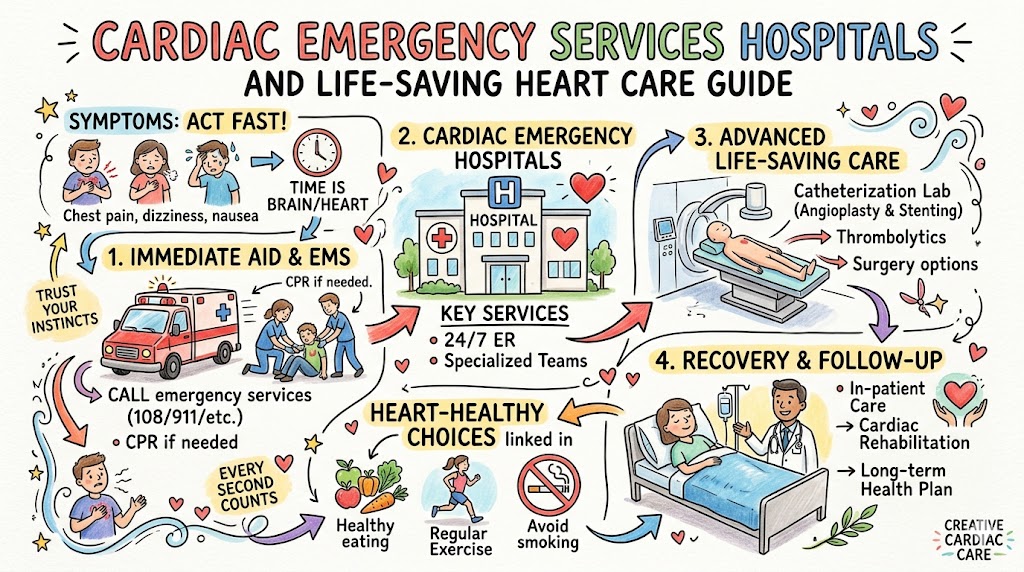
A cardiac emergency is a moment that tests the strength of a patient and the resilience of their family. It is a situation where the heart—the very engine of life—begins to struggle, demanding an immediate and perfectly coordinated response. Whether it is a sudden episode of crushing chest pain in the middle of the night or an unexpected collapse at home, the difference between a tragic outcome and a successful recovery often hinges on one factor: time.When seconds turn into minutes, the medical infrastructure available to you becomes your greatest ally. Leading cardiac emergency services hospitals are designed to be ready the moment a patient enters their doors, utilizing advanced cath labs, intensive care units, and a team of specialists who work in sync to restore heart function. Resources like BestCardiacHospitals are dedicated to ensuring that when every heartbeat counts, you know exactly where to turn for trusted, life-saving intervention.Consider the story of a fifty-year-old patient who experienced sudden, intense chest pressure while sitting in his office. Because his family recognized the symptoms and immediately contacted a facility with specialized emergency cardiac services, a rapid-response ambulance arrived within minutes. By the time he reached the hospital, the cardiac team had already activated the cath lab. His artery was opened well within the critical window, preventing permanent damage to his heart muscle. This level of synchronization between ambulance, diagnostic imaging, and surgical intervention is what defines a truly trusted cardiac emergency hospital.
What Is a Cardiac Emergency?
A cardiac emergency occurs when the heart’s ability to pump blood is suddenly and severely compromised. This can manifest in several life-threatening ways, and understanding the terminology can help families act with the necessary urgency.
Heart Attack (Myocardial Infarction)
This is the most common cardiac emergency. It happens when blood flow to a portion of the heart muscle is blocked—usually by a blood clot in a coronary artery. If the flow is not restored quickly, the section of the muscle begins to die.
Cardiac Arrest
This is an electrical malfunction. The heart suddenly stops beating unexpectedly. Unlike a heart attack, where the heart usually continues to pump, in cardiac arrest, the patient loses consciousness, stops breathing, and has no pulse. This is a total life-or-death emergency that requires immediate CPR and defibrillation.
Other Cardiac Emergencies
- Arrhythmia Emergencies: Extremely fast or irregular heartbeats that prevent the heart from pumping enough blood to the body.
- Cardiogenic Shock: A condition where the heart is suddenly too weak to pump enough blood to meet the body’s needs, often following a massive heart attack.
The “Golden Hour” Concept
In cardiology, the first sixty minutes after the onset of symptoms are known as the “golden hour.” Every minute of delay results in the loss of millions of heart muscle cells. This is why hospital readiness is not just a policy—it is a race against time.
Warning Signs of a Heart Emergency
Recognizing the subtle and overt signs of a cardiac event can save a life. It is better to be safe and seek medical help for a false alarm than to ignore a warning until it is too late.
- Chest Pain or Pressure: Often described as a heavy weight, squeezing sensation, or tightness in the center of the chest.
- Pain Radiating: Discomfort that moves to the arms (especially the left), neck, jaw, shoulders, or back.
- Shortness of Breath: Feeling winded even while resting, often occurring with or without chest pain.
- Sudden Sweating: Breaking out in a cold, clammy sweat is a classic, frequently ignored sign.
- Dizziness or Fainting: A sudden feeling of lightheadedness or losing consciousness indicates that the brain is not receiving enough blood.
- Nausea and Fatigue: Particularly in women and elderly patients, heart attacks can present as overwhelming fatigue, indigestion, or nausea rather than traditional chest pain.
If you or a loved one experience these, do not wait to “see if it goes away.” Call emergency services immediately.
Why Cardiac Emergency Hospitals Matter
A general hospital can provide basic care, but a dedicated cardiac emergency hospital is built to handle the mechanical and electrical complexities of the heart under pressure.
24/7 Readiness
Cardiac emergencies do not keep office hours. A trusted hospital has a cardiology team, nurses, and cath lab technicians on standby around the clock, every single day.
On-Site Cath Lab Access
The catheterization laboratory (cath lab) is where life-saving procedures like angioplasty and stenting happen. Having an on-site lab means the patient is moved directly from the ambulance to the operating table with zero transit delays.
ICU and Specialized Monitoring
Post-emergency care requires high-level monitoring to ensure the heart rhythm remains stable. A specialized Cardiac Intensive Care Unit (CICU) is staffed with nurses trained specifically in observing subtle changes in heart monitors.
Integrated Response Teams
At a top-tier hospital, the moment a heart attack is identified, the “Code STEMI” team is activated. This pulls together radiologists, surgeons, and nurses into a single, cohesive unit focused solely on the patient’s survival.
How Cardiac Emergency Treatment Works
The process is a precise, practiced workflow designed to minimize the time between the ambulance arrival and the opening of a blocked artery.
- Emergency Activation: A call to emergency services triggers the ambulance team.
- Pre-Hospital Assessment: Paramedics perform an ECG in the ambulance and transmit the data to the hospital cardiologists while still in transit.
- Hospital Admission: The patient bypasses the general waiting room and is taken directly to the emergency department or cath lab.
- Immediate Diagnosis: Blood work and imaging confirm the extent of the blockage.
- Intervention (Angioplasty/Surgery): If a clot is found, surgeons use a thin tube (catheter) to clear the blockage and place a stent to keep the artery open.
- ICU Monitoring: The patient is moved to the CICU for stabilization.
- Recovery Planning: Rehabilitation starts almost immediately, involving lifestyle modifications and long-term medication strategies.
Advanced Technologies in Cardiac Emergency Care
Modern hospitals have embraced technology that makes the invisible visible, allowing for unprecedented accuracy in life-saving care.
- Portable ECGs: Allows paramedics to diagnose a heart attack at the patient’s bedside at home.
- Real-time Alerts: Systems that notify the surgical team of an incoming cardiac patient before they arrive.
- Defibrillators: Advanced machines that can shock the heart back into a normal rhythm during cardiac arrest.
- AI-Assisted Interpretation: Software that helps doctors identify complex ECG patterns that could signify a hidden blockage.
- Ventilator Support: High-end respiratory support for patients whose hearts are too weak to support normal breathing during a crisis.
Role of Ambulance Services in Cardiac Emergencies
The ambulance is the mobile extension of the hospital. In a cardiac emergency, the ambulance crew is your first line of defense.
- Pre-Hospital CPR: Providing manual chest compressions if the heart has stopped.
- Oxygen Therapy: Ensuring the heart muscle receives enough oxygen to survive the stress of the attack.
- Drug Administration: Early delivery of aspirin, blood thinners, and pain relief medication.
- Communication: Acting as the eyes and ears of the hospital cardiologist, providing live updates on the patient’s stability.
ICU and Post-Emergency Cardiac Care
The work isn’t done once the heart is stabilized. The Cardiac Intensive Care Unit (CICU) is where the patient is closely monitored for days following a crisis.
- Intensive Monitoring: Constant observation of heart rate, blood pressure, and oxygen levels.
- Medication Management: Titrating powerful drugs to prevent further clotting and stabilize blood pressure.
- Managing Complications: Monitoring for rhythm abnormalities or fluid buildup in the lungs.
- Physiotherapy: Early, gentle movement to prevent muscle atrophy and encourage circulatory health.
Common Mistakes During Heart Emergencies
- The “Wait and See” Approach: Thinking that resting for a few hours will make the pain go away.
- Driving Yourself: Never drive yourself or have a family member drive you to the hospital; you need the life-saving equipment found only in an ambulance.
- Self-Medicating: Taking antacids for what you think is indigestion, when it is actually a heart attack.
- Panic: While understandable, panic increases the workload on your already struggling heart. Calmness—facilitated by paramedics—is crucial.
How to Choose the Right Cardiac Emergency Hospital
When preparing for emergencies, look for these markers of excellence:
- Accreditation: Check for national or international healthcare quality certifications.
- 24/7 Cath Lab: Ensure the hospital does not just have a cardiologist on call, but a full, functional cath lab team available at all hours.
- Ambulance Network: Hospitals with their own dedicated ambulance fleet are often more efficient at inter-hospital transfers and pre-hospital diagnostics.
- Specialized ICU: A hospital that prioritizes its Cardiac ICU shows a commitment to long-term recovery, not just quick fixes.
Real-World Emergency Cardiac Use Cases
- Workplace Collapse: A worker collapses in a high-stress environment; a nearby facility with rapid cardiac response uses AEDs and transport to save his life.
- Diabetic Silent Heart Attack: A diabetic patient feels only mild fatigue; a hospital using AI-assisted diagnostic tools catches the subtle signs of a major heart attack in time.
- Post-Surgery Follow-up: A patient feeling “off” after a procedure is monitored through tele-cardiology and rushed back for a minor adjustment that prevents a major complication.
Prevention of Cardiac Emergencies
Prevention is the ultimate form of emergency care.
- Heart-Healthy Diet: Focus on whole grains, leafy greens, and lean proteins.
- Controlled Living: Manage hypertension and diabetes strictly through medication and diet.
- Tobacco Cessation: Smoking is the single most avoidable cause of arterial damage.
- Regular Screenings: Know your cholesterol levels, blood pressure, and family history.
Future of Emergency Cardiac Care
The future involves “smart” hospitals. Imagine ambulances that automatically upload ECG data to the cloud, where AI instantly highlights the exact location of a blockage for the surgeon, or predictive systems that alert a patient’s cardiologist when their vitals suggest an upcoming risk, allowing for preventative intervention before an emergency ever happens.
FAQs (15 Questions)
1. What is a cardiac emergency? A cardiac emergency refers to any sudden, life-threatening heart condition, such as a heart attack, cardiac arrest, or severe arrhythmia. These events prevent the heart from pumping blood efficiently and require immediate medical intervention to prevent permanent damage or death.
2. What should I do during a heart attack? First, call emergency services immediately. Do not attempt to drive. While waiting for the ambulance, sit or lie down to minimize the heart’s workload. If the patient is unconscious and not breathing, start CPR immediately.
3. How fast should I reach a hospital? In cardiac emergencies, every minute matters. You should be in an ambulance on your way to a specialized hospital within minutes of symptoms starting. The sooner you reach a facility with a cath lab, the higher the chance of saving your heart muscle.
4. Can heart attacks be treated? Yes. Modern cardiology has revolutionized the treatment of heart attacks. With procedures like angioplasty and the use of life-saving medications, many patients survive and go on to lead active, full lives if they are treated quickly.
5. What is angioplasty in emergency care? Angioplasty is a procedure where a balloon-tipped tube is inserted into the blocked artery. Once in position, the balloon is inflated to clear the blockage, and a small metal mesh tube called a stent is placed to keep the artery open.
6. Is chest pain always a heart attack? Not always, but it should always be treated as one until proven otherwise. Other conditions like acid reflux or muscle strain can cause chest pain, but only a medical professional can distinguish these from a life-threatening cardiac event.
7. Why is a cath lab important? A cath lab is the only place where doctors can physically open a blocked artery during a heart attack. It is the gold standard for emergency cardiac care.
8. What is the role of an ICU in cardiac care? The ICU provides continuous monitoring of the heart’s electrical and mechanical functions, ensuring that any dangerous rhythm changes or blood pressure drops are treated the second they occur.
9. Can I drive myself to the hospital? No. If you are having a heart attack, you could lose consciousness while driving, endangering yourself and others. Always use an ambulance, which is equipped with life-saving tools.
10. Do women have different heart attack symptoms? Yes. While men often report crushing chest pain, women are more likely to experience fatigue, shortness of breath, nausea, or pain in the jaw and back.
11. What is an ECG? An ECG (Electrocardiogram) is a simple test that records the electrical activity of your heart. In an emergency, it is the first test used to diagnose a heart attack.
12. How long is the recovery after an emergency heart procedure? Recovery depends on the severity of the heart attack. Most patients stay in the ICU for a few days before transitioning to general recovery and then cardiac rehabilitation.
13. Is CPR necessary? Yes, if the patient has stopped breathing or has no pulse, CPR (cardiopulmonary resuscitation) is absolutely necessary to keep oxygenated blood flowing to the brain until professionals arrive.
14. What are the signs of cardiac arrest? The primary signs are sudden loss of consciousness, absence of breathing, and the absence of a detectable pulse. It is an immediate emergency.
15. How do I find the best cardiac hospital? Research hospitals with 24/7 cath labs, specialized cardiac ICUs, and positive patient outcomes. Websites like BestCardiacHospitals can help you identify trusted institutions in your area.
Final Conclusion
Cardiac emergencies are profound challenges, but they are not insurmountable. The evolution of modern medical science has placed incredible power in the hands of cardiac emergency teams. Today, a heart attack is no longer the final word on one’s health; with the right interventions performed at the right time in the right facility, it can be a manageable medical event from which a person can fully recover.The key to navigating this complexity lies in preparation and awareness. Recognizing the early, often subtle symptoms of heart distress, understanding the critical importance of ambulance transit, and knowing which hospitals provide the specialized care required for heart emergencies can change the trajectory of a patient’s life. Do not underestimate the value of having a plan. When an emergency strikes, you do not want to be searching for information; you want to be acting on a plan that is already in place.We urge you to take proactive steps today: identify the nearest cardiac-specialized emergency centers, keep emergency contact numbers saved, and ensure that those you live with are aware of the warning signs. Your heart works tirelessly to keep you alive; it is only fair that you be prepared to protect it when it needs help the most. For those seeking clarity, guidance, or the location of reliable, top-tier cardiac care, BestCardiacHospitals stands as a dedicated resource to help you make informed, life-saving choices.