Introduction
Your heart’s rhythm is the steady, reliable drumbeat that sustains your life. It is governed by a precise electrical system that ensures blood is pumped efficiently to every part of your body. When this system experiences a “short circuit” or a signal disruption, the heart may beat too fast, too slow, or in a chaotic, irregular pattern. These irregularities are known as heart rhythm disorders, or arrhythmias.At BESTCARDIACHOSPITALS, we are committed to providing you with the educational resources needed to understand your care options. In this guide, we will explore the different types of rhythm disorders, the advanced treatments available, and how to identify a hospital equipped to handle complex cardiac rhythm needs. Please remember that all treatment decisions must be made in consultation with a qualified cardiologist or electrophysiologist, as every patient’s heart health journey is unique.
What Are Heart Rhythm Disorders?
A heart rhythm disorder occurs when the electrical signals that coordinate your heartbeats are delayed, blocked, or abnormal.
In a healthy heart, an internal electrical impulse travels through a specific path to signal the chambers to contract in a coordinated fashion. When this system fails, the result is an arrhythmia. While some arrhythmias are harmless, others can cause significant discomfort or long-term health complications, making expert evaluation essential.
Types of Heart Rhythm Disorders
Tachycardia (Fast Heartbeat)
Tachycardia occurs when the heart beats faster than normal while at rest.
- Atrial Fibrillation (AFib): A chaotic, rapid rhythm in the heart’s upper chambers.
- Atrial Flutter: A fast, organized rhythm in the upper chambers.
- Supraventricular Tachycardia (SVT): Rapid episodes originating above the heart’s lower chambers.
- Ventricular Tachycardia: A fast, dangerous rhythm originating in the lower chambers.
Bradycardia (Slow Heartbeat)
Bradycardia is when the heart beats slower than the normal resting rate. This can be caused by problems with the heart’s natural pacemaker (the sinus node) or electrical blockages.
Other Rhythm Problems
- Premature Contractions: Occasional “extra” beats or skipped beats.
- Heart Block: A condition where the electrical signal is delayed or blocked entirely.
- Genetic Disorders: Inherited conditions that affect the heart’s electrical pathways.
Common Heart Rhythm Disorders Comparison Table
| Disorder | Description | Possible Symptoms |
| Atrial Fibrillation | Irregular and often rapid heartbeat | Palpitations, fatigue, dizziness |
| Bradycardia | Heartbeat slower than normal | Weakness, tiredness, fainting |
| Tachycardia | Heartbeat faster than normal | Chest discomfort, shortness of breath |
| Heart Block | Electrical signals slow or stop | Dizziness, low energy |
| Premature Beats | Extra or skipped beats | Fluttering sensation |
Symptoms of Heart Rhythm Disorders
Symptoms vary greatly between individuals. Some people experience intense sensations, while others may not notice any changes at all. Common signs include:
- Heart palpitations or a “fluttering” feeling in the chest.
- Feeling lightheaded or dizzy.
- Unexplained shortness of breath.
- Chest discomfort or tightness.
- Unusual fatigue or weakness.
- Fainting or near-fainting episodes.
- Reduced ability to engage in daily exercise.
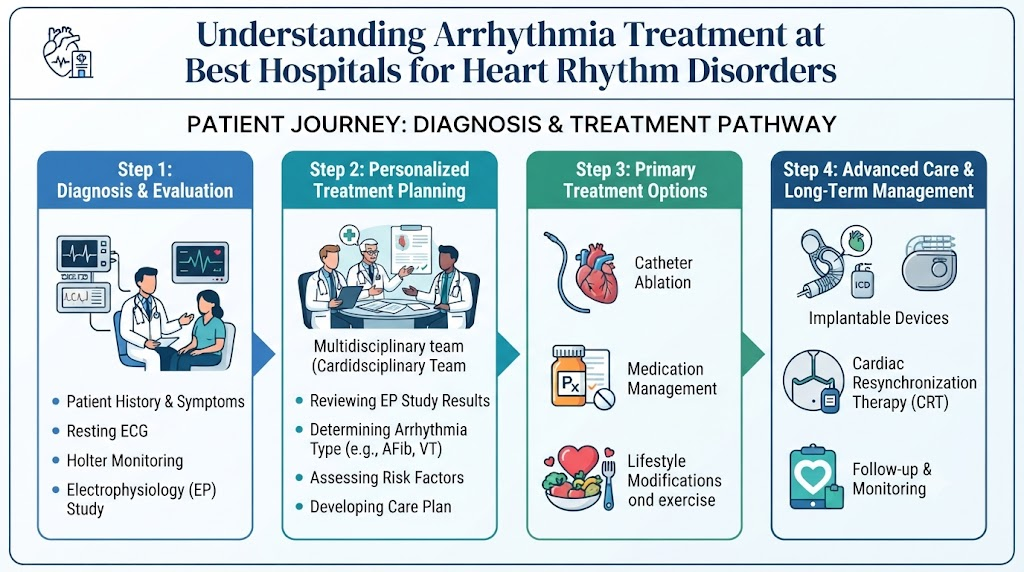
Diagnostic Tests Used by Heart Rhythm Specialists
Doctors use several tools to map your heart’s electrical activity:
- Electrocardiogram (ECG): A quick snapshot of the heart’s electrical activity.
- Holter Monitoring: A portable device worn for 24–48 hours to record rhythm.
- Event Monitoring: A device worn for longer periods that records only when an arrhythmia occurs.
- Echocardiography: An ultrasound to see the heart’s structure.
- Electrophysiology Study (EPS): A specialized test where thin catheters are inserted to map the heart’s electrical signals.
Advanced Treatments Available
Medication Management
Physicians often use anti-arrhythmic drugs to stabilize the heart rhythm or control the heart rate. This requires careful, ongoing supervision by a specialist to monitor for side effects.
Catheter Ablation
This is a procedure to treat abnormal electrical pathways. A doctor guides a thin tube (catheter) to the precise area of the heart causing the issue and uses heat or cold to create a tiny scar, which blocks the abnormal signal.
Pacemaker Implantation
When the heart beats too slowly, a pacemaker can be implanted. This small device monitors your rhythm and sends electrical pulses when needed to keep the heart beating at a healthy pace.
Implantable Cardioverter Defibrillator (ICD)
For patients at risk of dangerous fast rhythms, an ICD can monitor the heart and deliver a small shock to restore a normal rhythm if a life-threatening beat is detected.
Importance of Cardiac Electrophysiology Specialists
While a cardiologist specializes in the heart as a whole, a Cardiac Electrophysiologist (EP) is a cardiologist with additional years of specialized training in the heart’s electrical system. If you have a rhythm disorder, your care team will ideally include an EP who has the expertise to perform complex procedures like ablation or device implantation.
How to Choose the Right Hospital
When evaluating a hospital for heart rhythm care, look for programs that prioritize a multidisciplinary approach.
Hospital Selection Checklist
| Feature | Importance |
| Cardiac Electrophysiology Team | Specialized rhythm care |
| Advanced Monitoring Technology | Accurate diagnosis |
| Experienced Cardiologists | Better treatment planning |
| Emergency Cardiac Services | Immediate support when needed |
| Follow-Up Programs | Long-term rhythm management |
Lifestyle Changes Supporting Heart Rhythm Health
- Heart-Healthy Diet: Focus on fruits, vegetables, and whole grains.
- Blood Pressure Control: Hypertension puts unnecessary strain on the heart.
- Managing Stress: Practice techniques like meditation or deep breathing.
- Physical Activity: Gentle, consistent exercise (with doctor approval).
- Limiting Stimulants: Reducing alcohol, caffeine, and tobacco.
Common Myths vs. Facts
| Myth | Fact |
| All irregular heartbeats are dangerous | Many are harmless, but all need evaluation |
| Heart rhythm problems only affect older adults | People of all ages can experience arrhythmias |
| Treatment always requires surgery | Many rhythm treatments are minimally invasive |
| Pacemakers stop all heart problems | Pacemakers manage specific rhythm-related conditions |
Common Mistakes Patients Make
- Ignoring Symptoms: Mistaking palpitations for simple stress can delay a necessary diagnosis.
- Stopping Medications: Never discontinue heart rhythm medication without speaking to your doctor, even if you feel “fine.”
- Lack of Tracking: Keeping a log of when and how you feel symptoms is incredibly helpful for your doctor.
FAQs
- What are heart rhythm disorders?
Problems with the heart’s electrical system causing irregular beats. - What causes them?
Heart disease, aging, stress, or underlying health issues. - What are symptoms?
Palpitations, dizziness, fatigue, and shortness of breath. - When to see a specialist?
If you experience persistent palpitations or fainting. - What is electrophysiology?
The study of the heart’s electrical pathways. - How are they diagnosed?
Through ECGs, monitors, and electrophysiology studies. - What treatments are available?
Medicines, ablations, and implanted devices. - Is ablation a surgery?
It is a minimally invasive procedure, not open-heart surgery. - Why use a pacemaker?
To correct slow heartbeats. - How to choose a hospital?
Look for dedicated EP labs and experienced specialists. - Can lifestyle changes help?
Yes, by lowering stress and controlling blood pressure. - Are they preventable?
Not always, but managing heart health reduces risk. - What is AFib?
A common type of rapid, irregular rhythm. - How often are follow-ups?
Based on your specific diagnosis and treatment. - Who treats these disorders?
Cardiac electrophysiologists.
Final Thoughts
Managing a heart rhythm disorder is a journey that requires the right support, the best information, and a team of experts dedicated to your cardiovascular health. Choosing a hospital with advanced electrophysiology services ensures that you have access to the latest technologies and the most experienced minds in heart rhythm care.Your heart deserves the best care available. We encourage you to continue your research and engage with your healthcare providers to find the path that is right for you. For more information on navigating your care journey, explore the resources at BESTCARDIACHOSPITALS. Stay informed, stay active, and prioritize your heart health.