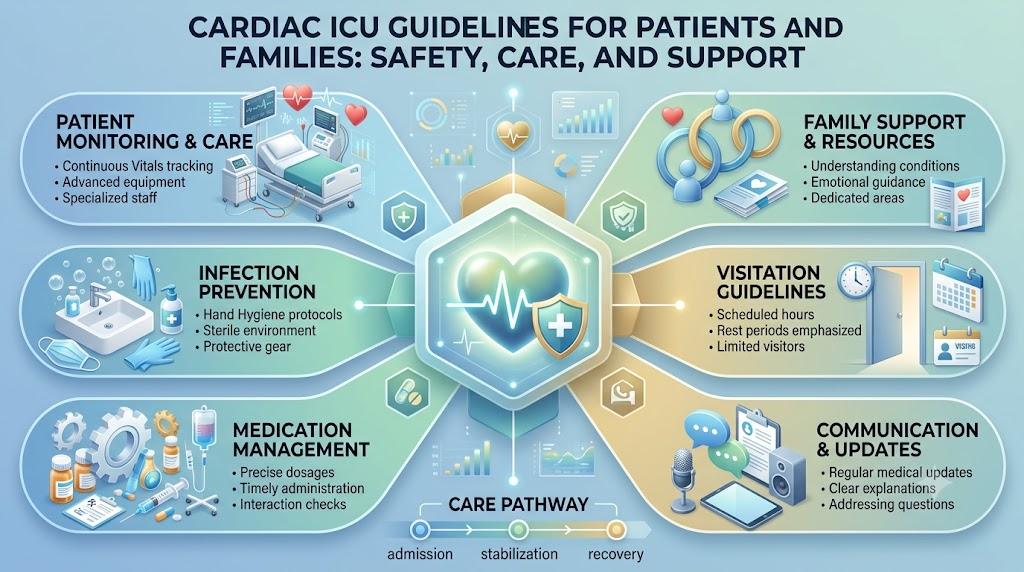
Cardiac intensive care can feel confusing and stressful for patients and their loved ones. There may be unfamiliar machines, frequent checks, medical terms, and rules about visiting. Families may worry about what will happen next and how they can help. Understanding cardiac ICU guidelines for patients and families can make this time easier to manage.
A cardiac intensive care unit (CICU) provides close care for people with serious heart problems. Doctors, nurses, and other trained staff watch patients closely and provide treatment based on their needs. Clear information, open communication, and teamwork help families understand the care process and support their loved ones.
BESTCARDIACHOSPITALS, available at, may help readers learn about cardiac care options and prepare questions before speaking with a qualified healthcare professional.
What Is a Cardiac Intensive Care Unit?
A cardiac intensive care unit is a special hospital area for people who have serious heart conditions or need close heart monitoring. It is also called a cardiac ICU or CICU.
Unlike a standard hospital room, a cardiac ICU has continuous monitoring systems and staff trained to respond quickly to changes in a patient’s condition. It may also provide advanced breathing support and other forms of critical care when needed.
The care team may include:
- Cardiologists who diagnose and treat heart problems.
- Critical care doctors who manage serious illness.
- Nurses trained in heart monitoring and intensive care.
- Respiratory therapists who help with breathing support.
- Pharmacists and other specialists who support safe treatment.
The team works together to check the patient’s condition, give treatment, and respond to changes. Not every patient needs the same level of care or the same equipment.
Why Might a Patient Need Cardiac ICU Care?
A patient may need cardiac ICU care when a serious heart problem requires close observation or urgent treatment. Admission depends on the patient’s condition and the medical team’s assessment.
Common reasons include:
- Heart attack: The heart muscle may be damaged because blood flow is blocked or reduced.
- Severe heart failure: The heart cannot pump enough blood to meet the body’s needs.
- Dangerous heart rhythms: The heartbeat may become too fast, too slow, or irregular in a way that needs urgent care.
- Recovery after a heart procedure or surgery: Some patients need close monitoring after major treatment.
- Cardiogenic shock: The heart cannot pump enough blood to supply vital organs.
- Serious circulation problems: Blood pressure or blood flow may become dangerously low.
- Monitoring after a major cardiac event: The team may need to watch for complications and check how the patient responds to treatment.
A person with a heart condition does not always need intensive care. Many heart problems can be managed in other hospital areas or through planned outpatient care.
What Happens When a Patient Arrives in the Cardiac ICU?
When a patient arrives, the team checks their condition and decides what care is needed first. The exact process depends on whether the admission is planned or follows an emergency.
Staff may:
- Check heart rate, blood pressure, breathing, temperature, and oxygen levels.
- Ask about symptoms, allergies, medical conditions, and current medicines.
- Review test results and medical records when available.
- Connect heart and oxygen monitors.
- Place an intravenous (IV) line to give fluids or medicines if needed.
- Arrange blood tests, heart tests, or other checks.
- Explain the care plan to the patient or family when possible.
Some patients are awake and able to speak. Others may be sleepy, confused, or unable to respond because of their illness, medicines, or breathing support.
Families can help by sharing accurate medical information and asking staff to explain unfamiliar procedures. Equipment and tests are used according to the patient’s needs, not as a fixed set for everyone.
Common Equipment and Monitoring in a Cardiac ICU
Cardiac monitoring helps the team check the heart, breathing, and circulation. Some devices display information continuously, while others are used for specific tests or treatments.
Common Cardiac ICU Equipment and Its Purpose
| Equipment or monitor | What it helps the team check or do | What families should know |
|---|---|---|
| Heart rhythm monitor | Tracks the heartbeat and detects rhythm changes | Sticky pads and wires may be attached to the chest |
| Blood pressure monitor | Measures blood pressure | Some cuffs tighten at regular intervals |
| Oxygen monitor | Checks oxygen levels in the blood | A small sensor may be placed on a finger |
| Oxygen or breathing support equipment | Helps patients who need extra oxygen or assistance with breathing | The type of support depends on the patient’s condition |
| IV lines and fluid pumps | Deliver prescribed medicines or fluids | Do not touch or adjust the lines or pump |
| Temporary pacing equipment | Helps control the heartbeat in certain cases | It is used only when medically required |
Not every patient needs every device. Some patients need only monitoring, while others need several forms of support.
Alarms may sound because of a real change, a loose sensor, movement, or another issue. An alarm does not always mean an emergency, but staff must check it. Families should call a nurse if they are concerned. Never silence, disconnect, or adjust equipment yourself.
Important Cardiac ICU Safety Guidelines
ICU patient safety depends on careful monitoring, clean practices, correct treatment, and teamwork. Patients and families can support these efforts by following staff instructions and reporting concerns.
Hand hygiene and infection prevention: Clean your hands when entering and leaving the unit, and follow instructions about masks or protective clothing. Do not visit when you have symptoms of a contagious illness unless the hospital gives specific guidance.
Patient identification: Staff should confirm the patient’s identity before tests, medicines, or procedures. This helps prevent mistakes.
Safe medicine use: The team checks medicines, allergies, and possible side effects. Tell staff about all medicines and supplements the patient uses. Do not give outside medicines without approval.
Close monitoring: Nurses and doctors watch for changes in the heartbeat, blood pressure, breathing, and level of awareness. Report anything unusual that you notice.
Fall and line prevention: Patients may feel weak or dizzy. Ask staff for help before moving the patient, getting them out of bed, or assisting with walking. Never pull tubes or lines.
Safe movement and positioning: Staff will explain how the patient can turn, sit, or move safely. Follow their directions.
Clear handovers: When care passes from one team to another, important information about the patient’s condition, medicines, and treatment needs should be shared.
Privacy, dignity, and consent: Staff should explain care as clearly as possible, protect private information, and respect the patient’s choices.
If something seems wrong, raise your concern with the bedside nurse or doctor. Do not try to manage treatment or medical equipment yourself.
What Should Families Know About Visiting?
Cardiac ICU visiting rules vary by hospital and may change with the patient’s condition, infection risks, and care needs. Some units limit the number of visitors or the length of visits.
Before visiting, ask the staff about:
- Visiting hours and the number of people allowed.
- Hand cleaning and protective clothing.
- Rules for children and visitors who feel unwell.
- Quiet periods and times when procedures take place.
- Phone or video updates if in-person visits are limited.
- Whether family members can attend medical discussions.
Keep visits calm and avoid crowding the bedside. Follow instructions when staff need space to provide treatment. If you cannot visit, ask whether another way to receive updates is available.
How Can Family Members Support a Cardiac ICU Patient?
Family support can help patients feel less alone. The best way to help depends on the patient’s condition and the care team’s advice.
You can:
- Speak calmly and offer simple words of reassurance.
- Share the patient’s medical history, allergies, and medicine list.
- Tell staff about important changes you have noticed.
- Explain the patient’s language needs, communication habits, and preferences.
- Ask before touching the patient or anything near the bed.
- Follow instructions about food, drinks, movement, and personal care.
- Choose one family contact to share updates with other relatives.
Some patients may not respond normally because they are very ill, tired, confused, or affected by medicines. This does not always mean they cannot hear or understand what is said. Ask the care team what to expect and how best to communicate.
Do not offer food, water, or medicines unless staff say it is safe. Some patients must avoid eating or drinking before a procedure or because of their condition.
Questions Families Should Ask the Cardiac ICU Team
Asking clear questions helps families understand the patient’s condition and take part in care discussions. It is fine to ask staff to explain medical terms in simple language.
Questions Families Can Ask During Cardiac ICU Care
| Topic | Suggested question | Why it matters |
|---|---|---|
| Patient’s condition | What is the main reason for ICU admission? | Explains why close care is needed |
| Current concerns | What are the main concerns right now? | Helps the family understand priorities |
| Monitoring | Which monitors or devices does the patient need, and why? | Makes the equipment easier to understand |
| Communication | Who should we contact for medical updates? | Prevents confusion about updates |
| Visiting | What visiting rules should we follow? | Helps families plan visits safely |
| Decisions | What decisions may need the patient’s or family’s input? | Clarifies how care choices are handled |
| Transfer planning | What needs to happen before the patient can leave the ICU? | Helps the family prepare for the next stage |
Write down the answers if that helps. Ask whom to contact if new questions arise. The team may explain what it hopes to achieve, but it may not be able to predict the patient’s progress with certainty.
Patient Rights, Privacy, and Shared Decisions
Patients should be treated with dignity and respect throughout cardiac ICU care. When a patient can understand information and make decisions, the healthcare team should explain suitable options, discuss risks and benefits, and seek informed consent when required.
A patient’s private medical information should be handled with care. Families can ask how updates are shared and what information staff can provide.
If a patient cannot make or communicate decisions, the team should follow applicable law, the patient’s known wishes, and the hospital’s decision-making process. Not every relative automatically has legal authority to make medical decisions.
Tell staff if the patient needs an interpreter or has cultural, spiritual, or communication preferences that may affect care. Clear communication helps the team respect the patient as a person, not just treat a medical condition.
Emotional Support for Patients and Families
A cardiac ICU stay can bring fear, sadness, uncertainty, and exhaustion. These feelings are common, and families do not have to manage them alone.
Helpful steps include taking short breaks, eating regular meals, resting when possible, and asking for clear updates. Talk with a trusted person, hospital counselor, social worker, or spiritual care worker if you need support.
Try to focus on what the team can explain now rather than guessing what will happen later. You do not need to learn every medical term at once. Ask questions whenever something is unclear.
Recognizing Urgent Changes and Raising Concerns
Cardiac ICU patients receive close monitoring, but family members may notice a change first. Call the bedside nurse or available clinical staff immediately if the patient develops new or worsening breathing difficulty, sudden chest discomfort, fainting, unusual unresponsiveness, sudden confusion, or significant bleeding.
Do not try to diagnose the problem or adjust the patient’s equipment. Tell staff what you noticed and when it began.
Outside the hospital, possible heart attack symptoms, severe breathing difficulty, collapse, or signs of a stroke require immediate medical attention. Call your local emergency number. When emergency services are available, do not drive someone with a suspected life-threatening emergency to the hospital yourself.
Preparing for Transfer Out of the Cardiac ICU
A patient may move to a general ward or another care setting when the team believes that level of monitoring and support is suitable. The timing depends on the patient’s condition, treatment needs, and progress. There is no fixed stay that applies to everyone.
Before transfer, ask about:
- Current medicines and how they will be managed.
- Follow-up visits and tests.
- Activity limits and safe movement.
- Wound care or device care, when relevant.
- Warning signs that need urgent attention.
- Whom to contact if a problem arises.
The receiving team should be told about ongoing treatment, recent changes, and care needs. Ask staff to repeat or write down instructions if they are difficult to follow.
How to Choose a Hospital With Appropriate Cardiac Critical Care
The right hospital depends on the patient’s needs, the urgency of the condition, location, and available services. When there is time to compare options, consider these factors:
- Access to a cardiac ICU and trained critical care staff.
- Cardiology and cardiac surgery expertise when needed.
- Emergency response systems and specialist support.
- Suitable heart monitors and critical care equipment.
- Clear communication with patients and families.
- Infection prevention and patient safety practices.
- Rehabilitation, discharge planning, and follow-up care.
- Interpreter services and family communication arrangements.
Ask how the hospital handles emergencies, explains treatment choices, and supports families. Look for clear information rather than relying on unsupported rankings or promises of success. In a medical emergency, getting prompt access to appropriate care is more important than spending time comparing hospitals.
How BESTCARDIACHOSPITALS Can Help Readers
BESTCARDIACHOSPITALS can serve as a starting point for learning about cardiac care options and preparing questions for a hospital or heart specialist. Readers can use information platforms to better understand the types of services they may need to discuss with a qualified healthcare professional.
Hospital information alone cannot determine which facility is right for every patient. Confirm current services directly with the hospital, and base medical decisions on the patient’s needs and advice from the treating team.
Frequently Asked Questions
1. What is a cardiac ICU?
A cardiac ICU is a special hospital unit for patients with serious heart problems who need close monitoring, urgent treatment, or advanced support.
2. Why is a patient admitted to a cardiac ICU?
Reasons may include a heart attack, severe heart failure, dangerous heart rhythms, recovery after major heart treatment, or serious circulation problems.
3. What equipment is commonly used in a cardiac ICU?
Common equipment includes heart rhythm monitors, blood pressure monitors, oxygen sensors, IV pumps, and breathing support devices when needed.
4. Can family members visit a cardiac ICU patient?
Usually, visiting depends on hospital rules, the patient’s condition, and infection prevention needs. Ask staff about the current policy.
5. How can families help a patient in the cardiac ICU?
Families can offer calm reassurance, share medical information, report changes, follow staff instructions, and ask clear questions.
6. Do alarms always mean that a patient is in danger?
No. Some alarms occur because of sensor problems or movement, but staff should check them. Tell a nurse if you are concerned.
7. What questions should families ask the cardiac ICU team?
Ask about the patient’s condition, current concerns, equipment, treatment goals, visiting rules, decisions, and plans for transfer.
8. How long does a patient usually stay in a cardiac ICU?
The length of stay varies. It depends on the illness, response to treatment, and the amount of monitoring and support needed.
9. What should families do if they notice a sudden change in the patient?
Call the bedside nurse or available clinical staff immediately. Do not attempt to diagnose or treat the change yourself.
10. What should families know before a patient leaves the cardiac ICU?
Ask about medicines, follow-up care, activity limits, wound or device care, warning signs, and whom to contact with concerns.
Conclusion
Cardiac ICU care can feel overwhelming, but clear information and good communication can help families feel more prepared. By following safety rules, sharing useful information, asking questions, and working closely with the healthcare team, patients and loved ones can take an active role in care.
Every patient’s needs are different. Follow the instructions given by the treating team, raise concerns promptly, and ask for help whenever something is unclear. This article provides general education and does not replace advice from qualified healthcare professionals. Urgent symptoms always require immediate medical attention.