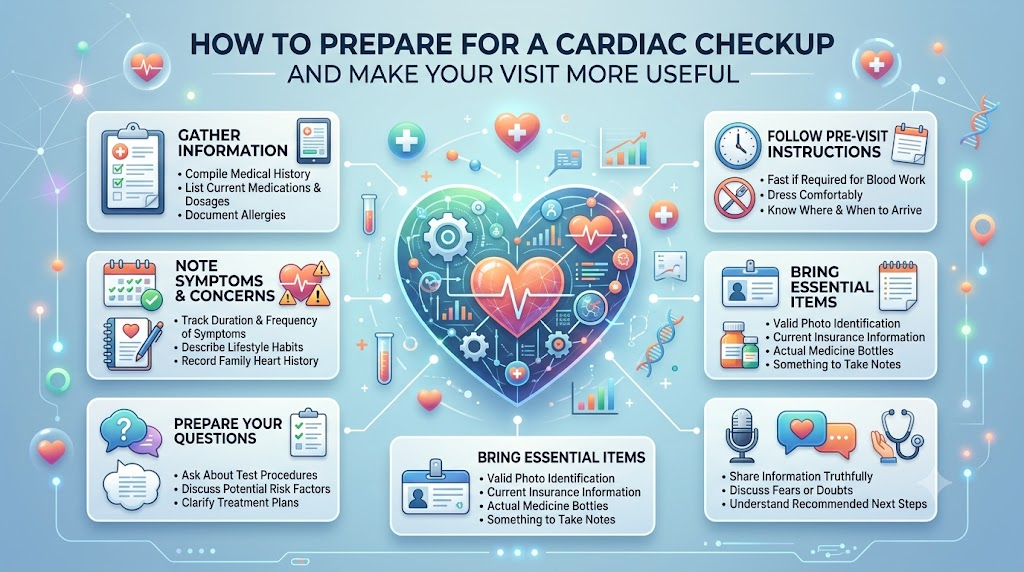
A heart checkup can help review your heart health. Some heart risks may not cause clear signs. A cardiac checkup looks at your health history and risk factors. Good preparation can make the visit easier and more useful. BestCardiacHospitals helps people learn about cardiac hospitals and heart-care services. You can use this information to understand your care options. Medical decisions should always come from a qualified healthcare professional.
What Is a Cardiac Checkup?
A cardiac checkup is a health visit for your heart. It looks at heart health and possible risk factors. The visit may include your health history and family history. It may also include a physical examination and blood pressure check.
Your doctor may discuss blood tests or heart tests. These can include cholesterol, blood sugar, or an ECG. An ECG records the heart’s electrical activity. Not every person needs the same tests.
Why Prepare Before a Heart Checkup?
Good preparation can help you use your visit well. It helps you remember important health details. You can also prepare questions before the appointment. This can make your discussion clearer and less rushed.
Bring useful health records when possible. Also, write down symptoms that concern you. Keep your medicine list ready and current. These details can help your doctor understand your health better.
Know Your Health History
Your health history gives important background about your heart. Try to remember past heart problems and hospital stays. Also note high blood pressure, high cholesterol, or diabetes.
Tell your healthcare professional about major health conditions. Mention previous surgeries or important treatments. Honest information helps create a clearer health picture. You do not need to diagnose any problem yourself.
Write Down Your Symptoms
Symptoms can be easy to forget during an appointment. Write down any changes before your visit. These may include chest discomfort or shortness of breath. You may also notice a fast or uneven heartbeat.
Other symptoms can include dizziness, fainting, or unusual tiredness. Swelling can also be important to mention. Note when symptoms started and how often they happen. Share these details with your healthcare professional.
Know Your Family Heart History
Family history can give useful information about heart risk. Ask about major heart problems in close family members. These may include heart disease or heart attack. Stroke and high blood pressure can also matter.
High cholesterol may also appear in family health history. Sudden cardiac events may be important to report. Family history does not mean you will develop heart disease. It simply gives your doctor more information.
Make a Current Medicine List
A current medicine list can help your doctor. Include prescription medicines and over-the-counter medicines. Also list vitamins and supplements you take.
Keep the list updated before each visit. Bring the medicine containers if that helps you remember. Never stop or change a medicine on your own. Medicine changes should come from a qualified healthcare professional.
Bring Previous Medical Records
Old medical records can help show health changes over time. Bring reports that relate to your heart when available. These may include ECG and blood test reports.
You can also bring echocardiogram reports and imaging reports. Hospital discharge papers may also help. Previous cardiology notes can give useful background. Your doctor can review these records during the visit.
Ask About Fasting and Test Preparation
Test preparation can differ from one test to another. Some blood tests may require fasting. Other tests may have different instructions.
Ask the hospital or healthcare team before your visit. This helps you prepare in the right way. Do not change your medicines because of a test. Ask your healthcare team if you have questions about preparation.
Simple Cardiac Checkup Preparation
| Before the Checkup | Why It Helps |
|---|---|
| Write down symptoms | Helps explain concerns clearly |
| Bring health records | Gives the doctor useful history |
| Prepare a medicine list | Shows current medicines and supplements |
| Know family history | Helps review heart risk |
| Write questions | Helps avoid forgetting important concerns |
What Tests May Be Discussed?
A cardiac checkup may include different heart screening tests. The choice depends on your health and medical history. A blood pressure check is often part of a health visit.
A cholesterol test checks blood fat levels. A blood sugar test checks glucose levels. An ECG records heart electrical activity. An echocardiogram uses sound waves to create heart pictures.
Some people may also discuss an exercise stress test. Heart rhythm monitoring may also be considered. These tests are not needed for everyone. A healthcare professional decides which tests are suitable.
Understanding an ECG
An electrocardiogram is also called an ECG. It records the electrical activity of the heart. The test can provide information about heart rhythm.
An ECG may be discussed during a cardiac examination. However, it is not part of every checkup. Your healthcare professional decides when it may be useful. Only a qualified professional should explain your ECG results.
Understanding an Echocardiogram
An echocardiogram is an ultrasound test of the heart. It uses sound waves to create heart pictures. These pictures can show the heart’s structure and movement.
An echocardiogram may help a doctor assess heart function. But it is not needed during every heart checkup. Your doctor decides if the test is appropriate. Test results should be explained by a qualified healthcare professional.
Prepare Questions for the Cardiologist
Questions can help you understand your heart health better. Write them down before your cardiologist appointment. This can help you remember important concerns.
You can ask what your heart health review includes. You can ask which risk factors need attention. Ask whether any tests are needed. You can also ask what each test checks.
Ask when you should return for follow-up. Ask which symptoms should be reported. You can also ask if another specialist may be needed.
What Happens During a Cardiac Checkup?
Each cardiac checkup can be different. Your healthcare professional may first review your health history. They may then ask about your current symptoms.
The visit may include a blood pressure check. A physical examination may also take place. Your doctor may review old medical reports. They may discuss heart disease risk factors.
More testing may be discussed when needed. The next step depends on the information from your visit. Not every patient follows the same checkup process.
Lifestyle Information to Share
Your daily habits can be part of a heart health assessment. Your doctor may ask about physical activity. Food habits may also come up during the visit.
You may also be asked about tobacco or alcohol use. Sleep, stress, and weight changes may be discussed. Honest answers help your healthcare professional understand your overall health. You do not need to create a personal health plan yourself.
Who May Need Closer Heart Monitoring?
Some people have more heart disease risk factors. These can include high blood pressure and high cholesterol. Diabetes can also affect heart health.
Tobacco use and low physical activity can also matter. Excess weight may be another risk factor. Previous cardiovascular disease is also important. Family history can add useful health information.
Risk is different for every person. A healthcare professional can review these factors together. Do not use a single risk factor to judge your health.
What to Do After the Checkup
Before leaving, make sure you understand the next steps. Ask when follow-up may be needed. Ask about planned tests or referrals.
You can also ask how reports will be reviewed. Speak up if any instruction is unclear. Keep new health records with your older reports. Good record keeping can make future visits easier.
When a Routine Checkup Is Not Enough
Some symptoms should not wait for a routine appointment. Severe or persistent chest pressure needs urgent medical attention. Severe trouble breathing also needs prompt evaluation.
Fainting can also need urgent medical assessment. Sudden weakness or sudden confusion can be warning signs. Sudden severe dizziness may also need urgent care. When serious symptoms occur, seek urgent medical evaluation.
How to Choose a Cardiac Hospital
Choosing a cardiac hospital can take some research. Look at the cardiac services offered by the facility. Check whether cardiologists and heart specialists are available.
You can also compare diagnostic services and emergency care. Imaging and laboratory services may be useful factors. Follow-up support can also matter. Hospital location and clear patient communication are worth considering.
No single hospital is right for every person. Your health needs should guide your choice. Confirm important service details directly with the hospital.
How BestCardiacHospitals.com Can Help
BestCardiacHospitals.com can help patients research cardiac hospitals. It can provide information about heart-care services and facilities. Patients can also explore cardiology services and heart specialists.
The website can help people compare basic hospital information. Patients should still confirm important details with the hospital. A healthcare professional can also explain which care may suit their needs.
Educational Example
A person schedules a routine heart checkup. Before the visit, they write down recent symptoms. They also collect older reports and make a medicine list.
They note important family heart history as well. This preparation gives the healthcare professional useful background. It can also help the person ask clear questions during the visit.
This is only an educational example. It does not describe a specific patient or outcome.
Frequently Asked Questions
1. How should I prepare for a cardiac checkup?
Start by writing down your symptoms and health concerns. Make a current medicine list. Bring useful medical records when available. Also note important family heart history. Write your questions before the visit. Ask the healthcare team about any special test preparation.
2. What should I bring to a cardiologist appointment?
Bring recent health records when available. These may include ECG reports and blood test reports. Previous heart reports can also help. Keep a current list of medicines, vitamins, and supplements. Written symptoms and questions can also make the visit more useful.
3. Do I need to fast before a heart checkup?
Not every heart checkup needs fasting. Some blood tests may require it. Other tests may have different preparation rules. Ask the hospital or healthcare team before your appointment. Do not change medicines because of fasting instructions without professional advice.
4. What tests may be included in a cardiac checkup?
Tests depend on the person’s health and medical history. A visit may include blood pressure and blood tests. An ECG may also be discussed. Some people may need an echocardiogram or rhythm monitoring. A healthcare professional decides which tests are appropriate.
5. Is an ECG part of every heart checkup?
No, an ECG is not needed for every person. An ECG records the heart’s electrical activity. A healthcare professional decides when it may be useful. The decision can depend on symptoms, health history, and the reason for the visit.
6. Why is family history important during a cardiac checkup?
Family history can give useful information about heart risk. Tell your doctor about major heart problems in close family members. Heart disease, stroke, high blood pressure, and sudden cardiac events may matter. Family history does not mean that heart disease will happen.
7. Should I tell my doctor about all my medicines?
Yes, share an accurate and current medicine list. Include prescription and over-the-counter medicines. Also mention vitamins and supplements. This information helps your healthcare professional understand your health. Never stop or change a medicine without advice from a qualified professional.
8. How often should I have a cardiac checkup?
There is no single schedule for everyone. The need for heart screening depends on health and risk factors. Your healthcare professional can discuss follow-up based on your medical history. People with ongoing heart concerns may need different follow-up than others.
9. What questions should I ask a cardiologist?
Ask questions that help you understand your heart health. You can ask about risk factors and possible tests. Ask what each test checks. You can also ask about follow-up and symptoms to report. Write your questions before the visit so you remember them.
10. When should I seek urgent care instead of waiting for a checkup?
Some serious symptoms should not wait for a routine visit. Severe chest pressure, severe breathing trouble, or fainting need urgent evaluation. Sudden weakness, confusion, or severe dizziness can also be serious. Seek urgent medical help when such warning signs occur.
Final Thoughts
Preparing for a cardiac checkup can make your visit more useful. Bring health records and keep your medicine list current. Write down symptoms and family heart history. Prepare simple questions for your healthcare professional.
The right tests and follow-up depend on individual health needs. BestCardiacHospitals.com can help you research cardiac hospitals and heart-care services. Always discuss personal heart concerns with a qualified healthcare professional.