Technology has changed how people reach doctors. Telemedicine lets some cardiac patients speak with doctors from home. It may reduce travel for suitable visits. It can also support routine follow-up and health discussions. However, telemedicine does not replace emergency cardiac care. For cardiac hospital information and care options, visit BESTCARDIACHOSPITALS.
What Is Cardiac Telemedicine?
Cardiac telemedicine means heart care through remote technology. It can connect patients with cardiologists without a hospital visit. Visits may use video calls, phone calls, or secure digital tools.Patients may share health records and test reports online. Doctors can then review this information during a visit. Services can differ between hospitals and cardiac teams.Cardiac telemedicine can be useful for some patients. It works best when the doctor considers remote care suitable.
How Does a Virtual Cardiology Visit Work?
A virtual cardiology consultation usually starts with an appointment. Patients may receive details about joining the visit. They may also need to share medical records.Before the visit, patients can keep reports nearby. The doctor may ask about symptoms and health changes. The doctor may also review available test results.The visit can help plan suitable follow-up care. Sometimes, the doctor may still need an in-person visit. This depends on the patient’s condition and care needs.
How Telemedicine Helps Cardiac Patients
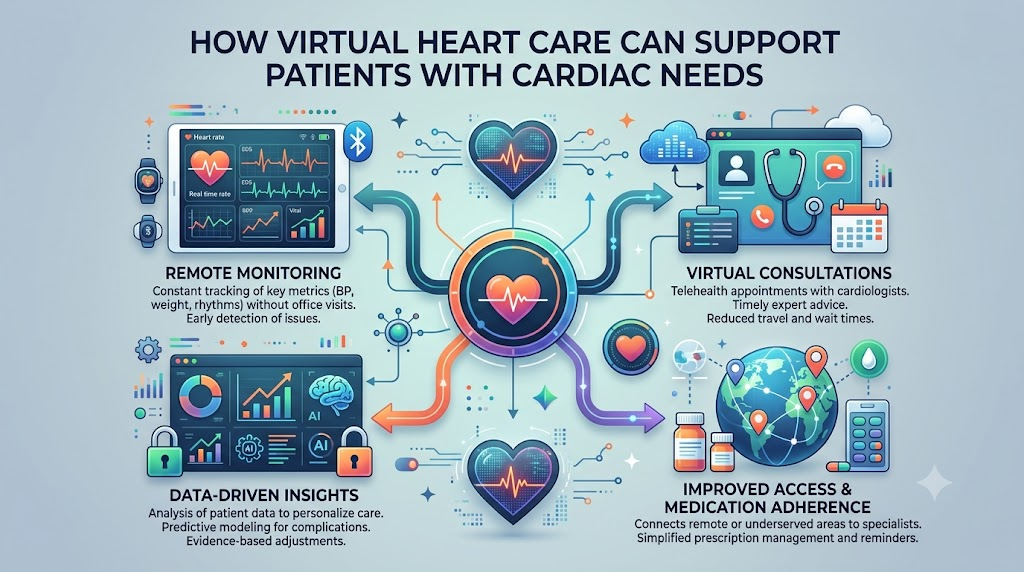
Telemedicine for cardiac patients can offer several practical benefits. It may reduce travel for suitable follow-up visits. It can also make appointments easier for some people.Virtual visits may help patients reach heart specialists. This can be useful when specialist hospitals are far away. Family members may also join when the patient gives permission.Telemedicine can support communication with healthcare teams. However, these benefits depend on available services and patient needs.
Telemedicine for Cardiac Follow-Up
Cardiac follow-up often involves regular health discussions. Some stable patients may complete suitable follow-ups online. Doctors may review symptoms, reports, and home health information.A virtual visit can save travel time for some patients. It may also help doctors check recovery progress. The doctor decides whether remote care is suitable.Some follow-ups still need physical checks or tests. In those cases, an in-person visit may be needed.
Telemedicine and Heart Disease Management
Telemedicine may support some long-term heart care. It can help with routine discussions for suitable patients. It may also support communication between visits.Examples can include stable high blood pressure and some heart conditions. Some stable heart rhythm problems may also allow remote follow-up. Stable heart failure may also involve remote care in suitable cases.Telemedicine is not suitable for every cardiac patient. A cardiologist must consider the person’s medical needs.
Remote Patient Monitoring
Remote patient monitoring means sharing health data from home. Some cardiac patients may use connected health devices. These devices can collect useful information.Examples may include blood pressure readings and weight readings. Some devices can also record heart rate data. Wearable devices may provide other heart information.Some systems can share ECG data with healthcare teams. Devices provide data, but doctors must interpret it. Patients should follow the monitoring plan given by their care team.
How Telemedicine Helps Patients Living Far Away
Distance can make cardiac care harder to reach. Some patients live far from large cardiac hospitals. Travel can also be difficult for people with limited mobility.Online cardiology consultation may reduce travel for suitable visits. It can support routine discussions from a patient’s home. This can make some parts of cardiac care easier.However, telemedicine cannot replace emergency services. Patients may still need local hospital care and testing.
How Telemedicine Helps Older Cardiac Patients
Travel can be tiring for some older adults. Virtual heart care may reduce travel for suitable appointments. It can also allow family members to offer support.Some older adults may need help using digital tools. A family member may help with technology when permitted. Privacy and patient permission should always be respected.Not every older patient will prefer virtual care. In-person cardiac care may still be more suitable.
Family Members and Caregivers
Family members can support a virtual cardiology visit. They may help prepare medical records and reports. They can also help with technology before the visit.With patient permission, family members may join the appointment. They may take notes during the discussion. They can also help remember follow-up questions.Patient privacy remains important during every visit. The patient should decide who joins the appointment.
What Information Should Patients Prepare?
Patients can prepare useful information before a virtual visit. This can make the discussion easier and more organized.
Useful items may include:
- Current medical records
- Recent test reports
- Previous cardiac reports
- Home health readings
- Current medicine list
- Main symptoms
- Questions for the cardiologist
Patients should not change medicines based on online information. Medicine changes should come from the treating medical team.
Telemedicine vs In-Person Cardiac Care
Telemedicine and in-person care serve different needs. Virtual care can support some discussions and follow-ups. It may also help review reports and health information.
In-person care allows physical examination and on-site testing. Doctors can perform or arrange ECGs, blood tests, and imaging. Hospitals can also provide procedures and urgent assessment.
| Telemedicine | In-Person Cardiac Care |
|---|---|
| Remote consultation | Physical consultation |
| Less travel | Hospital or clinic visit |
| Useful for some follow-ups | Useful for physical exams |
| Can review reports | Can perform on-site tests |
| May support remote monitoring | Can provide urgent evaluation |
When Telemedicine May Not Be Enough
Telemedicine has clear limits. A doctor cannot perform every physical check online. Some patients need direct assessment or hospital testing.In-person care may be needed for severe new symptoms. It may also be needed when tests or procedures are required. Rapidly worsening symptoms need prompt medical attention.Examples include severe chest pain or serious breathing trouble. Fainting and severe weakness also need urgent assessment. Do not delay emergency care for a virtual appointment.
Emergency Cardiac Symptoms
Telemedicine should never delay emergency cardiac care. Severe or sudden symptoms need immediate medical attention.
Warning signs can include:
- Severe or new chest pain
- Sudden trouble breathing
- Fainting
- Severe weakness
- New confusion
- Sudden sweating with chest discomfort
- Symptoms that quickly become worse
Seek emergency care for severe or sudden cardiac symptoms. Contact local emergency services when needed. Do not wait for an online appointment.
How to Choose a Cardiac Hospital With Telemedicine
Patients can compare several hospital features. First, check whether cardiology specialists offer virtual visits. Also check how appointments are arranged.Other useful points include privacy and secure communication. Patients can also check access to testing and in-person care. Emergency support and follow-up systems may also matter.Hospital location can be important for future visits. Patient support services may also help. BESTCARDIACHOSPITALS.COM can help users research cardiac hospitals and services.
Telemedicine and Cardiac Specialists
Different heart problems may need different specialists. A cardiologist treats many heart and blood vessel conditions. Some patients may need a cardiac subspecialist.Patients can ask which specialist provides virtual consultations. They can also ask if an in-person visit may be needed later. The right specialist depends on the medical concern.Hospital websites and care teams can provide service details. BESTCARDIACHOSPITALS.COM can support cardiac hospital research and comparison.
Telemedicine Privacy and Security
Health information needs careful protection. Patients may share reports, records, and personal health details. Secure hospital systems can help protect this information.Use official hospital communication systems when available. Avoid sharing private health records through unknown channels. Patients can also ask how their information is handled.Privacy rules can differ between services. Hospitals can explain their own systems and processes.
Benefits and Limits of Cardiac Telemedicine
Cardiac telemedicine can make some care more convenient. It may reduce travel and support routine follow-ups. It can also help some patients reach specialists.But remote care has limits. Doctors may not be able to perform physical examinations online. Some patients need tests or urgent hospital care.Telemedicine works best as part of suitable medical care. It should not replace emergency cardiac services.
How BESTCARDIACHOSPITALS.COM Can Help
Choosing cardiac care can involve many questions. BESTCARDIACHOSPITALS.COM helps users research cardiac hospitals and services. The platform can support hospital discovery and comparison.Users can explore information about cardiac care options. They can also learn what services may be available. Patients should confirm current telemedicine services with each hospital.Not every listed hospital will offer the same services. Telemedicine availability can also change by department and specialist.
Practical Example
A patient lives far from a cardiac hospital. The patient needs a routine follow-up. A virtual visit may reduce travel if remote care is suitable.The doctor reviews the available health information. The doctor may later request an in-person visit or test. This example shows how virtual and hospital care can work together.
Frequently Asked Questions
1. How does telemedicine help cardiac patients?
It can reduce travel and support suitable follow-ups. It may also improve access to some heart specialists.
2. Can a cardiologist be consulted online?
Yes, some cardiologists offer virtual visits. Suitability depends on the patient’s medical needs.
3. Can telemedicine help with cardiac follow-up?
Yes, it may support suitable routine follow-ups. Doctors can review symptoms and available health information.
4. Can heart patients monitor their health from home?
Some patients may use remote monitoring tools. These tools can collect health data for medical review.
5. Is telemedicine suitable for every heart patient?
No. Some patients need physical examinations or hospital testing. A cardiologist can assess whether remote care is suitable.
6. Can family members join a virtual cardiology visit?
They may join with the patient’s permission. Family support can also help with technology and notes.
7. What should patients prepare for an online cardiology appointment?
Keep medical records, test reports, medicine lists, and questions ready. Home health readings may also be useful.
8. When should a cardiac patient visit a hospital instead?
In-person care may be needed for severe symptoms. It may also be needed for physical exams, tests, or procedures.
9. Is telemedicine suitable for chest pain?
Severe or sudden chest pain needs emergency medical care. Do not wait for a virtual appointment.
10. How can BESTCARDIACHOSPITALS.COM help with cardiac hospital research?
It helps users explore cardiac hospitals and services. Users can compare available information and confirm services with hospitals.
Final Thoughts
Telemedicine can support cardiac care in useful ways. It may reduce travel and support routine follow-ups. It can also improve access to some heart specialists.Remote monitoring may help suitable patients share health information. Family members may also support virtual appointments with permission.Still, telemedicine has limits. Some patients need physical exams, tests, procedures, or hospital care. Severe or sudden cardiac symptoms need immediate emergency care.BESTCARDIACHOSPITALS.COM can help people research cardiac hospitals and services. Patients should discuss their care needs with their medical team.