Introduction
Heart treatment is an important step in recovery. But recovery often continues after hospital care. Cardiac rehabilitation can support this next stage. It may include safe activity, heart health education, food advice, lifestyle support, and follow-up care. Each hospital may offer a different program. So, patients and families should compare services with care. They can check staff, program details, location, costs, and follow-up support. BESTCARDIACHOSPITALS can also help families explore cardiac hospitals and related heart care services.
What Is Cardiac Rehabilitation?
Cardiac rehabilitation is a planned heart recovery program. It is made for people with certain heart needs. A trained healthcare team helps guide the program.A cardiac rehab program may include supervised activity. It may also include heart health lessons. Food advice and lifestyle support may be included too.
The program can help people understand their heart health. It can also help them return to daily activities. However, each plan should match the person’s medical needs.Cardiac rehabilitation is different from a normal fitness program. It is linked to medical care and follow-up. This makes hospital cardiac rehabilitation useful for some eligible patients.
Who May Need Cardiac Rehabilitation?
Not every heart patient needs cardiac rehabilitation. A doctor or care team can decide if it may help. The decision depends on the person’s health and treatment.Cardiac rehab after heart attack is one common example. Some people may need support after certain heart surgeries. Others may be offered rehabilitation after certain coronary procedures.Cardiac rehabilitation after angioplasty may include education and supervised activity. Other qualifying heart conditions may also need support. Patients should ask their healthcare team about eligibility.It is important not to compare one person’s care with another. Heart problems and treatments can be very different. The right plan should always come from the treating team.
Why Can Cardiac Rehabilitation Matter?
Recovery can involve more than medical treatment. People may need support with activity and daily habits. They may also have questions about food, stress, and heart health.Supervised activity can help patients learn safe movement. Education can explain simple ways to support heart health. Lifestyle support can help with healthy daily choices.A cardiac recovery program may also help patients feel more prepared. It can give them a clear plan to follow. Still, recovery can differ from person to person.
Cardiac rehabilitation does not promise a certain result. It also does not replace medical treatment. Patients should continue their regular cardiac care and follow-up.
What Happens in a Cardiac Rehabilitation Program?
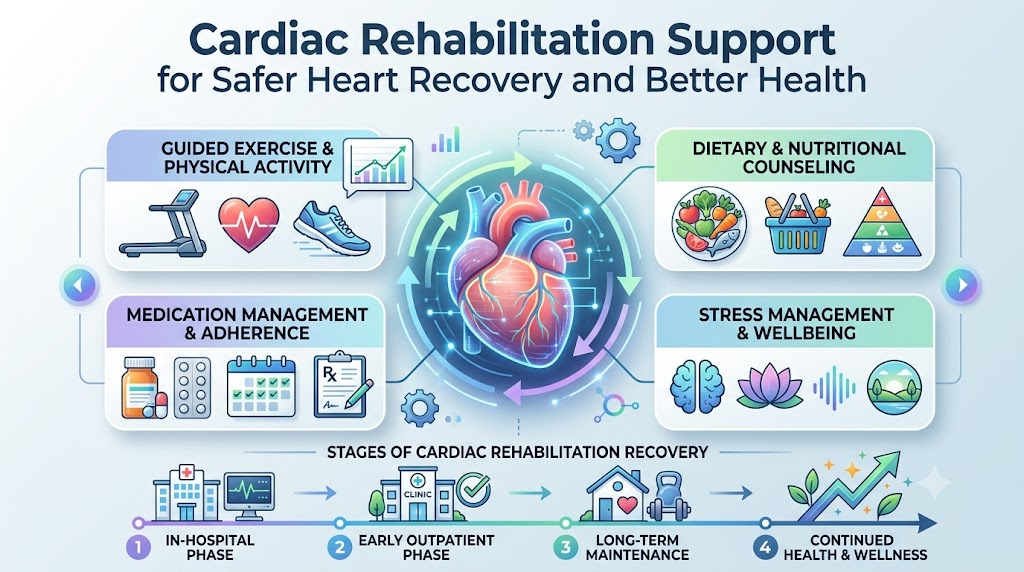
Many programs begin with an initial assessment. The team may review health history and current needs. They may also discuss past heart treatment.Supervised cardiac rehabilitation may include planned activity. Staff can watch the patient during sessions. Cardiac monitoring may be used when needed.
Education is another key part of cardiac rehab. Patients may learn about food and heart health. They may also learn about sleep and stress.Some programs include nutrition support from a dietitian. Others may offer stress support and lifestyle sessions. Progress checks can also be part of the program.
The exact services can vary by hospital. Some cardiac rehabilitation centers may offer more support. Patients should ask what each program includes.
The Cardiac Rehabilitation Team
Cardiac rehabilitation care often uses a team approach. A cardiologist may guide medical care. A cardiac nurse may support patients during sessions.An exercise specialist may help with planned activity. A physical therapist may support movement needs. A dietitian may explain healthy food choices.Other healthcare professionals may also join the team. Their roles can differ between hospitals. Not every cardiac rehab hospital has the same staff.Teamwork can connect different parts of recovery. Good communication can also help keep care organized. Ask how the rehabilitation team works with your cardiologist.
Exercise Support in Cardiac Rehabilitation
Exercise is often part of cardiac rehab programs. But it should not be treated like regular gym training. Activity should match each person’s health needs.Supervised activity lets trained staff watch progress. They can also monitor how a patient responds. The program may change as health needs change.
Patients should not copy another person’s exercise plan. Heart conditions and treatments can be very different. Your care team should guide your activity.Do not start a new exercise routine after a heart event without medical advice. Your healthcare team can explain what is suitable. They can also explain when changes may be needed.
Education and Lifestyle Support
Cardiac rehab education can cover many daily health topics. These lessons may include heart healthy eating. They may also cover sleep, stress, and physical activity.Tobacco avoidance may also be discussed. Patients may learn about personal heart risk factors. They may also learn why follow-up care matters.These lessons can make heart care easier to understand. They can also help patients make informed daily choices. However, lifestyle changes should not replace medical treatment.A heart healthy lifestyle should work alongside medical care. Patients should continue following advice from their healthcare team. This includes regular follow-up when advised.
Cardiac Rehabilitation After Heart Surgery
Heart surgery recovery can take time and care. Cardiac rehabilitation may support some patients during recovery. The exact program depends on the surgery and health needs.A program may include supervised activity and education. It may also include nutrition advice and progress checks. Follow-up care can support the recovery process.Recovery needs are different for each patient. Surgery type can affect the rehabilitation plan. Other health needs can also affect the plan.Patients should not use another person’s recovery as a guide. Their own care team should decide what is safe. This is why proper follow-up is important.
Cardiac Rehabilitation After a Heart Attack
A heart attack can change daily routines. Recovery may continue after hospital treatment. A heart recovery program can provide structured support.The program may include supervised activity and heart health education. Patients may also learn about food and daily habits. Stress support may be included as well.Follow-up care can help review ongoing needs. Patients should follow the advice of their treating team. They should not compare their progress with others.Cardiac rehabilitation after a heart attack can look different for each person. The care plan should reflect the patient’s health needs. Medical guidance should remain the main focus.
Cardiac Rehabilitation After Angioplasty
Angioplasty can be an important part of heart care. Recovery may continue after the procedure. Some patients may be offered cardiac rehabilitation.The program may include supervised activity and education. It may also cover heart healthy lifestyle habits. Follow-up can help patients understand ongoing care needs.The right program depends on the person’s health. Patients should ask their care team about rehabilitation. They should also follow all medical advice after angioplasty.
Medication changes should always come from the treating team. Patients should not start or stop medicines on their own. Activity questions should also be discussed with healthcare professionals.
What Makes a Hospital Cardiac Rehab Program Useful?
There is no single feature that makes one hospital best. Patients should look at the complete program. Their own medical needs should guide the comparison.Start by checking the healthcare team. Ask about cardiologists, nurses, and exercise specialists. Also ask if dietitian support is available.
Medical supervision can be important for some patients. Ask if cardiac monitoring is used. Check the available rehabilitation facilities and education sessions.Emergency readiness is another useful point to ask about. Follow-up systems can also matter. Good communication with the treating cardiologist is helpful.Program access is important too. Regular sessions may be easier at a nearby hospital. These factors can support a useful cardiac hospital comparison.
How to Compare Cardiac Rehabilitation Programs
Begin by checking the services offered. Then compare the staff and program structure. This gives families a clear starting point.Look at the session schedule and location. Travel time can matter when sessions are regular. Ask if the program offers follow-up support.Cost is another important factor. Ask what services are included in the price. Also ask about extra charges and insurance coverage.Insurance rules can differ between plans. Never assume that all rehabilitation costs are covered. Confirm the details with the hospital and insurer.You can also ask how the rehab team communicates with your cardiologist. Clear communication can make care easier to follow. These details can help with a cardiac hospital comparison.
Hospital Cardiac Rehabilitation vs Other Recovery Support
Hospital cardiac rehabilitation is connected to medical care. It is designed for eligible people with heart health needs. Trained healthcare professionals help guide the program.A general wellness program has a different purpose. It may focus on fitness or general health. It may not provide cardiac monitoring or medical supervision.This difference matters after a heart event. A normal fitness program should not replace cardiac care. Patients should ask their healthcare team about suitable support.
Simple Comparison of Cardiac Rehab Program Features
| Program Feature | What to Check | Why It Matters |
|---|---|---|
| Medical supervision | Qualified cardiac care team | Supports safe program planning |
| Exercise support | Supervised activity | Helps match activity to patient needs |
| Education | Heart health lessons | Helps patients understand daily care |
| Nutrition support | Qualified dietitian access | Supports healthy food choices |
| Follow-up | Progress checks | Helps track recovery needs |
Cost and Access
The cost of cardiac rehabilitation can vary. Hospital type can affect the total cost. Location and program length can also matter.The services included may change the cost too. Some programs may offer different care options. Patients should ask for clear cost details before starting.Insurance coverage can vary between plans. Rehabilitation may not be covered in every situation. Patients should confirm coverage with their insurer.Access is also important for regular sessions. A nearby cardiac rehabilitation hospital may be easier to reach. Session times can also affect practical planning.
When Cardiac Rehabilitation May Not Be Enough
Cardiac rehabilitation supports recovery. But it does not replace urgent medical care. Some sudden symptoms need immediate attention.Severe or new chest pain needs urgent medical care. Severe breathing trouble also needs urgent attention. Fainting or sudden serious weakness should not be ignored.Other sudden and serious symptoms may also need emergency care. Contact emergency services when symptoms may be life-threatening. Follow local emergency care instructions.
Do not wait for a scheduled rehab session during an emergency. Urgent symptoms need the right medical response. Rehabilitation should continue only as advised by the care team.
Online and Remote Cardiac Rehabilitation Support
Some programs may offer remote or hybrid support. This means some care happens outside the hospital. Such options may suit selected patients.Remote care is not right for everyone. Medical needs can affect whether it is suitable. Program design can also affect the available options.Ask your healthcare team about remote cardiac rehabilitation. They can explain the safest options for your needs. They can also tell you when in-person care is needed.
How BESTCARDIACHOSPITALS.COM Can Help
BESTCARDIACHOSPITALS.COM can help patients and families research cardiac hospitals. The platform can help users explore cardiac services and rehabilitation options. It can also provide useful information for early hospital research.Families can use this information to prepare questions. They can then contact hospitals for specific details. This can make the comparison process easier.The platform does not independently certify hospital quality. It also does not promise treatment results.Patients should confirm important program details directly with the hospital.The goal is to help families make informed comparisons. Medical decisions should still be discussed with the treating cardiac team. This keeps hospital research connected to personal medical needs.
A Simple Practical Example
Suppose two hospitals offer cardiac rehabilitation programs. Both may provide supervised activity and education. Their other services may still differ.One program may include nutrition support and regular progress checks. Another may have a more convenient location. Session times and costs may also be different.A patient can compare these practical factors. They can ask about medical supervision and monitoring. They can also ask about follow-up and insurance.This approach focuses on personal needs. It does not assume one program is right for everyone. The patient’s cardiac care team can help explain suitable options.
Frequently Asked Questions About Cardiac Rehabilitation Programs
1. What is a cardiac rehabilitation program?
A cardiac rehabilitation program supports recovery after certain heart problems or treatments. It may include supervised activity, education, lifestyle support, and follow-up care.
2. Who may benefit from cardiac rehabilitation?
Some people may benefit after a heart attack. Others may benefit after certain heart surgeries or procedures. A healthcare team should decide if it is suitable.
3. What happens during cardiac rehabilitation?
Programs may begin with an assessment. They may include supervised activity, education, nutrition support, lifestyle guidance, and progress checks.
4. Is cardiac rehabilitation supervised by healthcare professionals?
Many programs use trained healthcare professionals. The team may include cardiologists, nurses, exercise specialists, and dietitians.
5. Can cardiac rehabilitation help after heart surgery?
It may support recovery after some heart surgeries. The program may include activity, education, and follow-up. The plan should follow medical advice.
6. Can cardiac rehabilitation help after a heart attack?
It may become part of recovery after a heart attack. Programs can include supervised activity and heart health education. Eligibility should be discussed with the care team.
7. What should I check when comparing cardiac rehab hospitals?
Check staff, services, monitoring, education, location, schedule, and follow-up. Also ask about costs and insurance coverage.
8. How much does cardiac rehabilitation cost?
Costs vary between hospitals and programs. Program length and included services can affect cost. Confirm prices and insurance coverage directly.
9. Can cardiac rehabilitation be done at home?
Some programs may offer remote or hybrid support. This depends on medical needs and program design. Ask your healthcare team if it is suitable.
10. What questions should I ask a cardiac rehabilitation hospital?
Ask about staff, services, monitoring, costs, insurance, and follow-up. Also ask how the team handles urgent problems and communicates with your cardiologist.
Final Thoughts
Cardiac rehabilitation can be an important part of recovery for eligible patients. It may bring supervised activity, education, lifestyle support, and follow-up together.Every cardiac rehabilitation program can be different. Patients and families should compare services carefully. They should also check staff, location, costs, access, and follow-up support.Most importantly, rehabilitation should match the patient’s medical needs. Discuss the program with the treating cardiac care team. BESTCARDIACHOSPITALS.COM can help families research cardiac hospitals and rehabilitation options as part of that process.