Introduction
Angioplasty can improve blood flow through a narrowed heart artery. But care does not end after the procedure. Patients may need monitoring, medicine support, follow-up, and heart health education. Family support can also make recovery easier. Hospitals for angioplasty recovery and care can provide these services through cardiac teams. BESTCARDIACHOSPITALS helps readers learn about cardiac hospitals, recovery services, and follow-up care.
What Is Angioplasty?
Angioplasty is a treatment for a blocked or narrow heart artery. A coronary artery carries blood to the heart muscle. During angioplasty, doctors open a narrowed area to improve blood flow. A small tube called a stent may also support the artery. Angioplasty is also called PCI, which means percutaneous coronary intervention. It is different from open-heart surgery because it uses a blood vessel instead of opening the chest.
Why Does Recovery Care Matter?
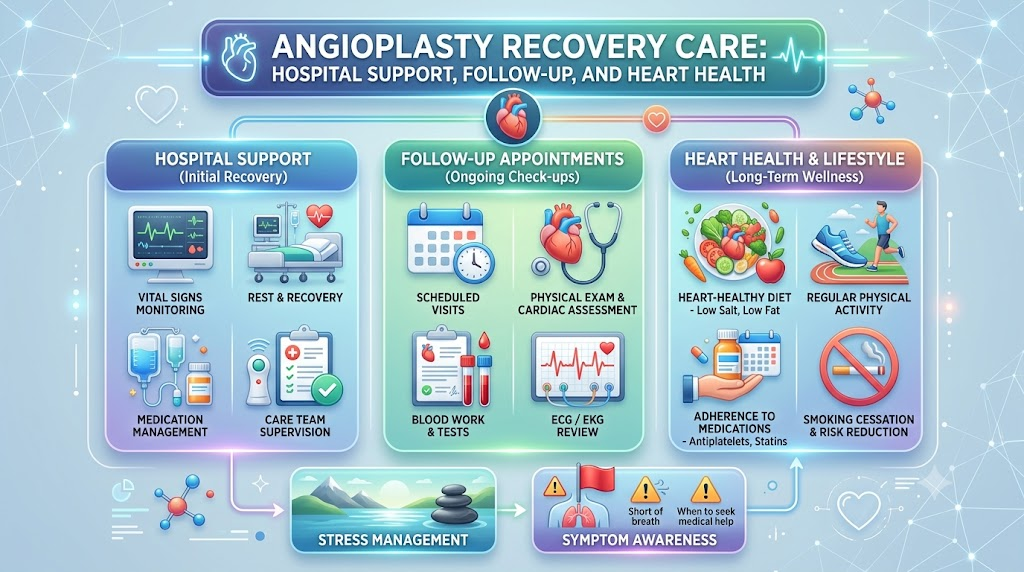
Recovery care helps the medical team watch the patient after angioplasty. The team may check heart rhythm, blood pressure, symptoms, and the access site. They also review medicines and discharge information. This care can help the patient understand the next steps. Each person can have different recovery needs based on their health and heart condition.
What Happens After Angioplasty?
After the procedure, the patient moves to a recovery or observation area. Nurses and doctors continue to watch vital signs and symptoms. They may also check the catheter access site for bleeding or swelling. Before discharge, the team reviews medicines, warning signs, follow-up needs, and other care information. The treating team decides when the patient is ready to leave.
The Role of a Cardiac Recovery Unit
A cardiac recovery unit provides close observation after a heart procedure. Staff may monitor heart rhythm, blood pressure, and oxygen levels when needed. They also watch for changes in symptoms and the access site. Nurses can support the patient and communicate changes to the cardiology team. Close observation can help the team respond quickly when concerns appear.
Access-Site Care After Angioplasty
Angioplasty needs access through a blood vessel. Doctors may use a vessel in the wrist or groin. The care team checks this area after the procedure. They look for signs such as bleeding, swelling, or other changes. Patients receive care instructions before leaving the hospital. These instructions can differ, so patients should follow their own hospital team’s advice.
Medication Support After Angioplasty
Medicines often play an important role after angioplasty. They may help protect the heart and reduce risks linked with a coronary stent. The medicine plan can differ from one patient to another. Doctors may review medicines during follow-up visits. Patients should not change, stop, or start medicines without advice from their healthcare team.
Angioplasty Follow-Up Care
Follow-up care helps doctors review recovery after angioplasty. The cardiologist may discuss symptoms, medicines, heart health, and risk factors. The team may also decide if further evaluation is needed. Follow-up can include advice about nutrition, physical activity, smoking cessation, and other heart-healthy habits. The treating cardiologist decides the right follow-up schedule for each patient.
What Is Cardiac Rehabilitation?
Cardiac rehabilitation is a supervised program for heart recovery. It can include safe physical activity, heart health education, nutrition support, and lifestyle guidance. Stress support may also be part of the program. Medical staff guide the process based on each person’s needs. Not every patient has the same rehabilitation plan, so professional advice is important.
Heart Health Education After Angioplasty
Education is an important part of cardiac recovery after angioplasty. Patients may learn about blood pressure, cholesterol, diabetes, smoking, food choices, and physical activity. These factors can affect long-term heart health. Simple changes can support better heart care over time. The healthcare team can explain which changes are suitable for the patient.
Support From Family and Caregivers
Family members can provide useful support during recovery. They may help patients remember appointments and keep medical information organized. They can also help patients understand discharge instructions and prepare questions for follow-up visits. Emotional support can also make recovery feel easier. Caregivers should support the patient without making medical decisions on their behalf.
Warning Signs After Angioplasty
Some symptoms after angioplasty need urgent medical attention. These may include new or severe chest pain, severe shortness of breath, fainting, sudden weakness, trouble speaking, or severe dizziness. Heavy bleeding or rapid swelling near the access site can also be concerning. New severe symptoms should not be ignored. Patients should seek appropriate emergency medical care when serious symptoms occur.
When to Contact the Cardiac Team
Patients may have questions during recovery. They may notice changes at the access site or develop new symptoms. They may also need help understanding medicines, appointments, rehabilitation, or activity guidance. These concerns should be discussed with the cardiac team. Patients should not change their treatment on their own. The treating team can provide advice based on the person’s medical needs.
What Makes a Good Angioplasty Recovery Hospital?
A good cardiac hospital should offer more than the procedure itself. Patients and families may look for experienced cardiology teams and interventional cardiology support. Cardiac monitoring, recovery units, emergency cardiac services, and follow-up care can also matter. Cardiac rehabilitation and patient education may provide added support. Clear communication between doctors, nurses, patients, and families is also important.
Choosing Between Cardiac Hospitals
Hospital comparison should include more than the angioplasty procedure. Look at the cardiology team, recovery services, emergency support, rehabilitation, follow-up, and patient education. Location can also matter during follow-up care. Families may also consider communication and support services. A higher cost does not always mean better care. Patients should focus on suitable services and qualified medical support.
Common Mistakes After Angioplasty
Some patients may ignore new symptoms after discharge. Others may skip follow-up visits or change medicines without advice. Returning to heavy activity too soon can also be a concern when it does not match medical guidance. Some people may also assume angioplasty removes all heart risks. Angioplasty treats a blocked artery, but long-term heart care still matters.
Long-Term Cardiac Care
Angioplasty can improve blood flow, but it does not remove every heart health risk. Continued cardiac care can help manage factors linked with heart disease. This may include medicine reviews, blood pressure care, cholesterol management, healthy habits, and follow-up visits. Cardiac rehabilitation may also support recovery when suitable. New symptoms should always be discussed with the healthcare team.
Practical Fictional Example
Consider a fictional patient who recently had angioplasty. The patient feels unsure about recovery after leaving the hospital. The family looks for a cardiac hospital with follow-up support and rehabilitation. They prepare questions about medicines, warning signs, and future care. The treating team then explains the recovery plan and answers their concerns.
How BESTCARDIACHOSPITALS Can Help
BESTCARDIACHOSPITALS can help readers learn about cardiac hospitals and recovery services. It can provide information about angioplasty, cardiac care, rehabilitation, and follow-up needs. Readers can also use the information to prepare questions for cardiologists. The website does not replace medical advice or emergency care. Hospital services can also differ, so readers should confirm available care with the hospital.
Frequently Asked Questions
1. What happens after angioplasty?
After angioplasty, the patient usually moves to a recovery or observation area. The care team checks vital signs, symptoms, heart rhythm, and the access site. The team also reviews medicines and discharge information. Follow-up care is planned based on the patient’s condition. Recovery needs can differ from person to person.
2. How long does angioplasty recovery take?
Recovery can differ between patients. It depends on the person’s health, the procedure, and other medical factors. The treating healthcare team provides guidance based on the patient’s condition. There is no single recovery period that suits everyone. Patients should follow their own medical team’s advice during recovery.
3. Why is hospital monitoring important after angioplasty?
Monitoring helps the care team watch the patient’s condition after the procedure. Staff may check heart rhythm, blood pressure, symptoms, and the access site. They can also watch for bleeding or other concerns. This observation supports safe recovery and helps the team decide when further care or discharge planning is appropriate.
4. What is cardiac rehabilitation after angioplasty?
Cardiac rehabilitation is a supervised program that supports heart recovery. It may include physical activity, nutrition education, lifestyle support, and heart health learning. Stress support may also be included. Medical professionals guide the program based on each person’s needs. Not every patient will have the same rehabilitation plan.
5. What care is needed after receiving a stent?
Stent care includes medical follow-up and medicine support. Doctors may review medicines, symptoms, and heart health during follow-up. Patients may also receive advice about lifestyle changes and rehabilitation. They should follow their treating team’s instructions. Medicine changes should only happen with professional medical advice.
6. When should patients contact their cardiac team?
Patients should contact their cardiac team when they have recovery concerns or new symptoms. Questions about medicines, appointments, rehabilitation, or activity can also be discussed. Changes around the access site should be reported as advised. The cardiac team can explain what action is suitable for the patient’s condition.
7. What warning signs can happen after angioplasty?
Severe chest pain, severe shortness of breath, fainting, sudden weakness, trouble speaking, and severe dizziness can be warning signs. Heavy bleeding or rapid swelling near the access site can also be serious. New severe symptoms need urgent medical assessment. Patients should seek appropriate emergency care when serious symptoms occur.
8. What should patients look for in an angioplasty recovery hospital?
Patients may look for skilled cardiology teams, cardiac monitoring, recovery units, emergency services, and follow-up care. Cardiac rehabilitation and patient education can also be useful. Clear communication matters as well. Patients should compare the services that fit their needs instead of relying only on hospital size or cost.
9. Can family members help during angioplasty recovery?
Yes. Family members can help with appointments, medical information, and follow-up planning. They can also provide emotional support and help patients understand discharge information. Caregivers should not change medicines or make medical decisions for the patient. The healthcare team should guide treatment and recovery decisions.
10. Why is follow-up important after angioplasty?
Follow-up helps the cardiologist review recovery and ongoing heart health. It may include discussions about symptoms, medicines, risk factors, rehabilitation, and lifestyle habits. Further evaluation may be needed for some patients. The treating cardiologist decides the appropriate follow-up plan based on the patient’s condition.
Final Thoughts
Angioplasty is one part of cardiac care. Recovery may include hospital monitoring, access-site observation, medicine support, follow-up, rehabilitation, and heart health education. Long-term care also remains important after the procedure. Each patient’s recovery can be different. BESTCARDIACHOSPITALS can help readers learn about cardiac hospitals and recovery services. Personal recovery guidance should always come from the treating healthcare team.