Introduction
Coronary artery disease (CAD) is a widespread and significant cardiovascular health concern. It occurs when blood vessels supplying the heart muscle narrow or harden due to plaque buildup. This restricts oxygen-rich blood flow, leading to chest pain, shortness of breath, and, in severe cases, heart attacks.As you navigate these critical heart health choices, platforms like BESTCARDIACHOSPITALS serve as comprehensive resources to help locate specialized cardiac institutions and experienced clinical teams tailored to your needs.
What Is a Coronary Stent Procedure?
A coronary stent procedure—often referred to within a broader clinical process known as Percutaneous Coronary Intervention (PCI) or coronary angioplasty—is a minimally invasive medical treatment designed to open clogged heart arteries.
Percutaneous Coronary Intervention (PCI)
PCI is the clinical term for catheter-based procedures designed to relieve coronary blockages. Unlike open-heart bypass surgery, which requires opening the chest wall, PCI is performed through a tiny puncture wound in the wrist (radial artery) or groin (femoral artery).
What Is a Coronary Stent?
A coronary stent is an exceptionally small, expandable mesh tube made of metal alloy or biocompatible materials. It acts as a structural scaffold, supporting the internal walls of the coronary artery from within.
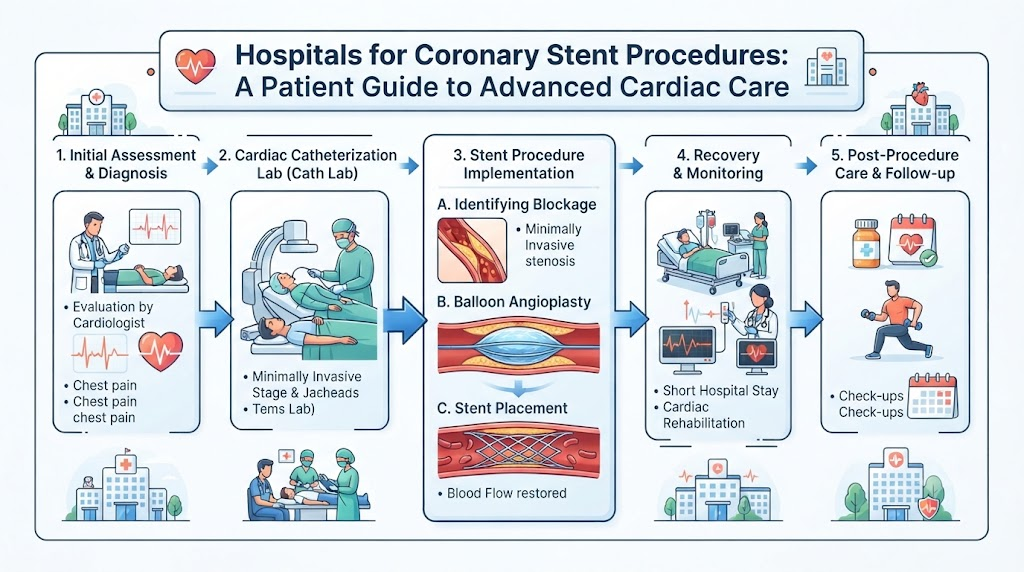
                  [ Stent Insertion Process ]

   [ Artery with Plaque ] ──► [ Balloon Inflates Stent ] ──► [ Stent Remains Open ]
      (Restricted Flow)          (Presses Plaque Back)         (Restored Flow)
How the Stent Works
The stent is mounted onto a tiny deflated balloon at the tip of a long, thin catheter. Once positioned precisely at the site of the blockage, the balloon is inflated. This expansion presses the plaque buildup flat against the artery wall and locks the mesh stent into its expanded state. The balloon is then deflated and removed, leaving the stent behind to keep the pathway permanently open.
Balloon Angioplasty vs. Stent Placement
In the early days of interventional cardiology, balloon angioplasty was performed alone: doctors simply inflated a balloon to stretch the narrowed artery and then removed it. However, without a structural support left behind, many arteries experienced “elastic recoil” (re-shrinking) or clogged again quickly. Today, balloon angioplasty is almost always followed by stent placement to secure the opening.
Why Coronary Stent Procedures Are Performed
Interventional cardiologists recommend stenting for several key clinical reasons, with the primary goal of restoring proper blood supply to heart tissues.
- Treating Coronary Artery Disease (CAD): When plaque blocks the blood supply, the heart muscle becomes oxygen-deprived, leading to tissue damage.
- Managing Stable Angina: For patients who experience predictable chest pain or pressure during physical exertion, a stent can open narrowed arteries to resolve symptoms.
- Emergency Heart Attack Treatment: During an acute heart attack, an artery is completely blocked by a ruptured plaque or blood clot. Performing emergency PCI to open the artery within minutes is life-saving and prevents permanent heart muscle damage.
- Improving Symptoms and Quality of Life: By restoring unrestricted blood flow, patients experience a dramatic reduction in shortness of breath and fatigue, helping them return to an active lifestyle.
Types of Coronary Stents
Cardiologists select different types of stents depending on the patient’s anatomy, risk factors, and medical history.
Drug-Eluting Stents (DES)
The vast majority of modern coronary procedures use drug-eluting stents. These metal mesh stents are coated with a specialized, slow-release medication. The medicine prevents the overgrowth of scar tissue inside the stent during the healing process, significantly reducing the risk of the artery narrowing again (a process called restenosis).
Bare-Metal Stents (BMS)
These are basic metal mesh stents without a protective drug coating. While they provide strong structural support, they carry a higher rate of tissue overgrowth. BMS may still be used for patients who cannot tolerate or need to stop blood-thinning medications quickly due to an upcoming urgent surgery.
Bioabsorbable Stents
Also known as bioresorbable scaffolds, these temporary structures are designed to slowly dissolve once the treated artery has healed and can remain open on its own. While promising, they are used selectively in specific clinical scenarios and anatomical structures.
Conditions That May Require Coronary Stent Procedures
Coronary interventions are primarily used to treat conditions involving impaired blood flow through the coronary arteries.
- Coronary Artery Disease (CAD): The progressive buildup of cholesterol-containing plaques along the inner walls of the arteries supplying the heart.
- Acute Coronary Syndrome (ACS): A range of clinical conditions associated with sudden, reduced blood flow to the heart, including unstable angina and acute myocardial infarction.
- Myocardial Infarction (Heart Attack): A medical emergency where a coronary artery becomes suddenly and completely blocked, starving a portion of the heart muscle of oxygen.
- Angina Pectoris: Persistent chest discomfort or pressure that occurs when heart muscle demand for oxygen exceeds the available supply.
- Severe Single or Multi-Vessel Blockages: High-grade narrowings identified during diagnostic imaging that put significant portions of the heart muscle at risk.
Coronary Stent Procedures Comparison Table
| Procedure | Purpose | Common Benefit |
| Balloon Angioplasty | Opens narrowed arteries using a temporary balloon. | Instantly widens restricted pathways. |
| Drug-Eluting Stent (DES) | Supports the artery long-term while releasing medication. | Significantly reduces the risk of the artery re-narrowing. |
| Bare-Metal Stent (BMS) | Provides immediate structural support without medicine. | Useful for patients unable to take long-term blood thinners. |
| Percutaneous Coronary Intervention (PCI) | Comprehensive catheter-based treatment of blockages. | Minimally invasive alternative to open-heart surgery. |
Diagnostic Tests Before Coronary Stenting
Before recommending a coronary stent, cardiologists perform thorough diagnostic testing to evaluate the severity and exact location of any blockages.
Electrocardiogram (ECG)
A non-invasive test that records the electrical activity of your heart. An ECG can detect abnormal rhythms and identify signs of active or past heart muscle damage.
Echocardiogram
An ultrasound of the heart that provides detailed images of heart valves, chamber sizes, and overall pumping strength. It helps doctors evaluate how well your heart muscle is contracting.
Stress Test
Monitors how your heart performs during physical exertion (usually on a treadmill) or chemical stimulation. It helps detect blood flow limitations that may not be apparent at rest.
Coronary Angiography
The definitive diagnostic tool for identifying blockages. During this procedure, a contrast dye is injected through a catheter into your coronary arteries, and real-time X-ray images are taken to pinpoint the exact location and severity of narrowings.
Cardiac CT Scan
A specialized imaging scan that can provide high-resolution, non-invasive cross-sectional views of the coronary arteries to detect calcium buildup and plaque.
Blood Tests
Complete blood counts, kidney function panels, and cardiac enzyme levels are evaluated to assess overall health and ensure the safety of contrast dyes used during the procedure.
How a Coronary Stent Procedure Is Performed
A coronary stent procedure is a highly coordinated process performed in a specialized hospital environment.
[ Preparation & Local Anesthetic ]
                │
                ▼
      [ Catheter Insertion ]
                │
                ▼
   [ Angiogram to Map Blockage ]
                │
                ▼
  [ Balloon Expansion & Stenting ]
                │
                ▼
 [ Flow Check & Recovery Unit Stay ]
1. Patient Preparation
The patient is brought to the Cardiac Catheterization Laboratory (“Cath Lab”) and placed on an imaging table. Intravenous (IV) lines are started to administer mild sedatives to help the patient relax while remaining awake.
2. Local Anesthesia
The insertion site (usually the wrist or the groin) is thoroughly cleaned and numbed with a local anesthetic injection. The patient will feel pressure but should not feel pain.
3. Catheter Insertion
A small hollow plastic tube (a sheath) is placed into the artery. Through this sheath, a long, flexible guide catheter is carefully threaded up to the origin of the coronary arteries near the heart under X-ray guidance.
4. Coronary Angiography
A small amount of contrast dye is injected through the catheter. X-ray imaging (fluoroscopy) captures real-time video of the dye flowing through the heart’s vessels, mapping the blockages.
5. Balloon Angioplasty and Stent Placement
A very thin guide wire is threaded past the blockage. Over this wire, the balloon-tipped catheter carrying the stent is advanced directly into the narrowed segment. The balloon is inflated, expanding the stent and pressing the plaque flat against the vessel walls.
6. Blood Flow Restoration
The balloon is deflated and withdrawn along with the catheters and wires, leaving the expanded metal stent permanently in place to keep the artery open. A final contrast injection is performed to confirm that unrestricted blood flow has been successfully restored.
7. Recovery in the Cardiac Unit
The insertion sheath is removed, and pressure is applied to the access site to prevent bleeding. The patient is then transferred to a specialized cardiac recovery unit for close observation.
Advanced Technologies Used in Cardiac Hospitals
Modern cardiac care centers utilize state-of-the-art technological tools to maximize the precision, safety, and long-term success of stent placements.
Digital Catheterization Laboratories
Equipped with high-resolution, low-dose radiation X-ray imaging systems, modern Cath Labs provide exceptionally clear, real-time views of delicate heart structures while minimizing radiation exposure.
Intravascular Imaging
Techniques like Intravascular Ultrasound (IVUS) and Optical Coherence Tomography (OCT) allow cardiologists to see inside the artery wall. By using sound waves or light waves from a tiny camera probe, doctors can measure plaque depth, select the perfect stent size, and verify that the stent is fully expanded against the artery wall.
Fractional Flow Reserve (FFR)
A specialized wire measurement system that calculates blood pressure before and after a blockage. This helps cardiologists determine whether a borderline narrowing actually restricts blood flow enough to require a stent, avoiding unnecessary procedures.
Advanced Cardiac Monitoring Systems
Continuous, computerized telemetry monitors patients’ heart rates, blood pressures, and oxygen levels throughout their hospital stay, instantly alerting staff to any subtle cardiac changes.
Recovery After Coronary Stent Placement
While the procedure itself is minimally invasive, a structured recovery period is essential to ensure long-term success and protect the healing heart.
Hospital Observation
Most patients remain in the hospital for observation, ranging from a few hours to overnight. Nurses monitor the access site in the wrist or groin for signs of bleeding or swelling and track vital signs closely.
Essential Medications
Patients must strictly adhere to prescribed medications. This almost always includes Dual Antiplatelet Therapy (DAPT)—a combination of aspirin and a second strong blood thinner—to prevent blood clots from forming on the newly placed stent while the artery heals.
Important Note: Stopping blood-thinning medications early without explicit guidance from your cardiologist carries a high risk of sudden stent blockage and a subsequent heart attack.
Gradual Return to Physical Activity
Patients are advised to avoid heavy lifting or strenuous exertion for several days following the procedure to allow the access site in the wrist or groin to heal completely. Gentle walking is encouraged.
Cardiac Rehabilitation
A highly recommended, medically supervised program that combines structured exercise, heart-health education, and emotional support. Participating in cardiac rehabilitation significantly improves long-term outcomes and exercise tolerance.
Long-Term Follow-Up Appointments
Regular visits with your cardiologist are crucial for monitoring heart function, managing risk factors, and adjusting medications over time.
Choosing the Right Hospital for Coronary Stent Procedures
Selecting a hospital for a heart procedure is a major decision. Because treatment paths depend on your specific cardiac anatomy, overall health, and physician recommendations, it is wise to choose an institution equipped with comprehensive resources.
[ Patient and Physician Collaboration ]
                   │
                   ▼
     🔍 evaluate hospital features:
     ├── On-Site 24/7 Emergency PCI & High-Volume Cath Labs
     ├── Board-Certified Interventional Cardiologists
     └── Dedicated Cardiac Intensive Care Unit (CICU)
                   │
                   ▼
   [ Safe, High-Quality Coronary Care ]
When researching hospitals, consider the following clinical pillars:
- Experienced Interventional Cardiologists: Look for hospitals staffed by board-certified interventional cardiologists who perform a high volume of PCI procedures annually. Studies indicate that high-volume operators and centers generally have lower complication rates.
- 24/7 Emergency Cardiac Services: Ensure the hospital has a dedicated emergency cardiac program capable of performing rapid primary PCI for heart attack patients at any time of day or night.
- Modern Catheterization Laboratories: The facility should feature state-of-the-art Cath Labs equipped with advanced intravascular imaging (IVUS/OCT) and physiology tools (FFR).
- Cardiac Intensive Care Units (CICU): A specialized intensive care unit staffed by cardiac-trained nurses and intensive care specialists is vital for managing complex patients after their procedures.
- Comprehensive Cardiac Rehabilitation: Choose a hospital that offers an integrated, on-site cardiac rehab program to support your physical recovery and lifestyle transition.
- Multidisciplinary Heart Teams: Complex cases benefit from collaboration between interventional cardiologists, cardiothoracic surgeons, and imaging specialists to determine the safest treatment path.
Hospital Selection Checklist
| Feature | Why It Matters | Checked |
| Interventional Cardiologists | Ensures your procedure is performed by highly trained specialists. | ☐ |
| Advanced Cath Lab | Supports precise, image-guided stent placement and sizing. | ☐ |
| Cardiac ICU (CICU) | Provides highly specialized nursing care and monitoring post-procedure. | ☐ |
| Emergency Heart Care | Crucial for rapid, life-saving intervention during an acute heart attack. | ☐ |
| Cardiac Rehabilitation | Supports structured exercise, education, and long-term heart strength. | ☐ |
| Patient Education Programs | Empowers you and your family with clear, actionable recovery plans. | ☐ |
Lifestyle Changes After Coronary Stent Placement
A coronary stent is an effective tool for opening a blocked artery, but it is not a cure for the underlying coronary artery disease. To prevent new blockages from forming in other blood vessels, proactive lifestyle changes are essential.
- Heart-Healthy Diet: Focus on a diet rich in vegetables, fruits, whole grains, lean proteins, and healthy fats (like olive oil), while limiting saturated fats, trans fats, sodium, and refined sugars.
- Regular Physical Activity: Aim for at least 150 minutes of moderate-intensity aerobic exercise (such as brisk walking) per week, as approved by your physician or cardiac rehab team.
- Smoking Cessation: Quitting smoking is one of the most powerful steps you can take to protect your heart. Smoking damages blood vessel walls and accelerates plaque buildup.
- Blood Pressure Control: Keep blood pressure within a healthy target range through a combination of low-sodium eating, exercise, and prescribed medications.
- Diabetes Management: Carefully monitor and control blood sugar levels, as diabetes significantly increases the risk of progressive cardiovascular disease.
- Cholesterol Management: Work with your doctor to lower low-density lipoprotein (LDL) cholesterol, often utilizing statins or other lipid-lowering therapies to stabilize plaques.
- Strict Medication Adherence: Take all prescribed heart and blood-thinning medications exactly as directed, and never discontinue them without consulting your cardiologist first.
How BESTCARDIACHOSPITALS Helps Patients Find Cardiac Care
Finding the right hospital and specialist for a coronary procedure can feel overwhelming. The centralized platform at BESTCARDIACHOSPITALS is designed to simplify this process, helping you find high-quality cardiovascular care with confidence.
- Hospital Discovery Platform: Easily search and locate hospitals equipped with advanced catheterization laboratories and specialized cardiac care services near you.
- Cardiac Specialist Information: Connect with experienced, board-certified interventional cardiologists who specialize in minimally invasive coronary procedures.
- Comparing Cardiac Services: Evaluate hospital capabilities, including on-site emergency heart care, cardiac rehabilitation, and advanced imaging technologies.
- Educational Healthcare Resources: Access clear, patient-friendly articles, checklists, and guides to help you understand your heart condition and feel prepared for your procedure.
- Empowering Informed Decisions: By providing transparent information, the platform helps patients and families collaborate effectively with their doctors to choose the best treatment path.
Common Mistakes Patients Make
Understanding common recovery pitfalls can help you avoid complications and achieve a safer, more complete recovery.
- Ignoring Recurrent Chest Pain: Assuming that chest pain or pressure after receiving a stent is just normal recovery pain. New or worsening discomfort should always be evaluated immediately.
- Delaying Medical Evaluation: Waiting to see if symptoms improve during a potential cardiac event instead of seeking emergency care.
- Stopping Medications Without Medical Advice: Discontinuing dual antiplatelet therapy (blood thinners) early due to minor bruising or upcoming dental work without consulting your cardiologist.
- Missing Follow-Up Appointments: Skipping scheduled cardiology visits because you feel healthy. These visits are essential for optimizing your medication dosages.
- Not Participating in Cardiac Rehabilitation: Declining cardiac rehab, which misses out on structured physical training and valuable lifestyle education.
- Returning to Unhealthy Habits: Resuming smoking, a high-sodium diet, or a sedentary lifestyle, which can lead to new blockages in other arteries.
Practical Solutions
To stay on track, use a daily pill organizer or phone app to manage your medications. Keep a journal of how you feel during your recovery, and write down any questions to bring to your follow-up appointments. Always keep your cardiologist’s emergency contact number easily accessible.
Common Myths vs Facts
| Myth | Fact |
| A coronary stent permanently cures heart disease. | A stent opens a specific blockage to restore blood flow, but plaque can still build up in other arteries without ongoing healthy habits. |
| Every blocked artery requires a stent. | Many blockages are managed safely and effectively with lifestyle modifications and medication alone, depending on your symptoms and evaluation. |
| Recovery ends once you leave the hospital. | Leaving the hospital is just the first step. Long-term cardiac rehabilitation, medication adherence, and follow-up care remain essential. |
| Patients can stop taking blood thinners once they feel better. | Blood-thinning medications are crucial for preventing clots on the stent and must only be changed under the direct supervision of your cardiologist. |
Real-Life Educational Scenarios
Scenario 1: Timely Intervention for Angina
A physical education teacher in his early 50s began noticing persistent tightness in his chest during his morning workouts. Instead of ignoring it, he scheduled an evaluation at a specialized cardiac center. An angiogram revealed an 85% blockage in his left anterior descending artery. His cardiologist successfully placed a drug-eluting stent. Within weeks, he returned to teaching completely free of chest pain.
Scenario 2: Emergency PCI Saves Heart Muscle
A woman in her 60s experienced sudden, severe chest pain radiating down her left arm while at home. Her family immediately called emergency services, and she was rushed to a hospital with a 24/7 cardiac catheterization lab. The emergency team performed a PCI, opening a completely blocked artery within 45 minutes of her arrival, saving critical heart muscle from permanent damage.
Scenario 3: Restoring Strength Through Cardiac Rehab
An office worker felt anxious and physically weak after undergoing a coronary stent procedure. He enrolled in his hospital’s supervised cardiac rehabilitation program. Over twelve weeks, exercise physiologists and nurses guided him through safe, structured workouts while educating him on heart-healthy nutrition, helping him regain his physical strength and emotional confidence.
Scenario 4: Maintaining Health Through Lifestyle Changes
After receiving a coronary stent, a patient committed to making lasting changes. He stopped smoking, adopted a Mediterranean-style diet, and began walking daily. By working closely with his cardiologist to manage his cholesterol and blood pressure, his follow-up scans showed excellent heart function and no new blockages.
FAQs
What is a coronary stent procedure?
It is a minimally invasive, catheter-based treatment where a small mesh tube (stent) is expanded inside a narrowed or blocked heart artery to restore proper blood flow.
What conditions require coronary angioplasty?
Angioplasty and stenting are primarily used to treat coronary artery disease, stable or unstable angina, acute coronary syndrome, and active heart attacks.
How long does a stent procedure usually take?
A standard coronary stent procedure typically takes between 30 to 90 minutes, though it may take longer depending on the complexity and number of blockages.
What is the difference between angioplasty and stenting?
Angioplasty refers to using a temporary balloon to widen a narrowed artery. Stenting involves placing a permanent mesh tube inside the artery to keep it from closing again.
Are coronary stent procedures minimally invasive?
Yes. They are performed through a tiny puncture wound in the wrist or groin, using long, flexible catheters, avoiding the need for open-heart surgery.
What are drug-eluting stents?
These are modern stents coated with slow-release medication that prevents excess scar tissue from growing inside the stent, keeping the artery open long-term.
How long is recovery after PCI?
Most patients can return to light, non-strenuous activities within a few days, though heavy lifting and vigorous exercise should be avoided for about a week.
Will I need medications after receiving a stent?
Yes. You will need to take dual antiplatelet therapy (blood thinners like aspirin and another prescribed medication) to prevent clots, alongside other heart medicines.
Can I return to normal activities after recovery?
Yes, most patients can return to their normal daily routines, including work and light exercise, once their doctor confirms the access site has healed and their heart is stable.
How do I choose a hospital for coronary stent procedures?
Look for hospitals with experienced interventional cardiologists, high-volume cardiac catheterization labs, 24/7 emergency heart care, and integrated cardiac rehabilitation.
What lifestyle changes improve long-term heart health?
Key changes include quitting smoking, eating a heart-healthy diet, exercising regularly, managing stress, and keeping blood pressure and cholesterol in check.
What complications can occur after stent placement?
Potential but rare complications include bleeding at the access site, blood clots forming on the stent, damage to the artery, or an allergic reaction to the contrast dye.
Is cardiac rehabilitation necessary?
While voluntary, cardiac rehab is highly recommended as it provides medically supervised exercise and education that significantly lowers the risk of future heart issues.
When should I seek emergency medical attention after a procedure?
Seek immediate emergency care if you experience sudden chest pain or pressure, shortness of breath, or severe bleeding or swelling at your catheter insertion site.
How does BESTCARDIACHOSPITALS help patients find specialized cardiac hospitals?
The platform offers an easy-to-use directory to help you search, compare, and connect with hospitals and specialists that perform advanced coronary interventions.
Final Thoughts
Addressing coronary artery disease early through timely diagnosis and treatment is essential for protecting your heart muscle and ensuring a high quality of life. Coronary stent procedures, performed by experienced interventional cardiology teams in modern cardiac care hospitals, offer highly effective, minimally invasive solutions for restoring critical blood flow.However, a successful outcome relies on a partnership between you and your healthcare team.