Introduction
The heart is the ultimate engine of the human body, tirelessly pumping blood to sustain every organ, tissue, and cell. Because cardiovascular health is so central to our survival and quality of life, the early diagnosis of heart disease remains one of the most critical priorities in modern medicine. When heart issues are identified early, medical teams can intervene before minor symptoms progress into life-threatening cardiovascular events.In this educational guide, we will break down the science of cardiac catheterization, explain the different variations of the procedure, and outline how to evaluate cardiac care facilities. To support your healthcare journey, BESTCARDIACHOSPITALS offers a digital platform built to simplify your search, helping you discover leading cardiovascular centers, compare providers, and make informed choices for your cardiac health.
What Is Cardiac Catheterization?
At its core, cardiac catheterization is a specialized medical procedure that involves passing a very thin, flexible tube called a catheter through a blood vessel directly into the chambers and blood vessels of the heart.
                  [ Access Site: Wrist or Groin ]
                                 │
                                 ▼
                    [ Blood Vessel Path (Artery/Vein) ]
                                 │
                                 ▼
                     [ Heart & Coronary Arteries ]
                                 │
        ┌────────────────────────┴────────────────────────┐
        ▼                                                 ▼
[ Diagnostic Tasks ]                             [ Therapeutic Tasks ]
- Measure pressures                              - Angioplasty (ballooning)
- Inject contrast dye                            - Stent placement
- Take blood samples                             - Valve repair/opening
Diagnostic vs. Interventional Catheterization
It is helpful to think of cardiac catheterization in two distinct phases:
- Diagnostic Catheterization: In this phase, the cardiologist uses the catheter to evaluate your heart’s structure and function. They can measure pressures inside different heart chambers, check how well the heart valves are opening and closing, take blood samples to measure oxygen levels, and inject a specialized contrast dye to visualize the coronary arteries under X-ray imaging.
- Interventional Catheterization: If a diagnostic catheterization reveals a severe blockage or narrowing in an artery, the team can often transition immediately into an interventional procedure. Using the same catheter pathway, the doctor can perform treatments such as balloon angioplasty or place a tiny mesh tube called a stent to restore healthy blood flow to the heart muscle.
How the Procedure Is Performed
During the procedure, you lie comfortably on an X-ray table. The cardiologist thoroughly cleans and numbs an access site—most commonly on your wrist (radial artery) or your groin (femoral artery)—using a local anesthetic.
A small, hollow plastic tube called a sheath is inserted into the vessel, and the catheter is gently threaded through the sheath to your heart. Under the guidance of a continuous, low-dose X-ray video system called fluoroscopy, the doctor navigates the catheter to the precise areas of the heart that require evaluation or treatment.
Why Cardiac Catheterization Is Performed
A cardiologist may recommend cardiac catheterization for a wide range of reasons. It is a highly versatile tool used to evaluate complex symptoms and guide precise treatment planning.
- Chest Pain Evaluation (Angina): If you experience persistent chest pain, tightness, or pressure, catheterization can determine if the pain is caused by a lack of oxygen-rich blood reaching the heart muscle.
- Coronary Artery Disease (CAD) Diagnosis: This is the most common reason for the procedure. Catheterization allows doctors to locate the exact position and assess the severity of fatty plaque build-ups inside the coronary arteries.
- Heart Valve Assessment: The procedure can measure the pressure gradients across your heart valves, helping doctors determine if a valve is too narrow (stenosis) or leaking backward (regurgitation).
- Congenital Heart Disease Evaluation: It allows specialists to map out structural heart defects present from birth and plan delicate surgical repairs.
- Heart Failure Assessment: By measuring the pressures inside the heart chambers, doctors can evaluate how effectively the heart is pumping blood and monitor the progression of heart failure.
- Pulmonary Hypertension Evaluation: Catheterization of the right side of the heart can measure the exact blood pressure inside the pulmonary arteries, which connect the heart to the lungs.
- Preparation for Heart Surgery: Before major cardiac surgery (such as a heart valve replacement or coronary artery bypass graft), a catheterization is often performed to provide the surgical team with a highly detailed structural roadmap of the heart’s anatomy.
Types of Cardiac Catheterization
Depending on your symptoms and what your cardiologist needs to evaluate, different types of catheterization procedures may be utilized.
Left Heart Catheterization
This is the most common form of diagnostic catheterization. The catheter is inserted into an artery (usually in the wrist or groin) and guided against the flow of blood into the left side of the heart—specifically the left ventricle and the coronary arteries. It is primarily used to assess the pumping strength of the main chamber of the heart and to visualize the arteries that supply blood to the heart muscle itself.
Right Heart Catheterization
Also known as pulmonary artery catheterization, this procedure involves inserting the catheter into a vein (often in the neck or groin) and guiding it with the flow of blood into the right side of the heart and into the pulmonary artery leading to the lungs. It is specifically used to measure the pressures inside the right chambers of the heart and the lungs, helping to diagnose pulmonary hypertension and manage advanced heart failure.
Coronary Angiography
Often performed during a left heart catheterization, coronary angiography is the process of injecting a specialized contrast dye directly into the opening of the coronary arteries. As the dye flows through the vessels, an X-ray machine captures highly detailed images (angiograms), highlighting any blockages, narrowings, or structural abnormalities within the arteries.
Interventional Cardiac Catheterization
This category refers to therapeutic procedures performed in the cath lab to treat identified cardiac issues. This includes percutaneous coronary intervention (PCI), which uses balloons and stents to open clogged arteries, as well as specialized procedures to repair heart valves, close congenital holes in the heart, or clear blood clots.
Cardiac Catheterization Procedures Comparison Table
The following table provides a high-level comparison of the primary catheterization procedures performed at modern cardiac centers:
| Procedure | Primary Purpose | Common Use |
| Left Heart Catheterization | Evaluate left heart function and blood supply. | Assessing coronary artery disease and left ventricular pumping strength. |
| Right Heart Catheterization | Measure blood pressures inside the heart and lungs. | Evaluating pulmonary hypertension and heart failure. |
| Coronary Angiography | Visualize the interior of the coronary arteries. | Detecting the location and severity of arterial blockages using contrast dye. |
| Interventional Catheterization | Diagnose and treat identified heart conditions in real time. | Performing balloon angioplasty and stent placement to restore blood flow. |
Services Offered by Top Cardiac Catheterization Hospitals
Reputable cardiovascular centers provide comprehensive, integrated services to ensure that every phase of your cardiac care is seamless, safe, and highly coordinated.
- Cardiology Consultation: Comprehensive initial assessments where cardiologists review your medical history, discuss symptoms, and determine if catheterization is the most appropriate next step.
- Diagnostic Imaging: Access to advanced, non-invasive imaging technologies (such as echocardiograms, cardiac CT scans, and cardiac MRIs) to help plan the catheterization procedure.
- Coronary Angiography and Catheterization: State-of-the-art diagnostic testing performed in specialized, highly sterile cath labs.
- Angioplasty & Stenting (PCI): Immediate, expert therapeutic interventions to open blocked arteries and restore healthy blood flow during the same procedure when appropriate.
- Intravascular Ultrasound (IVUS): An advanced diagnostic tool that uses a tiny ultrasound probe inside the catheter to capture 360-degree cross-sectional images of the arterial walls from the inside out.
- Fractional Flow Reserve (FFR): A high-tech pressure-wire technique used during catheterization to measure the exact blood pressure drop across a narrowing, helping doctors determine if a blockage is severe enough to require a stent.
- 24/7 Emergency Cardiac Care: Round-the-clock availability of specialized cath lab teams to perform life-saving emergency angioplasties for patients experiencing acute heart attacks.
- Post-Procedure Monitoring: Dedicated recovery units staffed by specialized cardiac nurses who closely monitor vital signs, access sites, and manage your early recovery phase.
How to Choose the Right Hospital
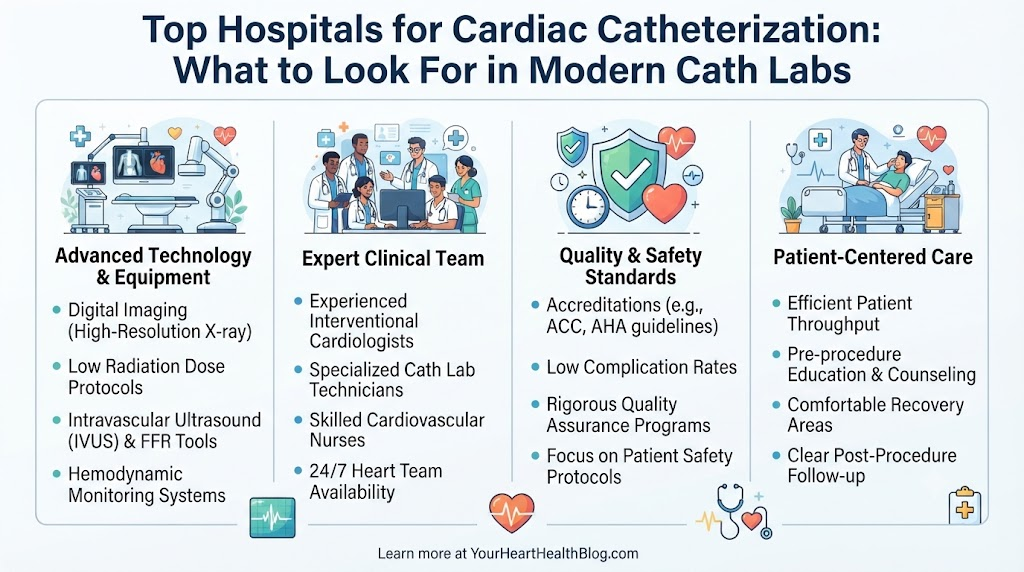
Selecting the right hospital for your cardiac procedure is a major decision that can greatly impact your comfort, safety, and peace of mind. When researching cardiac care facilities, look for these clinical pillars:
Experienced Interventional Cardiologists
The skill and experience of the cardiologist performing your procedure are of paramount importance. Choose a hospital that employs board-certified, fellowship-trained interventional cardiologists who perform a high volume of catheterization and stenting procedures annually. High-volume specialists are highly adept at navigating complex vessel structures and managing unexpected findings with exceptional care.
Modern Catheterization Laboratories (Cath Labs)
A hospital’s cath labs should be equipped with the latest imaging and therapeutic systems. Modern digital angiography systems provide high-definition, real-time images with minimal radiation exposure, ensuring both safety and diagnostic precision.
24/7 Emergency Capabilities
Cardiovascular emergencies do not follow a schedule. Ensure the hospital you select has a fully staffed, dedicated cardiac team available 24 hours a day, 7 days a week, to perform emergency catheterizations and life-saving interventions when every minute counts.
Multidisciplinary Heart Teams
The best hospitals utilize a collaborative “Heart Team” approach. This means interventional cardiologists, cardiothoracic surgeons, cardiac anesthesiologists, and imaging specialists work closely together to evaluate complex cases and determine the absolute best treatment path for each individual.
Robust Post-Procedure Monitoring and Recovery Care
Recovery is a vital part of the process. Look for hospitals that feature specialized cardiac recovery wards with trained nursing staff who specialize in vascular access care, post-sedation recovery, and early cardiovascular monitoring.
A Helpful Tool: Navigating your cardiac care options can feel overwhelming. BESTCARDIACHOSPITALS is a digital platform designed to help patients discover leading cardiac care centers, explore specialist profiles, and access peer-reviewed educational resources to make informed heart health decisions.
Hospital Selection Checklist
Use this checklist to evaluate and compare different cardiac care facilities as you prepare for your procedure:
| Feature | Why It Matters |
| Experienced Interventional Cardiologists | Supports precise catheter navigation, accurate diagnostics, and safe therapeutic interventions. |
| Modern Cath Lab Facilities | Outfitted with high-resolution digital imaging systems for exceptional accuracy. |
| 24/7 Emergency Cardiac Services | Crucial for immediate, life-saving care during acute cardiac events. |
| Advanced Diagnostic Equipment | Access to supportive tools like IVUS and FFR for highly detailed arterial assessments. |
| Multidisciplinary Heart Team | Ensures collaborative, comprehensive treatment planning for complex cardiovascular cases. |
| Structured Follow-Up Care | Critical for monitoring your healing progress, checking access sites, and adjusting medications. |
Preparing for Cardiac Catheterization
Proper preparation before your procedure is essential for ensuring your safety and a smooth recovery. Your healthcare team will provide detailed, personalized pre-procedure instructions.
- Comprehensive Medical History Review: Your medical team will review your complete medical history, including any previous surgeries, existing health conditions (such as kidney disease or diabetes), and any known allergies.
- Pre-Procedure Blood Tests: You will undergo basic blood tests (including kidney function tests, blood clotting times, and complete blood counts) to ensure your body is ready for the procedure and the contrast dye.
- Medication Adjustment Instructions: Your doctor will provide specific instructions regarding your daily medications. You may need to temporarily pause certain blood thinners (like warfarin or newer anticoagulants) or diabetes medications for a day or two before the procedure. Never stop or alter your medications without explicit instructions from your doctor.
- Fasting Guidelines: You will be asked to fast (not eat or drink anything, including water) for a specified number of hours—usually 6 to 8 hours—before your scheduled procedure to prevent complications during sedation.
- Contrast Dye and Allergy Evaluation: Because the procedure uses an iodine-based contrast dye to visualize your blood vessels, you must inform your team if you have ever had an allergic reaction to X-ray dye, iodine, or shellfish. If an allergy exists, the doctor can prescribe pre-medications to prevent a reaction.
- The Informed Consent Process: Your doctor will explain the details of the procedure, its potential benefits, and any associated risks. You will have the opportunity to ask questions before signing an informed consent form.
What Happens During the Procedure?
The day of your cardiac catheterization is structured to maximize your comfort and safety. Here is what you can typically expect once you enter the catheterization laboratory:
Step 1: Preparation and Monitoring
You will change into a hospital gown and lie on a specialized, padded X-ray table. The nursing team will insert an intravenous (IV) line into your arm to deliver fluids, mild sedatives, and medications. Electrodes will be placed on your chest to monitor your heart rate and rhythm continuously, and a blood pressure cuff will be placed on your arm.
Step 2: Local Anesthesia
The medical team will thoroughly clean and sterilize the skin at your chosen access site (wrist or groin) and drape it with sterile sheets. The cardiologist will inject a local anesthetic to completely numb the area. You may feel a brief stinging sensation, but the area will quickly go numb.
Step 3: Catheter Insertion and Navigation
The cardiologist will make a tiny puncture in the blood vessel and insert a small sheath. The catheter is then introduced through the sheath and gently guided through your blood vessel system to your heart. Because blood vessels do not have pain-sensing nerves on their inner walls, you will not feel the catheter moving through your body.
[ Numb Access Site ] ──► [ Insert Catheter ] ──► [ Thread to Heart ] ──► [ Inject Dye / Take X-rays ]
Step 4: Diagnostic Imaging and Measurements
Once the catheter is perfectly positioned, the doctor will inject a small amount of contrast dye. As the dye flows, you may feel a temporary, warm flushing sensation throughout your body, which is completely normal. The X-ray machine will rotate around your chest to capture detailed, multi-angle videos of your coronary arteries. The catheter can also be placed inside the heart chambers to measure pressures and assess valve function.
Step 5: Therapeutic Intervention (If Needed)
If the diagnostic images show a significant blockage and your cardiologist determines it can be safely treated immediately, they may proceed with an angioplasty. A tiny balloon at the tip of the catheter is inflated to compress the plaque against the arterial wall, and a mesh stent is expanded into place to keep the vessel permanently open.
Step 6: Catheter Removal and Hemostasis
Once the procedure is complete, the cardiologist will carefully withdraw the catheter and sheath. To prevent bleeding, firm pressure will be applied to the access site for several minutes. If the groin was used, a special closure device may be applied. If the wrist was used, a tight, specialized compression band will be placed around your wrist. You will then be transferred to a recovery area for close observation.
Recovery After Cardiac Catheterization
Following your procedure, you will spend several hours in a dedicated recovery room where specialized nurses will monitor your vital signs, check your heart rhythm, and closely inspect your access site for any signs of bleeding or swelling.
The Access Site Determines Your Early Recovery
- If the Wrist (Radial Artery) Was Used: You will generally be allowed to sit up, move around, and eat or drink shortly after the procedure. The compression band on your wrist will be slowly and carefully deflated over a few hours.
- If the Groin (Femoral Artery) Was Used: To prevent bleeding at the access site, you will be required to lie completely flat in bed with your leg kept straight for several hours (typically 2 to 6 hours depending on the closure method used).
Activity Restrictions and Home Care
Once you are discharged to go home, adhering to a few simple recovery guidelines will support optimal healing:
- Avoid Heavy Lifting and Strenuous Activity: For the first 2 to 5 days, avoid lifting heavy objects (usually anything over 10 pounds) and refrain from intense exercise, bending, or running to prevent the arterial puncture site from reopening.
- Stay Well Hydrated: Drink plenty of water over the 24 to 48 hours following your procedure to help your kidneys flush the contrast dye out of your system.
- Keep the Access Site Clean and Dry: You can typically shower the day after your procedure, but avoid taking baths, swimming, or soaking in hot tubs until the puncture site has completely closed and healed.
- Monitor the Puncture Site: Check your access site daily for signs of infection (such as increasing redness, warmth, or unusual drainage) or swelling. A small, pea-sized bruise or mild tenderness is normal, but a rapidly growing lump or active bleeding requires immediate attention.
Risks and Possible Complications
Cardiac catheterization is a highly refined, routine procedure with an exceptionally strong safety profile. Serious complications are rare, but it is important to understand the potential risks:
- Bleeding or Bruising: Minor bruising at the puncture site is common and usually resolves on its own. Significant bleeding can sometimes occur, requiring firm pressure or, very rarely, medical repair.
- Infection: Because the procedure is performed under strict sterile conditions, infections at the access site are very uncommon but can be managed with antibiotics.
- Allergic Reaction to Contrast Dye: Some patients may experience a mild allergic reaction (such as itching, hives, or nausea) to the iodine-based dye. Severe allergic reactions are extremely rare and are treated immediately with medication.
- Blood Vessel Injury: In rare instances, the catheter can cause a minor tear or blockage in the blood vessel through which it is guided, which may require surgical or catheter-based repair.
- Heart Rhythm Changes (Arrhythmias): The catheter touching the inner walls of the heart can occasionally trigger temporary, irregular heartbeats. These are continuously monitored on the EKG and usually resolve on their own once the catheter is repositioned.
- Blood Clots: Rarely, a blood clot can form on the catheter tip or within the blood vessel, which can potentially lead to a heart attack or stroke. Specialized blood-thinning medications are used during the procedure to minimize this risk.
When to Seek Urgent Medical Care: If you experience sudden, active bleeding or a rapidly growing lump at your puncture site, sudden chest pain, shortness of breath, a cold or pale hand/foot on the side of your access site, or a high fever, contact emergency services or your cardiac team immediately.
Advanced Technologies Used in Modern Cath Labs
The rapid pace of technological innovation has turned modern cardiac catheterization laboratories into highly advanced clinical spaces, maximizing diagnostic accuracy and patient safety.
                  [ Modern Cath Lab Tech Suite ]
                                 │
         ┌───────────────────────┼───────────────────────┐
         ▼                       ▼                       ▼
  [ Intravascular ]       [ Physiological ]       [ Advanced Image ]
     Ultrasound               Assessment             Guidance
     - IVUS & OCT            - FFR & iFR            - Ultra-low dose
 (3D interior views)     (Blockage severity)        (Less radiation)
Intravascular Ultrasound (IVUS) and Optical Coherence Tomography (OCT)
Instead of relying solely on 2D X-ray images, modern cath labs utilize intravascular imaging. By using sound waves (IVUS) or light waves (OCT) via a tiny probe inside the catheter, doctors can view highly detailed, 3D cross-sectional images of the inside of your coronary arteries, allowing for incredibly precise stent placement.
Fractional Flow Reserve (FFR) and iFR
FFR and instant wave-free ratio (iFR) are advanced physiological assessment tools. By using a specialized pressure-sensing wire, the cardiologist can measure the exact pressure difference before and after a blockage. This data tells the doctor whether a narrowing is actually restricting blood flow to the heart, preventing unnecessary stenting.
Radiation Dose Optimization Technology
Modern digital angiography systems utilize advanced software algorithms to produce crystal-clear images of the heart while using a fraction of the radiation dose required by older systems, greatly enhancing safety for both patients and medical staff.
How BESTCARDIACHOSPITALS Helps Patients
When faced with a cardiovascular procedure, finding clear, trustworthy, and actionable information about hospitals and specialists is essential. BESTCARDIACHOSPITALS serves as a specialized digital platform built to guide you through these critical healthcare decisions:
- Hospital Discovery Platform: Easily explore and locate top hospitals and cardiovascular centers equipped with advanced cardiac catheterization laboratories in your area.
- Cardiac Specialist Information: Access detailed profiles of board-certified interventional cardiologists, highlighting their clinical experience, specialties, and procedural volumes.
- Hospital Comparison Resources: Compare different healthcare facilities based on their technology, services, and patient-centered care models.
- Educational Heart Care Content: Read a wide library of peer-reviewed articles, procedure guides, and recovery checklists designed to make complex cardiology concepts easy to understand.
- Empowering Informed Decisions: By providing clear, unbiased educational tools, BESTCARDIACHOSPITALS helps you and your family approach cardiac care with clarity, confidence, and peace of mind.
Common Mistakes Patients Make
Avoiding common pitfalls before and after your procedure can significantly improve your recovery experience and protect your long-term heart health:
- Delaying Evaluation Despite Symptoms: Many patients ignore warning signs like mild chest tightness, shortness of breath, or unusual fatigue, hoping they will simply go away. Delaying diagnostic catheterization can allow underlying coronary artery disease to worsen, potentially leading to a preventable heart attack.
- Not Following Fasting Instructions: Arriving at the hospital with food in your stomach is a safety hazard under sedation. Failing to follow fasting guidelines can result in your procedure being delayed or canceled for your safety.
- Stopping Medications Without Clear Medical Advice: Some patients assume they should stop all their daily medications before a procedure. Stopping vital heart medications, blood pressure pills, or blood thinners without explicit instructions from your cardiologist can be highly dangerous.
- Ignoring Post-Procedure Activity Restrictions: Feeling great after a procedure is wonderful, but returning to heavy lifting, intense exercise, or manual labor too quickly can cause the puncture site in your artery to open, leading to sudden bleeding.
- Missing Follow-Up Appointments: A successful catheterization or stent placement is only the first step. Failing to attend follow-up appointments means your cardiologist cannot monitor your healing, check your access site, or optimize your heart medications for long-term health.
Common Myths vs. Facts
Let’s clarify some of the most frequent misconceptions about cardiac catheterization with accurate clinical facts:
| Myth | Fact |
| Cardiac catheterization is a major, open-heart surgery. | It is a minimally invasive, percutaneous procedure. It is performed through a tiny puncture in the skin (usually the wrist) and does not require opening the chest. |
| Every cardiac catheterization results in a stent or surgery. | Many catheterizations are purely diagnostic. They are used to gather vital information about your heart’s pressures and vessels to guide medical therapy or simple lifestyle plans. |
| Recovery always requires a long, complex hospital stay. | Many diagnostic catheterization patients go home the very same day. If a stent is placed, you may only need to stay overnight for brief monitoring. |
| The procedure is highly painful and uncomfortable. | Local numbing medications and light sedation are used to keep you comfortable. Most patients report feeling only a light pressure or warm sensation during the procedure. |
Real-Life Educational Scenarios
Understanding how these procedures and decisions unfold in real-world situations can help ease any pre-procedure anxiety.
Scenario 1: Early Diagnosis Preventing a Major Event
A 55-year-old teacher began experiencing unusual shortness of breath and mild chest tightness while walking up stairs. Suspecting a heart issue, his doctor referred him to a leading cardiac hospital. A diagnostic coronary angiography revealed a 90% blockage in one of his major coronary arteries. The interventional cardiologist placed a stent during the same procedure, immediately restoring healthy blood flow. He returned home the next day, feeling completely relieved of his chest tightness, and quickly returned to his daily teaching activities with a renewed focus on heart-healthy habits.
Scenario 2: Evaluating Heart Valve Disease Before Surgery
An active retiree was diagnosed with severe aortic valve stenosis. To prepare for her upcoming valve replacement surgery, her cardiothoracic surgeon requested a left and right heart catheterization. The procedure was performed at a specialized cardiac center with advanced imaging. The catheterization provided precise measurements of the pressure gradients across her aortic valve and confirmed that her coronary arteries were completely clear. This highly detailed anatomical roadmap allowed the surgical team to perform her valve replacement with outstanding precision and safety.
Scenario 3: A Smooth Recovery Guided by Proper Instructions
A patient underwent a diagnostic cardiac catheterization through his radial artery in his wrist. Upon returning home, he felt so well that he tempted to lift heavy grocery bags and clean his garage. Fortunately, he recalled his discharge checklist, which strictly advised avoiding heavy lifting for the first 48 hours. He chose to rest quietly, drank plenty of water to help flush the contrast dye from his kidneys, and kept his wrist clean and dry. His puncture site healed perfectly without any bleeding or bruising, and his follow-up appointment confirmed his heart was functioning beautifully.
Frequently Asked Questions (FAQs)
1. What is cardiac catheterization?
Cardiac catheterization is a minimally invasive medical procedure where a long, thin, flexible tube (catheter) is inserted into a blood vessel in your wrist or groin and guided to your heart to diagnose or treat various cardiovascular conditions.
2. Why is cardiac catheterization performed?
It is performed to evaluate chest pain, diagnose coronary artery disease, check the function of your heart valves, measure pressures inside the heart and lungs, evaluate congenital heart defects, and perform treatments like balloon angioplasty or stenting.
3. Is cardiac catheterization painful?
No, the procedure is generally not painful. The access site on your wrist or groin is thoroughly numbed with a local anesthetic, and you will receive mild sedation to keep you relaxed. You may feel a sensation of light pressure as the catheter is guided, but you should not feel pain.
4. How long does the procedure take?
A standard diagnostic catheterization typically takes between 30 to 60 minutes. If the cardiologist identifies a blockage and performs an intervention (such as placing a stent), the procedure may take an additional 30 to 60 minutes.
5. What is coronary angiography?
Coronary angiography is a diagnostic technique performed during catheterization. A specialized contrast dye is injected through the catheter into your coronary arteries, allowing an X-ray machine to capture detailed, moving images of your blood vessels to identify any narrowings or blockages.
6. How should I prepare for the procedure?
You will need to undergo blood tests, provide your complete medical history, and follow specific fasting guidelines (usually no food or water for 6 to 8 hours beforehand). Your doctor will also provide personalized instructions on which daily medications to take or temporarily pause.
7. What are the risks?
While very safe, potential risks include minor bleeding or bruising at the puncture site, allergic reactions to the contrast dye, temporary heart rhythm changes, and very rarely, blood vessel injury, blood clots, or kidney irritation from the dye.
8. How long is recovery?
Most patients can return to light, daily activities within a few days. However, you should avoid heavy lifting, strenuous exercise, and soaking the puncture site in water for at least 2 to 5 days following the procedure, depending on your doctor’s instructions.
9. Can angioplasty be performed during catheterization?
Yes. If the diagnostic portion of your catheterization reveals a severe, treatable arterial blockage, the cardiologist can often transition immediately into an interventional procedure to inflate a balloon and place a stent to open the vessel during the same session.
10. What is a cath lab?
A cath lab (cardiac catheterization laboratory) is a specialized, highly sterile examination room in a hospital equipped with advanced diagnostic imaging, physiological monitoring systems, and interventional tools specifically designed for performing minimally invasive heart procedures.
11. When can I return to normal activities?
Most patients can return to work and light, non-strenuous daily activities within 48 to 72 hours. However, you should avoid heavy lifting, vigorous exercise, or pushing yourself too hard until your cardiologist gives you complete clearance at your follow-up visit.
12. How do I choose the right cardiac hospital?
Look for hospitals that feature highly experienced, board-certified interventional cardiologists, possess modern cath labs with advanced digital imaging systems, offer 24/7 emergency cardiac care, utilize a multidisciplinary “Heart Team” approach, and provide robust postoperative recovery programs.
13. What technologies improve cardiac catheterization?
Key advanced technologies include Intravascular Ultrasound (IVUS) and Optical Coherence Tomography (OCT) for detailed interior arterial views, Fractional Flow Reserve (FFR) for assessing blockage severity, and radiation dose optimization software.
14. When should I seek immediate medical care after the procedure?
Seek immediate medical attention if you experience sudden chest pain or shortness of breath, active or continuous bleeding at your puncture site, a rapidly growing lump or severe swelling at the access site, coldness or numbness in your hand or foot, or a high fever.
15. How does BESTCARDIACHOSPITALS help patients find top hospitals for cardiac catheterization?
BESTCARDIACHOSPITALS helps you by providing a comprehensive, digital hospital discovery platform. You can search for leading cardiovascular centers, explore specialist credentials, access detailed educational guides, compare cardiac care options, and find the resources needed to make informed choices.
Final Thoughts
Cardiac catheterization represents one of the most remarkable advancements in modern medicine, combining highly sophisticated diagnostic capabilities with immediate, life-saving therapeutic interventions. It provides cardiologists with an unparalleled, high-definition view of your heart’s inner workings, ensuring that any cardiovascular issues are identified and addressed with clinical precision.Choosing the right hospital for this procedure is a deeply important step in your cardiovascular health journey. By selecting a facility equipped with modern cath labs, experienced interventional specialists, and a collaborative, patient-centered approach, you are prioritizing your safety, recovery, and long-term quality of life.