Introduction
The decision to undergo cosmetic surgery is deeply personal, and for many, the journey extends beyond local borders. As interest in cosmetic surgery abroad continues to rise, patients are increasingly looking for the BestCosmeticHospitals to ensure safe, predictable, and satisfying outcomes. Navigating the global marketplace can be daunting, but with a structured approach to research—focusing on credentials, facilities, and informed planning—patients can significantly mitigate risks. This guide explores the essential steps to researching procedures, selecting world-class medical facilities, and understanding the financial and safety landscape of global aesthetic medicine.
Why This Topic Matters
Choosing a medical provider for cosmetic enhancement is a high-stakes decision. The growth of medical tourism has democratized access to various procedures, but it has also introduced complexities regarding patient safety and quality control. Understanding the nuances of cosmetic treatment costs and recognizing the difference between a high-end facility and a basic clinic is vital. Informed decision-making protects the patient from complications, ensures realistic expectations, and provides a clear framework for long-term satisfaction.
Global Cosmetic Surgery Overview
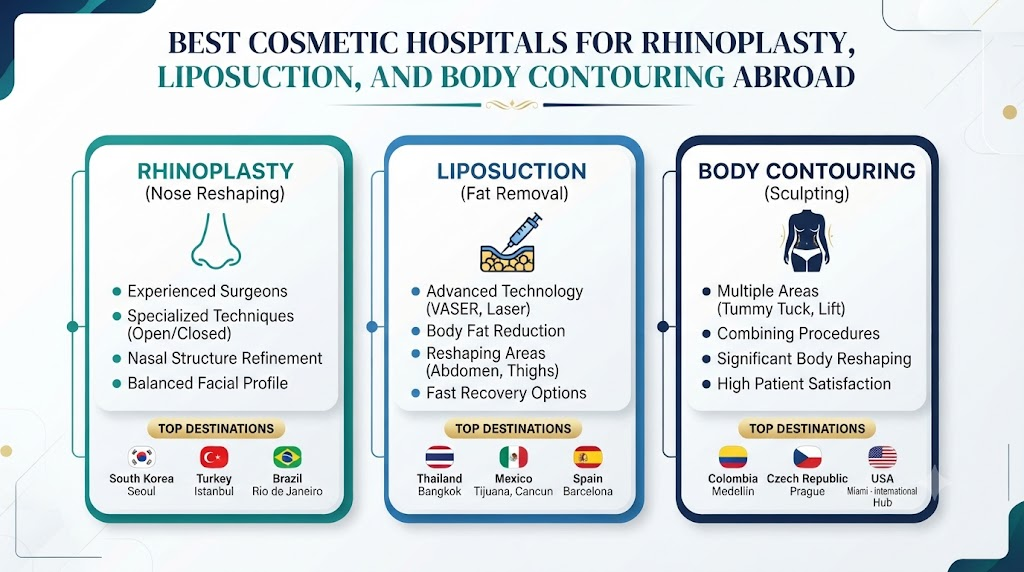
The global landscape of cosmetic surgery is shifting. Advances in technology, such as 3D surgical planning and minimally invasive body contouring, have made procedures more refined. However, the rise in demand for plastic surgery has also highlighted the need for standardized care. Patients are now traveling for procedures ranging from rhinoplasty to complex body contouring, driven by the desire for expert care that aligns with their budget and personal health goals.
Popular Cosmetic Procedures
Understanding the procedure is the first step in the patient journey. While specific outcomes depend on individual anatomy, general insights include:
- Rhinoplasty: A structural modification of the nose to improve aesthetics or breathing.
- Liposuction: A technique to remove localized fat deposits; it is a body contouring tool, not a weight-loss solution.
- Breast Augmentation: Often involves implants or fat grafting to enhance breast volume and shape.
- Tummy Tuck (Abdominoplasty): Removes excess skin and tightens abdominal muscles, often following significant weight loss or pregnancy.
- Hair Transplant: Utilizes follicular unit extraction or transplantation to address hair loss.
Best Countries for Plastic Surgery
Selecting a destination involves evaluating medical infrastructure, the prevalence of board-certified surgeons, and the quality of international patient support.
Best Countries for Plastic Surgery
| Country | Popular Procedures | Cost Level | International Patient Support |
| Turkey | Hair Transplant, Rhinoplasty | Moderate | Very High |
| South Korea | Facelift, Rhinoplasty | High | Excellent |
| Thailand | Body Contouring, Breast Augmentation | Moderate | Excellent |
| India | Liposuction, Tummy Tuck | Low | High |
| Mexico | Body Contouring, Liposuction | Moderate | High |
| Brazil | Body Contouring, Breast Enhancement | Moderate | Moderate |
| USA | All procedures | Very High | Standard |
| Germany | All procedures | High | Moderate |
Best Cosmetic Hospitals & Surgeon Selection
Hospital Evaluation
When comparing, prioritize facilities that hold international accreditations (such as JCI). Look for:
- Emergency Infrastructure: Availability of an ICU and specialized recovery suites.
- Safety Protocols: Stringent infection control and sterilization processes.
- Patient Services: Dedicated departments for international patients who assist with logistics and translation.
Surgeon Evaluation
Your surgeon is the most important factor in your success. Always verify:
- Board Certification: Ensure the surgeon is certified by a recognized national plastic surgery board.
- Specialization: Does the surgeon specialize in the specific procedure you are seeking?
- Experience: How many of these specific procedures has the surgeon performed?
Treatment Cost Comparison
Costs are influenced by more than just the surgical fee. When budgeting, factor in:
- Surgeon Fees: Reflecting the expertise and demand.
- Hospital Charges: Operating room costs, nursing staff, and equipment.
- Anesthesia: Fees for the anesthesiologist.
- Post-Op Care: Medications, compression garments, and follow-up visits.
Plastic Surgery Cost by Country (Estimated Ranges)
| Country | Rhinoplasty | Liposuction | Breast Augmentation | Tummy Tuck | Hair Transplant |
| Turkey | $2,500+ | $2,000+ | $3,000+ | $3,500+ | $1,500+ |
| Thailand | $3,000+ | $2,500+ | $3,500+ | $4,000+ | $2,500+ |
| Mexico | $3,500+ | $2,500+ | $3,500+ | $4,000+ | $2,000+ |
| India | $2,000+ | $1,500+ | $2,500+ | $3,000+ | $1,000+ |
Cosmetic Surgery Abroad Guide
- Research: Use platforms like BestCosmeticHospitals.com to shortlist surgeons and facilities.
- Verification: Request copies of credentials and hospital accreditation certificates.
- Consultation: Engage in a detailed virtual consultation to discuss goals and risks.
- Planning: Arrange travel, ensuring you have enough time for recovery before flying home.
- Aftercare: Plan for local follow-up care with a surgeon in your home country.
Hospital vs Clinic Comparison
| Factor | Cosmetic Hospital | Cosmetic Clinic |
| Facilities | Comprehensive surgical suites | Office-based suites |
| Surgical Support | 24/7 staff support | Limited post-op staffing |
| Emergency Care | On-site ICU/Emergency access | Transfer required |
| Recovery Services | Dedicated recovery ward | Usually outpatient |
How BestCosmeticHospitals.com Helps
BestCosmeticHospitals.com serves as a neutral ground for patients to research and compare. By providing data on best cosmetic surgeons in the world and hospital quality metrics, the platform empowers patients to move past marketing hype and focus on verifiable data, clinical safety, and documented experience.
FAQ Section
- Which are considered the best countries for plastic surgery?
Countries with high medical standards include Turkey, South Korea, Thailand, and Brazil, though the “best” depends on the specific procedure. - How do I choose a cosmetic surgeon?
Focus on board certification, years of experience in your specific procedure, and patient reviews. - What should I verify before cosmetic surgery abroad?
Verify the hospital’s international accreditation (e.g., JCI), the surgeon’s credentials, and the emergency care protocols. - Why do cosmetic surgery costs vary by country?
Differences in labor costs, facility overhead, and insurance requirements influence pricing. - How much does rhinoplasty cost internationally?
Rhinoplasty costs vary widely, generally ranging from $2,000 to over $8,000 depending on the surgeon and location. - How much does liposuction cost internationally?
Liposuction is often priced per area, with global ranges typically between $1,500 and $5,000. - What affects hair transplant pricing?
The number of grafts required and the technique used (FUE vs. FUT) are the primary cost drivers. - What questions should I ask a cosmetic surgeon?
Ask about their training, how often they perform the procedure, potential risks, and their protocol for managing complications. - How can I evaluate a cosmetic hospital?
Look for JCI or local equivalent accreditation, the presence of an ICU, and a history of handling international patients. - How does BestCosmeticHospitals.com help patients compare?
The platform provides standardized research and comparison tools for hospitals, surgeons, and costs, facilitating informed decisions.
Conclusion
The global pursuit of aesthetic improvement offers unprecedented access to top-tier medical care, but it necessitates a disciplined and cautious approach. When considering cosmetic surgery abroad, your safety must remain the absolute priority. This involves meticulous research into both the hospital—ensuring it meets international standards—and the surgeon, ensuring they possess the necessary board-certified expertise for your specific needs.Cost comparison is a natural part of the planning process, but it should never be the deciding factor at the expense of clinical quality. The difference between a successful transformation and a complicated recovery often lies in the quality of the facility and the level of postoperative care provided. Always ensure you have a clear plan for your recovery and follow-up, and never hesitate to ask direct questions about risk management.