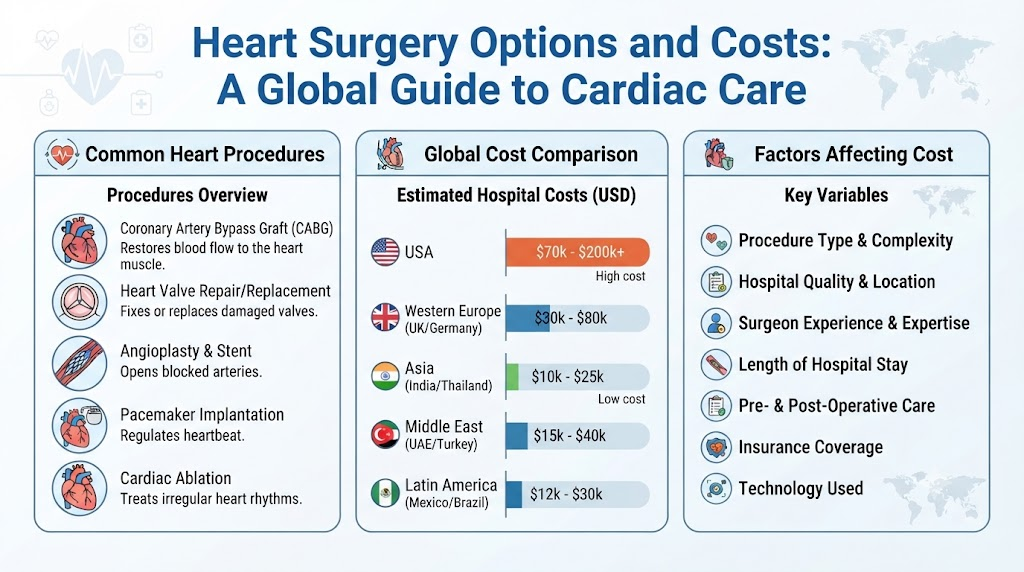
Facing a complex cardiac diagnosis can feel overwhelming for patients and their families. When a cardiologist recommends surgical intervention, making the right decisions regarding your treatment pathway becomes paramount to achieving optimal health outcomes. Choosing the right cardiac hospital and identifying highly experienced best heart surgery are two of the most critical steps in ensuring clinical success and long-term survival. The quality of institutional infrastructure, combined with the precise skill of the operating team, directly correlates with post-operative recovery rates and the minimization of surgical complications.In this comprehensive guide, we will break down the essential components of modern cardiac interventions, giving you the clarity needed to make informed choices. Readers will learn about advanced surgical techniques, global standards for high-performing cardiac centers, and how to evaluate medical expertise.
Understanding Heart Surgery
What Is Heart Surgery?
Heart surgery encompasses a broad range of surgical procedures performed by specialized cardiovascular surgeons to correct structural, electrical, or functional abnormalities within the human heart and its primary blood vessels. These procedures can range from traditional open-chest operations to advanced, minimally invasive interventions that require only small incisions between the ribs.
When Is Heart Surgery Needed?
Surgical intervention is typically required when conservative management strategies—such as lifestyle modifications, oral medications, and non-surgical interventional procedures like angioplasty or stenting—are no longer sufficient to manage a patient’s cardiac condition safely. Surgery aims to relieve debilitating symptoms, prevent sudden cardiac events, and significantly prolong life expectancy.
Common Cardiac Conditions Requiring Surgery
- Coronary Artery Disease (CAD): The progressive buildup of fatty plaques within the coronary arteries restricts oxygen-rich blood flow to the myocardium, frequently requiring surgical revascularization.
- Heart Valve Disease: Conditions such as aortic stenosis or mitral regurgitation involve malfunctioning valves that fail to open completely or close tightly, disrupting normal intra-cardiac blood flow dynamics.
- Congenital Heart Defects: Structural abnormalities present from birth, including atrial septal defects (ASD) or complex anomalies like the Tetralogy of Fallot, require precise surgical reconstruction.
- Heart Failure: End-stage myocardial failure where the heart cannot pump sufficient blood, requiring mechanical assist devices or complete organ replacement.
- Arrhythmias: Irregular heart rhythms, such as atrial fibrillation, that do not respond to medical therapy or catheter ablation, sometimes managed surgically via the Maze procedure.
Best Heart Surgery Hospitals: What Makes Them Stand Out?
When seeking superior cardiac treatment, selecting an elite institution is critical. The best heart surgery hospitals maintain a multi-disciplinary ecosystem designed to mitigate clinical risks and deliver exceptional outcomes.
Advanced Cardiac Infrastructure
Top-tier institutions invest heavily in state-of-the-art medical environments. This includes hybrid operating rooms that seamlessly combine advanced diagnostic imaging with surgical capabilities, allowing teams to transition from catheter-based interventions to open surgery instantly if required.
Experienced Surgical Teams
Excellence in cardiac care requires a cohesive team. High-performing centers house dedicated units comprising board-certified cardiothoracic surgeons, cardiac anesthesiologists, perfusionists, and specialized intensive care nurses who manage complex cases daily.
Success Rates and Outcomes
The hallmark of a premier cardiac center is a consistently high success rate, even when treating high-risk, multi-morbid patients. The best hospitals for bypass surgery routinely report procedural success rates exceeding 98%, reflecting rigorous quality controls and adherence to standardized clinical pathways.
International Accreditations
Reputable hospitals maintain prestigious national and international credentials. Patient safety and care quality are verified through rigorous auditing by bodies like the Joint Commission International (JCI) and the National Accreditation Board for Hospitals & Healthcare Providers (NABH).
Intensive Care and Recovery Support
Post-operative management is just as crucial as the surgery itself. The best hospitals for minimally invasive heart surgery offer dedicated Cardiothoracic Intensive Care Units (CTICUs) staffed 24/7 by dedicated intensivisits, alongside specialized units for younger patients, making them the best hospitals for pediatric cardiac surgery.
Best Heart Surgeons in the World and India
Characteristics of Leading Cardiac Surgeons
The best heart surgeons in the world possess an exceptional combination of extensive academic training, thousands of hours of operating room experience, and mastery over specialized surgical technologies. These professionals are frequently involved in clinical research, contributing to advancements in modern operative methodologies.
Importance of Experience and Specialization
Surgical volume matters immensely in cardiology. Surgeons who perform a high volume of specific procedures annually demonstrate significantly lower complication rates. A specialist focusing exclusively on complex aortic reconstructions or neonatal arterial switches will naturally deliver superior results compared to a generalist.
Choosing the Right Heart Surgeon
When looking for the best heart surgeons in India or globally, patients should look beyond subjective online rankings. Focus on objective criteria: verified board certifications, fellowship training at recognized international institutions, specific procedural volumes, and documented patient survival outcomes.
Types of Heart Surgeries
                    [ Heart Surgery Classifications ]
                                   |
         +-------------------------+-------------------------+
         |                                                   |
 [ Open-Heart Procedures ]                         [ Advanced Modalities ]
   ├── CABG (Bypass Surgery)                         ├── Minimally Invasive Surgery
   ├── Traditional Valve Repair/Replacement          ├── Robotic-Assisted Surgery
   └── Total Heart Transplantation                   └── Transcatheter Interventions
Coronary Artery Bypass Grafting (CABG)
Commonly known as heart bypass surgery, CABG involves harvesting healthy blood vessels from another part of the body—such as the internal mammary artery or saphenous vein—to bypass obstructed coronary arteries. This effectively restores normal blood supply to the heart muscle.
Heart Valve Repair and Replacement
When cardiac valves become stenotic or incompetent, surgeons perform repairs to preserve the patient’s native tissue, or replace the valve entirely. Replacements utilize either durable mechanical valves (requiring lifelong anticoagulation therapy) or bioprosthetic tissue valves.
Minimally Invasive Heart Surgery
Utilizing specialized endoscopic instruments inserted through small keyhole incisions, this technique avoids the need to split the sternum bone. This approach results in significantly reduced post-operative pain, shorter hospital stays, and a faster return to daily activities.
Pediatric and Congenital Cardiac Surgery
Treating newborns and children with structural cardiac anomalies requires highly specialized techniques. Surgeons operate on delicate structures to correct conditions like transposition of the great arteries, hypoplastic left heart syndrome, and septal defects.
Heart Transplant Procedures
For patients suffering from end-stage congestive heart failure that is unresponsive to maximal medical therapy, an orthotopic heart transplant remains the gold standard treatment option, replacing the failing heart with a healthy donor organ.
Heart Surgery in India: Why Patients Choose India
Over the past two decades, heart surgery in India has become a premier destination for international medical travel, attracting thousands of patients annually from across the globe.
World-Class Cardiac Hospitals
India boasts a dense network of corporate hospital groups holding JCI and NABH accreditations. These facilities are structurally identical to top-tier medical centers in Western nations, maintaining strict compliance with international infection control protocols.
Highly Skilled Surgeons
Many leading Indian cardiac surgeons have completed advanced fellowships or practiced extensively in prestigious medical centers across the United States, the United Kingdom, and Europe. They routinely manage highly complex surgical presentations.
Affordable Treatment Costs
The primary driver for international medical travel to India is the significant cost differential. Patients can access world-class surgical care at a small fraction of the price charged in the US or Europe, without compromising clinical quality or safety.
Modern Medical Technology
From robotic surgical systems to advanced ventricular assist devices (VADs) and intraoperative transesophageal echocardiography, Indian cardiac institutes utilize cutting-edge medical hardware.
International Patient Support Services
Major Indian hospitals feature dedicated international patient departments. These teams provide comprehensive support, including medical visa procurement, airport transfers, language interpretation, and customized dietary arrangements.
Heart Surgery Cost in India
Understanding the financial aspects of care is essential for effective treatment planning. The overall heart surgery cost in India is influenced by several clinical and non-clinical factors.
Factors Affecting Cost
- Hospital Category: Premium multi-specialty corporate hospitals have higher room rents and infrastructure fees compared to charitable or government-subsidized institutions.
- Surgeon Experience: Senior clinicians with global reputations command higher professional fees for their specialized expertise.
- City and Location: Medical care in Tier-1 metropolitan cities (such as Mumbai, Delhi, and Bangalore) naturally carries a premium due to higher operational overheads.
- Procedure Complexity: Revision surgeries, multi-valve operations, or surgeries complicated by severe comorbidities require extended operating room time and resources.
- ICU and Recovery Costs: Extended stays in the intensive care unit due to slow recovery or complications can significantly escalate the final billing.
Bypass Surgery Cost in India
The cost of Coronary Artery Bypass Grafting (CABG) in India is highly competitive globally. While an uncomplicated bypass surgery can easily exceed $100,000 in the United States, the bypass surgery cost in India typically ranges from $4,500 to $7,500 USD, depending on the specific facility and technique used (e.g., off-pump vs. on-pump bypass).
Cost Breakdown Comparison
| Expense Component | Estimated Cost Range (USD) | Inclusions / Details |
| Pre-Operative Diagnostics | $300 – $600 | Coronary angiography, CT scans, blood panels, pulmonary function tests. |
| Surgical Fee & OR Charges | $2,500 – $4,000 | Surgeon’s fee, anesthesia charges, perfusionist fees, OR consumables. |
| ICU Stay (2-3 Days) | $800 – $1,500 | 24/7 intensivist monitoring, invasive monitoring, nursing care. |
| Ward Stay (4-5 Days) | $500 – $900 | Standard single room or twin-sharing room accommodation. |
| Post-Discharge Medication | $100 – $200 | Initial supply of antiplatelets, statins, and beta-blockers. |
Heart Valve Replacement Surgery Cost in India
The final financial outlay for managing valvular diseases depends heavily on the type of prosthetic implant selected by the patient and surgical team. The heart valve replacement surgery cost in India generally ranges between $5,000 and $9,000 USD for a single-valve replacement.
Mechanical vs. Biological Valves
Mechanical valves are constructed from synthetic materials like pyrolytic carbon. They are highly durable and can last a lifetime, but require the patient to take lifelong blood thinners. Tissue valves, sourced from bovine or porcine donors, do not require long-term anticoagulation therapy but have a limited lifespan of 10 to 15 years, potentially requiring a future revision surgery. The cost of the valve implant itself varies based on whether it is imported or manufactured domestically.
Recovery Costs and Long-Term Considerations
Valvular surgeries require precise post-operative balancing of coagulation parameters. This involves regular prothrombin time (PT/INR) blood tests during the initial recovery window, which adds minor but essential ongoing costs to the overall treatment budget.
How to Choose the Right Heart Hospital
Pro Tip: Do not make your decision based on hospital marketing alone. Prioritize documented clinical metrics, patient safety indicators, and specialized infrastructure.
When evaluating global options for complex cardiac care, use this systematic checklist:
- Verify Accreditations: Ensure the facility maintains valid JCI or NABH certifications to guarantee adherence to rigorous international safety standards.
- Analyze Surgical Volumes: Select an institution that performs a high volume of your specific prescribed procedure every year.
- Evaluate the ICU Infrastructure: Confirm the presence of a dedicated, modern Cardiothoracic ICU equipped with advanced mechanical ventilation and circulatory support systems.
- Confirm Emergency Capabilities: The hospital must feature a fully integrated, 24/7 emergency cardiac care unit with dedicated cath labs for immediate intervention.
- Review Verified Patient Outcomes: Request documented data regarding post-operative infection rates, readmission metrics, and overall survival statistics for your specific procedure.
Step-by-Step Patient Journey
Navigating a major heart procedure involves a structured series of clinical phases:
[Diagnosis] ➔ [Consultation] ➔ [Planning & Costing] ➔ [Pre-Op Prep] ➔ [Surgery] ➔ [ICU & Ward] ➔ [Rehab]
- 1. Initial Diagnosis: Non-invasive screenings like echocardiograms, stress tests, or coronary angiograms confirm the underlying structural or vascular pathology.
- 2. Specialist Consultation: A comprehensive evaluation with a cardiothoracic surgeon to discuss the diagnosis and weigh the pros and cons of various approach choices.
- 3. Treatment Planning: Collaborative determination of the optimal surgical approach, whether it’s an open-heart procedure or a minimally invasive technique.
- 4. Cost Estimation: The financial counseling team provides a transparent breakdown of expected hospital fees, implant costs, and potential ancillary charges.
- 5. Hospital Selection: The patient finalizes the institutional choice based on medical requirements, surgeon preferences, and budget considerations.
- 6. Surgery Preparation: A thorough pre-operative medical workup, including banking blood, adjusting current medications, and undergoing pulmonary optimization.
- 7. Procedure Day: The surgery is performed under general anesthesia inside a sterile operating theater, supported by advanced cardiopulmonary bypass machinery.
- 8. Recovery Phase: Transitioning from the intensive care unit to a step-down ward, focusing on early mobilization, pain management, and respiratory exercises.
- 9. Long-Term Follow-Up: Comprehensive post-discharge management involving lifestyle adjustments, medication titration, and structured cardiac rehabilitation.
Risks, Recovery, and Expectations
Surgical Risks
As with any major surgical intervention, cardiac procedures carry inherent clinical risks. These can include post-operative bleeding, superficial or deep wound infections, adverse reactions to general anesthesia, temporary or permanent renal dysfunction, cardiac arrhythmias like atrial fibrillation, and a small risk of stroke or myocardial infarction. Advanced age and pre-existing comorbidities can elevate these risks.
Recovery Timeline
For a traditional open-heart procedure involving a sternotomy, complete healing of the breastbone typically takes 6 to 8 weeks. Patients can generally resume light desk work within a month, while full physical recovery and a return to strenuous activities may take 3 months. Minimally invasive approaches can reduce this recovery window by nearly half.
Lifestyle Modifications and Cardiac Rehabilitation
Long-term success depends heavily on post-operative lifestyle changes. Patients should participate in a structured cardiac rehabilitation program, adopt a heart-healthy diet (such as the DASH or Mediterranean diet), commit to smoking cessation, and proactively manage blood pressure, cholesterol, and blood sugar levels.
Expert Tips for Better Cardiac Treatment Decisions
- Seek a Second Opinion: Obtaining an independent evaluation from another qualified cardiothoracic specialist can confirm the primary diagnosis and help you explore alternative surgical approaches.
- Examine Specific Surgeon Volumes: Always ask your chosen surgeon how many times they have performed your exact procedure over the past calendar year.
- Understand Your Implant Material: If undergoing a valve replacement, engage in a detailed discussion regarding the long-term lifestyle impacts of choosing a mechanical versus a tissue valve.
- Request an All-Inclusive Cost Estimate: Ensure the hospital package covers potential extra costs, such as additional ICU days or unexpected medications, to avoid financial surprises at discharge.
- Assess Local Infrastructure for Family: When traveling for medical treatment, consider proximity to comfortable long-term accommodations and convenient transportation links for your accompanying family members.
How BestHeartSurgery.com Helps Patients
Navigating the complexities of international cardiac care can be challenging. BestHeartSurgery.com serves as an independent, educational resource designed to streamline your research.
Hospital Research
Our platform provides detailed profiles of accredited global cardiac centers, helping you evaluate their infrastructure, accreditations, and clinical capabilities objectively.
Surgeon Information
Access detailed profiles of leading international heart surgeons, outlining their professional qualifications, clinical milestones, areas of specialization, and academic credentials.
Procedure Education
We break down complex medical terms into clear, patient-friendly articles, helping you understand exactly what to expect before, during, and after your treatment.
Cost Awareness
We provide transparent, up-to-date pricing insights across major medical destinations, helping you compare treatment options and plan your finances effectively.
Frequently Asked Questions (FAQ)
1.Which are the best heart surgery hospitals?
The premier institutions globally are those holding international accreditations like JCI or NABH. These facilities maintain dedicated cardiothoracic units, high procedural volumes, and low post-operative infection rates.
2.How do I choose the best heart surgeon?
Look for board-certified specialists with extensive experience in your specific condition. Prioritize those who have completed advanced fellowships and maintain high success rates in high-volume settings.
3.What is the average heart surgery cost in India?
Depending on the specific procedure, the total cost generally ranges from $4,500 to $9,500 USD. This covers pre-operative assessments, surgical fees, the hospital stay, and essential medications.
4.What is the average bypass surgery cost in India?
An uncomplicated Coronary Artery Bypass Grafting (CABG) procedure typically ranges between $4,500 and $7,500 USD, presenting significant cost savings compared to Western healthcare markets.
5.What is the heart valve replacement surgery cost in India?
A single-valve replacement surgery generally ranges from $5,000 to $9,000 USD. The final price varies based on whether a mechanical or bioprosthetic tissue valve is selected.
6.Is heart surgery in India safe for international patients?
Yes. Top-tier Indian hospitals follow identical international protocols, match Western clinical standards, and feature world-class infrastructure, ensuring excellent patient safety and care.
7.How long does the recovery phase take after a bypass surgery?
Initial hospitalization lasts around 7 to 10 days. The breastbone takes approximately 6 to 8 weeks to heal fully, and most patients can return to normal daily routines within 2 to 3 months.
8.What exactly is minimally invasive heart surgery?
It is a modern surgical technique where the operation is performed through small incisions between the ribs using specialized instruments, avoiding the need to split the breastbone.
9.Which hospitals are best for pediatric cardiac surgery?
Look for specialized pediatric heart centers that feature dedicated pediatric cardiothoracic intensive care units (CTICUs) and neonatal surgical specialists.
10.How can patients compare international hospitals effectively?
Patients should compare objective metrics, including valid international accreditations, documented success rates, procedural volumes, all-inclusive package pricing, and verified patient reviews.
Conclusion
Making informed decisions about your cardiovascular health requires access to reliable, transparent, and comprehensive information. Choosing the right hospital and an experienced surgical team are the foundational steps toward a successful post-operative recovery and improved long-term quality of life. As medical technology continues to advance, patients now have access to a wide variety of sophisticated treatment pathways, ranging from traditional open surgery to state-of-the-art, minimally invasive interventions.
By thoroughly researching your heart surgery options and costs, you can clear away the financial uncertainty that often accompanies complex medical diagnoses. International medical destinations, particularly India, offer a safe, reliable, and highly affordable alternative for world-class cardiac care, delivering excellent clinical outcomes at a fraction of the cost found in Western nations. While the road to recovery requires careful planning, lifestyle adjustments, and dedicated cardiac rehabilitation, selecting an accredited hospital and a skilled surgical team provides the strongest foundation for a healthy, vibrant future.