Introduction
Navigating a cardiovascular care diagnosis can be overwhelming for patients and caregivers alike. When facing serious heart conditions, selecting the right medical institution is one of the most critical decisions you will make. The global healthcare landscape offers numerous options, making it essential to understand what differentiates standard medical centers from the best cardiac hospitals.Whether you are exploring local treatment paths, seeking a second medical opinion for a complex diagnosis, or researching medical tourism for heart surgery in India, having access to clear, objective information is vital. This comprehensive guide details key hospital evaluation metrics, treatment options, procedural costs, and expert frameworks to help you confidently select the ideal healthcare provider for your specific cardiac journey.
Why Choosing the Right Cardiac Hospital Matters
The choice of a medical facility directly impacts clinical success, patient safety, and the overall recovery experience. Cardiovascular care requires highly specialized infrastructure, seamless team coordination, and rapid intervention capabilities.
Clinical Outcomes and Success Rates
The best cardiology hospitals track and publish verified survival and success rates for complex procedures. Choosing a hospital with a proven track record in managing high-risk cases ensures that the medical team possesses the depth of experience necessary to minimize post-operative complications and optimize long-term heart health.
Advanced Medical Infrastructure
State-of-the-art diagnostic cardiology departments equipped with advanced echocardiogram, cardiac MRI, and high-speed ECG systems allow for precise assessments. Top-tier institutions house dedicated cardiothoracic intensive care units (ICUs) and hybrid operating suites, ensuring that emergency cardiac care can be delivered efficiently under one roof.
Key Factors to Compare Hospitals
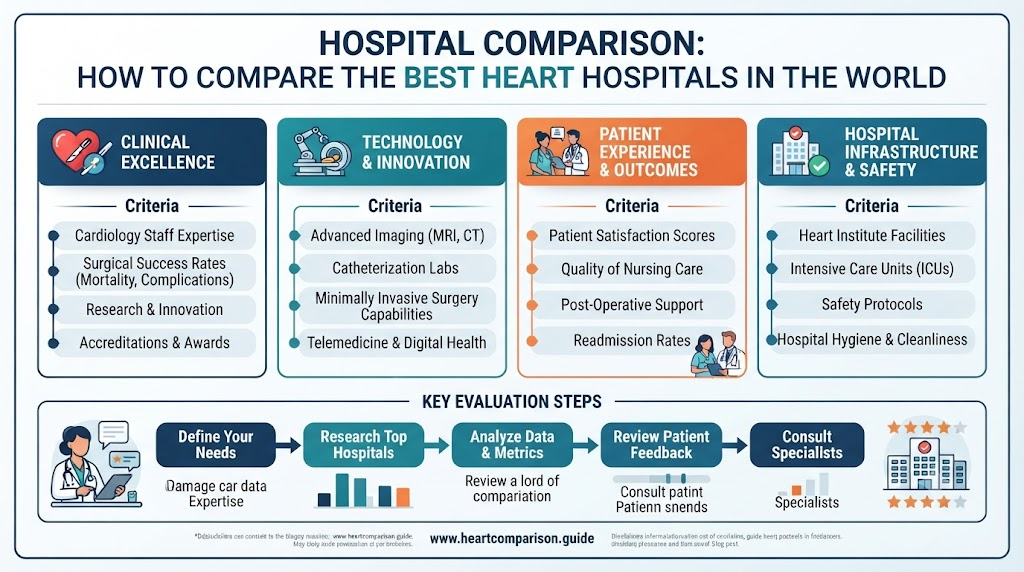
When evaluating the best heart hospitals in the world, patients should utilize specific, objective criteria rather than relying solely on generalized marketing claims.
- International Accreditations: Look for certifications from prestigious global bodies such as Joint Commission International (JCI) or national equivalents like NABH in India. These validate adherence to stringent patient safety protocols.
- Surgeon Volume and Specialization: Research the specific volume of surgeries performed annually. High-volume centers consistently demonstrate superior clinical outcomes due to refined institutional routines.
- Multidisciplinary Care Teams: A premier facility utilizes integrated teams consisting of a non-invasive cardiologist, interventional cardiologist, cardiac surgeon, and specialized cardiac anesthesiologist to build comprehensive treatment plans.
- International Patient Services: For medical tourists, the presence of dedicated international desks ensuring language interpretation, visa assistance, and seamless continuity of care is indispensable.
Comparison Table 1: Government vs. Private Cardiac Hospitals
| Features | Government Cardiac Hospitals | Private Cardiac Hospitals |
| Advantages | Highly affordable; experienced senior doctors handling massive patient volumes. | Shorter wait times; state-of-the-art infrastructure; personalized luxury patient care. |
| Limitations | Long waiting lists; crowded infrastructure; limited personalized administrative attention. | Significantly higher out-of-pocket costs; potential variation in localized pricing packages. |
| Suitable Patients | Budget-conscious local patients requiring standard cardiovascular care. | Patients seeking immediate treatment, advanced technology, or specialized international care. |
| Cost Considerations | Subsidized heavily; highly economical for standard treatments. | Premium pricing structures; comprehensive, all-inclusive specialized packages. |
Understanding Common Heart Procedures
Modern cardiovascular medicine offers various interventions tailored to the severity and nature of coronary artery disease, valve defects, or structural issues.
Coronary Artery Bypass Grafting (CABG)
Commonly referred to as bypass surgery, CABG redirects blood flow around blocked or partially blocked arteries in the heart. Finding the best hospitals for bypass surgery is essential, as this procedure demands exceptional surgical precision, advanced cardiopulmonary bypass machines, and intensive post-operative management.
Angioplasty and Stenting
This minimally invasive alternative involves inserting a balloon-tipped catheter to widen narrowed coronary arteries, followed by stent deployment. The best hospitals for angioplasty offer 24/7 cardiac catheterization labs staffed by experienced interventional specialists capable of executing emergency procedures during acute cardiac events.
Comparison Table 2: Bypass Surgery (CABG) vs. Angioplasty (PCI)
| Features | Bypass Surgery (CABG) | Angioplasty (PCI) |
| Advantages | Long-term durability; ideal for complex, multi-vessel arterial blockages. | Minimally invasive; rapid recovery time; requires local anesthesia only. |
| Limitations | Major open-heart procedure; longer hospital stay and extended recovery period. | Higher risk of restenosis over time compared to definitive bypass surgery. |
| Suitable Patients | Patients with triple-vessel disease or left main coronary artery blockages. | Patients with localized, single, or two-vessel blockages without complex anatomy. |
| Cost Considerations | Higher initial cost due to operating room time, ICU stay, and extended recovery. | Lower procedural cost, minimal downtime, and fewer inpatient hospital days. |
Treatment Cost Considerations Globally
The financial burden of cardiac procedures varies dramatically depending on the geographic location, hospital tier, and complexity of the required care. While western countries provide exceptional clinical care, the out-of-pocket expenses can be prohibitive for uninsured or underinsured individuals. This economic disparity has driven the steady growth of global medical travel for complex cardiac interventions.
Financial Planning for Heart Surgery
When planning healthcare expenses, patients must look beyond the base procedure price. A comprehensive budget should include pre-operative diagnostic imaging (such as an echocardiogram or coronary angiogram), fees for the cardiac surgeon and anesthesiologist, specialized ICU room charges, post-operative medications, and subsequent cardiac rehabilitation sessions.
Medical Tourism for Heart Surgery in India
India has emerged as a premier global hub for advanced cardiovascular treatments, combining world-class clinical outcomes with unmatched cost efficiencies.
Why International Patients Choose India
The best cardiac hospitals in India feature advanced medical technology matching top Western institutions. Many of these hospitals hold prestigious JCI accreditations, ensuring that strict patient safety and hygiene standards are maintained.
Furthermore, the best cardiac surgeons in India are globally recognized, with many having trained or practiced extensively in leading healthcare institutions across Europe and North America. This deep pool of clinical expertise makes the country an attractive destination for complex surgeries, including valve replacements, pediatric cardiac care, and minimally invasive heart surgery.
Comparison Table 3: Heart Surgery Costs: USA vs. India
| Features | Cardiac Treatment in the USA | Medical Tourism for Heart Surgery in India |
| Advantages | Immediate access for domestic residents; access to experimental clinical trials. | Enormous cost savings; world-class JCI accredited facilities; no waiting lists. |
| Limitations | Exceptionally high out-of-pocket costs for international or uninsured patients. | Requires long-distance international travel and meticulous cross-border planning. |
| Suitable Patients | Patients with premium local insurance coverage or those unable to travel. | Uninsured, underinsured, or international patients seeking top-tier affordable care. |
| Cost Considerations | High baseline costs ($70,000 to $150,000+ depending on the procedure). | Massive savings; heart surgery cost in India is often 70-80% lower than in Western nations. |
Expert Tips for Patients and Caregivers
Selecting a healthcare provider requires careful validation. Consider these actionable insights from medical travel professionals when researching your care options:
- Verify Surgeon Metrics, Not Just Hospital Brand: Confirm that your chosen specialist regularly performs the specific procedure you require. A great hospital name must be matched by an expert hand.
- Request an All-Inclusive Cost Estimate: Ensure your written quotation explicitly includes hospital stay duration, implant costs (such as specific stent or valve models), and contingency charges for unforeseen ICU extensions.
- Secure a Second Medical Opinion Early: Before committing to a major surgical procedure, upload your digital records to a trusted healthcare information platform to confirm the primary diagnosis and explore alternative, less invasive options.
Best Practices for Cardiac Treatment Planning
Achieving optimal outcomes requires thorough pre-operative organization and structured recovery plans. Follow these essential operational steps:
- Compile a Complete Medical Dossier: Maintain digital and physical copies of all recent ECGs, echocardiograms, blood panels, and angiogram films to avoid redundant diagnostic testing.
- Evaluate International Logistics: If traveling abroad, confirm that your target hospital provides comprehensive international patient services, including airport transfers, dedicated dietary accommodations, and immediate medical visa invitation letters.
- Establish a Local Post-Operative Plan: Ensure you have a local cardiologist lined up in your home city before traveling, enabling seamless continuity of care, medication adjustments, and recovery monitoring once you return home.
Common Mistakes to Avoid
Avoiding frequent pitfalls can save valuable time and prevent unnecessary financial or physical stress:
- Focusing Solely on the Lowest Price: Selecting a medical center based entirely on the lowest bid can result in hidden costs or compromises in infrastructure quality. Prioritize recognized hospital accreditations.
- Misinterpreting Recovery Timelines: Patients frequently underestimate the time required before they can safely travel or return to work. Always clear your travel timeline explicitly with your cardiac surgeon.
- Overlooking Post-Discharge Support: Ensure your chosen platform or hospital provides a clear mechanism for remote follow-ups, allowing you to easily communicate with your clinical team after discharge.
Why Use BestCardiacHospitals.com
The modern healthcare ecosystem presents an overwhelming amount of unstructured data, making it difficult for families to make clear, confident decisions. BestCardiacHospitals.com simplifies this critical journey by serving as a dedicated, objective information platform.
The portal allows users to seamlessly compare verified clinical credentials, explore recognized cardiac institutions, research transparent procedural costs, and review profiles of leading global heart specialists. By aggregating essential medical metrics into an accessible format, the platform empowers patients and caregivers to make well-informed, self-assured decisions for their long-term health.
Frequently Asked Questions
1. What defines the best cardiac hospitals globally?
The best institutions possess international accreditations like JCI, report high procedural success rates, house cutting-edge diagnostic technology, maintain dedicated cardiac ICUs, and utilize integrated, multidisciplinary teams of heart specialists to handle complex cases.
2. How much does heart surgery cost in India compared to Western nations?
The heart surgery cost in India is typically 70% to 80% lower than in the USA or UK. While a bypass surgery can exceed $100,000 in the West, top-tier Indian hospitals deliver equivalent clinical care for a fraction of that amount.
3. Is it safe to travel abroad for complex cardiac surgery?
Yes, provided you choose an accredited facility. Premier international patient services ensure seamless care, while highly experienced cardiac surgeons utilize standard protocols to manage risks, making medical tourism safe and highly effective.
4. What is the main difference between a cardiologist and a cardiac surgeon?
A cardiologist focuses on diagnosing heart conditions, managing diseases with medications, and performing minimally invasive procedures like angioplasty. A cardiac surgeon performs open heart surgeries, such as bypass operations and valve replacements.
5. How long is the recovery period after a coronary artery bypass graft (CABG)?
Inpatient hospital stay usually lasts 5 to 7 days. Full physical recovery of the breastbone typically takes 6 to 12 weeks, during which patients must adhere to prescribed cardiac rehabilitation and activity guidelines.
6. Do the best cardiac hospitals in India accommodate international dietary preferences?
Yes. Top hospitals offering medical tourism for heart surgery in India feature dedicated international patient wings with customized menus tailored to diverse cultural, religious, and international dietary requirements.
7. How do I verify the credentials of the best cardiac surgeons in India?
You can review their professional certifications, fellowship histories from international bodies, annual case volumes, and publications via comprehensive information platforms like BestCardiacHospitals.com before initiating contact.
8. What diagnostic tests are required before undergoing major heart surgery?
Standard pre-operative diagnostics include a detailed echocardiogram, electrocardiogram (ECG), coronary angiogram, comprehensive blood chemistry panels, and chest X-rays to assess overall surgical readiness and individual anatomy.
9. Can I get a second medical opinion through BestCardiacHospitals.com?
Yes, the platform acts as an educational resource helping you understand diagnostic options, contrast different institutional treatments, and easily evaluate various specialists for an informed second medical opinion.
10. What is minimally invasive heart surgery, and am I a candidate?
This technique accesses the heart through small incisions between the ribs rather than splitting the breastbone. Candidacy depends on your specific heart condition, vessel anatomy, and the recommendation of a specialized cardiac surgeon.
11. What metrics should I look for when comparing the best cardiology hospitals?
Key metrics include national and international accreditations (JCI/NABH), documented annual procedure volumes, patient survival rates, infection control statistics, and the availability of emergency cardiac care infrastructure.
12. How do private hospitals differ from government hospitals for cardiac care?
Private hospitals offer rapid access to care, highly advanced technologies, and individualized international patient services, whereas government facilities are highly economical but face large crowds and prolonged treatment waitlists.
13. How long should I stay in the host country after heart surgery?
Most cardiac surgeons recommend remaining near the treating facility for 10 to 14 days following hospital discharge to complete initial follow-up appointments and confirm you are fully fit to fly.
14. What are the primary signs that indicate an emergency cardiac care need?
Immediate warning signs include sudden crushing chest pain radiating to the jaw or arm, acute shortness of breath, severe dizziness, cold sweats, and unexplained nausea, requiring immediate medical intervention.
15. How do I avoid hidden costs when planning medical travel for heart surgery?
Always request a comprehensive, written, all-inclusive package quote that explicitly details the maximum covered ICU days, implant types, surgeon fees, routine medications, and step-down room rates.
Conclusion
Selecting the ideal medical institution for advanced cardiovascular care requires balancing clinical excellence, infrastructure quality, specialist expertise, and financial practicality. Whether evaluating local options or considering the significant advantages of medical tourism for heart surgery in India, making an informed choice is vital to ensuring a safe, successful outcome.
By prioritizing internationally accredited facilities, checking surgeon volumes, and understanding exact procedure costs, patients and caregivers can significantly reduce treatment anxiety. Utilizing reliable, consolidated medical insights allows you to approach complex healthcare decisions with clarity, logic, and confidence.