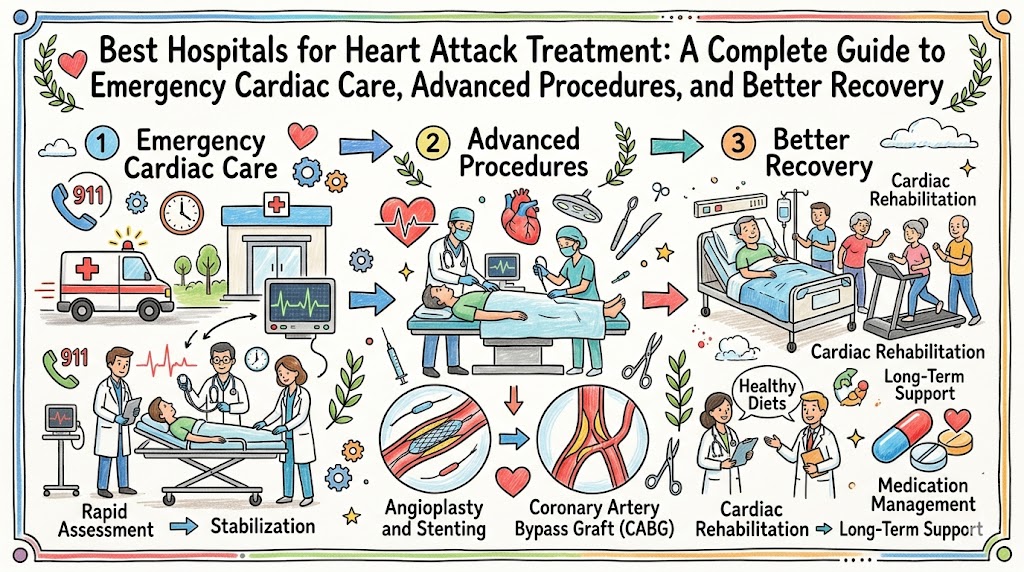
Introduction
A heart attack is a medical emergency where every second counts. Choosing the right facility before a crisis occurs can literally save your life. At BESTCARDIACHOSPITALS, we empower patients to navigate the complex world of cardiovascular medicine. Our platform helps you compare top-tier cardiac hospitals, explore cutting-edge treatment options, and connect with elite heart care specialists to ensure you receive the highest standard of care when it matters most.
What Is a Heart Attack?
A heart attack, or myocardial infarction, occurs when the flow of blood to the heart muscle is severely reduced or blocked, usually due to a buildup of fat, cholesterol, and other substances in the coronary arteries. Without oxygen-rich blood, the heart muscle begins to die.
Types of Heart Attacks
- STEMI (ST-Elevation Myocardial Infarction): A total blockage of a coronary artery; requires immediate intervention.
- NSTEMI (Non-ST-Elevation Myocardial Infarction): A partial blockage that still severely restricts blood flow.
- Coronary Spasm: A temporary tightening of the muscles in the artery wall that cuts off blood flow.
Warning Signs and Symptoms
Common symptoms include crushing chest pain (angina), shortness of breath, cold sweats, and pain radiating to the jaw, neck, back, or arms.
Heart Attack Symptoms and Emergency Actions
| Symptom | Severity | Recommended Action |
| Persistent chest pressure | High | Call Emergency Services (108/911) |
| Radiating arm/jaw pain | High | Do not drive; seek immediate help |
| Sudden shortness of breath | High | Sit down, stay calm, call for help |
| Lightheadedness/Nausea | Moderate | Seek urgent medical evaluation |
Why Immediate Treatment Is Critical
The “Golden Hour”—the first 60 minutes after symptoms begin—is the window where intervention is most effective. Rapid treatment minimizes heart muscle damage, prevents complications like heart failure, and significantly improves long-term survival rates.
Best Hospitals for Heart Attack Treatment: Key Features
Top-rated cardiac centers share several hallmarks of excellence:
- 24/7 Emergency Cardiac Care: Round-the-clock availability of an interventional cardiology team.
- Advanced Diagnostics: State-of-the-art imaging like Cardiac MRI, CT Angiography, and real-time echo labs.
- Accreditation: JCI or NABH certifications ensuring global quality and safety standards.
- Integrated Heart Teams: Seamless collaboration between cardiologists, surgeons, and critical care intensivists.
Treatment Options
| Treatment | Purpose | Benefits |
| Angioplasty | Unblock arteries | Restores blood flow immediately |
| Stent Placement | Keep artery open | Prevents future re-narrowing |
| Thrombolytic Therapy | Dissolve clots | Minimally invasive; uses medication |
| CABG (Bypass) | Create new blood path | Ideal for complex, multi-vessel disease |
Role of Interventional Cardiologists
These specialists are the “first responders” of the cath lab. They perform minimally invasive procedures to open blocked arteries, often using catheters threaded through blood vessels, avoiding the need for open-heart surgery whenever possible.
Recovery After a Heart Attack
Recovery is a phased process that focuses on healing the heart muscle and preventing future events.
Heart Attack Recovery Timeline
| Recovery Phase | Timeframe | Recommended Activities |
| Acute Phase | 0–2 weeks | Rest, monitored activity, medication compliance |
| Sub-Acute Phase | 3–8 weeks | Gentle walking, light chores, cardiac rehab start |
| Maintenance Phase | 8+ weeks | Structured exercise, diet adjustment, full follow-up |
Choosing the Right Cardiac Hospital
| Factor | Importance | Questions to Ask |
| Emergency Response Time | Critical | What is your average “door-to-balloon” time? |
| Staff Expertise | High | Is your cardiology team available 24/7? |
| Technology | Moderate | Do you have an on-site Cath Lab? |
Lifestyle Changes for Heart Health
- Quit Smoking: Immediate reduction in cardiovascular risk.
- Heart-Healthy Diet: Focus on Mediterranean-style nutrition (fruits, vegetables, lean proteins).
- Consistent Activity: At least 150 minutes of moderate exercise weekly.
- Stress Management: Yoga, meditation, or counseling.
Common Myths vs Facts
- Myth: “Heart attacks only happen to the elderly.” Fact: They can occur at any age due to genetic factors or lifestyle.
- Myth: “You must have chest pain.” Fact: Many heart attacks, especially in women, present as fatigue or shortness of breath.
Future of Cardiac Emergency Care
The landscape is shifting toward AI-powered diagnostic tools that detect blockage signatures before a full-blown attack occurs. Additionally, gene-editing and stem cell research offer hope for regenerating damaged heart tissue post-injury.
Expert Recommendations
- Know your nearest trauma center: Don’t wait for an emergency to look it up.
- Regular Screenings: If you are over 40, prioritize annual lipid profiles and ECGs.
- Cardiac Rehab: Do not skip these programs—they are the most effective way to regain confidence and strength.
Patient Heart Health Checklist
- Keep a list of all current medications in your wallet or phone.
- Know your blood pressure and cholesterol numbers.
- Identify the “Heart Attack Team” hospital near your home or office.
- Recognize early warning signs for family members.
Frequently Asked Questions
- What is the ‘door-to-balloon’ time? The time from hospital arrival to opening the artery.
- Are all hospitals equipped for heart attacks? No, only those with a Cath Lab.
- Is angioplasty painful? No, it is performed under local anesthesia.
- Can I drive after a heart attack? Usually not for several weeks; consult your doctor.
- What is a stent? A mesh tube that keeps an artery open.
- Does insurance cover cardiac procedures? Most major plans do.
- What is cardiac rehab? A structured exercise and education program.
- Can I exercise right away? No, start slowly per doctor’s orders.
- Are heart attacks hereditary? Genetics are a significant risk factor.
- What is a silent heart attack? One with little or no obvious symptoms.
- How do I find a cardiologist? Use verified platforms like BESTCARDIACHOSPITALS.COM.
- Can stress cause a heart attack? Chronic stress contributes to high blood pressure.
- Is Aspirin recommended during an attack? Only if advised by emergency services.
- How long does a stent last? Often a lifetime with proper medication.
- What is the difference between CABG and Angioplasty? CABG is surgery; Angioplasty is a catheter procedure.
- Can I drink alcohol post-recovery? Limit strictly as advised by a doctor.
- What is the survival rate? High with rapid, modern medical intervention.
- Do I need a special diet? Yes, low sodium and low saturated fat.
- How often should I have check-ups? Regularly, per your cardiologist’s schedule.
- Can I travel after an attack? Wait for medical clearance, usually after 4–6 weeks.
Conclusion
A heart attack is a life-altering event, but it does not have to be the end of your vitality. Choosing the best hospitals for heart attack treatment is the most significant decision you can make, as it directly correlates to the quality of emergency response, the precision of life-saving procedures, and the efficacy of your long-term rehabilitation.Top-tier cardiac centers differentiate themselves through their 24/7 availability of interventional cardiologists, state-of-the-art catheterization labs, and multidisciplinary heart teams that work in perfect synchronization. When every minute is precious, the ability of a hospital to mobilize quickly—achieving excellent “door-to-balloon” times—is what saves heart muscle and prevents lasting disability.Beyond the emergency, these hospitals provide comprehensive support through cardiac rehabilitation programs, which are essential for physical and psychological recovery. By engaging in these programs, you not only regain your strength but also gain the education necessary to modify your lifestyle and mitigate future risks. Proactive heart health management, including regular screenings and informed choices about your healthcare providers, creates a safety net that protects you and your loved ones.