Introduction
The human heart relies on a sophisticated system of four specialized valves to keep oxygen-rich blood moving through the body in a steady, one-way direction. When these structural valves become stiff, narrowed, or leaky due to disease or natural aging, the heart must work significantly harder to pump blood. Over time, this chronic overwork can lead to heart failure, severe fatigue, or life-threatening arrhythmias. For patients diagnosed with advanced valvular disease, finding a top-tier hospital equipped with advanced structural heart programs is a critical step toward reclaiming their health and longevity.
Navigating complex healthcare networks to find highly specialized surgical teams can feel overwhelming when dealing with serious medical diagnoses. Informational medical platforms like BestCardiacHospitals serve as an invaluable resource for patients and families during this stressful time. The platform helps individuals discover leading cardiac hospitals, compare treatment options, explore heart specialists, review advanced cardiac care services, and make informed healthcare decisions. Gaining a deep understanding of standard surgical approaches, transcatheter breakthrough procedures, and clinical center quality metrics empowers you to take an active role in planning your cardiovascular care.
Why Choosing the Right Hospital for Valve Replacement Matters
Heart valve replacement is a highly technical intervention that demands exceptional anatomical precision. Clinical data consistently shows that surgical outcomes, long-term survival rates, and perioperative complication rates are directly tied to the annual procedural volume of both the operating surgeon and the hospital itself (Praz et al., 2025). High-volume centers show significantly lower rates of stroke, structural valve degeneration, and surgical site infections than low-volume, general community facilities.
Furthermore, advanced valve care has evolved beyond standard, one-size-fits-all treatments. Top-performing cardiovascular centers utilize a multidisciplinary framework known as a Heart Team. This team brings together interventional cardiologists, cardiothoracic surgeons, advanced imaging specialists, and cardiac anesthesiologists to review each patient’s specific anatomy. Choosing a center with an established, high-volume Heart Team ensures you receive a personalized treatment plan—whether that involves a traditional open-heart procedure, a minimally invasive approach, or an advanced transcatheter intervention.
Understanding Heart Valve Disease
To understand why a replacement procedure becomes necessary, it is helpful to look at the specific pathologies that can impact the heart’s four structural valves. Valvular heart disease generally falls into two mechanical categories: stenosis (where the valve leaflets become thick and stiff, narrowing the opening and restricting forward blood flow) and regurgitation (where the valve leaflets fail to close tightly, allowing blood to leak backward).
   [Stenosis] ──> Valve stiffens and narrows ──> Restricts forward blood flow
   [Regurgitation] ──> Valve leaflets fail to close ──> Blood leaks backward
Aortic Valve Disease
The aortic valve rests between the left ventricle and the aorta, serving as the main gateway through which oxygenated blood is propelled out to the entire body. Aortic stenosis, often driven by age-related calcification, forces the left ventricle to generate exceptionally high internal pressures to squeeze blood through a narrowed opening. This chronic strain can lead to left ventricular hypertrophy (thickening of the heart muscle) and progressive heart failure.
Mitral Valve Disease
The mitral valve sits between the left atrium and the left ventricle. Mitral regurgitation is a common structural issue where blood flows backward into the lungs during ventricular contraction. This backward flow leads to pulmonary hypertension, shortness of breath, and atrial fibrillation (Praz et al., 2025). While surgeons prioritize heart valve repair surgery for the mitral valve whenever possible, severe calcification or extensive structural damage may require a complete replacement.
Tricuspid Valve Disease
The tricuspid valve regulates blood flow between the right atrium and the right ventricle. Tricuspid regurgitation was historically managed with medications, but modern guidelines now recommend earlier, proactive interventions (Wojakowski, 2026). Chronic tricuspid leakage allows blood to back up into the systemic venous system, which can cause right-sided heart failure, painful abdominal swelling (ascites), and severe lower-extremity edema.
Pulmonary Valve Disease
The pulmonary valve controls the flow of deoxygenated blood from the right ventricle into the pulmonary arteries toward the lungs. Pathologies affecting this valve are most frequently linked to congenital heart defects discovered in childhood or severe pulmonary hypertension in adults, occasionally requiring specialized structural interventions later in life.
What Is Heart Valve Replacement Surgery?
When a heart valve becomes too damaged, scarred, or calcified to be effectively repaired, a complete replacement becomes medically necessary. Heart valve replacement surgery is a highly controlled clinical procedure where the patient’s damaged, non-functional native valve is carefully excised and replaced with an advanced prosthetic substitute.
The primary clinical objective of this procedure is to immediately restore normal, unhindered hemodynamics (blood flow dynamics) within the heart’s chambers. Removing the structural bottleneck or stopping chronic backflow instantly relieves pressure on the heart walls, resolves debilitating physical symptoms, and initiates a positive healing process known as reverse ventricular remodeling (Auensen et al., 2017).
Types of Valve Replacement Procedures
Modern cardiac medicine offers several distinct surgical techniques and prosthetic designs, allowing teams to match treatments to a patient’s age, lifestyle, and anatomical needs.
Mechanical Valves
Mechanical valves are durable prosthetics crafted from advanced materials like pyrolytic carbon and titanium. Their primary clinical benefit is structural longevity; they do not wear out over time and can easily last a patient’s entire life. However, their synthetic surfaces carry an increased risk of inducing blood clots. As a result, patients with mechanical valves must commit to lifelong anticoagulant medication (blood thinners like warfarin) and undergo routine blood monitoring to prevent thromboembolic strokes.
Biological (Tissue) Valves
Biological prostheses, or bioprosthetic valves, are engineered using natural tissues sourced from porcine (pig) aortic valves or bovine (cow) pericardial membranes. Because these natural tissue surfaces mimic human anatomy, they carry a very low risk of causing blood clots, eliminating the need for lifelong blood thinners for most patients. The primary drawback is their limited lifespan: tissue valves naturally undergo slow calcification and structural valve degeneration over $10-15$ years, meaning younger patients may eventually require a second replacement procedure (Lee, 2026).
TAVR / TAVI (Transcatheter Aortic Valve Replacement)
TAVR procedure (Transcatheter Aortic Valve Replacement), also referred to as TAVI, has revolutionized structural cardiology. Instead of opening the chest, a structural cardiologist folds a tissue valve inside a thin, flexible catheter and guides it into the heart through a small puncture in the femoral artery in the groin. Once positioned inside the failing native valve, the new prosthetic is expanded, instantly taking over valve function. Current clinical guidelines endorse TAVR as a first-line option for appropriate patients aged 70 or older, regardless of their surgical risk profile (Wojakowski, 2026).
Minimally Invasive Valve Surgery
For patients who require surgery but are not candidates for a transcatheter procedure, minimally invasive valve surgery offers a middle ground. Rather than dividing the entire breastbone, the surgeon accesses the heart through a small, 2-to-3-inch incision between the ribs (a minithoracotomy) or through a partial division of the sternum. This approach utilizes specialized, long-shafted surgical instruments and high-definition endoscopes, resulting in less trauma, reduced blood loss, and a significantly faster recovery than traditional surgery.
Traditional Open-Heart Valve Surgery
Traditional open-heart valve surgery remains the gold-standard approach for complex, multi-valve diseases or when a patient’s anatomy is unsuited for transcatheter methods (Zancanaro, 2026). The surgeon performs a full median sternotomy to gently separate the breastbone, then connects the patient to a heart-lung bypass machine. This machine temporarily takes over the work of pumping and oxygenating blood, allowing the surgeon to safely stop the heart and operate within a still, bloodless surgical field to complete the replacement.
Table 1: Types of Heart Valve Replacement Procedures
| Procedure Type | Primary Benefits | Average Recovery Time | Ideal Candidate Profile |
| Traditional Open Surgery | Superior direct visualization; ideal for multi-valve disease or complex anatomy. | $6 – 8$ weeks | Adults under 70 with low surgical risk or complex anatomy needing concomitant procedures. |
| Minimally Invasive Surgery | Smaller incisions; reduced postoperative pain; lower risk of wound infections. | $3 – 5$ weeks | Patients with isolated single-valve disease and no significant chest wall deformities. |
| TAVR / TAVI Procedure | No sternotomy required; performed under conscious sedation; rapid return home. | $3 – 7$ days | Patients aged $\ge 70$ with suitable transfemoral anatomy, or high-risk/inoperable individuals. |
Table 2: Mechanical vs. Biological Heart Valves
| Comparison Feature | Mechanical Prosthetic Valve | Biological (Tissue) Prosthetic Valve |
| Material Composition | Pyrolytic carbon, titanium, and Dacron mesh. | Bovine pericardium or porcine aortic tissue. |
| Structural Durability | Lifelong ($30+$ years); rarely wears out. | Finite ($10 – 15$ years); undergoes slow calcification. |
| Anticoagulation Need | Mandatory, lifelong blood thinners (Warfarin). | Short-term ($3-6$ months) or none required. |
| Audible Clicking Sound | Yes; a faint mechanical click may be audible. | No; operates silently like a native human valve. |
| Reoperation Likelihood | Extremely low risk of mechanical failure. | Higher probability of needing a future intervention. |
| Preferred Age Group | Typically recommended for patients under 55-60. | Typically preferred for patients over 65-70. |
Signs You May Need Valve Replacement Surgery
Valvular diseases often progress subtly, as the heart initially compensates for a narrowing or leaky valve by thickening its muscle walls. However, as compensation limits are reached, clear warning signs emerge, signaling that you should seek a comprehensive evaluation at a specialized heart facility.
- Exertional Dyspnea: Experiencing unusual shortness of breath during everyday activities like climbing a flight of stairs or walking short distances.
- Angina Pectoris: Chest pain, pressure, or a tight, squeezing sensation that radiates across the chest during physical exertion or stress, caused by inadequate blood flow to the heart muscle.
- Syncope or Presyncope: Episodes of sudden dizziness, lightheadedness, or fainting spells, which occur when a narrowed valve restricts blood flow to the brain.
- Peripheral Edema: Noticeable swelling in the feet, ankles, calves, or abdomen, indicating that fluid is backing up due to right-sided heart strain.
- Palpitations: A sensation of a racing, pounding, or irregular heartbeat, frequently linked to atrial fibrillation triggered by valve-related chamber enlargement.
Table 3: Valve Disease Symptoms and Warning Signs
| Symptom | Common Underlying Cause | When to Seek Medical Help |
| Shortness of Breath while Lying Flat | Mitral or aortic regurgitation causing fluid backup into the lungs. | Schedule a prompt evaluation with your cardiologist. |
| Fainting or Lightheadedness During Exercise | Severe aortic stenosis restricting blood flow to the brain under exertion. | Seek immediate medical evaluation; avoid heavy exertion. |
| Sudden, Unexplained Weight Gain | Rapid fluid retention from worsening tricuspid or mitral valve failure. | Contact your care team if you gain $>3\text{ lbs}$ in 24 hours. |
| Chronic, Overwhelming Fatigue | Decreased systemic cardiac output depriving muscles of oxygen. | Discuss with a specialist if fatigue interferes with daily tasks. |
Common Causes of Heart Valve Disease
Valvular pathology can trace its roots to congenital conditions present from birth, acute infectious events, or chronic degenerative processes that develop over decades.
- Age-Related Calcification: The most common cause of aortic stenosis in older adults. Over decades of repetitive mechanical stress, calcium deposits naturally build up on the valve leaflets, making them stiff and rigid.
- Myxomatous Degeneration: A genetic condition where the connective tissues of the valve weaken, making the leaflets unusually stretchy and floppy. This often leads to mitral valve prolapse and severe regurgitation.
- Rheumatic Heart Disease: A condition resulting from untreated streptococcal infections (strep throat) in childhood. The immune system inadvertently attacks the heart valves, leading to severe scarring, fusion, and stenosis decades later.
- Infective Endocarditis: A serious bacterial or fungal blood infection where pathogens attach to and destroy the delicate structure of the heart valves, often requiring emergency surgery.
- Congenital Valve Defects: Structural abnormalities present at birth. The most common is a bicuspid aortic valve, where the valve develops with only two functioning leaflets instead of the normal three, causing it to wear out prematurely.
What Makes the Best Heart Hospitals Stand Out?
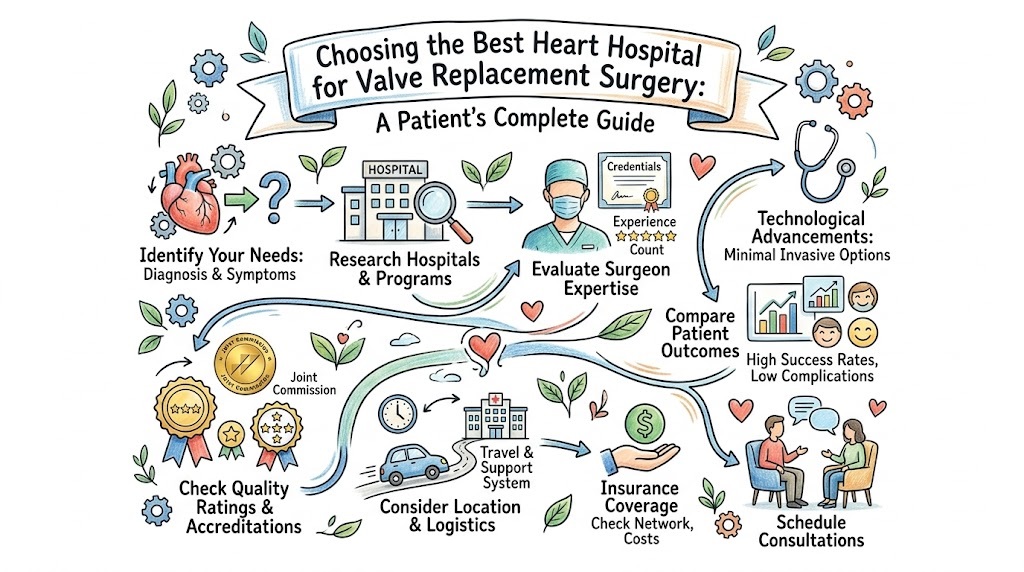
When searching for the best heart hospitals for valve replacement, look beyond basic regional marketing. Top-tier structural heart centers share several key institutional characteristics that distinguish them from general medical centers.
Elite Surgical and Interventional Teams
The best centers feature highly sub-specialized heart valve specialists who focus exclusively on structural pathologies. These surgeons and interventional cardiologists maintain exceptionally high individual case volumes, which has been clinically proven to correlate with lower complication rates and superior long-term patient outcomes (Praz et al., 2025).
Dedicated Multi-Disciplinary Valve Programs
Top-tier facilities house unified, comprehensive Heart Valve Centers. Within this dedicated framework, a patient’s diagnostic imaging, pre-operative optimization, and procedural planning are managed collectively by a regular panel of experts, ensuring a seamless, coordinated transition from diagnosis to recovery.
Advanced Surgical and Hybrid Infrastructure
Leading heart infrastructure requires significant, ongoing technological investment. Look for facilities equipped with dedicated hybrid operating rooms. These advanced surgical suites blend the sterile environment of an open operating room with the high-resolution imaging capabilities of a cardiac catheterization lab. This integration allows a care team to switch from a transcatheter approach to an open procedure instantly if an unexpected anatomical challenge arises, ensuring optimal patient safety.
Labeled Cardiac Intensive Care Units (CICUs)
The success of a valve procedure depends heavily on immediate postoperative care. Leading hospitals feature dedicated Cardiac ICUs staffed continuously by board-certified critical care cardiologists and specialized cardiac nursing teams trained to manage acute hemodynamic shifts, optimize fluid balance, and spot early recovery issues.
Advanced Technologies Used in Valve Replacement
The field of structural cardiology is continually advancing, utilizing new technological tools to improve surgical precision and safety.
- Robotic-Assisted Surgical Platforms: Using specialized robotic arms controlled by a surgeon at a high-definition console, physicians can perform mitral valve replacements through tiny, stable incisions between the ribs with exceptional visual clarity.
- Artificial Intelligence in Pre-Op Diagnostics: Modern imaging software uses AI algorithms to analyze complex cardiac CT scans. This allows teams to create precise 3D models of a patient’s aortic root, mapping out the ideal size and placement for a TAVR prosthetic before entering the procedure room (Zancanaro, 2026).
- Intraoperative Real-Time 3D TEE: Three-dimensional transesophageal echocardiography provides real-time, high-definition visual tracking of the valve structure during implantation, allowing teams to instantly confirm that a new valve is securely seated with zero leakage.
Benefits of Choosing Leading Valve Replacement Centers
Entrusting your care to an established, top-tier center offers several key clinical and practical benefits:
- Significantly Lower Complication Rates: High-volume centers consistently report lower rates of stroke, pacemaker dependency, and major bleeding events.
- Access to Clinical Trials: Top centers participate in cutting-edge research, granting patients access to next-generation prosthetic materials and advanced transcatheter devices before they are widely available.
- Optimized Length of Stay: Streamlined, evidence-based care paths allow TAVR patients to safely return home within $24-48$ hours, and open-heart patients to minimize their time spent in the hospital (Siregar et al., 2014).
- Comprehensive Post-Op Rehabilitation: Leading programs integrate structured, in-house cardiac rehabilitation directly into your recovery plan, ensuring a safe and complete return to daily physical activity.
Risks and Complications of Valve Surgery
While modern techniques have made valve replacement exceptionally safe, it remains a major cardiovascular intervention that carries inherent risks that must be carefully discussed with your surgical team:
- Stroke and Thromboembolism: Disrupting calcified tissues during a replacement can release microscopic particles into the bloodstream, carrying a small risk of perioperative stroke.
- Paravalvular Leakage (PVL): Occurs if the new prosthetic valve does not seal perfectly against the native tissue wall, allowing small streams of blood to leak around the edges of the valve casing (Lee, 2026).
- Conduction Disturbances and Pacemaker Needs: Because the heart’s electrical conduction pathways pass very close to the aortic and mitral valve rings, post-procedural tissue swelling can disrupt electrical signals, requiring a permanent pacemaker in a small percentage of patients.
- Surgical Site Infection or Mediastinitis: Open procedures carry a small risk of deep chest wound infections, which require strict adherence to sterile wound care protocols during recovery.
- Bleeding Complications: Both the use of a heart-lung bypass machine during surgery and the long-term use of anticoagulant medications carry an inherent risk of bleeding that requires careful medical monitoring.
Factors Patients Should Consider Before Choosing a Hospital
Selecting the ideal facility for your heart valve care involves checking objective performance metrics against your personal medical and logistical needs.
Table 4: Factors to Consider Before Choosing a Heart Hospital
| Hospital Selection Factor | Clinical Importance | Essential Questions to Ask the Hospital |
| Annual Volume Metrics | High annual volumes directly correlate with lower complication rates. | “How many TAVR and open-heart valve surgeries does this center perform each year?” |
| STS Star Ratings | The Society of Thoracic Surgeons grants independent 3-star ratings for quality. | “What is this hospital’s current STS star rating for isolated valve replacement?” |
| Proximity & Long-Term Follow-Up | Valve care requires lifelong tracking, which can be challenging if travel is extensive. | “Does the center coordinate with local cardiologists for long-term post-op follow-up care?” |
| Dedicated Rehabilitation Options | In-house cardiac rehabilitation programs significantly improve long-term recovery. | “Does the hospital offer an on-site, certified Phase II Cardiac Rehabilitation program?” |
Questions Patients Should Ask Their Cardiac Surgeon
Before consenting to a procedure, schedule a detailed consultation to review your options with your operating surgeon or structural cardiologist. Use this practical checklist to guide your conversation:
- “Based on my unique anatomy and age, am I a candidate for TAVR, minimally invasive surgery, or an open approach?”
- “What specific type of prosthetic valve do you recommend for me—mechanical or biological—and why?”
- “What is your personal complication rate, stroke rate, and success rate for this specific procedure?”
- “What are the long-term durability expectations for the specific prosthetic valve model you plan to implant?”
- “If we choose a tissue valve today, what are my options for a transcatheter valve-in-valve procedure in the future if it wears out?”
- “How long do you expect my total hospital stay to be, and when can I safely return to driving and working?”
Cost Factors Associated With Valve Replacement
The total financial cost of a heart valve replacement can vary widely based on the complexity of the procedure, geographic location, and insurance coverage structures.
Insurance and Medicare Considerations
Because valve replacement is a life-saving, medically necessary intervention for severe disease, it is widely covered by Medicare, Medicaid, and commercial health insurance providers. However, out-of-pocket costs can vary depending on deductibles, co-insurance percentages, and whether your chosen hospital and surgical providers are within your insurance network. Additionally, some newer, specialized transcatheter devices may require specific clinical criteria to be met before insurance approval is granted.
Breakdown of Primary Costs
- Pre-Operative Diagnostics: High-resolution cardiac CT scans, transesophageal echocardiograms, coronary angiograms, and comprehensive laboratory screenings.
- Hospitalization and Facility Fees: Operating room or hybrid suite utilization, ICU stays, specialized nursing care, and pharmaceutical expenses.
- Prosthetic Valve Device Costs: Advanced mechanical, biological, or transcatheter valve delivery systems carry substantial engineering and manufacturing costs.
- Post-Acute Care: Inpatient or outpatient cardiac rehabilitation sessions, follow-up imaging, and long-term anticoagulant tracking supplies.
Recovery and Rehabilitation After Valve Surgery
Recovering from a valve replacement is a phased process that requires a careful balance between rest and gradual physical mobilization.
The In-Hospital Recovery Window
TAVR patients often find themselves sitting up in bed a few hours after their procedure and are frequently discharged home within $1-2$ days. Open-heart surgery patients typically spend $1-2$ days in the Cardiac ICU under close monitoring before transferring to a standard cardiovascular ward for an additional $3-5$ days before discharge.
The Home Recovery Phase
For open-surgery patients, the first 6 to 8 weeks focus heavily on allowing the divided breastbone to heal completely. Patients must strictly avoid lifting anything heavier than 5 to 10 pounds, refrain from driving, and use proper techniques when getting out of bed to protect the sternum. Walking at a gentle pace remains the best early exercise for all recovery paths.
Phase II Cardiac Rehabilitation
Around 2 to 4 weeks post-discharge, patients should begin a formal Phase II Cardiac Rehabilitation program. This structured program provides medically supervised exercise sessions paired with continuous ECG monitoring, tailored nutritional advice, and lifestyle counseling to help you safely rebuild your cardiovascular endurance and strength.
Lifestyle Changes After Valve Replacement
Implanting a new valve is only part of the journey; maintaining long-term cardiovascular health requires a commitment to heart-healthy lifestyle choices.
- Commitment to Medication Compliance: If you receive a mechanical valve, taking your prescribed anticoagulant medication at the exact same time every day is essential to prevent dangerous clot formation.
- Adopting a Low-Sodium Eating Plan: Transition to a Mediterranean or DASH-style diet focused on fresh vegetables, lean proteins, and whole grains while limiting sodium intake to manage fluid balance and blood pressure.
- Diligent Oral Hygiene Habits: Bacteria from gum infections can enter the bloodstream and travel directly to your new prosthetic valve, causing a dangerous infection known as prosthetic valve endocarditis. Brush and floss daily, and always notify your dentist that you have a prosthetic heart valve before any dental cleanings, as you will need to take preventive antibiotics.
- Consistent, Low-Impact Activity: Incorporate regular, low-impact physical activities like brisk walking, swimming, or cycling into your weekly routine to keep your heart muscle strong and efficient.
Common Myths vs. Facts About Heart Valve Surgery
- Myth: TAVR is always a better choice than open-heart surgery for every single patient.
- Fact: While TAVR is excellent for older adults, long-term studies show that for younger, low-risk patients, open surgical replacement offers superior long-term valve durability and lower reintervention rates (Marin-Cuartas et al., 2026).
- Myth: Once my heart valve is replaced, my cardiovascular disease is completely cured for life.
- Fact: The surgery corrects the mechanical blockage or leak, but it does not stop the underlying processes that cause vascular wear and tear. Protecting your heart requires lifelong management of blood pressure, cholesterol, and lifestyle habits.
- Myth: People with prosthetic heart valves can never safely exercise or return to sports.
- Fact: The goal of a valve replacement is to help you return to an active life. Once fully healed and cleared by a cardiologist, most patients can safely enjoy a wide range of physical activities and recreational sports.
- Myth: If I need a tissue valve replaced down the road, I will automatically face another open-heart surgery.
- Fact: Thanks to advanced techniques, many failing tissue valves can now be safely treated using a minimally invasive, catheter-based “valve-in-valve” TAVR procedure, avoiding the need for a second open surgery.
Latest Innovations in Cardiac Valve Treatment
The field of structural cardiology continues to advance, introducing new techniques that expand treatment options for patients worldwide.
Transcatheter Edge-to-Edge Repair (TEER)
For patients with severe mitral or tricuspid regurgitation who are too frail for traditional surgery, TEER (Transcatheter Edge-to-Edge Repair) options provide a valuable, minimally invasive alternative. Using a small catheter inserted through the groin, a structural specialist can place a tiny clip on the leaking valve leaflets, clamping them together to significantly reduce backflow without replacing the valve entirely (Wojakowski, 2026).
Dry-Storage Bioprosthetic Materials
Traditional tissue valves must be stored in specialized chemical preservatives that require careful rinsing before implantation. Next-generation tissue valves utilize advanced anti-calcification treatments that allow them to be stored dry, simplifying preparation in the operating room and potentially extending the functional lifespan of the tissue leaflets.
Future of Valve Replacement Technology
Looking ahead, structural heart care is moving toward highly personalized, innovative designs aimed at improving durability and reducing complications.
Polymeric Structural Heart Valves
Engineered using next-generation biocompatible polymers, these advanced synthetic valves aim to combine the lifelong durability of mechanical valves with the low-clotting benefits of tissue valves, potentially eliminating the need for long-term blood thinners (Lee, 2026).
Tissue-Engineered Bioresorbable Matrices
Researchers are exploring tissue-engineered valves created using bioresorbable scaffolds. Once implanted, these advanced matrices are designed to guide the growth of the patient’s own cellular tissues, gradually dissolving to leave behind a living, functional human valve that can grow and self-repair over time.
Expert Recommendations
Clinical guidance from leading international cardiovascular societies emphasizes a thoughtful, long-term approach to selecting treatment options:
Clinical Consensus: “Modern structural heart care requires moving away from simply picking between a quick transcatheter option or a surgical procedure. Instead, teams should focus on patient-centered, lifetime management plans (Wojakowski, 2026). The immediate benefits of a minimally invasive or transcatheter approach must be carefully weighed against long-term durability and the potential need for future procedures down the road, particularly when treating younger populations. Patients achieve the best outcomes when they seek care at high-volume, established Heart Valve Centers where an integrated Heart Team can match the treatment strategy to the patient’s unique anatomy and long-term health goals.”
Key Takeaways
- Volume Directs Safety: Surgical safety and long-term success are directly tied to the annual procedural volume of the hospital and its care teams.
- The Team Approach Rule: Always look for facilities that use a collaborative, multi-disciplinary Heart Team to plan and evaluate your treatment options.
- Prosthetic Longevity Trade-offs: Mechanical valves offer lifetime durability but require lifelong blood thinners; tissue valves eliminate the need for blood thinners but have a limited functional lifespan of $10-15$ years.
- TAVR Expansion: Transcatheter procedures offer a highly effective, minimally invasive path for patients aged 70 or older, provided their arterial anatomy is suitable.
- Lifelong Maintenance: A valve replacement restores normal blood flow, but maintaining heart health requires long-term commitment to blood pressure management, consistent exercise, and careful oral hygiene.
Frequently Asked Questions
1. How long does a heart valve replacement surgery take?
A traditional open-heart valve replacement typically takes between 3 and 5 hours, depending on whether other procedures—like a coronary artery bypass—are performed at the same time. A transcatheter TAVR procedure is faster, usually completed within 1 to 2 hours.
2. What is the average life expectancy after a valve replacement?
For the majority of patients, a successful valve replacement restores normal blood flow, improves life expectancy, and allows individuals to live a normal lifespan comparable to peers of a similar age without heart disease, provided they maintain healthy lifestyle habits.
3. Can I undergo an MRI if I have a mechanical heart valve?
Yes, most modern mechanical and tissue heart valves are constructed using non-ferromagnetic materials like titanium or pyrolytic carbon, making them completely safe for standard MRI screenings. However, always provide your imaging team with your specific valve identification card before any scan.
4. Why are antibiotics required before dental work after a valve replacement?
Prosthetic heart valves are susceptible to bacterial infections. Routine dental work can release oral bacteria into your bloodstream, where they can attach to the new valve surface and cause a serious condition called endocarditis. Taking preventive antibiotics before your appointment mitigates this risk.
5. What happens if a biological tissue valve wears out?
If a biological tissue valve slowly calcifies and fails after $10-15$ years, patients can frequently avoid another open-heart surgery. Instead, teams can often place a new transcatheter valve directly inside the old, failing prosthetic using a minimally invasive valve-in-valve TAVR procedure.
6. Will I be awake during a TAVR procedure?
Most TAVR procedures are performed using conscious sedation (twilight sleep) paired with local numbing medications at the puncture site rather than general anesthesia. This allows for a faster, easier recovery and a shorter stay in the hospital.
7. How long do I need to wait before driving after open-heart surgery?
Open-heart surgery patients should avoid driving for at least 4 to 6 weeks. This restriction ensures the divided breastbone has healed sufficiently to handle the physical stress of steering or the sudden impact of an airbag deployment.
8. What does a mechanical valve click sound feel like?
Because mechanical valves use rigid leaflets crafted from carbon and titanium, they can produce a faint, audible clicking sound when they snap shut during each heartbeat. Most patients quickly adjust to this sound, which is most noticeable in quiet rooms or when lying in bed.
9. What is the difference between TAVR and TAVI?
There is no difference between the two terms. TAVR stands for Transcatheter Aortic Valve Replacement, while TAVI stands for Transcatheter Aortic Valve Implantation. Both terms refer to the exact same minimally invasive, catheter-based procedure.
10. Can a blood test confirm if my heart valve is failing?
A simple blood test cannot diagnose structural valve disease. However, doctors routinely check a specific biomarker called BNP (Brain Natriuretic Peptide). Elevated BNP levels indicate that the heart muscle is experiencing increased strain or pressure, which can flag the need for a detailed echocardiogram.
11. Can pregnant women receive a mechanical heart valve?
Managing a mechanical valve during pregnancy can be complicated because the required blood-thinning medication (warfarin) carries risks of causing birth defects. Women of childbearing age who require a valve replacement often discuss receiving a tissue valve or exploring specific surgical repair options with their medical team.
12. How soon can I return to work after a valve replacement?
Recovery timelines depend on the approach used and the nature of your job. TAVR patients can often return to desk-based work within 1 to 2 weeks. Patients recovering from traditional open-heart surgery typically require 6 to 12 weeks before returning to full-time work, particularly if their job involves manual labor.
13. What is a bicuspid aortic valve?
A bicuspid aortic valve is a common congenital variation where the valve develops with only two functioning leaflets instead of the normal three. This structural difference alters blood flow patterns, causing the valve to wear out and require replacement earlier in life than a typical valve.
14. What should I look for when checking my surgical incisions at home?
Inspect your incisions daily for any warning signs of infection, such as increased redness, worsening swelling, skin warmth, or foul-smelling drainage. Contact your care team immediately if you experience a fever over $101^\circ\text{F}$ or notice your breastbone shifting when you move.
15. How do I find out a hospital’s specific survival rates for valve replacements?
You can review verified hospital performance data by visiting public registry databases like the Society of Thoracic Surgeons (STS) public reporting portal or the American College of Cardiology (ACC) quality listings, which provide transparent star ratings based on clinical outcomes.
Conclusion
A heart valve replacement is a highly effective, life-changing procedure that can resolve debilitating symptoms and significantly extend your lifespan. Choosing the ideal treatment path requires looking beyond basic advertisements and focusing on objective quality measures. Prioritizing leading institutions that feature established, high-volume Heart Teams and checking performance metrics through dedicated comparison platforms like BestCardiacHospitals.com ensures you receive specialized care tailored to your unique anatomy.By actively discussing your options with a board-certified specialist, choosing the right prosthetic materials, and committing to a structured cardiac rehabilitation program, you can navigate your recovery journey safely and look forward to an active, heart-healthy future.