Introduction
Your heart is the engine that powers your life, and when it comes to your cardiovascular health, precision matters. Whether you are addressing a minor concern or managing a complex heart condition, the quality of care you receive depends heavily on the tools, expertise, and diagnostic capabilities available at your chosen medical facility.
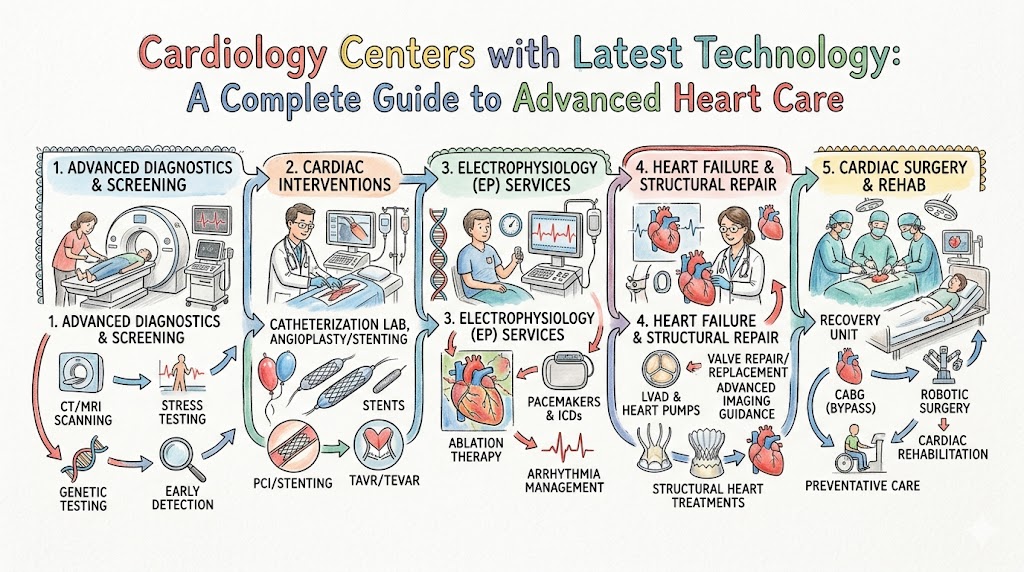
Modern cardiology has moved far beyond basic physical exams. Today, advanced imaging, robotic-assisted surgery, and digital monitoring systems have transformed how heart disease is detected and treated, often turning life-altering diagnoses into manageable conditions. At BestCardiacHospitals, we believe that access to the latest technology is not a luxury—it is a fundamental necessity for achieving the best health outcomes. In this guide, we will walk you through what defines a technologically advanced cardiology center, how these innovations work, and why choosing the right center is the most important decision for your long-term heart health.
Quick Answer
A technologically advanced cardiology center is characterized by the integration of high-resolution imaging, robotic-assisted surgical tools, and digital patient monitoring systems. These centers utilize state-of-the-art catheterization labs, AI-driven diagnostic software, and dedicated cardiac intensive care units to ensure precision. By focusing on minimally invasive procedures and early detection, these facilities significantly reduce patient recovery times, minimize surgical risks, and improve long-term survival rates. Choosing such a center ensures you receive personalized, evidence-based care that keeps pace with the latest global advancements in heart health.
Understanding Modern Cardiology Centers
What Is a Cardiology Center?
A cardiology center is a specialized medical facility dedicated to the diagnosis, treatment, and ongoing management of heart-related issues. These centers house a range of specialists, from interventional cardiologists to cardiac surgeons, all working in a synchronized environment to address various heart conditions.
Why Specialized Heart Care Matters
Heart disease is complex and often multifaceted. Specialized centers provide the concentrated expertise required to manage conditions that general practitioners or general hospitals might not see frequently. This focus translates into better proficiency, smoother workflows, and higher safety standards for patients.
Common Heart Conditions Treated
These centers handle a wide spectrum of issues, including coronary artery disease (blockages), arrhythmias (irregular heartbeats), structural valve problems, heart failure, and congenital heart defects.
Who May Need Cardiology Care?
Anyone with symptoms like chest pain, unexplained shortness of breath, dizziness, or a family history of heart disease should seek evaluation. Additionally, individuals with risk factors like high blood pressure or diabetes benefit significantly from regular cardiology care.
The Importance of Early Detection
Heart disease is often “silent” in its early stages. Advanced diagnostic technology allows cardiologists to detect minute changes in heart function or blood flow before a major cardiac event occurs, potentially saving lives through simple lifestyle or medical interventions.
The Role of Technology in Modern Heart Care
Advanced Diagnostic Systems
Technology enables doctors to look inside the heart without invasive surgery. Modern systems provide crystal-clear images that allow for precise identification of even the smallest issues within the heart’s vessels or valves.
Faster and More Accurate Diagnoses
Digital diagnostic tools analyze data in seconds, providing cardiologists with immediate insights. This speed is vital during emergencies, such as a heart attack, where every minute spent without blood flow increases potential muscle damage.
Improved Patient Safety
Modern technology includes safety protocols integrated directly into surgical and diagnostic equipment, which monitor a patient’s vital signs in real-time, drastically reducing the risk of complications during procedures.
Better Treatment Outcomes
Because technology allows for minimally invasive approaches, patients experience less trauma to the body. This results in fewer infections, less pain, and a higher success rate for complex procedures.
Enhanced Recovery Monitoring
Post-procedure, digital systems and wearable devices allow the medical team to monitor your heart rate, rhythm, and blood pressure from afar, ensuring that your recovery stays on track.
Latest Technologies Used in Cardiology Centers
Advanced Cardiac Imaging
From high-speed CT scans to multi-dimensional ultrasound, imaging is the cornerstone of heart care. These tools allow doctors to see the heart beating, measure blood flow, and inspect vessel walls in real-time.
3D and 4D Echocardiography
These technologies provide a three-dimensional view of the heart’s anatomy, allowing surgeons to plan procedures with pinpoint accuracy by seeing the heart structure exactly as it appears inside the body.
Cardiac CT and MRI
Cardiac CT and MRI provide a comprehensive view of the heart’s structure, identifying calcification in arteries or scarring in the heart muscle that traditional tests might miss.
AI-Assisted Heart Diagnostics
Artificial intelligence is now used to scan thousands of medical images to identify patterns or anomalies that even an expert eye might overlook, ensuring a higher level of diagnostic accuracy.
Digital Heart Monitoring Systems
These systems allow for the continuous, non-intrusive tracking of heart rhythm over days or weeks, making it easier to catch infrequent arrhythmias that occur outside the office.
Wearable Heart Health Devices
Many patients now use FDA-cleared wearable devices that sync directly with the cardiology center, providing the doctor with a steady stream of data regarding heart activity.
Remote Patient Monitoring
Remote monitoring bridges the gap between hospital visits, allowing doctors to detect subtle changes in your condition early and adjust your medication before a serious issue arises.
Advanced Cardiac Procedures
Coronary Angiography
This procedure involves using a specialized dye and X-ray imaging to view the heart’s blood vessels and pinpoint any blockages.
Angioplasty and Stent Placement
During this procedure, a small balloon is used to open a narrowed artery, and a mesh tube (stent) is inserted to keep the vessel open, restoring healthy blood flow.
Electrophysiology Procedures
These procedures focus on the heart’s electrical system, using specialized mapping technology to find and correct the source of irregular heartbeats.
Pacemaker Implantation
For patients with slow heartbeats, surgeons implant a small, battery-operated device that sends electrical impulses to the heart to maintain a steady, healthy rhythm.
Implantable Cardioverter Defibrillators (ICDs)
These devices monitor for life-threatening heart rhythms and can deliver an electrical shock to restore a normal heartbeat automatically.
Structural Heart Procedures
These involve repairing heart valves without open-heart surgery, often using catheters to reach the valve through the veins.
Minimally Invasive Cardiac Surgery
By making smaller incisions, surgeons can perform repairs on the heart with less impact, leading to a much faster return to daily life.
Robotic-Assisted Heart Surgery
Robotic platforms provide surgeons with enhanced dexterity and visualization, allowing them to perform intricate procedures with a level of precision that human hands alone cannot achieve.
Features of Cardiology Centers with Latest Technology
Experienced Cardiologists
Technology is only as good as the expert using it. Top centers employ cardiologists who are not only trained in general heart health but are also sub-specialized in interventional, electrophysiology, or structural heart techniques.
State-of-the-Art Cath Labs
A high-tech cardiac catheterization lab is essential. It should feature the latest in imaging, rapid ventilation, and hemodynamic monitoring equipment to handle everything from routine checks to emergency interventions.
Dedicated Cardiac Intensive Care Units
These units are specifically staffed by nurses and doctors trained in critical heart care, ensuring that patients receive specialized monitoring 24/7.
Emergency Heart Care Services
Top centers provide immediate access to heart care teams that are ready to operate or perform life-saving interventions the moment a patient arrives with cardiac symptoms.
Comprehensive Rehabilitation Programs
True care continues after the hospital. The best centers provide supervised exercise programs, nutritional support, and educational resources to help you maintain your heart health long-term.
Multidisciplinary Care Teams
Heart care works best when doctors from different fields collaborate. You should have access to a team that includes surgeons, medical cardiologists, dietitians, and physical therapists.
Personalized Treatment Planning
Every patient’s heart is unique. Advanced centers use genetic information and precise diagnostics to build a treatment plan tailored specifically to your physiology and medical history.
Benefits of Choosing a Technology-Driven Cardiology Center
Choosing a modern center means you are choosing precision. You gain access to diagnostics that catch issues earlier, procedures that carry fewer risks, and recovery paths that are significantly shorter. Furthermore, you benefit from a care team that is constantly updating their techniques based on the latest global research, ensuring you are never receiving “yesterday’s” medicine.
Comparison Table: Traditional Cardiology Care vs Advanced Technology-Based Cardiology Care
| Feature | Traditional Cardiology | Advanced Technology-Based Cardiology |
| Diagnostics | Basic ECG, Stress Test | 3D Imaging, AI Analysis, Cardiac MRI |
| Surgical Approach | Mostly Open-Heart | Minimally Invasive/Robotic |
| Diagnosis Speed | Slower, sequential testing | Rapid, integrated digital testing |
| Monitoring | Periodic In-Office Visits | Continuous, Remote Digital Monitoring |
| Recovery Time | Longer hospital stay | Faster, outpatient-focused |
| Safety Protocols | Standard manual monitoring | Real-time digital vitals/AI alerts |
Comparison Table: Common Cardiac Technologies and Their Benefits
| Technology | Primary Use | Main Benefit |
| Cardiac MRI | Detailed Heart Structure | High accuracy without radiation |
| Robotic Surgery | Precision Procedures | Faster recovery, less scarring |
| Digital Holter | Rhythm Monitoring | Detects infrequent arrhythmias |
| 3D Echocardiography | Valve/Chamber Imaging | Real-time planning for surgery |
| Smart Monitoring | Remote Patient Tracking | Prevents emergency readmissions |
Heart Disease Diagnosis Process
Initial Consultation
The journey begins with a thorough discussion of your symptoms, family history, and lifestyle factors. Your cardiologist will establish a baseline for your heart health.
Risk Assessment
Doctors evaluate your risk profile using factors like cholesterol levels, blood pressure, and potential genetic indicators.
Diagnostic Testing
Depending on your assessment, your team will schedule specific tests like blood work, echocardiography, or a cardiac CT to get a precise look at your heart.
Treatment Planning
Based on the data, your multidisciplinary team will meet to discuss the most effective, least invasive approach to resolve your specific issue.
Follow-Up Monitoring
Following your procedure or start of treatment, your team will continue to monitor your progress, adjusting your care plan as your heart health improves.
Common Heart Conditions Managed in Advanced Cardiology Centers
Coronary Artery Disease
The build-up of plaque in arteries. Modern centers use advanced imaging to identify the severity of the blockage before deciding between medication, stents, or bypass surgery.
Heart Failure
A condition where the heart struggles to pump effectively. Management involves sophisticated medication regimens, pacemaker optimization, and remote monitoring.
Arrhythmias
Irregular heartbeats managed through advanced mapping technologies and ablation procedures, or devices like pacemakers and ICDs.
Valve Disorders
Structural problems with heart valves that are now frequently treated via minimally invasive, catheter-based repairs instead of traditional open-heart surgery.
Congenital Heart Disease
Conditions present from birth that often require lifelong, highly specialized care from experts who understand the unique anatomy of these hearts.
Hypertension-Related Heart Conditions
Long-term high blood pressure can thicken the heart muscle. Advanced centers focus on aggressively managing pressure to prevent long-term damage.
Cardiac Rehabilitation and Recovery
Importance of Rehabilitation
Rehabilitation is the bridge between a cardiac event and your return to normal life. It is not just about exercise; it is about building the confidence and physical strength needed to live well.
Exercise Programs
Supervised sessions help you increase your heart’s endurance under the watchful eye of specialists, ensuring that your activity level is safe and beneficial.
Nutritional Guidance
Renal and heart-healthy diets are customized by dietitians to help lower cholesterol and blood pressure while providing you with necessary energy.
Lifestyle Modifications
Centers offer resources to help you quit smoking, manage stress, and achieve healthy weight targets, which are all vital for preventing future heart issues.
Long-Term Heart Health Monitoring
Rehab doesn’t end; it transitions into a maintenance phase where you keep in touch with your care team to ensure you remain in peak health.
How to Choose the Right Cardiology Center
Technology and Infrastructure
Look for a hospital that highlights its equipment. If they list 3D imaging, robotic surgical platforms, and a modern cath lab, they are invested in your care.
Expertise of Specialists
Research the medical staff online. Look for board-certified cardiologists who have additional fellowships in sub-specialties like interventional cardiology or electrophysiology.
Emergency Care Availability
Always ensure your center has a 24/7 cardiac emergency department. You want to know that if a problem arises at 3 AM, the experts are ready.
Patient Support Services
Does the hospital offer transplant coordination, heart failure support groups, or financial counselors? These services are vital for navigating the stress of heart illness.
Rehabilitation Programs
Ask if they have an on-site cardiac rehab unit. Access to this service is significantly better when it is integrated directly into the facility where you had your procedure.
Questions Patients Should Ask
- What is the success rate of this procedure at your facility?
- Does your center offer minimally invasive or robotic surgical options?
- What is the process for remote follow-up after I go home?
- How long has your surgical team been performing this specific procedure?
- Does your facility provide a dedicated care coordinator to help me navigate my appointments?
Risks and Challenges in Cardiac Care
Delayed Diagnosis
The biggest risk is waiting too long. Early symptoms should never be ignored. Advanced technology is only helpful if the patient seeks care as soon as they feel unwell.
Treatment Complications
All cardiac procedures have some risk. However, choosing a center with high procedural volume and the latest technology drastically reduces the statistical likelihood of complications.
Lifestyle Risk Factors
Even with the best surgery, a heart will struggle if lifestyle issues like diet and activity are not addressed. Success is a partnership between your doctor and your own daily choices.
Importance of Ongoing Monitoring
Heart conditions can change over time. Ongoing, regular check-ups with your cardiologist are essential to catch small changes before they become major problems.
How Advanced Technology Reduces Risks
By providing more accurate information and enabling less invasive procedures, technology limits the physical stress on your body, directly decreasing your overall risk profile.
Future of Cardiology Technology
Artificial Intelligence in Cardiology
AI is set to become even more integrated, predicting heart attacks before they happen by analyzing subtle changes in data that human doctors might miss.
Precision Medicine
We are moving toward a future where treatment is based on your unique genetic markers, allowing for “custom-made” medical regimens that work better and have fewer side effects.
Digital Health Platforms
Apps and integrated platforms will become the norm for communication, allowing for instant, secure data sharing between your home devices and your medical team.
Remote Cardiac Monitoring
Expect to see more wearable sensors that provide clinical-grade data, potentially reducing the need for many in-person check-ups.
Robotic and Minimally Invasive Innovations
Robotic platforms will become smaller and more autonomous, allowing for even more complex internal repairs to be done through a simple needle prick.
Key Takeaways
- Technology is a cornerstone of modern heart care, ensuring diagnostic accuracy and safety.
- Early detection via advanced imaging can significantly improve long-term outcomes.
- Minimally invasive and robotic surgeries lead to faster recovery and less pain.
- Choose centers that combine high-tech equipment with board-certified, sub-specialized experts.
- Multidisciplinary teams—including dietitians and rehab specialists—offer the best comprehensive care.
- Cardiac rehabilitation is essential for maintaining heart health after a diagnosis or surgery.
- Remote monitoring and wearable tech are changing the way cardiologists manage chronic conditions.
- Emergency readiness and 24/7 care are critical markers of a top-tier cardiology center.
- Patients should always ask about procedural volumes and available surgical options.
- Technology is rapidly advancing, with AI and precision medicine leading the way in personalized care.
FAQ Section
How does robotic-assisted heart surgery differ from traditional open-heart surgery?
Robotic-assisted surgery uses tiny incisions, whereas traditional surgery requires a large incision to open the chest. The robot provides surgeons with high-definition 3D views and superior maneuverability, resulting in less pain, less scarring, and a faster return to normal activities.
Why should I choose a center with a dedicated cardiac intensive care unit?
A dedicated cardiac ICU is staffed by specialists who focus solely on heart and vascular patients. They are experts in managing complex cardiac vitals, ensuring that if your condition changes unexpectedly, you receive immediate, highly specialized intervention.
Are wearable devices accurate enough for medical monitoring?
Many modern, medical-grade wearables are highly accurate. However, they are tools to support—not replace—professional medical oversight. Your doctor will interpret the data provided by these devices to make informed decisions about your care.
What is the benefit of a multidisciplinary care team?
A multidisciplinary team allows for a comprehensive approach. It ensures that your cardiologist, surgeon, dietitian, and physical therapist are all communicating, which prevents gaps in your care and ensures your plan is well-rounded.
How long does cardiac rehabilitation usually last?
The duration depends on your individual needs and the complexity of your recovery. Most programs last anywhere from 3 to 6 months, though some patients continue with maintenance programs indefinitely to keep their heart healthy.
Is AI really used in heart diagnosis today?
Yes, AI is currently used to interpret complex images from CT and MRI scans. It helps doctors identify blockages or structural issues with greater consistency and speed, which is especially beneficial in high-volume settings.
What should I look for regarding emergency heart care?
Look for a center that is an accredited “Chest Pain Center” or a designated primary/comprehensive stroke and cardiac center. These designations mean they have met strict national standards for rapid, expert response to heart emergencies.
Can I receive treatment for a valve disorder without open-heart surgery?
In many cases, yes. Advances like transcatheter valve repair allow surgeons to fix or replace valves using a catheter inserted through a small vein, significantly reducing the invasiveness of the procedure.
How often should I have a heart check-up if I have a family history?
This varies by individual, but if you have a family history, you should start proactive screenings earlier than the average population. Your cardiologist will help you create a screening schedule that is appropriate for your age and risk profile.
Does the technology in a center change how I recover?
Absolutely. Because advanced technology allows for less invasive procedures, your recovery is generally faster, you have less risk of infection at surgical sites, and you can often get back to your normal daily routine sooner.
Conclusion
Your journey to heart health is supported by an incredible range of medical innovations that were once considered science fiction. By choosing a cardiology center that prioritizes the latest technology, you are ensuring that your heart receives the most accurate, safe, and efficient care available today. Remember, the best technology is a powerful tool in the hands of experienced experts, and finding that balance is the key to your long-term wellness.We encourage you to be proactive about your heart health. Ask questions, seek out the best technology, and commit to your recovery journey. For more comprehensive information and resources on finding the best care, visit BestCardiacHospitals.com. Your heart deserves nothing less than the best.