Introduction
Hypertension, or high blood pressure, is widely recognized as the “silent killer.” This is because it often develops without any noticeable symptoms, yet it exerts continuous, damaging pressure on the arteries and heart. Over time, this undetected stress can lead to severe cardiovascular events. Early diagnosis and consistent, expert-led management are the most effective ways to mitigate these risks.
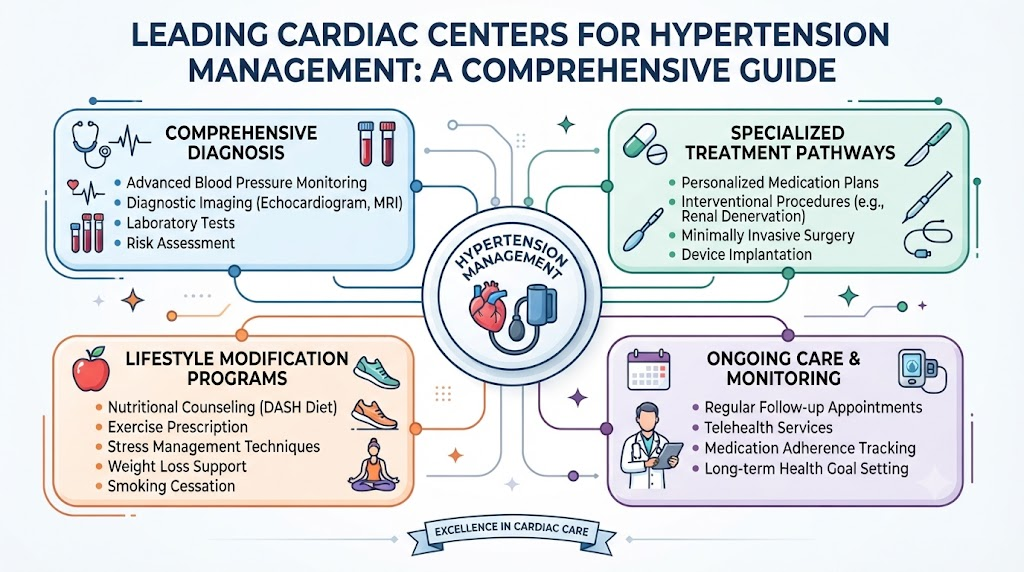
While primary care physicians are essential for initial screening, specialized cardiac centers provide the advanced diagnostics and multidisciplinary teams necessary for managing complex or resistant hypertension. These centers go beyond prescribing medication; they offer comprehensive programs that integrate lifestyle modifications, risk assessment, and long-term monitoring. For patients and families seeking clarity and top-tier care, BestCardiacHospitals offers resources to help you compare leading institutions and better understand your options for sustained blood pressure control.
Understanding Hypertension
Hypertension is a chronic medical condition characterized by elevated force of blood against the artery walls. Blood pressure is recorded using two numbers: systolic (pressure during heartbeats) and diastolic (pressure between beats).
HYPERTENSION OVERVIEW TABLE
| Aspect | Description |
| Medical Condition | Hypertension |
| Normal Blood Pressure | Less than 120/80 mmHg |
| High Blood Pressure | 130/80 mmHg or higher |
| Common Symptoms | Often asymptomatic (silent) |
| Long-Term Risks | Heart attack, stroke, heart failure, kidney disease |
Common Causes and Risk Factors
HYPERTENSION RISK FACTORS TABLE
| Risk Factor | Why It Increases Risk | Can It Be Modified? |
| Family History | Genetic predisposition to vascular issues | No |
| Obesity | Increases workload on the heart | Yes |
| Smoking | Constricts and damages arterial walls | Yes |
| Diabetes | Damages blood vessel linings | Yes |
| High Salt Diet | Promotes fluid retention and pressure | Yes |
| Stress | Triggers hormones that raise heart rate | Yes |
Why Specialized Cardiac Centers Matter
General care is vital, but specialized cardiac centers offer infrastructure specifically designed for cardiovascular health. These centers include:
- Hypertension Clinics: Dedicated units staffed by specialists who focus specifically on resistant blood pressure issues.
- Cardiovascular Risk Assessment: Advanced imaging and screening to determine the total impact of hypertension on your body.
- Personalized Plans: Treatment that adapts as your health and lifestyle evolve.
Leading Cardiac Centers for Hypertension Management
1. Metropolitan Heart & Vascular Institute
- Hypertension Program: A multi-disciplinary team approach involving cardiologists, dietitians, and exercise physiologists.
- Preventive Services: Extensive risk-factor screening and genetic counseling for early-onset hypertension.
- Why Patients Choose This Hospital: Proven track record in managing resistant hypertension through advanced medication titration and lifestyle coaching.
2. The Comprehensive Cardiac Wellness Center
- Program Focus: Heavy emphasis on long-term follow-up and patient education.
- Diagnostic Facilities: Equipped with 24-hour ambulatory monitoring and state-of-the-art renal artery imaging.
- Why Patients Choose This Hospital: Excellent patient support programs and a highly integrated team-based approach to cardiac health.
HOSPITAL COMPARISON TABLE
| Hospital Name | Location | Hypertension Clinic | Advanced Diagnostics | Preventive Services | Emergency Care |
| Metropolitan Heart | Major Metro | Yes | Yes | Yes | Yes |
| Cardiac Wellness | Major Metro | Yes | Yes | Yes | Yes |
Diagnostic Tests for Hypertension
DIAGNOSTIC TESTS TABLE
| Test | Purpose | Benefit |
| BP Measurement | Standard screening | Identifies initial elevation |
| ABPM | 24-hour monitoring | Catches “white coat” vs. true hypertension |
| ECG | Electrical heart tracing | Detects heart strain from pressure |
| Echocardiogram | Ultrasound of the heart | Visualizes heart muscle thickness |
| Blood Tests | Chemistry/Lipid panel | Identifies secondary causes like kidney issues |
Treatment Options
TREATMENT OPTIONS TABLE
| Treatment | Purpose | Best For |
| Lifestyle Changes | Foundation of heart health | All patients |
| Medication | Pharmacological pressure control | Patients needing direct intervention |
| Diet Management | Sodium/processed food reduction | Everyone, especially salt-sensitive patients |
| Exercise | Cardiovascular strengthening | Those physically able to perform moderate activity |
| Stress Management | Reducing sympathetic nervous response | Patients with stress-induced hypertension |
Future of Hypertension Management
FUTURE OF HYPERTENSION CARE TABLE
| Innovation | Potential Benefit |
| AI Monitoring | Predicts spikes before they happen |
| Wearable Devices | Continuous, non-invasive data collection |
| Remote Monitoring | Real-time feedback for your doctor |
| Smart BP Monitors | Easier, more accurate home reporting |
| Personalized Medicine | Tailoring drugs based on your genetic profile |
Frequently Asked Questions (FAQs)
- What is hypertension?
High force of blood against arterial walls. - What is considered high?
Generally 130/80 mmHg or higher. - Can it be controlled?
Yes, through lifestyle and medication. - What foods help?
Fruits, vegetables, and low-sodium options (DASH diet). - Is medication always necessary?
Not always; early stage can sometimes be managed by lifestyle. - How often to check?
As recommended by your doctor. - Does stress increase it?
Yes, it can lead to temporary or chronic spikes. - Is it hereditary?
Genetics play a significant role. - Can exercise lower it?
Yes, regular activity strengthens the heart. - How do I choose a center?
Look for those with dedicated hypertension clinics. - What is a “silent killer”?
The lack of symptoms in early stages. - Can I stop meds?
Only under strict doctor supervision. - What is secondary hypertension?
High BP caused by another condition like kidney disease. - How accurate are home monitors?
Very, if they are validated and used correctly. - Does sodium affect everyone?
Many people are “salt-sensitive,” but it’s risky for everyone.
Final Thoughts
Managing hypertension is a marathon, not a sprint. The most effective approach involves a combination of early diagnosis, proactive lifestyle changes, and, when necessary, professional medical intervention at a specialized cardiac center. Regular monitoring is the key to maintaining control.For further resources, personalized research, and help in finding the best specialized care, explore BestCardiacHospitals to find the right partners for your long-term heart health.