Introduction
Heart failure is a condition where the heart is unable to pump blood as efficiently as the body requires. Despite the name, it does not mean the heart has stopped working; rather, it indicates a need for medical intervention and ongoing management to maintain quality of life. Because heart failure is a complex condition that affects the entire body, it requires the expertise of specialized medical centers equipped with advanced diagnostics and multidisciplinary teams.At BestCardiacHospitals, we provide the information necessary to help you understand your options and make informed decisions about your cardiac care. This guide explores the nature of heart failure, the importance of choosing a specialized hospital, and how modern medical advancements are changing the landscape of cardiac failure treatment.
Understanding Heart Failure
Heart failure occurs when the heart muscle becomes too weak or too stiff to pump blood effectively. This leads to a backup of fluid in the lungs, legs, or abdomen, causing the characteristic symptoms of the condition. It is often categorized by which part of the heart is affected or whether the issue lies in the pumping (systolic) or filling (diastolic) phase of the heart cycle.
HEART FAILURE OVERVIEW TABLE
| Aspect | Description |
| Medical Condition | Impaired pumping or filling of the heart |
| Main Cause | Coronary artery disease, high blood pressure |
| Types | Systolic, Diastolic, Left-sided, Right-sided |
| Symptoms | Shortness of breath, swelling, chronic fatigue |
| Treatment Goal | Improving symptoms and heart function |
Types of Heart Failure
- Left-Sided: The left ventricle cannot pump blood effectively to the rest of the body.
- Right-Sided: The right ventricle struggles to pump blood to the lungs, often causing fluid buildup in the legs.
- Systolic: The heart muscle is too weak to pump out blood properly.
- Diastolic: The heart muscle is too stiff to relax and fill with blood.
- Acute: Sudden onset requiring immediate emergency attention.
HEART FAILURE TYPES TABLE
| Type | Description | Severity Level |
| Left-Sided | Primary pumping chamber issue | High |
| Right-Sided | Often follows left-sided failure | Moderate to High |
| Systolic | Reduced ejection fraction | High |
| Diastolic | Preserved ejection fraction | Moderate |
| Acute | Sudden decompensation | Critical |
Symptoms of Heart Failure
Recognizing symptoms early is key to adjusting treatment plans and preventing hospital admissions.
- Shortness of Breath: Often noticed during activity or when lying flat.
- Swelling: Fluid retention in the ankles, feet, and abdomen.
- Fatigue: Feeling tired due to inadequate oxygen delivery to tissues.
- Rapid Heartbeat: The heart attempts to compensate for weak pumping.
- Fluid Retention: Rapid weight gain due to water weight.
SYMPTOMS TABLE
| Symptom | Cause | When to Seek Help |
| Shortness of Breath | Fluid in lungs | Immediately |
| Swelling | Systemic fluid overload | Contact physician |
| Fatigue | Low cardiac output | During routine check-ups |
| Rapid Pulse | Compensatory mechanism | If accompanied by pain |
| Fluid Retention | Sodium/Water imbalance | Daily weight monitoring |
Causes and Risk Factors
Heart failure is rarely an isolated event; it is usually the culmination of chronic conditions. Hypertension and coronary artery disease are leading contributors, as they put consistent, long-term strain on the heart muscle.
RISK FACTORS TABLE
| Risk Factor | Why It Matters | Can It Be Controlled? |
| Hypertension | Strains heart walls | Yes |
| Diabetes | Damages blood vessels | Yes |
| Smoking | Constricts vessels/reduces oxygen | Yes |
| Obesity | Increases metabolic demand | Yes |
| Valve Disease | Obstructs flow/leaks | Yes (via repair) |
| CAD | Limits blood supply to heart | Yes |
Diagnosis of Heart Failure
Doctors use a combination of physical exams and diagnostic tools to grade the severity of heart failure and tailor the treatment approach.
DIAGNOSTIC TESTS TABLE
| Test | Purpose | What It Detects |
| Echocardiogram | Ultrasound of the heart | Pumping function/Valve health |
| ECG | Electrical activity | Rhythm issues |
| BNP Test | Blood biomarker | Heart strain levels |
| MRI | Advanced imaging | Muscle tissue health |
| X-ray | Chest visualization | Fluid in lungs/Enlarged heart |
Heart Failure Treatment Options
Treatment is multi-faceted, ranging from lifestyle adjustments to complex surgical interventions like heart transplants.
TREATMENT OPTIONS TABLE
| Treatment | Purpose | Benefit |
| Medication | Manage symptoms/prevent damage | Improves quality of life |
| Lifestyle Changes | Reduce heart workload | Prevents progression |
| ICD/CRT | Correct rhythm/synchronize pumping | Reduces sudden death risk |
| VAD | Mechanical pumping support | Bridges to transplant/recovery |
| Heart Transplant | Replace failing heart | Potential for long-term health |
Advanced Technologies in Heart Failure Care
Modern centers now utilize AI-based prediction models to identify patients at risk of sudden decompensation, allowing for proactive adjustments in treatment.
TECHNOLOGY TABLE
| Technology | Purpose | Patient Benefit |
| AI Monitoring | Predicts fluid overload | Prevents hospitalization |
| Remote Tracking | Daily vitals monitoring | Faster medical intervention |
| VAD Systems | Circulatory support | Sustains vital organ health |
| Advanced Imaging | Precision diagnostics | Better surgical planning |
| Telecardiology | Virtual consultations | Improved access to specialists |
Top Hospitals for Heart Failure Treatment
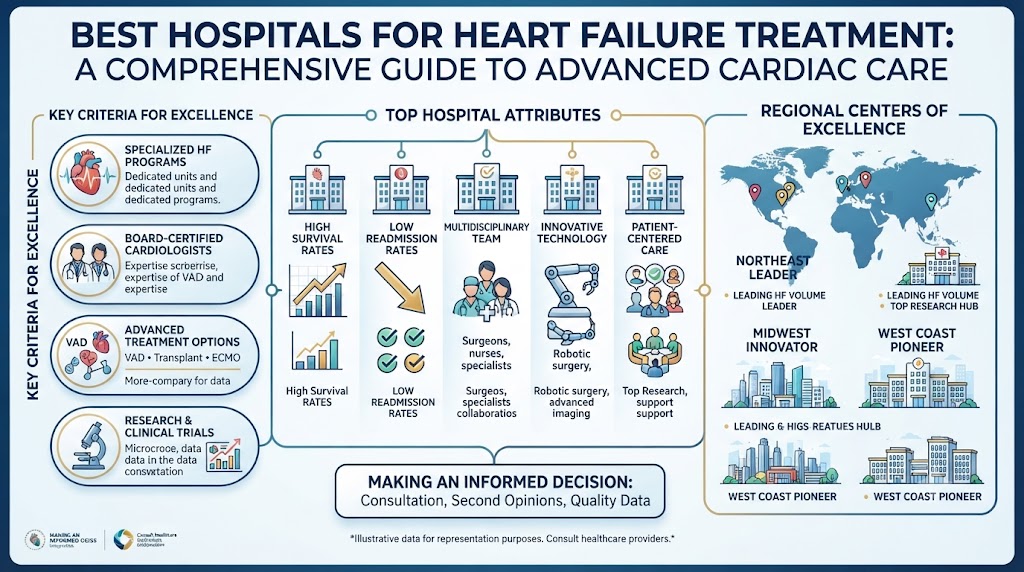
When reviewing hospitals, prioritize those that maintain dedicated “Heart Failure Units” and high-volume transplant programs, as these facilities demonstrate the highest level of expertise.
HOSPITAL COMPARISON TABLE
| Hospital Name | Location | Heart Failure Unit | Transplant | VAD Support | ICU Quality | International |
| Global Heart Center | Major Hub | Advanced | High Volume | Yes | Exceptional | Yes |
| Cardio-Care Institute | Urban Center | Specialized | Moderate | Yes | High | Yes |
Recovery and Long-Term Management
Recovery is an ongoing process. It involves a strict medication regimen, a low-sodium diet, and participation in cardiac rehabilitation programs designed to improve exercise tolerance safely.
RECOVERY TIMELINE TABLE
| Stage | Focus | Outcome |
| Hospital Phase | Stabilization | Stable hemodynamics |
| Early Recovery | Medication titration | Symptom reduction |
| Long-Term Care | Lifestyle maintenance | Sustained quality of life |
| Follow-Up | Monitoring progress | Early complication detection |
Benefits of Specialized Heart Failure Hospitals
Specialized hospitals utilize multidisciplinary teams that include heart failure cardiologists, cardiac surgeons, dietitians, and rehabilitation therapists. This coordinated approach ensures that all aspects of the patient’s health are managed, leading to better survival outcomes and fewer readmissions.
BENEFITS TABLE
| Benefit | Why It Matters | Patient Advantage |
| Specialized ICU | High-level monitoring | Safety in crisis |
| Expert Teams | Coordinated care | Fewer errors |
| Advanced Devices | Cutting-edge tools | More treatment options |
| Continuous Monitoring | Proactive care | Early complication detection |
| Rehab Programs | Supervised recovery | Improved stamina |
How to Choose the Right Hospital
- Clinical Volume: Does the hospital perform a high number of heart failure procedures annually?
- Advanced Capabilities: Are VADs and transplants offered on-site?
- Outcomes Transparency: Are they willing to discuss their success rates?
- Infrastructure: Do they have a dedicated ICU for cardiac patients?
Common Mistakes Patients Make
- Non-adherence: Skipping doses of medication.
- Ignoring weight gain: Failing to track daily fluid retention.
- Delaying follow-ups: Missing appointments until symptoms are severe.
Real-Life Patient Scenarios
- Scenario 1: Managing chronic failure through strict sodium restriction and medication optimization, avoiding the need for surgery.
- Scenario 2: Acute stabilization in an ICU followed by successful VAD implantation, serving as a bridge to a life-saving transplant.
Future of Heart Failure Treatment
The horizon of cardiac care includes regenerative medicine, where scientists are researching ways to repair heart muscle using stem cells or gene therapy to potentially reverse the damage caused by heart failure.
FUTURE OF CARDIAC CARE TABLE
| Innovation | Potential Benefit |
| AI Prediction | Prevents emergency events |
| Smart Devices | Real-time cardiac adjustments |
| Remote Monitoring | Eliminates geography barriers |
| Regenerative Therapy | Potential to heal heart muscle |
| Precision Cardiology | Highly personalized dosing |
FAQs
- What is heart failure? The heart’s inability to pump blood adequately.
- Can it be treated? Yes, through meds, lifestyle, and surgery.
- What causes it? Hypertension, CAD, diabetes, etc.
- How long can patients live? It varies based on diagnosis and care adherence.
- What is the best treatment? It is personalized to the patient.
- When is a transplant needed? When end-stage failure occurs.
- What lifestyle changes help? Salt restriction and regular exercise.
- Are ICD devices safe? Yes, they prevent sudden cardiac death.
- What foods to avoid? High-sodium and processed foods.
- When to seek emergency care? Chest pain or severe breathlessness.
- Does heart failure hurt? It can cause discomfort.
- What is an ECHO? Ultrasound of the heart.
- Can exercise worsen it? No, supervised exercise helps.
- What is a VAD? A mechanical pump.
- Is it curable? It is manageable, though not always curable.
Final Thoughts
Heart failure requires a lifetime of management and a dedicated care team. Choosing the right hospital is not just about the medical technology available; it is about finding a facility that understands the importance of compassionate, coordinated, and continuous care.For more information on comparing hospitals and understanding heart failure treatment options, explore BestCardiacHospitals. Taking control of your care starts with being informed and choosing a team that stands by your side at every stage of your journey.