Introduction
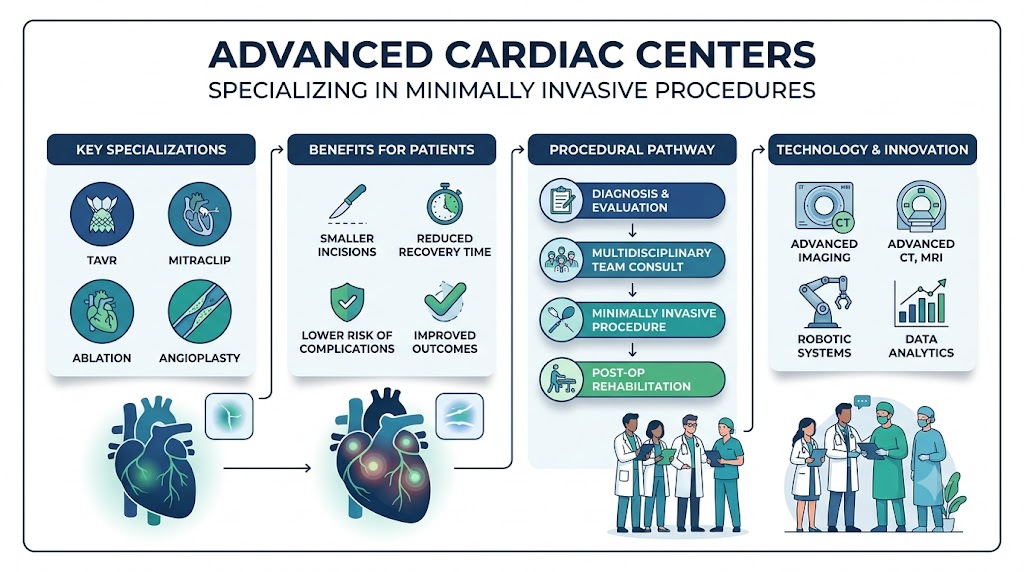
Minimally Invasive Heart Surgery (MICS) represents a significant evolution in cardiovascular medicine. Unlike traditional open-heart procedures, which require a large chest incision and splitting of the breastbone, MICS allows surgeons to access the heart through small incisions between the ribs. This approach has transformed cardiac care, offering patients a path to recovery that is often quicker, less painful, and associated with fewer complications.As medical technology advances, the importance of choosing a facility equipped with state-of-the-art robotic systems and highly specialized surgical teams has become paramount. For patients navigating these complex treatment decisions, access to reliable, structured, and expert-led information is essential. BestCardiacHospitals serves as a foundational resource for those seeking to understand their options and compare top-tier institutions. This guide explores the nuances of minimally invasive procedures, the technology behind them, and the factors to consider when selecting a hospital for your cardiac health needs.
Understanding Minimally Invasive Heart Surgery
MICS is a technique that enables surgeons to perform complex cardiac operations using specialized instruments, miniaturized cameras, and sometimes robotic assistance. The primary goal is to achieve the same or better surgical outcomes as traditional methods while minimizing trauma to the patient’s body.
While traditional open-heart surgery remains necessary for certain complex cases, MICS is increasingly becoming the preferred approach for valve repairs, coronary artery bypass grafting, and the treatment of certain congenital defects. By avoiding large incisions, surgeons can preserve the integrity of the chest wall, significantly reducing the physiological stress on the patient.
MINIMALLY INVASIVE SURGERY OVERVIEW TABLE
| Aspect | Description |
| Procedure Type | Access through small chest wall openings |
| Incision Size | Typically 2 to 4 inches |
| Surgical Tools | Specialized endoscopes, robotic arms, long-shaft instruments |
| Recovery Time | Generally shorter than traditional methods |
| Hospital Stay | Typically 2 to 5 days depending on complexity |
Why Doctors Recommend Minimally Invasive Heart Surgery
Medical teams often recommend MICS when the patient’s condition allows for it, as it aligns with the modern clinical focus on patient-centered recovery and safety.
Valve Repair and Replacement Cases
MICS is highly effective for mitral and aortic valve repairs, allowing surgeons to visualize the valve clearly via high-definition cameras while avoiding a full sternotomy.
Coronary Artery Disease
Certain bypass procedures can be performed through smaller incisions, reducing the risk of complications for patients with localized coronary blockages.
Congenital Heart Defects
For patients born with heart conditions, minimally invasive techniques provide a way to correct anomalies while minimizing growth and development impacts in younger patients.
Atrial Fibrillation Treatments
Specialized ablation procedures to correct heart rhythm irregularities are frequently performed using minimally invasive robotic or thoracoscopic approaches.
High-Risk Patients
In older patients or those with co-morbidities (such as diabetes or respiratory issues), the reduced trauma of MICS can significantly lower the risk of post-surgical infection and wound-related complications.
Top Hospitals for Minimally Invasive Heart Surgery
Metro Advanced Cardiac Institute
- Hospital Overview: A globally recognized center for cardiac excellence that prioritizes innovative surgical techniques.
- Cardiac Surgery Department: Houses an integrated team of cardiologists, surgeons, and intensivists.
- Minimally Invasive Surgery Expertise: Focuses on high-volume valve repairs using endoscopic guidance.
- Robotic Surgery Facilities: Equipped with the latest multi-arm robotic surgical platforms.
- Technologies Used: 3D high-definition imaging and specialized endoscope technology.
- Patient Care Services: Personalized case management and detailed pre-operative education.
- Recovery & Rehabilitation Support: On-site cardiac rehab gym and dedicated physical therapy staff.
- Why Patients Choose This Hospital: The hospital’s strong track record in clinical safety and patient satisfaction.
- Major Strengths: Unmatched precision in robotic-assisted bypass procedures.
Global Heart & Vascular Center
- Hospital Overview: Renowned for blending academic research with practical surgical application.
- Cardiac Surgery Department: Features sub-specialty clinics for complex valve and structural heart diseases.
- Minimally Invasive Surgery Expertise: Specialists are leaders in small-incision coronary revascularization.
- Robotic Surgery Facilities: Dedicated robotic suite with real-time fluoroscopic integration.
- Technologies Used: AI-enhanced surgical planning and diagnostic simulation tools.
- Patient Care Services: Comprehensive support groups for patients and families.
- Recovery & Rehabilitation Support: Tele-monitoring services for post-discharge recovery.
- Why Patients Choose This Hospital: Access to experimental and latest-generation treatment protocols.
- Major Strengths: Strong focus on complex valve reconstruction.
HOSPITAL COMPARISON TABLE
| Hospital Name | Location | MICS Expertise | Robotic Surgery | Cardiac Specialties | ICU Facilities | Success Rate Approach |
| Metro Advanced | Metro City | High | Yes | Valve/Bypass | Advanced | Evidence-based |
| Global Heart | Capital City | Very High | Yes | Structural/Valve | Integrated | Data-driven |
Benefits of Minimally Invasive Heart Surgery
The clinical advantages of MICS are substantial, particularly regarding long-term healing and physical comfort.
Faster Recovery
Because the chest bone remains intact, patients can often return to non-strenuous daily activities significantly sooner.
Less Pain
Smaller incisions result in less trauma to the chest wall nerves and muscles, often reducing the need for strong post-operative pain medication.
Smaller Scars
Cosmetic outcomes are superior, as the incisions are small and can often be hidden in natural skin folds or under the arm.
Lower Infection Risk
The integrity of the chest bone is maintained, reducing the risk of deep sternal wound infections.
Reduced Blood Loss
Minimally invasive techniques generally involve less manipulation of tissues, leading to lower rates of post-surgical bleeding.
Shorter Hospital Stay
Efficient recovery leads to quicker discharge, allowing patients to rehabilitate in the comfort of their own homes.
BENEFITS TABLE
| Benefit | Explanation | Patient Impact |
| Faster Recovery | Less skeletal disruption | Earlier return to work/lifestyle |
| Less Pain | Smaller nerve disruption | Reduced dependence on opioids |
| Smaller Incisions | Less tissue trauma | Better cosmetic outcome |
| Lower Risk | Preserved chest integrity | Lower complication rate |
| Shorter Stay | Efficiency in surgical approach | Decreased cost and stress |
Who Can Benefit from This Surgery?
Eligibility for MICS is determined through comprehensive diagnostic screening. It is most often recommended for:
- Patients requiring simple to complex valve repairs.
- Coronary artery disease patients with specific blockage patterns.
- Elderly patients who are at higher risk for complications from full sternotomy.
- Patients with specific anatomical features that allow for safe access via small ports.
Risks and Limitations
While MICS is highly effective, it is not for everyone. Potential limitations include:
- Patient Suitability: Patients with extensive scarring from prior heart surgeries may not be candidates.
- Conversion Risk: In rare cases, a surgeon may need to convert to an open-heart approach during the procedure to ensure patient safety.
- Complexity: These procedures are technically demanding and require an experienced surgical team.
- Hospital Dependency: Success is tied closely to the hospital’s infrastructure and surgeon skill level.
DIAGNOSTIC TESTS TABLE
| Test | Purpose | Why Important |
| ECG | Measure heart electrical activity | Identifies arrhythmias/damage |
| Echo | Visualize heart structure/valves | Evaluates pump function |
| Angiography | Map coronary artery blockages | Guides surgical planning |
| CT Scan | Detailed anatomical imagery | Checks for calcification/vessel paths |
| Blood Tests | Screen for infection/clotting | Ensures patient is fit for anesthesia |
What Happens During the Procedure
- Anesthesia: The patient is placed under general anesthesia to ensure total comfort.
- Access: Small incisions are made in the chest (often near the right side).
- Visualization: Surgeons use a high-definition endoscope or camera to view the heart without needing to open the chest wide.
- Assistance: Robotic arms or long-shafted surgical instruments are inserted through the ports to perform the repair.
- Completion: Once the procedure is complete, the incisions are carefully closed, and the patient is moved to the recovery area.
Recovery After Surgery
Recovery is a structured journey designed to optimize cardiac function.
ICU Care
Immediate post-op monitoring in the ICU ensures stable heart rhythm, oxygen levels, and blood pressure.
Hospital Stay
Usually involves controlled mobilization and monitoring by a cardiac nursing team.
Pain Management
Includes non-narcotic pain control and gradual physical therapy to ensure chest mobility.
Cardiac Rehabilitation
A specialized program that guides patients through monitored exercise to restore heart strength and endurance.
RECOVERY TABLE
| Recovery Stage | What Happens |
| ICU Phase | Continuous vital sign monitoring |
| Hospital Stay | Gradual increase in movement |
| First Week | Wound management and light activity |
| Full Recovery | Return to normal lifestyle (weeks 4–8) |
How to Choose the Right Cardiac Surgery Hospital
Selecting a facility should be a methodical process:
- Surgeon Experience: Confirm the number of MICS procedures the surgeon has performed.
- Technology: Ensure the hospital uses latest-generation robotic surgical platforms.
- ICU Quality: A strong ICU team is the backbone of safe cardiac recovery.
- Multidisciplinary Approach: Look for hospitals that have heart teams including both surgeons and cardiologists.
- Outcomes Data: Reputable hospitals are usually transparent about their surgical success rates.
Common Mistakes Patients Make
- Delaying Treatment: Waiting too long can make a procedure more complex.
- Ignoring Symptoms: Early diagnosis is critical for better outcomes.
- Cost-Only Focus: Choosing a hospital based solely on price may compromise the level of surgical expertise.
- Lack of Inquiry: Patients should always ask about the surgeon’s specific volume and success with MICS.
- Skipping Rehab: Cardiac rehabilitation is non-negotiable for lasting success.
Real-Life Patient Scenarios
- Valve Repair: A patient in their 60s undergoes MICS for mitral valve repair and returns to light walking within 48 hours.
- Bypass Case: A high-risk patient with bypass needs avoids the long recovery of an open chest procedure through robotic MICS.
- Faster Return: A patient requiring a complex valve change utilizes MICS to minimize hospital time, enabling a rapid return to their professional role.
Future of Cardiac Surgery
The field is evolving toward even greater precision:
- AI-Assisted Robotics: Better guidance during complex maneuvers.
- Smart Navigation: Real-time software that helps surgeons navigate complex anatomy.
- Tele-cardiology: Monitoring patients remotely as they recover at home.
- Personalized Planning: Using 3D printed heart models based on patient scans.
FUTURE OF CARDIAC SURGERY TABLE
| Innovation | Benefit |
| Robotic Surgery | Higher precision and reduced tremor |
| AI Assistance | Enhanced surgical decision making |
| Imaging Systems | Clearer view of complex structures |
| Tele-cardiology | Secure, remote follow-up care |
| Smart Monitoring | Early detection of post-op complications |
FAQs
- What is minimally invasive heart surgery?
It is a surgical approach using small incisions instead of a full chest opening. - Is it safe?
Yes, it is a well-established and safe approach for suitable candidates. - How long does recovery take?
Generally 4 to 8 weeks for a return to normal activity. - Who is eligible?
Candidates are assessed based on their condition, anatomy, and general health. - What are the risks?
As with any surgery, there are risks like bleeding or infection, though MICS often lowers these. - Is it better than open-heart surgery?
It offers faster recovery and less pain; however, open-heart is safer for certain complex cases. - How long is the hospital stay?
Often shorter than open-heart surgery, usually 2 to 5 days. - Is robotic surgery used?
Yes, many MICS procedures utilize advanced robotic arms. - What are the costs involved?
Costs vary by hospital; robotic procedures may involve technology fees. - Can all heart patients undergo it?
No, suitability depends on the specific condition and anatomy. - Do I need physical therapy?
Yes, cardiac rehabilitation is essential. - Are scars visible?
They are usually very small and often hidden. - What is the success rate?
High, especially when performed by experienced teams in top hospitals. - Will I need blood thinners?
This depends on the specific valve or procedure. - How soon can I drive?
Usually after a few weeks, once you are off heavy medications and cleared by a surgeon.
Final Thoughts
The decision to undergo heart surgery is significant, and choosing the right minimally invasive approach can drastically influence your recovery trajectory. By focusing on specialized institutions, verifying the expertise of the surgical team, and adhering to rehabilitation protocols, patients can expect optimized outcomes and a quicker return to their quality of life. Always prioritize hospitals that emphasize safety, advanced technology, and multidisciplinary care. For comprehensive resources, hospital comparisons, and trusted cardiac surgery information, explore BestCardiacHospitals.