Introduction
Choosing the right facility for heart-related treatment is one of the most significant healthcare decisions an individual or family will ever make. Cardiac surgery requires not only exceptional surgical skill but also a high-tech infrastructure capable of managing complex physiological needs before, during, and after a procedure. Advanced cardiac surgery units are designed to provide this comprehensive level of care.As heart disease continues to impact millions of people globally, the demand for specialized, high-acuity care has never been higher. Understanding what sets top-tier institutions apart—ranging from their diagnostic capabilities to their intensive care support—is essential for ensuring the best possible health outcomes. Whether you are preparing for a planned procedure or researching emergency options, finding a facility with the right expertise is paramount. To assist you in navigating your healthcare journey, BESTCARDIACHOSPITALS provides resources to help you find the specialized care you need.
Understanding Advanced Cardiac Surgery Units
A cardiac surgery unit is a highly specialized hospital department dedicated exclusively to the surgical treatment of heart and vascular diseases. Unlike general surgical wards, these units are equipped with sophisticated life-support systems, dedicated operating theaters, and specialized recovery areas.
Role of the Team
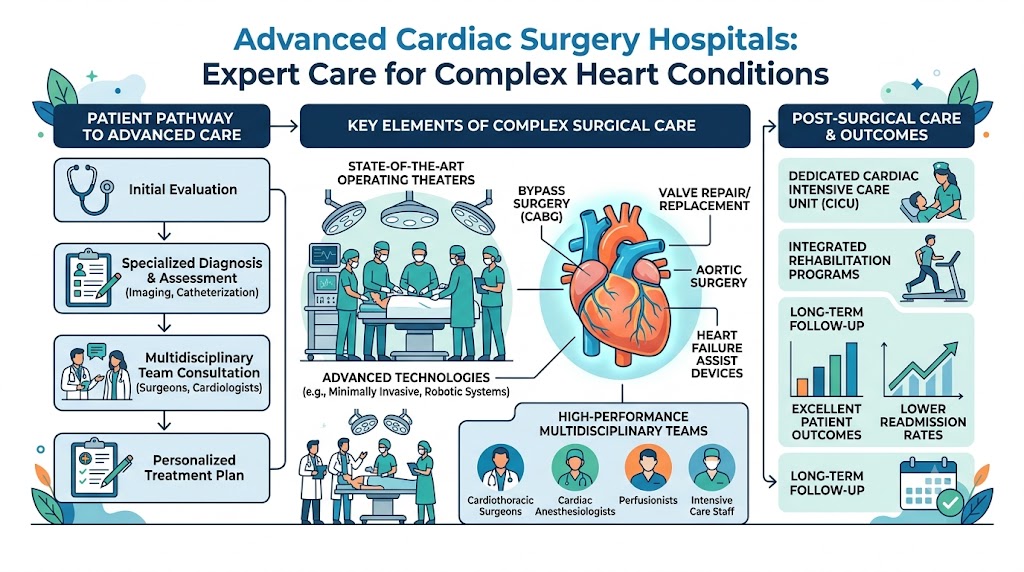
These units are staffed by multidisciplinary teams, including cardiothoracic surgeons, perfusionists, cardiac anesthesiologists, and specialized cardiac nurses. Their coordinated approach ensures that every aspect of a patient’s physiology—from blood oxygenation to heart rhythm—is monitored and managed with precision.
Key Infrastructure
- Cardiac Catheterization Labs (Cath Labs): Used for both diagnostic imaging and minimally invasive procedures.
- Cardiothoracic ICUs: Intensive care units staffed by doctors trained to manage the delicate post-operative recovery of heart surgery patients.
- Hybrid Operating Rooms: These rooms combine traditional surgical capabilities with advanced imaging, allowing surgeons to perform complex procedures with real-time visualization.
Why Advanced Cardiac Hospitals Matter
Advanced cardiac centers represent the pinnacle of cardiovascular medicine. They prioritize safety, accuracy, and efficiency through integrated care models.
- Emergency Readiness: They maintain 24/7 cardiac emergency teams, critical for treating acute conditions like myocardial infarction (heart attack) where every minute counts.
- Robotic and Minimally Invasive Precision: These institutions often lead in adopting technology that allows for smaller incisions, resulting in less pain, reduced risk of infection, and a faster return to daily life.
- Multidisciplinary Expertise: Complex heart issues often involve other organ systems. Advanced centers have the staff and infrastructure to handle comorbidities, such as kidney or respiratory issues, during a cardiac crisis.
QUICK COMPARISON TABLE
| Hospital Name | Location | Cardiac Specialties | Advanced Technologies | Accreditation | ICU/OR Facilities |
| Metro Heart Institute | Metropolitan | Bypass & Valve | Robotic Surgery | Joint Commission | Advanced Cath Lab |
| Regional Cardiac Center | City Center | Pediatric & Adult | ECMO Support | National Board | Hybrid OR |
| Apex Cardiology Group | North District | Heart Failure | AI Monitoring | Healthcare Quality | Specialized ICU |
| Global Heart Hospital | West Zone | Arrhythmia | Minimally Invasive | Int’l Standards | High-Acuity Unit |
Top Hospitals with Advanced Cardiac Surgery Units
1. Metro Heart Institute
- Overview: A premier institution known for pioneering complex bypass surgeries.
- Key Specialties: Coronary artery disease and valve repair.
- Technologies: State-of-the-art robotic surgery platforms.
- Why Choose Them: High success rates for high-risk surgical candidates.
2. Regional Cardiac Center
- Overview: Focuses on both congenital defects and adult cardiovascular needs.
- Key Specialties: Structural heart disease and complex aortic repair.
- Technologies: Advanced ECMO (Extracorporeal Membrane Oxygenation) support for severe heart failure.
- Why Choose Them: Excellent integration between surgical and intensive care teams.
3. Apex Cardiology Group
- Overview: A tech-forward hospital integrating AI into cardiac monitoring.
- Key Specialties: Advanced heart failure management.
- Technologies: Real-time AI heart rhythm tracking.
- Why Choose Them: Rapid emergency response times for acute cardiac events.
Advanced Cardiac Technologies Explained
- Robotic Cardiac Surgery: Surgeons control tiny instruments via a console, allowing for extreme precision through tiny incisions.
- ECMO Support: A life-support machine that does the work of the heart and lungs, providing time for the heart to recover.
- Heart-Lung Machines: Used during open-heart surgery to maintain blood circulation and oxygenation while the heart is stopped.
- Cath Lab Procedures: Allows for stenting or valve repair without the need for traditional open-chest surgery.
Common Heart Conditions Treated
- Coronary Artery Disease: Blockages in the arteries that supply blood to the heart.
- Heart Valve Disorders: Malfunctions in the valves that regulate blood flow.
- Congenital Heart Defects: Heart problems present from birth.
- Heart Failure: A condition where the heart struggles to pump blood effectively.
- Arrhythmia: Irregular electrical signals causing abnormal heartbeats.
How to Choose the Right Cardiac Hospital
When evaluating facilities, look for the following pillars of excellence:
- Surgeon Experience: Research the specific volume of surgeries performed by the team annually.
- Infrastructure: Ensure they have dedicated cardiothoracic ICUs.
- Accreditation: Check for recognized national or international healthcare certifications.
- Emergency Response: A hospital should be equipped to handle cardiac emergencies around the clock.
Benefits of Advanced Cardiac Surgery Units
- Reduced Risk: Specialized centers have lower rates of post-operative complications.
- Faster Recovery: Minimally invasive techniques lead to shorter hospital stays.
- Precision: Advanced imaging ensures surgeons can address anatomical complexities with higher accuracy.
Real-Life Patient Scenarios
Consider a patient with complex valve failure. In a general hospital, they might face significant downtime and high surgical risk. By seeking care at an advanced cardiac surgery unit, the patient benefits from a team that uses 3D surgical mapping to plan the operation. The use of minimally invasive techniques reduces the patient’s recovery time from weeks to days, illustrating why the specialized facility is vital.
Common Mistakes Patients Make
- Delaying Consultation: Waiting until a heart condition becomes a crisis.
- Ignoring Subtle Symptoms: Dismissing fatigue or mild chest discomfort.
- Overlooking Facility Capabilities: Choosing a local hospital that lacks the ICU strength to handle complex heart procedures.
Future of Cardiac Surgery
The field is moving toward a more personalized approach. AI-driven imaging is helping surgeons predict surgical outcomes with higher certainty, while remote monitoring systems allow doctors to track heart health in real-time, even after the patient has returned home.
FAQs
- What is cardiac surgery?
Surgery on the heart or major blood vessels. - Which hospital is best?
The one that offers the right combination of technology, experienced surgeons, and 24/7 ICU support. - Is robotic heart surgery safe?
Yes, it is a highly validated, minimally invasive approach. - What is bypass surgery?
Rerouting blood around blocked arteries. - Recovery time?
Varies based on the procedure; minimally invasive is usually faster. - Cost of surgery?
Highly dependent on location and procedure type. - ICU importance?
Critical for stabilizing heart function post-operation. - Emergency treatment?
Advanced hospitals offer immediate bypass or stent placement. - Can stress affect heart surgery outcomes?
Yes, managing anxiety is part of recovery. - Do I need a referral?
Often yes, check with your local physician. - How to find a surgeon?
Start with hospital cardiac department websites. - What is ECMO?
A heart-lung bypass machine. - Are heart surgeries common?
Millions are performed safely each year. - What is structural heart disease?
Problems with the heart’s valves or walls. - How long does a surgery take?
Ranges from a few hours to a full day for complex cases.
Final Thoughts
The quality of the hospital where you receive cardiac care is just as important as the procedure itself. Advanced cardiac surgery units provide the sophisticated technology and multidisciplinary expertise required to turn complex heart issues into manageable health outcomes. Early detection and choosing the right facility are the most effective ways to ensure long-term heart health.For personalized information and to explore a network of high-quality facilities, remember to visit BESTCARDIACHOSPITALS to start your journey toward better cardiac health today.