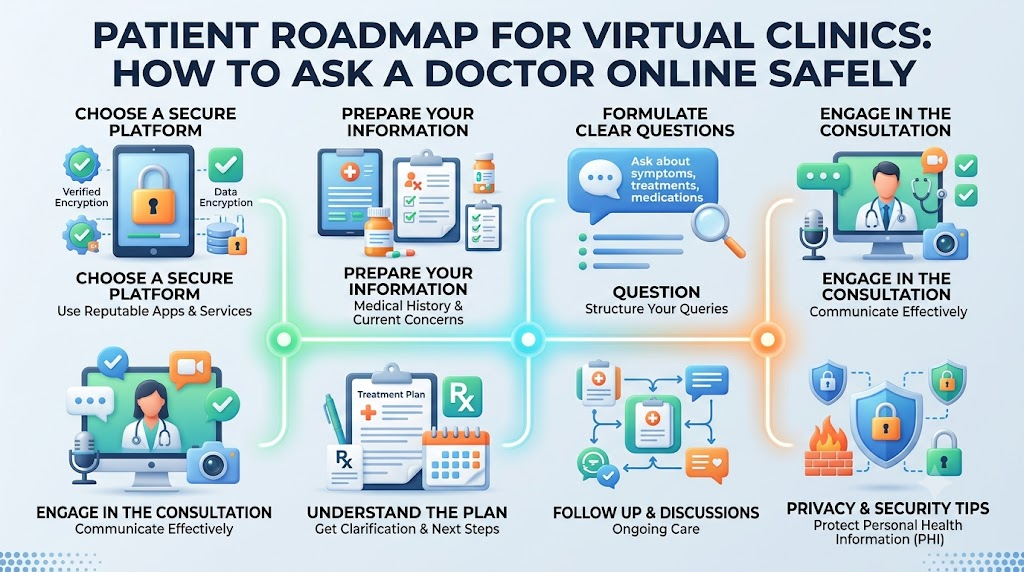
When unexpected symptoms develop, figuring out the safest path to clear medical guidance can feel overwhelming. Many patients hesitate between making a clinic trip for mild issues or searching the internet without professional context. In non-critical circumstances, deciding to ask a doctor online provides an effective way to review health concerns with licensed clinicians and clarify your next steps from home.This practical guide explains how remote healthcare works, breaks down specialist access, outlines appointment preparation, and highlights when immediate hospital care remains vital.
What Does It Mean to Ask a Doctor Online?
To ask a doctor online means consulting an accredited healthcare provider using secure digital systems such as encrypted text messaging, private phone conversations, or real-time video calls. Virtual care serves as an accessible starting point for clinical discussions rather than an outright replacement for physical examinations.
How Online Doctor Consultation Works
A virtual visit links you directly with a medical professional through a secure platform. You outline your primary complaints, share your medical history, and list current medications. The doctor evaluates the situation, asks pertinent clarifying questions, and offers evidence-based guidance.
What You Can Discuss With a Doctor
Digital appointments accommodate a wide range of non-urgent medical inquiries:
- General lifestyle habits, sleep patterns, and preventative wellness
- Clarification regarding prescription directions, potential interactions, and minor side effects
- Translation of complicated medical terms on diagnostic or laboratory reports
- Initial symptom assessments to establish if an in-person appointment is needed
- Practical strategies for monitoring stable, ongoing health conditions
When Online Consultation May Be Useful
Virtual consultations are beneficial when managing tight daily routines, living far from specialty centers, or needing non-emergency advice outside regular clinic hours. They also offer a practical channel for follow-up questions after previous clinic visits.
When In-Person Care May Be Necessary
Virtual care has clear clinical boundaries. Any condition requiring hands-on examination, deep wound care, internal pelvic checks, sample draws, or emergency stabilization requires a direct visit to a clinic or emergency department.
Online Doctor Consultation
A standard online doctor consultation follows an organized sequence focused on patient clarity:
- Selecting the Relevant Specialty: You pick the clinical field that best matches your primary symptoms, such as general medicine, pediatrics, or dermatology.
- Detailing Your Symptoms: You summarize when your symptoms began, their progression, and any relevant previous diagnoses.
- Sharing Available Reports: When appropriate, you upload digital copies of lab panels, imaging results, or clinical notes via protected portals.
- Interactive Clinical Dialogue: You speak directly with the doctor to explore probable triggers, symptom patterns, and management strategies.
- Formulating Next Steps: The clinician suggests actionable steps, which may include home self-care, watchful waiting, or referrals for physical tests.
An online session focuses on health education and professional triage; it does not promise an immediate prescription or complete diagnosis.
Talk to a Doctor Online
Choosing to talk to a doctor online offers distinct practical advantages:
- Eliminating Travel Hassles: Virtual visits bypass traffic, parking logistics, and crowded waiting rooms.
- Support for Limited Mobility: Individuals managing joint pain, fatigue, or transport limitations can access clinical input without traveling.
- Simplified Follow-Ups: Checking progress after starting a new diet or discussing routine health readings is fast and convenient online.
However, remote appointments cannot replace hands-on diagnostic checks, such as abdominal palpation or listening to lung sounds with a stethoscope.
24/7 Online Doctor Consultation
Health questions frequently arise outside typical clinic schedules. A 24/7 online doctor consultation refers to digital platforms offering access to medical guidance during evenings, weekends, and holidays.
Where 24/7 consultation is available, it provides valuable reassurance for non-urgent late-night concerns. However, service availability depends on provider schedules and local telehealth rules. Patients must verify actual operating hours and remember that severe overnight symptoms always warrant emergency hospital care.
Online Doctor Chat
An online doctor chat allows patients to communicate with healthcare providers using text messaging. This setup works well for:
- Inquiring about non-urgent symptoms or medication labels
- Communicating when spoken calls are inconvenient or noisy
- Maintaining a written record of advice to review later
- Sharing concise summaries of previous medical history
While text-based guidance offers convenience, it cannot substitute for video evaluations or physical examinations when symptoms are severe, shifting, or complex.
Online Medical Second Opinion
Facing a major medical diagnosis or an elective surgery recommendation can cause uncertainty. Requesting an online medical second opinion allows an independent specialist to review your case records, test findings, and treatment plan.
An online second opinion helps you:
- Evaluate the medical reasoning behind proposed surgical or procedural plans
- Explore alternative, evidence-based management approaches
- Decode complex pathology findings in clear language
- Formulate meaningful questions for your primary treating doctor
A second opinion is meant to empower your decision-making, not replace your primary healthcare team.
Online General Physician Consultation
General practitioners manage a broad spectrum of everyday health issues. An online general physician consultation is commonly used for:
- Mild respiratory complaints (coughs, mild sore throats, congestion)
- Low-grade seasonal fevers and general body aches
- Mild digestive upset, heartburn, or dietary questions
- Understanding routine blood pressure logs or glucose trends
- General fatigue and preventative wellness planning
A general practitioner reviews your symptom history, suggests supportive lifestyle measures, and indicates whether physical testing is needed.
Online Dermatologist Consultation
Skin and scalp concerns are well-suited for virtual evaluation. An online dermatologist consultation can assist with:
- Managing mild to moderate facial acne
- Addressing localized dry patches, mild rashes, and redness
- Evaluating general itching or seasonal skin reactions
- Discussing preliminary concerns regarding hair shedding or scalp flaking
- Reviewing gentle skincare routines for reactive skin
Clear photographs and video feeds give dermatologists helpful visual context. However, changing moles, dark skin spots, severe blistering, or conditions requiring biopsies require an in-person dermatology visit.
Online Gynecologist Consultation
Women’s health issues often involve sensitive personal topics that are easier to discuss from home. An online gynecologist consultation provides a confidential space to discuss:
- Irregular periods and menstrual cramping
- Common lifestyle considerations for managing PCOS
- Perimenopause symptoms, including sleep changes and hot flashes
- General reproductive health and family planning concepts
- Non-urgent pregnancy guidance and wellness questions
Routine screenings like Pap smears, physical pelvic evaluations, obstetric scans, and acute pelvic pain require in-person clinical assessment.
Online Pediatrician Consultation
When a child feels unwell, parents need clear, calm guidance. An online pediatrician consultation supports families with:
- Home-care strategies for mild colds and coughs
- Guidance on infant feeding, weaning, and general nutrition
- Clarification regarding typical developmental milestones and sleep habits
- Advice on mild, non-spreading diaper rashes
Children can deteriorate rapidly when ill. If a child develops a high fever, severe lethargy, breathing difficulties, persistent vomiting, or dehydration, seek emergency care immediately.
Benefits of Online Medical Guidance
Virtual medical guidance provides several distinct advantages for managing non-urgent health needs:
- Broader Access: Connect with experienced clinicians regardless of your physical distance from major medical centers.
- Time Efficiency: Eliminate travel and waiting room delays, making it easier to balance health needs with daily obligations.
- Informed Decision-Making: Receive clear medical advice on whether symptoms can be managed at home or need clinic testing.
- Organized Record Reviews: Take the time to systematically walk through diagnostic findings with an expert.
- Access to Multiple Disciplines: Consult with general practitioners and various specialists on a single platform.
Limitations of Online Doctor Consultation
Understanding the limitations of virtual care is essential for patient safety:
- No Physical Examination: Clinicians cannot palpate the abdomen, listen to chest sounds, or assess reflexes remotely.
- No Direct Testing: Blood draws, urine analyses, cultures, X-rays, and scans cannot be performed through a screen.
- Inappropriate for Emergencies: Acute, severe, or worsening symptoms cannot be treated over the internet.
- Technical Constraints: Poor lighting, low-resolution cameras, or unstable internet connections can hinder visual assessments.
How to Prepare Before You Ask a Doctor Online
Being organized ensures a focused and effective virtual consultation. Use this preparation checklist:
Write Down Your Main Symptoms
Note your main complaints clearly, describing their nature (e.g., sharp, throbbing, dull, or intermittent).
Note When Symptoms Started
Document the exact timeline—when the issue started, how often it occurs, and whether it is improving or worsening.
Prepare Relevant Medical History
List your existing medical conditions, past hospitalizations, and major surgeries.
Keep Current Medicines and Allergies Information Ready
Write down all current prescription drugs, supplements, over-the-counter medications, and known drug allergies.
Keep Relevant Reports Available
Have digital copies or clear photos of recent lab results, scan reports, or clinical summaries ready to share.
Prepare Specific Questions
List 3–5 core questions you want answered during your appointment so you cover all your concerns.
Use a Private and Secure Environment
Choose a quiet, well-lit, private room where you can discuss your health without interruptions.
Be Honest About Your Symptoms
Share complete, accurate details about your lifestyle, health habits, and symptoms so your doctor can provide appropriate advice.
Online Consultation vs In-Person Consultation
The table below outlines key differences between remote and clinic-based care:
| Factor | Online Consultation | In-Person Consultation |
| Convenience | High; consult from home or work | Requires transit, parking, and waiting room time |
| Physical Examination | Visual only; no hands-on assessment | Complete hands-on physical exam available |
| Medical History Discussion | Detailed and comprehensive | Detailed and comprehensive |
| Diagnostic Testing | Requires an external lab/imaging referral | Can often be coordinated on-site |
| Follow-Up Questions | Fast and convenient for routine updates | Requires booking a dedicated clinic appointment |
| Emergency Care | Not appropriate for acute emergencies | Appropriate via hospital emergency departments |
Privacy and Patient Information
Safeguarding your medical data is critical when using online healthcare services:
- Connect using secure, private internet networks rather than public Wi-Fi hotspots.
- Upload medical files and personal details only through encrypted, authenticated platforms.
- Never share sensitive personal health details or images on open online message boards.
- Use strong passwords for your healthcare accounts and log out after completing your session.
When Online Consultation Is Not Enough
Remote platforms are designed strictly for non-critical medical questions. You must bypass online consultations and seek immediate emergency care if you experience:
- Sudden, severe chest pain, pressure, or tightness
- Acute breathing difficulty or severe shortness of breath
- Symptoms of stroke, including sudden facial drooping, one-sided weakness, or speech difficulties
- Heavy, uncontrolled bleeding or severe physical trauma
- Sudden fainting, loss of consciousness, or severe confusion
- Severe allergic reactions involving facial swelling or airway constriction
- Sudden, debilitating headaches unlike any experienced before
How AskDoctorLive Can Support the Online Healthcare Journey
Managing everyday health concerns is far easier with direct access to professional medical perspectives. AskDoctorLive provides a secure digital platform where patients can connect with qualified healthcare professionals for timely guidance.
Whether you need an online general physician consultation for everyday health queries, an online dermatologist consultation for skin issues, an online gynecologist consultation for reproductive health, or an online pediatrician consultation for parenting guidance, the platform helps you take positive steps toward better health. Patients can book an online doctor consultation, use online doctor chat for concise guidance, or request an online medical second opinion to better understand complex medical decisions—all while understanding when an in-person visit is the safest choice.
Authoritative Health Resources
For verified medical guidance and public health information, consult recognized institutions:
- World Health Organization (WHO) – International health guidelines and disease prevention advice.
- Centers for Disease Control and Prevention (CDC) – Reliable symptom overviews and public health updates.
- National Health Service (NHS) – Comprehensive clinical guides and condition overviews.
Frequently Asked Questions
- How do I ask a doctor online about my symptoms safely?
To ask a doctor online safely, use an encrypted platform, prepare a clear timeline of your symptoms, keep your current medication list handy, and consult from a quiet, private space. Provide complete, accurate information so the doctor can offer sound guidance. - Can an online doctor consultation replace an in-person clinic visit?
An online doctor consultation complements traditional clinical care but cannot replace it when physical exams, laboratory tests, or imaging are necessary. It works best for non-emergency triage, wellness advice, and report reviews. - When should I talk to a doctor online instead of traveling to a clinic?
You can talk to a doctor online for routine questions, mild non-urgent symptoms, follow-up discussions, lifestyle adjustments, or to determine whether your condition requires an in-person exam. - What does a 24/7 online doctor consultation typically provide?
A 24/7 online doctor consultation offers medical guidance outside normal clinic operating hours, helping patients resolve non-urgent health queries during nights and weekends. Severe or sudden symptoms must always be handled by emergency services. - What can be addressed during an online doctor chat?
An online doctor chat is suitable for non-urgent wellness queries, medication clarification, routine follow-ups, and discussing mild symptoms. Complex or worsening symptoms require video assessment or an in-person physical evaluation. - Why should I consider an online medical second opinion?
An online medical second opinion allows an independent specialist to review your diagnosis, treatment plans, or surgical recommendations, giving you greater clarity when discussing options with your primary physician. - What conditions are suitable for an online general physician consultation?
An online general physician consultation is appropriate for mild colds, minor fevers, general fatigue, digestive questions, and routine health metric reviews that do not involve acute pain or emergency warning signs. - How does an online dermatologist consultation evaluate skin problems?
An online dermatologist consultation reviews skin conditions through high-resolution images and video discussions, assisting with issues like mild acne, dry patches, and localized rashes. Moles that change shape or color require an in-person biopsy. - What topics can I discuss during an online gynecologist consultation?
You can discuss menstrual irregularities, menopause symptoms, PCOS management, general fertility questions, and non-urgent reproductive health topics. Physical exams, Pap smears, and acute pelvic pain require in-person care. - When is an online pediatrician consultation appropriate for my child?
An online pediatrician consultation is appropriate for minor coughs, mild diaper rashes, feeding advice, and routine developmental questions. High fevers, lethargy, or breathing difficulties in children require immediate emergency medical attention. - What are the primary limitations of virtual doctor consultations?
The main limitations include the inability to perform hands-on physical exams, listen to heart and lung sounds, run diagnostic blood tests on-site, or manage severe, acute, and rapidly worsening medical emergencies. - When should I go to an emergency room instead of consulting online?
Seek emergency care immediately if you experience chest pain, severe shortness of breath, sudden slurred speech or weakness, heavy bleeding, loss of consciousness, or severe allergic reactions.
Conclusion
Digital healthcare has made accessing reliable medical perspectives simpler and more efficient. When you choose to ask a doctor online, you can conveniently discuss non-urgent symptoms, seek an online medical second opinion, or consult with specialists in general medicine, dermatology, gynecology, and pediatrics.While virtual care provides immense convenience, it cannot replace the necessity of in-person medical examinations, diagnostic laboratory tests, or emergency interventions. Understanding both the benefits and clinical boundaries of digital consultations allows you to make informed decisions that support your long-term health.