Introduction
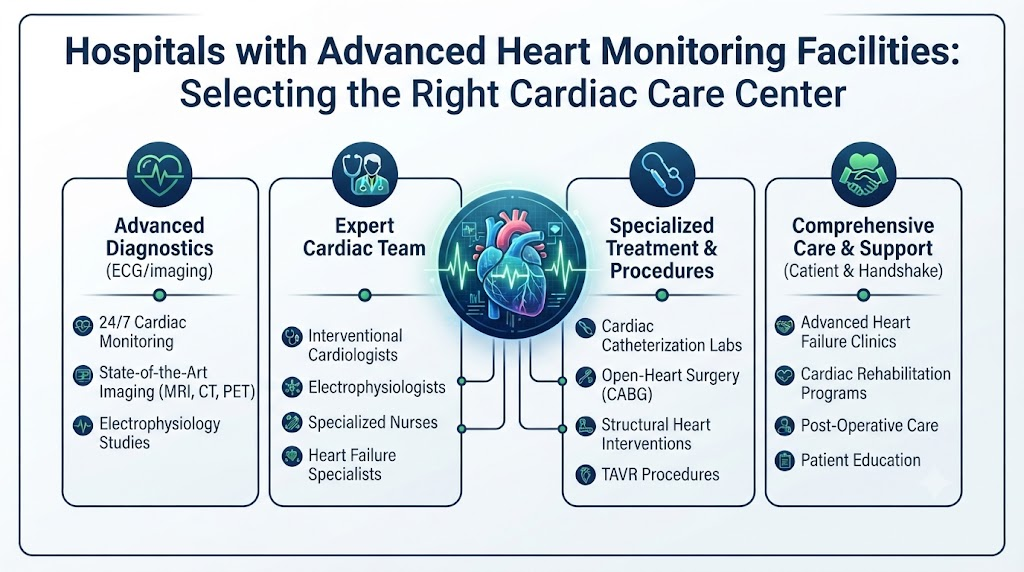
The detection and management of cardiovascular conditions rely heavily on the accuracy and speed of medical data collection. Because the human heart operates on an intricate electrical conduction system, capturing subtle changes in cardiac behavior requires advanced technology. Continuous heart monitoring serves as a vital pillar in modern clinical practice, providing real-time observations that help physicians track heart function under varying conditions.This educational guide details the clinical importance of cardiac tracking, explores the various monitoring technologies used by specialists, and outlines the criteria for evaluating healthcare facilities. Navigating these specialized options can be complex, but platforms like BestCardiacHospitals can help connect patients with detailed insights into cardiac monitoring technologies, specialized cardiovascular care services, and comprehensive hospital resources.
What Is Heart Monitoring?
Heart monitoring is the continuous or intermittent assessment of the heart’s electrical activity, mechanical function, and overall performance. At its core, the procedure tracks the electrical impulses that stimulate heart muscle contractions, mapping them onto a visible waveform for clinical analysis.
The primary purpose of monitoring heart rhythm and function is to establish a clear picture of a patient’s cardiovascular performance over time. This process helps clinicians:
- Analyze the baseline rate and rhythm of the heartbeat.
- Identify disruptions in the electrical pathways of the heart.
- Correlate physical symptoms like chest pressure or dizziness with specific electrical changes.
- Evaluate how well the heart muscle pumps blood to the rest of the body.
[ Normal Electrical Impulse ] -> [ Predictable Contraction ] -> [ Stable Waveform ]
[ Disrupted Impulse Path ]   -> [ Irregular Contraction ]   -> [ Abnormal Waveform Alert ]
A key distinction in cardiovascular care is the difference between short-term diagnostic tests and continuous cardiac monitoring. Short-term testing, such as a standard 12-lead resting electrocardiogram (ECG), records heart activity for only a few seconds. While valuable for catching immediate abnormalities or an active heart attack, it cannot capture irregular events that occur intermittently throughout the day or night.
Continuous monitoring addresses this limitation by recording heart activity over hours, days, weeks, or even years. This extended approach is essential for tracking down hard-to-find rhythm changes, observing how a patient reacts to new medications, and keeping a close watch on individuals recovering from major cardiovascular events.
Why Advanced Heart Monitoring Matters
Advanced heart monitoring plays a critical role in preventing complications, improving patient safety, and guiding therapeutic decisions in modern cardiology.
Early Detection of Rhythm Abnormalities
Many heart rhythm disorders, such as intermittent arrhythmias, occur unpredictably and without regular patterns. Advanced monitoring allows clinicians to capture these fleeting electrical disruptions the exact moment they happen. Identifying these changes early prevents them from worsening into more severe cardiovascular events, such as standard heart failure or a sudden cardiac arrest.
Tracking Treatment and Detecting Silent Events
Once a treatment plan is in place—whether it involves antiarrhythmic medications, a surgical procedure, or a medical device like a pacemaker—continuous monitoring allows doctors to track its effectiveness in real time.
Additionally, advanced systems are vital for detecting “silent” cardiac events. Conditions like silent myocardial ischemia or asymptomatic atrial fibrillation can damage cardiovascular tissue without causing obvious physical symptoms like pain or shortness of breath. Continuous tracking exposes these hidden events, allowing clinical teams to adjust therapies before permanent tissue damage occurs.
[ Unmonitored Silent Event ] --> Asymptomatic Tissue Strain --> Long-Term Damage
[ Advanced System Tracking ] --> Real-Time Data Capture   --> Prompt Medical Adjustment
Supporting Emergency Care and Long-Term Management
In acute clinical settings, like emergency departments or intensive care units, advanced monitoring acts as an early warning system. It alerts staff to sudden, dangerous shifts in a patient’s physiological state before physical symptoms manifest.
For long-term patient management, the comprehensive data collected by modern tracking systems provides a clear record of heart behavior. This allows cardiologists to base their long-term treatment plans on solid clinical trends rather than subjective descriptions or assumptions.
Conditions That May Require Heart Monitoring
Healthcare providers utilize advanced cardiac monitoring for a wide range of medical conditions, helping them clarify complex symptoms and manage chronic diseases safely.
- Arrhythmias: Generalized electrical conduction disorders where the heart beats too quickly, too slowly, or erratically, requiring detailed tracking to map out the underlying pathway.
- Atrial Fibrillation (AFib): A common, irregular rhythm in the heart’s upper chambers that increases the risk of blood clots and stroke, requiring continuous observation to manage stroke risk and rate control.
- Heart Failure: A progressive condition where the heart’s pumping efficiency decreases, requiring close fluid and rhythm monitoring to prevent sudden fluid retention or dangerous heart rhythms.
- Coronary Artery Disease (CAD): Narrowed or hardened arteries that restrict blood supply to the heart muscle, where monitoring helps identify ischemic changes during daily stress or exercise.
- Unexplained Chest Pain: Discomfort that requires real-time electrical tracing to determine if the pain stems from restricted coronary blood flow or other non-cardiac sources.
- Palpitations: Sensations of a racing, fluttering, or skipping heartbeat that need to be captured on an ECG to see if an underlying electrical problem is responsible.
- Syncope (Fainting): Sudden, temporary losses of consciousness that require long-term heart rhythm tracking to rule out dangerous drops in heart rate or blood pressure.
- Post-Operative Recovery: The critical phase following cardiothoracic surgery or catheter interventions, where continuous monitoring helps manage risks like bleeding, fluid shifts, or sudden arrhythmias.
- Pacemaker or ICD Evaluation: Periodic and continuous tracking of implanted electrical devices to ensure they are sensing, pacing, and delivering therapies correctly.
Heart Monitoring Technologies Comparison Table
| Technology | Primary Clinical Purpose | Common Clinical Use Case |
| Electrocardiogram (ECG) | Measures and records the heart’s electrical activity from multiple angles over a brief window | Initial emergency triage, routine physical examinations, and baseline cardiovascular screening |
| Holter Monitor | Continuous 24-to-48-hour electrical recording using a small, wearable device | Evaluating daily heart rhythm variations and capturing frequent but intermittent abnormalities |
| Cardiac Telemetry | Continuous, real-time wireless monitoring of hospitalized patients | Tracking acute patients in intensive care units, step-down wards, or emergency departments |
| Event Monitor | Records heart rhythms over several weeks, activated either manually by the patient or automatically by a change in rhythm | Capturing infrequent symptoms that occur less often than once a day |
| Implantable Loop Recorder (ILR) | Subcutaneously placed device that provides continuous monitoring for several years | Investigating rare, unexplained fainting spells or assessing long-term stroke risks |
Advanced Heart Monitoring Facilities in Modern Hospitals
To provide comprehensive cardiovascular care, modern hospitals invest heavily in both inpatient and outpatient monitoring infrastructure. These specialized facilities allow clinical teams to observe patient data across a variety of healthcare settings.
                  +--------------------------------+
                  |  HOSPITAL MONITORING REALMS    |
                  +--------------------------------+
                   /              |               \
                  /               |                \
      [ Inpatient Wards ]   [ Intensive Care ]   [ Outpatient Networks ]
       - Telemetry Units     - CCU / ICUs         - Holter Devices
       - Central Desk        - Continuous Vitals  - Remote Monitoring
Inpatient Monitoring Wards and Telemetry Units
Within specialized hospitals, dedicated telemetry units allow patients to move around freely while remaining connected to a wireless transmitter. This lightweight device continuously sends their real-time heart rhythm data to a centralized nursing station.
At this monitoring desk, trained telemetry technicians and specialized nurses review multiple patient screens simultaneously. If an irregular rhythm develops or a heart rate crosses a pre-set safety threshold, the system automatically triggers an alert, allowing the care team to respond immediately.
Intensive Care and Advanced Diagnostics
For patients facing life-threatening conditions, the Intensive Cardiac Care Unit (CCU) provides the highest level of continuous observation. These specialized spaces utilize advanced, multi-parameter digital monitoring systems that track not only heart rhythm, but also arterial blood pressure, oxygen saturation levels, respiratory rates, and central venous pressures simultaneously.
For outpatient care, hospitals run dedicated ambulatory monitoring services. These departments equip patients with wearable solutions, such as Holter monitors or event recorders, and handle the download and analysis of the data once the monitoring period ends.
Implantable Technologies and Remote Networks
When long-term tracking is required, physicians can place an implantable cardiac monitor, or loop recorder, just beneath the skin of the chest during a quick, minimally invasive procedure. These discreet devices continuously analyze the heart’s rhythm for several years, saving battery life by only recording when they detect unusual activity or when manually activated by the patient via a remote control or smartphone app.
This technology integrates seamlessly with a hospital’s remote patient monitoring network, which securely transmits data from a patient’s home directly to their cardiology team, ensuring timely adjustments without requiring an in-person clinic visit.
Advanced Diagnostic Technologies
In addition to rhythm monitoring, modern hospitals utilize an array of advanced diagnostic imaging and electrophysiological testing systems to evaluate the heart’s structure and blood flow.
Non-Invasive Structural and Vascular Imaging
- Echocardiography: An ultrasound-based test that provides real-time moving images of the heart chambers, walls, and valves. This helps physicians measure the heart’s pumping capacity (ejection fraction) and identify structural anomalies or valve leaks without exposing the patient to radiation.
- Stress Testing: Evaluates how the heart muscle responds to increased physical demand. Patients exercise on a treadmill or receive a pharmacological agent while clinical teams monitor their ECG, blood pressure, and oxygen levels to look for signs of restricted blood flow under stress.
- Cardiac CT Scan: A rapid, high-resolution imaging technique that uses X-rays to visualize coronary anatomy, screen for calcium deposits, and identify blockages within the arterial walls (CT Angiography).
- Cardiac MRI: An advanced, non-invasive imaging method that uses strong magnetic fields to generate highly detailed images of heart tissue. This helps specialists evaluate tissue viability, detect inflammation (myocarditis), and differentiate between healthy muscle and scar tissue.
Invasive Tracing and Next-Generation Tracking
When surface-level tests do not provide enough detail, specialists use Coronary Angiography within a catheterization laboratory. By introducing a contrast dye directly into the coronary arteries under real-time X-ray guidance, interventional cardiologists can map out the exact location and severity of physical blockages.
For complex rhythm disorders, an electrophysiologist can perform Electrophysiology (EP) Studies. This detailed test involves guiding specialized electrode catheters into the heart to stimulate and map its internal electrical pathways, identifying the exact origin of an arrhythmia.
[ Diagnostic Imaging: CT/MRI ] ---> Identifies Physical and Structural Layout
[ Electrophysiology: EP Study ] -> Maps Out Dynamic Electrical Pathways
Additionally, hospitals increasingly incorporate medical-grade wearable cardiac monitoring devices into their outpatient care plans. These lightweight patches and smart sensors attach comfortably to the patient’s skin, recording and uploading data automatically during normal daily activities to help capture rare or hard-to-find cardiac events.
Technology Comparison Table
| Technology | Primary Clinical Purpose | Key Diagnostic Benefit for Patients |
| Echocardiography | Assesses the structural movement, wall thickness, and valve function of the heart | Provides a completely non-invasive, radiation-free look at the heart’s mechanical pumping performance |
| Cardiac CT | Generates detailed, cross-sectional three-dimensional visual maps of the coronary arteries | Quickly and accurately identifies arterial calcium deposits and structural blockages |
| Cardiac MRI | Evaluates the health and structural integrity of the heart muscle tissue | Delivers high-contrast imaging that distinguishes between inflamed, scarred, or healthy tissue |
| Electrophysiology Study | Provokes, tracks, and maps out the electrical pathways within the heart chambers | Pinpoints the exact origin of complex arrhythmias to guide treatments like catheter ablation |
How Hospitals Monitor Cardiac Patients
Patient tracking within a specialized hospital is structured around a continuous care model, adapting the level of observation to the patient’s immediate medical needs as they move through different departments.
  [ Emergency Triage ] ---> Rapid evaluation and immediate cardiac stabilization
           |
  [ Intensive Care Unit ] -> Continuous multi-parameter tracking for high-risk patients
           |
  [ Step-Down Ward ] ------> Wireless telemetry monitoring with increased physical mobility
           |
  [ Outpatient Care ] -----> Remote wearable devices and regular check-ins from home
Triage, Intensive Care, and Step-Down Wards
When a patient arrives at the emergency department with potential cardiac symptoms, they are immediately placed on an ECG monitor to check for acute rhythmic failures or signs of a heart attack. If they require admission for a high-risk condition, they move to the Intensive Cardiac Care Unit (CCU). In this unit, bed-side monitors track vital signs continuously, ensuring that specialized physicians and nursing teams can see any shift in their condition immediately.
As the patient’s condition stabilizes, they transition to a step-down cardiac unit. In this ward, the level of observation changes from restrictive bedside cables to mobile remote telemetry systems. Patients wear a small wireless pack that allows them to walk around the ward to rebuild strength, while their heart rhythm continues to stream directly to the central nursing monitoring station.
Post-Operative Care and Outpatient Transition
Following major procedures like a coronary artery bypass graft or valve replacement, post-operative cardiac monitoring tracks how the heart handles recovery. Clinical teams keep a close watch for common post-surgical shifts, such as new-onset atrial fibrillation, fluid accumulation around the heart, or pacing anomalies, ensuring immediate care if any arise.
Before discharge, patients are often enrolled in outpatient monitoring programs. The hospital equips them with take-home wearable sensors or sets up automated transmissions for their implanted pacemakers. This remote care network allows the clinical team to review the patient’s real-time recovery data while they rest at home, helping prevent unnecessary readmissions and ensuring a safer transition back to daily life.
Benefits of Choosing Hospitals with Advanced Monitoring Facilities
Selecting a healthcare institution equipped with modern heart monitoring infrastructure provides several practical advantages that directly influence diagnostic safety and treatment outcomes.
- Faster and More Accurate Diagnosis: Advanced tracking technologies catch fleeting, irregular symptoms the moment they occur, reducing the time spent guessing and preventing the need for repeated, inconclusive testing.
- Continuous, Round-the-Clock Observation: Patients are monitored continuously, ensuring that subtle shifts in electrical or structural performance are caught immediately, even while they are asleep.
- Access to Specialized Care Teams: Advanced facilities are staffed by experienced cardiologists, electrophysiologists, and cardiac nurses who can quickly interpret complex waveforms and adjust care plans accurately.
- Rapid Emergency Response: Centralized telemetry systems and automated alarms instantly alert medical staff to critical changes, ensuring life-saving interventions can begin without delay.
- Tailored, Data-Driven Treatment Plans: Having access to a complete record of a patient’s heart behavior allows physicians to customize medication types, adjust dosages, and time interventions based on solid data trends.
- Coordinated Continuity of Care: Advanced centers manage the entire care process smoothly, sharing data seamlessly from the emergency room to the intensive care unit, and eventually into outpatient home-tracking programs.
Choosing the Right Cardiac Hospital
Evaluating a hospital’s cardiac monitoring capabilities requires looking beyond basic medical services to analyze their specialized infrastructure, care teams, and support programs.
Specialized Clinical Teams
The quality of a cardiac program depends heavily on the expertise of its medical team. Look for hospitals staffed by board-certified general cardiologists and cardiac electrophysiologists—specialists who focus exclusively on diagnosing and treating heart rhythm disorders. These physicians should work alongside a team of specialized nurses, telemetry technicians, and critical care staff who are trained to manage advanced tracking data daily.
Comprehensive Infrastructure and Dedicated Units
A well-equipped hospital should offer a complete range of modern monitoring equipment, including 24/7 wireless telemetry, modern ambulatory monitors, and high-resolution imaging infrastructure like cardiac CT and MRI.
It is also important to choose a facility with dedicated care spaces, such as a certified Intensive Cardiac Care Unit (CCU) and dedicated step-down wards, to ensure you receive an appropriate level of observation throughout your stay.
       [ HIGH-VOLUME CLINICAL EXPERTISE ]
 (Specialized Electrophysiologists + Advanced Care Infrastructure)
                       |
       [ RECOVERY AND LONG-TERM SUCCESS ]
  (Comprehensive Rehabilitation + Patient-Centered Support)
Continuity of Care and Rehabilitation
Cardiovascular health management extends far after a patient leaves the hospital. Look for facilities that feature structured cardiac rehabilitation programs that combine supervised physical exercise with dietary counseling and lifestyle education.
Additionally, prioritize hospitals that emphasize patient-centered care, meaning they value clear communication, involve family members in care decisions, and provide straightforward educational resources to help you manage your health confidently at home.
Hospital Selection Checklist
| System Feature | Clinical Core Significance | Specific Indicators to Look For |
| Continuous Cardiac Monitoring | Enables early detection of transient, hard-to-find rhythm disorders | Dedicated inpatient wireless telemetry networks; automated alarm algorithms |
| Experienced Cardiology Team | Ensures expert interpretation of complex clinical data and precise treatment adjustments | Board-certified electrophysiologists; specialized telemetry nurses on staff |
| Advanced Diagnostic Imaging | Provides accurate structural and vascular maps to guide therapeutic interventions | On-site accessibility to cardiac-optimized CT, MRI, and high-resolution echocardiography |
| Cardiac ICU (CCU) | Delivers intensive monitoring and immediate specialized care for high-risk patients | Closed unit configuration staffed by dedicated cardiac critical care specialists |
| Rehabilitation Services | Supports long-term recovery, lifestyle adjustments, and secondary prevention | Structured outpatient exercise programs supervised by clinical physiologists |
Common Myths vs Facts
Myth: Advanced heart monitoring facilities are only necessary for patients experiencing an active heart attack.
Fact: While essential for managing heart attacks, advanced monitoring is equally important for diagnosing unexplained fainting spells, tracking asymptomatic arrhythmias, evaluating pacemaker function, and monitoring how a patient tolerates changes to their cardiovascular medications.
Myth: A normal reading on a standard resting ECG rules out every type of heart problem.
Fact: A standard resting ECG only records heart activity for a brief window of a few seconds. If a rhythm abnormality is intermittent, it may not happen during the test. Capturing these fleeting events often requires longer-term monitoring tools, like Holter monitors or implantable loop recorders.
Myth: Wearing a continuous cardiac monitoring device is uncomfortable and limits daily activities.
Fact: Modern ambulatory monitoring equipment is designed to be lightweight, discreet, and water-resistant. Many systems utilize small, wireless patches that attach comfortably to the chest, allowing patients to shower, sleep, and go about their normal routines without disruption.
Myth: Continuous cardiac tracking can only be performed while a patient is admitted to a hospital hospital bed.
Fact: Telehealth and remote patient tracking networks allow modern hospitals to monitor a patient’s real-time heart rhythm data while they rest comfortably at home, combining professional medical oversight with the convenience of outpatient care.
Common Mistakes Patients Make
Navigating a cardiovascular care plan requires active communication and careful adherence to medical instructions. Avoiding common pitfalls can significantly improve the accuracy of your diagnostic data and keep you safer throughout your recovery.
Ignoring Brief Symptoms or Delaying Evaluation
A frequent mistake is downplaying brief episodes of heart fluttering, mild dizziness, or occasional chest discomfort, assuming they are simply caused by stress, caffeine, or fatigue. Delaying a medical evaluation allows potential underlying conditions to go unmanaged, increasing the risk of facing a more serious cardiovascular event down the road.
Removing Wearable Monitoring Devices Too Early
Some patients take off their prescribed ambulatory monitors before the tracking period is complete, often because of minor skin irritation or a belief that they have already captured enough data. Removing the device early can prevent the system from recording a rare, intermittent abnormality, making it harder for your doctor to establish an accurate diagnosis.
Missing Follow-Up Appointments and Care Changes
Skipping scheduled follow-up visits or failing to report new symptoms can disrupt your care plan. These appointments are essential for allowing your cardiologist to review your monitoring data, check how you are responding to treatments, adjust medication dosages safely, and verify that your health is improving on schedule.
Altering Prescribed Medication Routines Independently
Some individuals stop taking their heart medications or adjust their dosages without consulting their physician, often because they feel better or want to avoid a side effect. Stopping heart medications abruptly can destabilize your heart rhythm and increase blood pressure, which can lead to complications and invalidate current monitoring data.
Practical Solutions
To support your monitoring process:
- Keep a simple daily diary of your activities and any physical symptoms, noting the exact time they occurred so your doctor can match them against your monitoring data.
- Follow the device instructions carefully, keeping the skin around the sensors clean and dry to ensure clear signal recordings.
- Treat your follow-up appointments as an essential part of your recovery, and always discuss any medication concerns openly with your cardiologist before making changes.
Real-Life Patient Scenarios
Scenario A: Capturing a Hard-to-Find Rhythm Change
A 48-year-old individual experienced occasional episodes of dizziness and a fluttering feeling in their chest, but their symptoms never occurred during regular office visits, and their standard resting ECGs always showed normal results. Seeking answers, their cardiologist arranged for them to wear a lightweight Holter monitor for 48 hours at home.
On the second afternoon of tracking, the patient felt the fluttering sensation again and noted the exact time in their diary. When the medical team analyzed the downloaded data, they discovered a brief, self-limiting run of atrial fibrillation that matched the patient’s note. Having a clear, documented diagnosis allowed the cardiologist to start a targeted treatment plan early, effectively resolving the symptoms and significantly reducing the patient’s long-term stroke risk.
Scenario B: Wireless Observation During Hospital Recovery
A 66-year-old individual was recovering in a step-down ward after undergoing a successful coronary artery bypass graft. To support their recovery, physical therapists encouraged them to sit up and take short walks down the hallway.
The hospital ward utilized a wireless telemetry network, allowing the patient to walk comfortably without being tied to a bedside machine. While the patient was resting after a short walk, the central telemetry desk noticed a sudden run of premature ventricular contractions on their monitor and alerted the nursing staff immediately. The care team quickly checked on the patient, adjusted their electrolyte levels, and modified their medications, preventing a minor electrical shift from turning into a more serious post-operative complication.
Scenario C: Clarifying Unexplained Fainting Spells Long-Term
A 72-year-old individual experienced two unprovoked, sudden fainting spells over a six-month period, which resulted in minor injuries. Because extensive diagnostic testing—including multiple echocardiograms, neurological reviews, and a 30-day external event monitor—turned up normal results, their cardiology team recommended a long-term approach.
The specialist placed a tiny implantable loop recorder just beneath the skin of the patient’s chest during a quick, outpatient procedure. Four months later, the patient experienced a brief dizzy spell at home. The implantable device automatically recorded the event and securely uploaded the data to the hospital’s remote monitoring network. The review revealed a transient, severe drop in heart rate (bradycardia), providing the clear diagnostic evidence needed to recommend a pacemaker, which successfully prevented any future fainting episodes.
FAQs (15 Questions)
1.What is heart monitoring?
Heart monitoring is the continuous or intermittent tracking of the heart’s electrical impulses and mechanical performance over time, allowing healthcare providers to evaluate rhythms, detect abnormalities, and observe trends under different conditions.
2.Why is continuous heart monitoring important?
Continuous tracking is vital because many cardiovascular issues, like irregular heartbeats, occur infrequently and unpredictably. Monitoring over extended periods allows clinical teams to capture these transient events the moment they happen, ensuring an accurate diagnosis.
3.What is a Holter monitor?
A Holter monitor is a small, battery-powered medical device that records your heart’s electrical activity continuously for 24 to 48 hours while you go about your normal daily routine, helping identify rhythm variations that a brief clinic ECG might miss.
4.How long does a patient need to remain on a heart monitor?
The duration of tracking is personalized based on your symptoms and history. It can range from a few seconds for a standard ECG, to several days with a Holter monitor, a month with an event recorder, or several years with an implantable loop recorder.
5.Is undergoing heart monitoring painful or uncomfortable?
No, non-invasive monitoring options are completely painless. Wearable sensors and patches use gentle adhesives to attach to your skin, and while you might occasionally experience mild itching under the pad, the lightweight devices are designed to be comfortable.
6.What medical conditions require continuous cardiac tracking?
Continuous tracking is commonly used to manage arrhythmias, atrial fibrillation, unexplained fainting spells (syncope), coronary artery disease, heart failure, chest pain, palpitations, and to monitor recovery following major heart surgery.
7.What is telemetry monitoring?
Telemetry monitoring is a wireless system used within hospitals where a small transmitter worn by the patient sends real-time heart rhythm data to a centralized observation desk, allowing the care team to monitor the patient while they move around.
8.Can heart monitoring devices detect all irregular heartbeats?
Yes, continuous monitors are highly effective at capturing irregular heart rhythms. However, the device can only record an abnormality if it occurs while you are actively wearing it, which is why doctors adjust the monitoring duration to match how often your symptoms occur.
9.What happens if an abnormal heart rhythm is detected?
If a monitor detects an abnormality, the data is reviewed by your cardiologist. Depending on the type and severity of the rhythm change, your doctor may adjust your medications, recommend further diagnostics, or plan an intervention like a pacemaker.
10.How should I prepare for a heart monitoring procedure?
For wearable monitors, it is helpful to bathe before your appointment, as the skin on your chest needs to be clean, dry, and free of lotions to help the sensors stick properly. Your care team will provide specific instructions based on the device you use.
11.Can I continue my normal daily activities during tracking?
Yes, most ambulatory monitors are designed to track your heart during your usual routine, including work, light exercise, and sleep. Your doctor will clarify if you need to avoid specific activities, like swimming or heavy contact sports, based on your device type.
12.How do hospitals choose the most appropriate monitoring method?
Specialists select a monitoring method by evaluating your physical symptoms, medical history, how often your symptoms occur, and your general clinical condition, ensuring you receive a tool suited to your diagnostic needs.
13.What is an implantable loop recorder?
An implantable loop recorder is a tiny diagnostic device placed just under the skin of the chest during a quick procedure. It provides continuous heart rhythm tracking for several years, making it ideal for investigating rare, unexplained symptoms.
14.How do I identify a hospital with advanced heart monitoring facilities?
Look for accredited medical centers that feature dedicated cardiac intensive care units, 24/7 telemetry wards, access to advanced imaging like cardiac CT and MRI, a team of board-certified electrophysiologists, and a structured cardiac rehabilitation program.
15.When is it appropriate to consult a cardiologist?
You should schedule a consultation with a cardiologist if you experience symptoms like persistent heart palpitations, unexplained shortness of breath, dizziness, fainting spells, chest discomfort, or if you have a strong family history of heart disease.
Final Thoughts
Advanced heart monitoring is an invaluable component of modern cardiovascular medicine, providing the real-time insights needed for early diagnosis, continuous observation, and effective treatment planning. By utilizing technologies ranging from wearable ambulatory patches to long-term implantables, specialized hospitals can look closely at heart function over time, uncovering subtle changes that might otherwise go undetected. This comprehensive data allows clinical teams to step in early, lowering the risk of complications and making inpatient care safer.However, using advanced technology is only one part of a successful care plan. Maintaining long-term heart health requires an ongoing partnership between the patient and their care team, supported by regular follow-up evaluations, consistent medication tracking, and heart-healthy lifestyle choices. Every patient’s heart function is unique, and the most effective care paths are developed through careful analysis tailored to the individual’s history and symptoms.