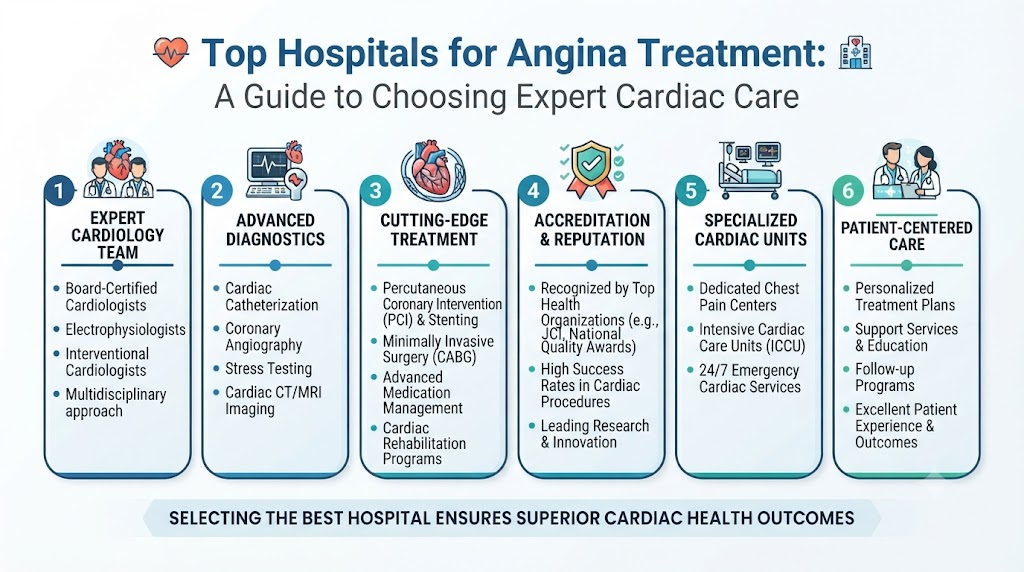
Introduction
Angina is more than just chest pain; it is a vital warning signal from your heart that it is not receiving enough oxygen-rich blood. Because angina is often a symptom of underlying coronary artery disease, it should never be ignored. Prompt medical attention is the cornerstone of preventing more serious cardiac events.Choosing the right facility is a critical decision in your healthcare journey. Specialized cardiac hospitals provide the expertise, advanced technology, and multidisciplinary teams necessary to accurately diagnose and treat angina effectively. By prioritizing centers that focus on cardiovascular excellence, you ensure that you receive evidence-based care tailored to your specific needs. To help you navigate your options and explore cardiac care information, you can visit BestCardiacHospitals.
What Is Angina?
Angina is the physical sensation of chest pain or discomfort that occurs when your heart muscle does not get as much blood as it needs. It is usually described as pressure, squeezing, or burning in the chest.
- Stable Angina: The most common form; it occurs during physical activity or stress and typically goes away with rest or medication.
- Unstable Angina: A medical emergency; it is unpredictable and can occur at rest, signaling that a heart attack may be imminent.
- Microvascular Angina: Involves the tiny blood vessels of the heart and may not show up on standard diagnostic tests.
- Variant (Prinzmetal) Angina: Caused by a spasm in the coronary arteries, often occurring at rest.
Why Specialized Cardiac Hospitals Matter
Cardiac care is highly complex. Specialized hospitals excel because they focus their resources, expertise, and technology entirely on the heart.
- Multidisciplinary Teams: You gain access to a coordinated team, including interventional cardiologists, surgeons, and specialized nurses.
- Advanced Diagnostics: Access to modern imaging that a general hospital might not offer.
- 24/7 Readiness: These centers are equipped for rapid, life-saving interventions at any hour.
- Integrated Rehab: Care continues beyond the procedure with dedicated cardiac rehabilitation programs.
Common Symptoms of Angina
Recognizing the symptoms early can be life-saving. While chest pain is the hallmark, angina can manifest in several ways.
Symptoms Comparison Table
| Symptom | Possible Medical Significance |
| Chest Pain | Reduced blood flow to the heart |
| Shortness of Breath | Decreased oxygen delivery |
| Jaw or Arm Pain | Referred cardiac pain |
| Fatigue | Reduced heart efficiency |
| Dizziness | Poor circulation |
| Nausea | Possible cardiac event |
Causes and Risk Factors
Angina is usually caused by coronary artery disease, where plaque narrows the arteries. Key risk factors include high blood pressure, high cholesterol, diabetes, smoking, obesity, chronic stress, physical inactivity, family history, and advancing age. Addressing these factors is essential to managing the condition long-term.
Diagnostic Tests for Angina
Top-tier hospitals utilize a range of tools to pinpoint the cause of your discomfort.
Diagnostic Tests Table
| Test | Purpose | Benefit |
| ECG | Detect abnormal heart rhythm | Quick diagnosis |
| Stress Test | Assess heart function during activity | Detect blocked arteries |
| Echocardiogram | Evaluate heart structure | Assess heart performance |
| Coronary Angiography | Identify artery blockage | Guides treatment |
| Blood Tests | Detect heart damage | Supports diagnosis |
Treatments Offered by Top Angina Hospitals
Care plans are highly individualized. They may include:
- Lifestyle Modification: Diet and exercise.
- Medications: To relax arteries or reduce the workload on the heart.
- Angioplasty & Stenting: Widening blocked arteries with a small balloon and mesh tube.
- Bypass Surgery (CABG): Creating a new path for blood to flow around a blockage.
- Cardiac Rehabilitation: Supervised exercise and education for long-term recovery.
Advanced Cardiac Technologies
Leading hospitals employ advanced tools to ensure precision. Technologies like Fractional Flow Reserve (FFR) and Optical Coherence Tomography (OCT) allow surgeons to see inside arteries with unprecedented clarity, leading to better outcomes.
Cardiac Technology Comparison Table
| Technology | Purpose | Patient Benefit |
| Cath Lab | Diagnose and treat blockages | Faster intervention |
| IVUS | Detailed artery imaging | Improved treatment planning |
| OCT | High-resolution visualization | Greater procedural precision |
| Hybrid OR | Complex cardiac procedures | Enhanced patient safety |
How to Choose the Right Hospital
When evaluating centers, focus on these pillars:
- Expertise: Look for teams led by board-certified cardiologists.
- Emergency Capability: Does the hospital have a 24/7 cardiac catheterization lab?
- Accreditation: Ensure the center meets rigorous safety and quality benchmarks.
- Integrated Care: A hospital that offers everything from diagnosis to post-operative rehabilitation is ideal.
Hospital Selection Checklist
- Expert Cardiologists: Experienced staff lead to better outcomes.
- Advanced Technology: Modern equipment ensures accurate diagnostics.
- Cardiac ICU: Critical care availability is non-negotiable for serious cases.
- Insurance Support: Clear financial guidance reduces unnecessary stress.
Preparing for Angina Treatment
Preparation includes a full medical evaluation, a review of your current medications, and lifestyle adjustments. Use your pre-treatment consultations to ask your cardiologist specific questions about the procedure, the expected recovery time, and what success looks like for your particular case.
Recovery and Long-Term Heart Care
Recovery is a team effort. Cardiac rehabilitation is essential for building your strength back safely. Adhering to your medication regimen, managing blood pressure, and staying committed to follow-up appointments are the most effective ways to prevent angina from recurring.
Common Mistakes Patients Make
- Ignoring Pain: “It will go away” is dangerous thinking.
- Delaying Care: Time is muscle; the sooner you seek help, the more heart tissue can be saved.
- Stopping Meds: Never stop heart medication without consulting your doctor, even if you feel “fine.”
- Skipping Rehab: Rehabilitation is not optional; it is part of the cure.
Heart-Healthy Lifestyle Tips
Heart Health Tips Table
| Healthy Habit | Heart Benefit |
| Healthy Diet | Better cholesterol control |
| Daily Exercise | Stronger heart muscle |
| Weight Management | Lower cardiovascular risk |
| Stress Reduction | Lower blood pressure |
| Regular Checkups | Early detection of problems |
Real-Life Patient Scenarios
- Early Detection: A patient noticed jaw pain during their daily walk. Because they recognized it as a possible cardiac symptom and went to a specialized hospital, they were diagnosed with early-stage arterial narrowing and treated with a simple stent, preventing a major heart attack.
- Rehabilitation Success: After bypass surgery, a patient completed a 12-week cardiac rehabilitation program. They went from needing assistance for daily tasks to running 5K races, demonstrating the power of structured recovery.
FAQs
- What is angina?
Chest pain caused by reduced blood flow to the heart. - Is angina a heart attack?
No, but it is a warning sign that requires medical evaluation. - When should I seek emergency care?
If chest pain is severe, persistent, or accompanied by dizziness or shortness of breath. - What tests diagnose angina?
ECGs, stress tests, and coronary angiograms are common. - Can angina be treated without surgery?
Yes, many cases are managed with medication and lifestyle changes. - What hospitals are best for angina treatment?
Look for hospitals with accredited cardiac units and specialized teams. - How do I choose a cardiac hospital?
Prioritize accreditation, surgeon experience, and emergency capability. - What is cardiac rehabilitation?
A medically supervised program of exercise and education. - Can lifestyle changes reduce angina?
Yes, diet and exercise are fundamental to management. - Does insurance cover angina treatment?
Most plans cover medically necessary treatments. - What foods are good for heart health?
Leafy greens, fish, whole grains, and nuts. - How long is recovery after angioplasty?
Often just a few days, but follow-up care is vital. - Can angina return after treatment?
Yes, which is why long-term medication and lifestyle changes are required. - What questions should I ask my cardiologist?
Ask about the severity of your blockages and the risks/benefits of proposed treatments. - How often should I have follow-up appointments?
Your doctor will set a schedule based on your specific needs.
Final Thoughts
Angina is a serious medical condition, but it is also a manageable one. By recognizing the symptoms, seeking early care at a specialized cardiac hospital, and committing to heart-healthy lifestyle changes, you can significantly improve your long-term cardiovascular health.Your journey to a healthier heart starts with informed decisions. We encourage you to explore BestCardiacHospitals to find resources that will help you compare facilities and understand your treatment options. Please remember to consult with a qualified cardiologist to create a care plan that is right for you.