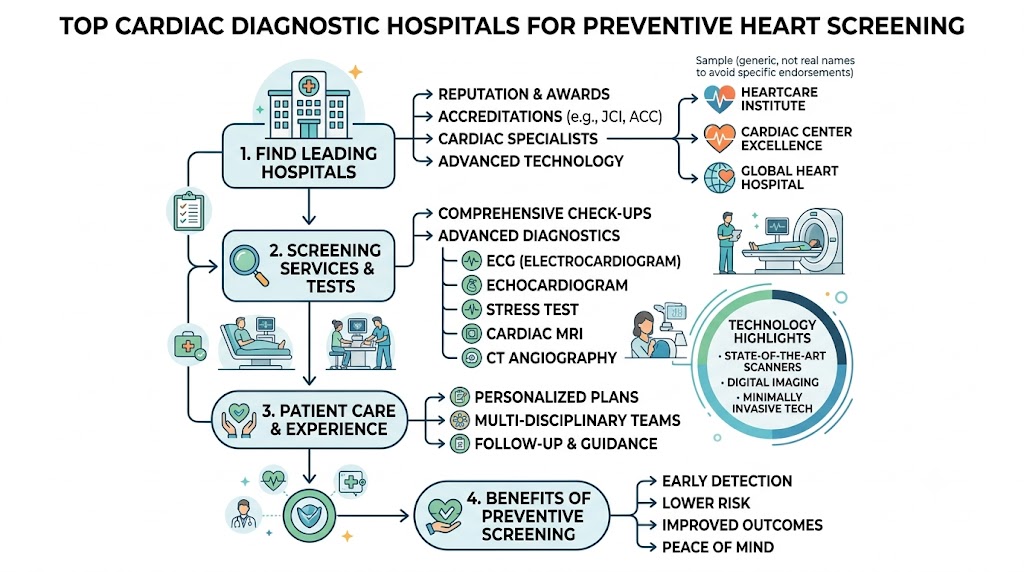
Introduction
Protecting cardiovascular wellness stands as one of the most vital actions an individual can take to ensure long-term health. Heart disease remains a primary health concern globally, but many of its complications are entirely preventable through proactive monitoring. Taking a preventive approach to heart health allows medical professionals to identify underlying cardiovascular issues before they progress into serious medical events.Specialized cardiology hospitals offer the unique combination of experienced physicians, advanced imaging systems, and integrated care teams necessary for thorough cardiac evaluations. This comprehensive guide is designed to clarify the diagnostics process, outline essential heart screening options, and highlight leading heart centers. To browse structured directories of specialized heart centers and access verified healthcare resources, visit BESTCARDIACHOSPITALS to connect with leading cardiac experts.
Understanding Cardiac Stress Tests
A cardiac stress test is a non-invasive diagnostic procedure that measures how well the heart muscle pumps and handles an increased workload. During the test, the heart is stimulated—either through physical exercise on a treadmill or via medication that mimics exercise—while its electrical activity, blood pressure, and rhythm are continuously monitored.
+-----------------------------------------------------------------+
|                    THE CARDIAC STRESS PROCESS                   |
+-----------------------------------------------------------------+
|  [Resting Baseline] --> [Controlled Exercise] --> [Peak Strain] |
|    ECG & Blood Pressure      Continuous Monitoring     Imaging/ECG  |
+-----------------------------------------------------------------+
Physicians typically recommend a stress test to investigate symptoms like chest pain, unexplained shortness of breath, or a racing heartbeat. By pushing the heart to work harder, the test increases the body’s demand for oxygen, forcing the coronary arteries to work at their maximum capacity. This makes the test exceptionally valuable for diagnosing coronary artery disease (CAD), a condition where the arteries supplying blood to the heart become narrowed or blocked.
If an artery is partially blocked, the heart muscle may receive enough blood during rest, but fail to get an adequate supply during exertion. A stress test captures these specific drops in blood supply, providing clear data that helps doctors assess the structural and functional health of your cardiovascular system.
Why Early Cardiac Diagnosis Matters
Identifying cardiovascular issues early significantly changes the course of heart care, transforming a potentially urgent medical situation into a manageable, structured health plan.
- Detecting Hidden Conditions: Many cardiovascular issues, including early-stage arterial narrowing, develop silently without causing obvious daily symptoms until a significant blockage occurs.
- Preventing Major Complications: Finding a drop in blood flow early allows medical teams to intervene before the heart muscle suffers lasting damage or faces an acute event like a heart attack.
- Guiding Tailored Treatment Decisions: Precise diagnostic data helps cardiologists choose the most appropriate path forward, whether that involves lifestyle changes, targeted medications, or minimally invasive procedures.
- Improving Long-Term Health Outcomes: Patients who receive an early, accurate diagnosis enjoy a better quality of life, maintain greater physical capacity, and experience fewer lifestyle disruptions over time.
Quick Comparison Table
| Hospital Name | Location | Diagnostic Services | Cardiology Expertise | Advanced Imaging Technology | Emergency Support |
| Cleveland Clinic | Cleveland, OH | Exercise, Nuclear, Stress Echo | Coronary Artery Disease, Valve Care | Dual-Source CT, 4D Echo | 24/7 Cardiac ER |
| Mayo Clinic | Rochester, MN | Stress Testing, Complex Imaging | Congenital Heart, Arrhythmia | High-Res Cardiac MRI, PET | Full Crisis Teams |
| Cedars-Sinai | Los Angeles, CA | Multimodality Stress Testing | Women’s Heart, Structural Care | Advanced CT Angiography | 24/7 Chest Pain Unit |
| Massachusetts General | Boston, MA | Functional Stress, Biomarkers | Preventative Cardiology, SRE | Ultra-Fast CT, Spectral CT | Cardiac Trauma Unit |
| Johns Hopkins Medicine | Baltimore, MD | Advanced Stress Echo, Holter | Imaging Diagnostics, Myopathy | Cardiac MRI, Perfusion PET | 24/7 Acute Triage |
Best Cardiology Hospitals for Stress Test & Diagnosis
Cleveland Clinic
Hospital Overview
Consistently ranked as a global leader in cardiovascular care, the Sydell and Arnold Miller Family Heart, Vascular & Thoracic Institute at Cleveland Clinic represents the highest standard of excellence in heart diagnostics, treatment, and clinical research.
Cardiology Department
The department brings together hundreds of board-certified cardiologists, imaging specialists, and cardiovascular researchers. Their collaborative approach ensures that every patient receives a comprehensive, peer-reviewed diagnostic evaluation.
Diagnostic Tests Offered
- Comprehensive Exercise Stress Testing
- Advanced Nuclear Stress Perfusion Imaging
- Stress Echocardiography with Strain Imaging
- High-Definition Electrocardiography (ECG) and continuous monitoring
Advanced Technologies Used
Cleveland Clinic utilizes dual-source CT scanners, high-resolution cardiac MRI, and advanced 4D echocardiography systems that provide clear, detailed views of the moving heart.
Preventive Heart Programs
The hospital features a dedicated Preventative Cardiology and Rehabilitation Program focused on identifying genetic risk factors, managing cholesterol levels, and designing custom heart-healthy lifestyle plans.
Why Patients Choose This Hospital
Patients select Cleveland Clinic for its exceptional reputation, unmatched diagnostic accuracy, and its ability to handle complex or previously undiagnosed cardiovascular conditions.
Major Strengths
- Unrivaled expertise in complex valve and coronary artery diagnostics
- State-of-the-art cardiovascular imaging pavilions
- Comprehensive data integration across all medical sub-specialties
Mayo Clinic
Hospital Overview
Located in Rochester, Minnesota, the Department of Cardiovascular Medicine at Mayo Clinic is world-renowned for its team-based care model, where specialists work together to solve complex diagnostic puzzles.
Cardiology Department
Mayo Clinic’s cardiology team is organized into highly specialized clinics, allowing patients to be evaluated by doctors who focus specifically on their exact cardiovascular symptoms or history.
Diagnostic Tests Offered
- Exercise and Pharmacological Stress Testing
- Myocardial Perfusion Imaging (MPI)
- Holter and continuous patch event monitoring
- Advanced non-invasive cardiac structure analysis
Advanced Technologies Used
The clinic employs advanced cardiac PET imaging, ultra-high-resolution CT angiography, and specialized speckle-tracking echocardiography to evaluate subtle shifts in heart function.
Preventive Heart Programs
Mayo Clinic offers the Cardiovascular Health Clinic, a program designed to evaluate asymptomatic individuals with a family history of heart disease using advanced risk-scoring methods.
Why Patients Choose This Hospital
Families choose Mayo Clinic for its detailed diagnostic process, where multiple tests can be scheduled, completed, and analyzed within a few days.
Major Strengths
- Highly efficient, fully integrated multi-test diagnostic scheduling
- World leaders in diagnosing rare, complex, and congenital heart conditions
- Extensive application of advanced cardiac magnetic resonance imaging
Cedars-Sinai Medical Center
Hospital Overview
Based in Los Angeles, California, the Smidt Heart Institute at Cedars-Sinai is a premier health institution known for pioneering new diagnostic standards and providing exceptional patient care.
Cardiology Department
The institute features a forward-thinking clinical team that balances everyday preventive screening with the development of next-generation cardiovascular technologies.
Diagnostic Tests Offered
- Treadmill Stress Testing with metabolic cart analysis
- Stress Echocardiography
- Multi-detector CT Coronary Angiography
- Continuous ambulatory arrhythmia monitoring
Advanced Technologies Used
Cedars-Sinai utilizes fractional flow reserve CT (FFR-CT), an advanced technology that allows doctors to measure blood pressure drops across arterial blockages without using invasive catheters.
Preventive Heart Programs
The hospital is home to the famous Barbra Streisand Women’s Heart Center, which focuses specifically on identifying and treating microvascular disease and unique cardiac patterns in female patients.
Why Patients Choose This Hospital
Patients select Cedars-Sinai for its innovative care options, focus on patient comfort, and specialized diagnostic tracks tailored to diverse patient populations.
Major Strengths
- Pioneers in non-invasive microvascular heart disease testing
- State-of-the-art 24/7 chest pain diagnostic units
- Excellent integration of non-invasive structural diagnostics
Massachusetts General Hospital
Hospital Overview
As the largest teaching hospital of Harvard Medical School, Massachusetts General Hospital (Mass General) delivers a highly sophisticated approach to cardiac diagnostics, supported by a rich history of clinical innovation.
Cardiology Department
The Corrigan Minehan Heart Center at Mass General features specialized clinical units where diagnostic data is translated into precise, evidence-based treatment tracks.
Diagnostic Tests Offered
- Standard and Nuclear Stress Testing
- Cardiopulmonary Exercise Testing (CPET)
- Transthoracic and Transesophageal Echocardiography
- Long-term Holter and mobile cardiac telemetry
Advanced Technologies Used
Mass General employs ultra-fast spectral CT imaging and advanced blood-based cardiac biomarker tracking to detect early cellular-level changes associated with heart stress.
Preventive Heart Programs
The Cardiovascular Disease Prevention Center provides comprehensive evaluations, combining nutritional coaching, genetic screening, and exercise prescription to manage cardiovascular risks.
Why Patients Choose This Hospital
Patients choose Mass General for its deep academic foundation, access to international clinical registries, and methodical approach to early disease detection.
Major Strengths
- Advanced expertise in cardiopulmonary exercise interaction testing
- Cutting-edge research in cardiac biomarkers and early plaque stability
- Seamless coordination between outpatient screening and specialized care units
Johns Hopkins Medicine
Hospital Overview
Located in Baltimore, Maryland, Johns Hopkins Medicine is an iconic healthcare institution renowned for creating foundational diagnostic techniques used across modern cardiology.
Cardiology Department
The Johns Hopkins Heart and Vascular Institute combines detailed clinical skills with advanced imaging to evaluate structural, electrical, and vascular heart health concurrently.
Diagnostic Tests Offered
- Advanced Stress Echocardiography
- Radionuclide Myocardial Perfusion Imaging
- Comprehensive Electrocardiogram (ECG) analysis
- Continuous Holter and event recording options
Advanced Technologies Used
The facility features specialized cardiac MRI suites optimized for evaluating heart muscle disorders (cardiomyopathies) and advanced cardiac CT systems for measuring calcium scores.
Preventive Heart Programs
The Ciccarone Center for the Prevention of Cardiovascular Disease is a leader in tracking early arterial plaque development and educating patients on lifestyle changes.
Why Patients Choose This Hospital
Individuals choose Johns Hopkins for its diagnostic depth, particularly when seeking definitive answers for unusual heart rhythms or inherited heart conditions.
Major Strengths
- Global benchmark programs for inherited cardiomyopathies and arrhythmias
- Advanced non-invasive calcium scoring and plaque visualization
- Highly detailed, research-driven risk assessment methodologies
Types of Cardiac Diagnostic Tests
Modern cardiology relies on a variety of specialized diagnostic tests to evaluate different aspects of heart function, structure, and electrical activity.
+-----------------------------------------------------------------------+
|                 TYPES OF CARDIAC TESTS & CLINICAL FOCUS               |
+-----------------------------------------------------------------------+
|  [Exercise Stress] ----> Blood Flow Under Physical Exertion           |
|  [Stress Echo] --------> Real-Time Valve & Wall Movement Images       |
|  [Nuclear Stress] -----> Radioactive Tracer Mapping of Blood Paths    |
|  [CT Angiography] -----> High-Definition 3D Vascular Blockage Maps    |
+-----------------------------------------------------------------------+
Exercise Stress Test
Often called a treadmill test, this is the most common form of cardiac stress testing. While the patient walks on a treadmill with increasing speed and incline, an ECG continuously records the heart’s electrical rhythm, and blood pressure is checked regularly. This test helps identify rhythm abnormalities or drops in blood flow during exercise.
Nuclear Stress Test
This advanced test provides detailed images of blood flow through the heart muscle. A tiny, safe amount of a radioactive tracer is injected into the bloodstream. A specialized camera then scans the heart twice—once while the patient is at rest and once after exercise—allowing doctors to see exactly which areas of the heart muscle may not be receiving enough blood.
Stress Echocardiography
This diagnostic option combines a standard exercise stress test with an ultrasound of the heart (an echocardiogram). High-frequency sound waves are used to capture detailed images of the heart’s walls and valves right before exercise and immediately after. This allows cardiologists to see if any parts of the heart muscle fail to contract properly when under stress.
Electrocardiogram (ECG)
An ECG is a quick, completely painless test that records the electrical signals traveling through the heart. Small adhesive sensors are placed on the chest, arms, and legs to map these signals. An ECG is used to detect irregular heartbeats, verify heart rate, and show signs of an old or developing heart attack.
Holter Monitoring
When a standard ECG doesn’t capture occasional symptoms, a Holter monitor may be recommended. This small, wearable device is worn by the patient for 24 to 48 hours as they go about their normal routine. It provides a continuous, round-the-clock log of the heart’s electrical rhythm, making it helpful for catching occasional irregular heartbeats (arrhythmias).
Echocardiography
A standard echocardiogram uses ultrasound technology to create a live, moving picture of the heart at rest. It gives cardiologists precise measurements of the heart’s size, the thickness of its walls, and how efficiently its internal valves open and close with each beat.
CT Coronary Angiography
This advanced imaging test uses a specialized CT scanner and an intravenous contrast dye to create detailed, three-dimensional pictures of the coronary arteries. It allows physicians to check for calcium or fatty plaque build-up within the arterial walls without requiring an invasive surgical procedure.
Cardiac Test Comparison Table
| Test Type | Purpose | Common Clinical Use |
| ECG / EKG | Evaluates the heart’s basic electrical rhythm | Initial heart screening and routine physicals |
| Cardiac Stress Test | Measures blood flow and performance under strain | Investigating unexplained chest pain or shortness of breath |
| Holter Monitor | Continuous rhythm tracking over 24-48 hours | Catching intermittent or unpredictable arrhythmias |
| Echocardiogram | Visualizes the heart’s structural walls and valves | Assessing overall pumping strength and valve health |
| CT Angiography | Creates clear, 3D images of the coronary arteries | Locating and measuring specific arterial blockages |
Symptoms That May Require Cardiac Testing
Paying attention to how your body responds to everyday physical activities is an important part of heart care. Certain symptoms warrant a discussion with a physician and a formal diagnostic evaluation.
Chest Pain or Discomfort
Any feeling of pressure, tightness, squeezing, or aching in the center of the chest—especially if it spreads to the jaw, neck, back, or left arm—requires immediate medical attention. This discomfort, known as angina, is a common sign of reduced blood flow to the heart muscle.
Shortness of Breath
Feeling unusually winded during simple activities, like climbing a short flight of stairs or walking a short distance, can suggest that the heart is struggling to pump blood efficiently through the lungs.
Palpitations
A feeling that your heart is skipping beats, fluttering, thumping, or racing too fast can point to a shift in the heart’s electrical system. These rhythm issues are best evaluated using an ECG or a continuous wearable monitor.
Persistent Fatigue
Experiencing deep, unexplained exhaustion that doesn’t improve with rest can sometimes be a sign that the heart muscle isn’t pumping enough oxygen-rich blood to sustain the body’s daily activities.
Dizziness or Lightheadedness
Feeling faint or dizzy, particularly when standing up quickly or exercising, can happen when blood pressure drops or when the heart cannot increase its pumping speed appropriately during activity.
Strong Family History of Heart Disease
Even without obvious symptoms, individuals with a close relative who experienced an early heart attack or structural heart condition can benefit from preventive screening. Early evaluations help identify risk factors before symptoms appear.
How to Choose the Right Cardiology Hospital
- Cardiologist Experience: Look for facilities with board-certified cardiologists who hold advanced certifications in specific fields like nuclear cardiology or adult echocardiography.
- Advanced Diagnostic Technology: Choose a hospital that uses modern imaging equipment, such as dual-source CT scanners or fractional flow reserve software, which offer greater detail and accuracy.
- 24/7 Emergency Services: Ensure the facility features a dedicated cardiac emergency department or a 24/7 chest pain unit equipped to provide immediate, life-saving care during an acute crisis.
- Accreditations and Reputation: Verify that the institution holds recognized accreditations from trusted healthcare organizations, such as the American College of Cardiology or the Joint Commission.
- Clear Insurance Support: Select hospitals that work openly with your insurance provider and offer dedicated financial counselors to help clarify coverage for diagnostic procedures.
Benefits of Advanced Cardiac Diagnosis
Using advanced diagnostic tools offers important benefits that go far beyond standard resting evaluations.
“Modern, non-invasive cardiac diagnostics provide medical teams with the clear, detailed insights needed to identify subtle cardiovascular shifts early, allowing for proactive care plans that protect long-term heart health.”
Advanced imaging and stress testing allow doctors to see precisely how your heart performs under strain, making it possible to identify early signs of heart disease before permanent muscle damage occurs. This precise data helps your care team design a personalized treatment plan tailored to your specific anatomy and lifestyle.
Furthermore, having an accurate picture of your heart health significantly reduces the risk of sudden cardiovascular complications, giving you and your family greater peace of mind as you manage your long-term health.
Common Mistakes Patients Make
- Ignoring Mild Warning Signs: Attributing occasional shortness of breath or mild chest tightness to simple aging or stress rather than mentioning it to a healthcare provider.
- Delaying Recommended Diagnostic Tests: Putting off a scheduled stress test or echocardiogram due to a busy schedule, which can allow an underlying condition to progress unmonitored.
- Skipping Regular Preventive Checkups: Assuming that because you feel healthy today, you don’t need routine heart screenings or cholesterol checks.
- Attempting to Self-Diagnose: Misinterpreting cardiovascular symptoms as simple acid reflux or muscle strain based on internet searches instead of getting a professional medical evaluation.
Real-Life Patient Scenarios
Scenario 1: Identifying Hidden Heart Issues Through Routine Screening
An active individual in their late 40s noticed a slight, unusual tightness in their chest while jogging, but initially brushed it off as a pulled muscle. Because their parent had a history of early heart disease, they decided to schedule a preventive evaluation at a dedicated cardiology center.
The cardiologist recommended an exercise stress test, which revealed subtle changes in the heart’s electrical rhythm during peak exercise. A follow-up CT coronary angiography located a significant, but treatable, blockage in a main coronary artery. Thanks to early detection, the care team stabilized the area using a minimally invasive procedure, allowing the patient to return to running safely without experiencing a heart attack.
Scenario 2: Investigating Persistent Fatigue and Confirming Structural Health
A professional juggling a demanding career began experiencing unusual, deep fatigue that lasted for several weeks, accompanied by occasional heart fluttering. Worried about their heart health, they visited an advanced cardiac diagnostic hospital for a thorough evaluation.
The medical team performed an ECG, an echocardiogram, and a 48-hour Holter monitoring test to capture the heart’s rhythm throughout their normal workday. The structural images showed that the heart valves and walls were completely healthy, while the monitor identified minor, harmless extra beats triggered by high caffeine intake and poor sleep. Guided by these reassuring results, the patient was able to resolve the symptoms through simple lifestyle changes, free from unnecessary worry.
Future of Cardiac Diagnostics
The field of cardiology is evolving rapidly, blending advanced technologies with clinical expertise to make heart screenings more precise, accessible, and personalized.
Artificial intelligence is playing a growing role in heart imaging, helping doctors analyze complex CT angiograms and echocardiograms with greater speed and detail. These advanced systems can identify tiny amounts of arterial plaque and subtle shifts in heart wall movement that might be difficult to detect during standard reviews, supporting more reliable diagnoses.
At the same time, portable heart monitors and remote telemetry systems are making it easier to track heart health outside the clinic. Today’s wearable monitors can log heart rhythms for weeks at a time, sending real-time data directly to a patient’s care team. This ongoing information allows cardiologists to catch occasional irregular heartbeats as they happen during daily activities, ensuring a safer and more convenient diagnostic experience.
FAQs (Frequently Asked Questions)
1.What is a cardiac stress test?
A cardiac stress test is a non-invasive medical evaluation that measures how well your heart functions and maintains blood flow while working under increased physical strain.
2.How long does a standard stress test take?
The entire appointment usually takes about 45 to 60 minutes, which includes preparation, baseline testing, and recovery, while the actual exercise portion lasts between 7 and 15 minutes.
3.Is an exercise stress test painful?
No, the test is not painful. It feels similar to walking briskly or jogging on a treadmill, though you may feel tired or winded as the exercise intensity increases.
4.Who should consider undergoing a routine heart screening?
Heart screenings are highly recommended for individuals experiencing unexplained chest discomfort or shortness of breath, as well as those with risk factors like high blood pressure, elevated cholesterol, or a strong family history of heart disease.
5.What does a standard ECG detect?
An ECG detects the heart’s electrical signals, helping doctors evaluate heart rate, identify irregular rhythms (arrhythmias), and locate signs of current or past heart muscle stress.
6.Are cardiac stress tests safe?
Yes, stress tests are highly safe and are performed under close medical supervision by trained professionals who monitor your vital signs throughout the entire procedure.
7.When should I make an appointment with a cardiologist?
You should see a cardiologist if you develop symptoms like persistent chest pain, unexplained shortness of breath, frequent heart palpitations, or if your primary doctor recommends a specialized evaluation based on your cardiovascular risk factors.
8.What should I wear to a scheduled stress test?
It is best to wear comfortable, loose-fitting clothing and supportive athletic shoes suitable for walking or running on a treadmill.
9.What is the primary difference between a standard stress test and a nuclear stress test?
A standard stress test relies entirely on an ECG to track heart function under strain, while a nuclear stress test uses a safe radioactive tracer and a specialized camera to capture detailed images of blood flow inside the heart muscle.
10.Can a stress test detect all types of heart disease?
While highly effective at finding significant blockages in major coronary arteries and tracking exercise-induced rhythm changes, a stress test may not detect minor plaque build-up that doesn’t yet restrict blood flow.
11.What is a stress echocardiogram?
This test combines a traditional treadmill stress test with ultrasound imaging, allowing doctors to look at pictures of your heart walls and valves before and immediately after exercise.
12.How does a Holter monitor work?
A Holter monitor is a lightweight, portable device worn for 1 to 2 days that continuously logs your heart’s electrical activity as you go about your normal daily routine.
13.What is a coronary calcium score?
This is a non-invasive CT scan that measures the amount of calcified plaque inside your coronary arteries, helping doctors assess your long-term risk for a heart attack.
14.Can anxiety mimic the symptoms of a heart problem?
Yes, anxiety can cause symptoms like a racing heart, chest tightness, and shortness of breath that feel very similar to a heart issue, making a professional evaluation important for a clear diagnosis.
15.Where can I find a verified cardiac diagnostic center?
You can look for reputable hospitals through trusted healthcare directories, consult your primary care doctor for a referral, or browse verified listings on specialized heart health platforms.
Final Thoughts
Taking a proactive approach to your cardiovascular health is an essential step in protecting your long-term wellness. By understanding how diagnostic tools like stress tests work, you can make informed choices alongside your healthcare team. Recognizing early warning signs and scheduling regular screenings allows you to address potential heart concerns before they turn into urgent health crises.With the support of experienced cardiologists and modern diagnostic tools, building an effective, personalized heart care plan is straightforward and manageable. Investing in your cardiovascular health today helps ensure you can continue to enjoy an active, fulfilling life for years to come. To explore detailed directories of specialized heart facilities, access helpful wellness guides, and connect with reputable heart experts, utilize the medical resources available at BESTCARDIACHOSPITALS.