Introduction
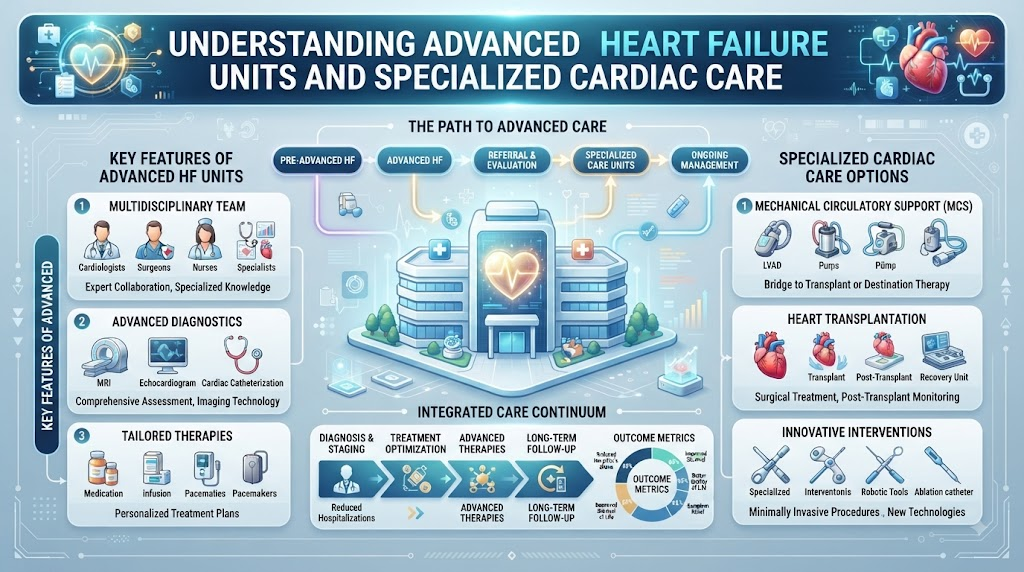
Heart failure is a complex condition that affects millions of people worldwide. While many individuals manage their symptoms successfully through routine cardiology care and medications, others experience a progression of the disease that requires a higher tier of medical expertise. Understanding the differences between standard cardiac care and specialized inpatient or outpatient units can make a significant difference for patients and their families.Multidisciplinary collaboration is central to these programs. Advanced heart-failure programs may bring together cardiologists, cardiac surgeons, nurses, pharmacists, nutrition professionals, social workers, and other specialists, particularly when advanced therapies are being considered. To explore cardiac healthcare facilities, learn about specialized services, and research important hospital-selection criteria, visit BESTCARDIACHOSPITALS.
What Is Advanced Heart Failure?
Heart failure is a chronic, progressive condition in which the heart muscle is unable to pump blood efficiently enough to meet the body’s needs. While chronic heart failure can often be managed effectively over many years, advanced heart failure represents a stage where the disease continues to progress despite optimal medical management.
The American Heart Association describes advanced heart failure as a stage in which severe symptoms, intolerance of guideline-directed therapy, or recurrent hospitalizations may lead to referral for advanced therapies such as LVAD or heart transplantation and multidisciplinary care.
Key clinical concepts associated with advanced heart failure include:
- Persistent Symptoms: Experiencing shortness of breath, severe fatigue, or fluid retention even during minimal physical exertion or at rest.
- Reduced Functional Capacity: Significant limitations in performing routine daily activities.
- Repeated Hospitalizations: Frequent emergency department visits or inpatient admissions due to worsening heart failure.
- Medication Intolerance: Inability to tolerate standard heart failure medications due to low blood pressure, worsening kidney function, or other side effects.
It is vital to understand that an advanced heart failure diagnosis does not mean every patient requires a heart transplant or mechanical support; many benefit greatly from specialized medical optimization and close monitoring.
What Is an Advanced Heart Failure Unit?
An advanced heart failure unit is a specialized hospital division or clinical program dedicated entirely to diagnosing, managing, and treating complex, refractory forms of heart failure. These units bridge the gap between standard outpatient cardiology and intensive surgical intervention.
Services provided by these specialized units typically include:
- Specialized Consultations: Expert evaluations conducted by board-certified heart failure cardiologists.
- Medication Optimization: Fine-tuning guideline-directed medical therapies under rigorous clinical observation.
- Advanced Diagnostic Testing: Comprehensive assessments of cardiac hemodynamics, structure, and function.
- Multidisciplinary Care Coordination: Collaborative management involving diverse clinical specialists.
- Device Evaluation: Assessment for implantable cardioverter-defibrillators (ICDs) and cardiac resynchronization therapy (CRT).
- LVAD Assessment: Evaluation and management for left ventricular assist devices.
- Transplant Evaluation: Comprehensive pre-transplant workups and post-transplant follow-up care.
- Long-Term Disease Management: Structured outpatient monitoring to minimize hospital readmissions.
Note: The exact range of invasive therapies and surgical procedures varies widely between healthcare institutions.
Advanced Heart Failure Unit vs General Cardiology Department
| Feature | General Cardiology Department | Advanced Heart Failure Unit |
| Routine Cardiac Care | Yes | Yes |
| Heart Failure Management | Yes (Standard) | Yes (Specialized & Complex) |
| Advanced HF Evaluation | Limited or varies | Routinely available |
| Multidisciplinary Team | Varies by facility | Core standard of care |
| LVAD Evaluation | Usually limited | Available in designated centers |
| Transplant Evaluation | Usually limited | Available in transplant-certified centers |
| Complex Heart Failure | Often refers out | Managed on-site by specialists |
| Long-Term Coordination | Varies | Highly structured and continuous |
Not every hospital possesses the specialized infrastructure required to manage advanced heart failure.
Who May Need an Advanced Heart Failure Unit?
Specialized care is typically recommended when standard outpatient management is no longer sufficient to control symptoms or alter disease progression. Referral to an advanced heart failure unit may be considered for individuals experiencing:
- Persistent, severe symptoms that restrict daily life
- Recurrent, frequent hospital admissions for acute decompensated heart failure
- Progressive deterioration of cardiac function despite optimized therapy
- Intolerance or resistance to standard guideline-directed medical medications
- Complex comorbidities interacting with heart failure
- Potential eligibility for advanced surgical therapies like LVADs or transplantation
Note: Referral decisions are made strictly by qualified healthcare professionals following thorough individual clinical assessments.
Signs That Specialized Evaluation May Be Needed
While these signs do not constitute a formal diagnosis, they often prompt physicians to consider specialized evaluation:
- Worsening shortness of breath during light activity or while lying flat
- Repeated emergency visits or hospital stays for fluid overload
- Progressive swelling (edema) in the legs, ankles, or abdomen
- Persistent fatigue and lack of physical energy
- Inability to tolerate necessary heart failure medications due to dizziness or low blood pressure
- A documented, steady decline in cardiac ejection fraction or overall heart performance
Specialists in an Advanced Heart Failure Unit
Advanced heart failure care relies heavily on a synchronized team of diverse professionals. Advanced programs may include cardiologists, surgeons, nurses, pharmacists, dietitians, social workers, and palliative-care professionals.
Advanced Heart Failure Cardiologist
These physicians have completed specialized subspecialty fellowship training beyond general cardiology. They focus on complex diagnostics, delicate medical titration, and timing referrals for advanced surgical interventions.
Cardiac Surgeon
Cardiologists collaborate closely with cardiothoracic surgeons who specialize in implanting mechanical circulatory support devices (like LVADs) and performing heart transplant surgeries.
Heart Failure Nurses
Specialized nurse coordinators provide continuous patient education, manage outpatient device checks, track daily weights, monitor symptoms, and serve as the primary point of contact for families.
Pharmacists
Clinical pharmacists manage complex medication regimens, monitor kidney function and electrolyte balances, and prevent adverse drug interactions.
Dietitians
Dietary professionals provide individualized nutrition plans, focusing particularly on sodium and fluid management strategies.
Social Workers
Social workers assist families with navigating insurance complexities, coordinating home care resources, and managing the psychological impact of chronic illness.
Palliative Care Specialists
Palliative care experts focus on symptom relief, pain management, and enhancing quality of life at any stage of serious illness. Palliative care is specialized medical support for comfort and is not synonymous with giving up treatment.
Diagnostic Services in Advanced Heart Failure Programs
Accurate diagnosis and ongoing monitoring require specialized diagnostic tools:
- Echocardiography: Ultrasound imaging evaluates heart chamber size, valve function, and pumping strength (ejection fraction).
- Electrocardiogram (ECG/EKG): Traces the heart’s electrical activity to detect arrhythmias and conduction delays.
- Advanced Cardiac Imaging: Techniques such as cardiac magnetic resonance imaging (MRI) or nuclear scans assess heart muscle viability and scar tissue.
- Laboratory Testing: Regular blood draws monitor renal function, electrolyte balance, liver enzymes, and cardiac biomarkers (such as natriuretic peptides).
- Hemodynamic Assessment: In selected patients, invasive procedures measure pressures inside the heart chambers to guide medication adjustments.
Not every patient requires every diagnostic test; investigations are tailored to individual needs.
Medical Management of Heart Failure
Advanced heart failure centers excel at optimizing guideline-directed medical therapy (GDMT) tailored to the patient’s physiological profile:
- Medication Titration: Carefully adjusting doses of foundational medications to improve heart efficiency and survival.
- Blood Pressure and Heart Rate Control: Maintaining stable hemodynamics to reduce strain on the heart muscle.
- Fluid Management: Utilizing diuretics and lifestyle adjustments to control congestion and swelling.
- Electrolyte and Kidney Monitoring: Protecting renal function while aggressively managing fluid balance.
- Addressing Underlying Causes: Treating ischemia, rhythm disturbances, or metabolic triggers contributing to heart failure.
Device-Based Therapies
Implantable Cardioverter-Defibrillator (ICD)
An ICD is a small device implanted under the skin that continuously monitors heart rhythms. In selected patients at risk of dangerous ventricular arrhythmias, it can deliver a lifesaving shock or pacing to restore a normal heartbeat.
Cardiac Resynchronization Therapy (CRT)
CRT utilizes a specialized pacemaker to coordinate the pumping action of the heart’s lower chambers (ventricles), helping selected patients with electrical conduction delays pump blood more efficiently.
Remote Monitoring
Many advanced programs utilize digital scales, blood pressure cuffs, and implanted device sensors to remotely transmit biometric data, allowing care teams to detect early signs of fluid retention before hospitalization becomes necessary.
What Is an LVAD?
A Left Ventricular Assist Device (LVAD) is a surgically implanted mechanical pump that helps the heart’s main pumping chamber (the left ventricle) pump blood to the rest of the body.
- Purpose: It assumes a major share of the heart’s workload, restoring adequate blood flow to vital organs.
- Clinical Indications: Advanced heart-failure programs may evaluate patients for LVAD or other mechanical circulatory support depending on clinical status and eligibility.
- Application Types: An LVAD may serve as a “bridge-to-transplant” (keeping a patient stable while awaiting a donor heart), a “destination therapy” (a permanent alternative to transplantation for those ineligible for a donor heart), or a “bridge-to-recovery” in rare instances where heart function improves.
Note: LVAD therapy requires rigorous medical follow-up and lifestyle adaptation, and is not suitable for every heart failure patient.
Heart Transplant Evaluation
For individuals with end-stage heart failure who have exhausted other medical and surgical options, heart transplantation is evaluated as a potential therapy.
- The Evaluation Process: An extensive multidisciplinary workup assesses overall organ health, psychological readiness, social support systems, and absence of contraindications.
- Post-Transplant Care: Lifelong medical management, immune-suppressing therapies, and structured follow-up surveillance are essential for long-term success.
- Eligibility: Not every patient with heart failure is a transplant candidate; rigorous selection criteria ensure organs are allocated where they offer the greatest benefit.
Other Advanced Heart Failure Therapies
Beyond LVADs and transplantation, advanced centers may offer specialized interventions:
- Surgical Revascularization & Valve Repair: Advanced surgical techniques to address underlying coronary artery disease or severe mitral regurgitation.
- Clinical Trials: Access to cutting-edge investigational drugs, devices, and therapies.
- Disease-Specific Programs: Specialized clinics focusing on rare or infiltrative cardiomyopathies such as cardiac amyloidosis, sarcoidosis, hypertrophic cardiomyopathy, pulmonary hypertension, or inherited genetic heart diseases.
Multidisciplinary Care: Why It Matters
Heart failure affects multiple organ systems and every aspect of daily life. Coordinated multidisciplinary care addresses these interconnected needs effectively:
- Synchronizing medication adjustments with dietary and fluid restrictions.
- Integrating physical rehabilitation safely with heart failure management.
- Preparing patients and caregivers psychologically and logistically for device surgeries or transplants.
- Ensuring seamless transitions from inpatient hospital stays to outpatient home monitoring.
How to Choose a Hospital with an Advanced Heart Failure Unit
- Specialist Expertise: Confirm the presence of board-certified heart failure cardiologists and transplant cardiologists.
- LVAD Program Capabilities: If mechanical support is anticipated, verify whether the hospital actively implants and manages LVADs.
- Transplant Program Access: Check whether the hospital performs heart transplants on-site or maintains formal, seamless referral pathways to a transplant center.
- Multidisciplinary Infrastructure: Look for integrated teams including dedicated heart failure nurses, clinical pharmacists, dietitians, and social workers.
- Critical Care Support: Ensure the facility houses a specialized cardiac intensive care unit (CICU) staffed by critical care cardiologists.
- Post-Discharge Coordination: Review how outpatient follow-up, remote monitoring, and cardiac rehabilitation are managed after leaving the hospital.
Hospital Comparison Checklist
| Factor | What to Check |
| Heart Failure Specialists | Board-certified advanced heart failure and transplant cardiologists |
| Multidisciplinary Team | Integrated cardiology, nursing, pharmacy, nutrition, and social work |
| Diagnostics | Comprehensive echocardiography, advanced imaging, and lab support |
| LVAD Capabilities | Active surgical implantation and long-term device management programs |
| Transplant Program | On-site evaluation/transplant capabilities or formal regional referral links |
| Cardiac Surgery | Specialized cardiothoracic surgical team experienced in complex repairs |
| ICU Support | Dedicated cardiac intensive care units (CICU) |
| Rehabilitation | Supervised outpatient cardiac rehabilitation programs |
| Remote Monitoring | Digital device tracking and home telemonitoring infrastructure |
| Clinical Trials | Access to emerging therapies and research protocols |
| Follow-Up Care | Structured long-term heart failure disease management clinics |
| Emergency Services | 24/7 urgent cardiac triage and stabilization capabilities |
Cost Factors for Advanced Heart Failure Care
Advanced cardiac care involves significant resource utilization. Financial planning should account for multiple variables:
| Service | Factors That May Affect Cost |
| Specialist Consultation | Physician expertise, hospital tier, and consultation length |
| Diagnostic Tests | Complexity and frequency of imaging, lab work, and hemodynamic studies |
| Hospitalization | Length of stay, ICU utilization, and nursing care intensity |
| LVAD Implantation | Cost of the pump device, surgical fees, and specialized post-op care |
| Transplant Evaluation | Comprehensive multi-specialty testing and psychological screenings |
| Transplant Surgery | Major surgery, organ acquisition costs, and extensive recovery stays |
| Rehabilitation | Number of supervised sessions and program structure |
Note: Exact medical costs vary extensively depending on geographic location, insurance coverage, and individual clinical requirements.
What Makes an Advanced Heart Failure Program Strong?
Evaluating the strength of a cardiac center involves looking beyond simple metrics:
- Depth of Specialist Expertise: A deep bench of dedicated heart failure cardiologists and surgeons.
- Seamless Multidisciplinary Communication: Daily collaboration across nursing, pharmacy, and surgical teams.
- Comprehensive Advanced Therapies: Robust programs spanning medication optimization, LVAD support, and transplantation.
- Patient Education and Support: Empowering patients and families with clear guidance on self-management, fluid restriction, and symptom tracking.
- Strong Outpatient Transition: Rigorous follow-up protocols designed to prevent avoidable hospital readmissions.
Common Mistakes When Choosing a Heart Failure Hospital
- Choosing a facility solely based on overall hospital size or general reputation.
- Relying exclusively on unverified online ratings or commercial ranking lists.
- Assuming every general hospital or standard cardiology department provides advanced heart failure care.
- Failing to ask whether specialized heart failure cardiologists are on staff.
- Overlooking the need to check LVAD and transplant capabilities when disease progression warrants it.
- Ignoring the importance of structured long-term outpatient follow-up and remote monitoring.
- Focusing solely on out-of-pocket costs without evaluating clinical quality and comprehensiveness.
- Assuming one universal treatment approach applies to every patient.
- Delaying referral to a specialist center despite worsening symptoms and frequent hospitalizations.
Myths vs Facts
| Myth | Fact |
| Advanced heart failure means there are no treatment options left. | Specialized programs offer multiple advanced medical, device, and surgical support options. |
| Everyone with heart failure eventually needs an LVAD. | LVAD therapy is reserved strictly for selected patients with end-stage disease who meet specific criteria. |
| Everyone with advanced heart failure needs a heart transplant. | Transplant eligibility requires rigorous individual evaluation, and only a small fraction qualify. |
| Only cardiologists are involved in managing advanced heart failure. | Advanced programs rely on multidisciplinary teams including surgeons, nurses, pharmacists, and dietitians. |
| Any large hospital automatically provides advanced heart failure services. | Specialized capabilities, LVAD programs, and transplant centers vary significantly between institutions. |
| Heart failure care ends successfully when the patient is discharged from the hospital. | Long-term outpatient monitoring, medication management, and follow-up are lifelong necessities. |
How BESTCARDIACHOSPITALS.COM Can Help
Navigating heart failure care can feel overwhelming for patients and their families. Platforms like BESTCARDIACHOSPITALS.COM help simplify the research process by providing structured educational resources where readers can:
- Explore cardiac care facilities and specialized hospital profiles.
- Learn about advanced heart-failure units, treatments, and clinical services.
- Understand different cardiac therapeutic capabilities side-by-side.
- Compare essential factors that matter when researching specialized heart hospitals.
- Prepare thoughtful questions for cardiology consultations and specialist visits.
Note: Informational platforms serve as educational guides and do not independently certify hospitals or provide personalized medical diagnoses.
FAQs
1.What is an advanced heart failure unit?
It is a specialized hospital unit dedicated to managing complex, refractory heart failure using advanced medical therapies, devices, and surgical evaluations.
2.What is advanced heart failure?
It is a progressive stage of heart failure where symptoms remain severe and disabling despite optimized guideline-directed medical therapy.
3.Who should visit an advanced heart failure specialist?
Patients experiencing persistent symptoms, recurrent hospitalizations, medication intolerance, or declining function despite standard care.
4.What services do advanced heart failure hospitals provide?
Specialized medication optimization, hemodynamic monitoring, device management, LVAD evaluation, and heart transplant assessments.
5.What specialists work in an advanced heart failure unit?
Advanced heart failure cardiologists, cardiothoracic surgeons, specialized nurses, clinical pharmacists, dietitians, social workers, and palliative care specialists.
6.What is an LVAD?
A Left Ventricular Assist Device is a surgically implanted mechanical pump that helps a weakened heart circulate blood throughout the body.
7.When might an LVAD be considered?
When medical therapy is no longer sufficient and the patient has end-stage heart failure, either as a bridge to transplant or destination therapy.
8.Do all advanced heart failure hospitals offer heart transplantation?
No. Only specialized medical centers with dedicated transplant programs perform heart evaluations and surgeries.
9.What tests are used to evaluate advanced heart failure?
Echocardiograms, electrocardiograms, cardiac imaging, blood tests, and sometimes invasive hemodynamic catheterizations.
10.Can advanced heart failure be treated with medicines?
Yes, sophisticated medical optimization remains the cornerstone of care, even when advanced surgical therapies are also being evaluated.
Final Conclusion
Advanced heart failure units provide specialized, high-level care for patients whose condition requires complex evaluation, intensive medication management, or advanced surgical interventions. These programs bring together advanced heart-failure cardiology, cardiac surgery, nursing, pharmacy, nutrition, social support, and other specialties. Furthermore, designated centers evaluate patients for mechanical circulatory support (such as LVADs) and heart transplantation when clinically appropriate.Hospital selection should carefully weigh specialist expertise, multidisciplinary care coordination, diagnostic capabilities, advanced therapy availability, emergency cardiac support, and long-term outpatient follow-up.