Introduction
Heart disease can sometimes develop silently over many years without causing noticeable discomfort, making early awareness a crucial part of maintaining long-term wellness. Identifying cardiovascular risk factors early allows individuals and healthcare providers to take proactive steps to protect heart health. Preventive cardiology focuses precisely on assessing, evaluating, and managing these risks before serious cardiac events occur. Regular heart health assessments are especially important because risk factors like high blood pressure or elevated cholesterol often present no obvious warning signs.Choosing a medical facility with comprehensive cardiac screening facilities can make a significant difference in receiving accurate evaluations and personalized guidance. For patients and families navigating these health choices, finding reliable guidance is an important first step. Platforms like BESTCARDIACHOSPITALS provide valuable resources to help individuals explore specialized healthcare options and understand preventive services.
Understanding Preventive Cardiology
What Is Preventive Cardiology?
Preventive cardiology is a specialized branch of cardiovascular care dedicated to identifying, evaluating, and managing factors that increase the likelihood of developing heart and blood vessel disease. Rather than treating advanced cardiac events after they occur, this field focuses on risk assessment, lifestyle guidance, and medical management to safeguard long-term cardiovascular wellness.
Why Preventive Heart Care Matters
Recognizing cardiovascular risk factors early allows patients to modify habits, manage underlying conditions, and work alongside medical professionals to prevent or delay the onset of severe heart problems. Proactive care reduces overall physiological stress on the cardiovascular system.
Primary and Secondary Prevention
Primary prevention involves stopping cardiovascular disease before it ever develops in individuals without a known history of heart problems. Secondary prevention focuses on patients who already have existing cardiovascular conditions, aiming to manage their health, reduce complications, and prevent future cardiac events.
The Role of Preventive Cardiologists
Preventive cardiologists evaluate comprehensive patient data, including family medical history, lifestyle habits, current symptoms, blood markers, and diagnostic test results. They synthesize this information to build personalized risk reduction and monitoring plans.
Who May Benefit from Preventive Cardiology Checkups?
- Adults with a Family History of Heart Disease: Individuals whose close relatives experienced early cardiovascular events.
- People with High Blood Pressure: Those whose blood pressure readings consistently exceed normal healthy ranges.
- Individuals with High Cholesterol: People with elevated LDL cholesterol, low HDL cholesterol, or high triglycerides.
- People with Diabetes: Individuals managing blood sugar challenges that impact vascular health.
- Individuals with Obesity or Excess Weight: Those carrying extra body weight that places added strain on the heart.
- Smokers and Tobacco Users: Individuals exposed to tobacco smoke, which damages blood vessels.
- People with a Sedentary Lifestyle: Those with low physical activity levels and prolonged daily sitting.
- Individuals Experiencing Concerning Symptoms: People noticing unusual shortness of breath, fatigue, or chest discomfort.
- People with Previous Cardiovascular Conditions: Individuals seeking structured secondary prevention support.
- Health-Conscious Adults Seeking Risk Assessment: Proactive individuals wanting an objective baseline of their cardiovascular health.
The appropriate timing and specific type of heart checkup vary significantly depending on each person’s unique age, symptoms, family history, and individual risk profile.
Common Cardiovascular Risk Factors
- High Blood Pressure: Forces the heart to work harder and stresses arterial walls over time.
- High LDL Cholesterol: Contributes to plaque buildup inside coronary arteries.
- Low HDL Cholesterol: Reduces the body’s ability to clear harmful fats from the bloodstream.
- High Triglycerides: Elevated blood fats associated with metabolic stress.
- Diabetes and Blood Sugar Problems: Accelerates atherosclerosis and damages small and large blood vessels.
- Smoking and Tobacco Exposure: Promotes inflammation and impairs arterial flexibility.
- Physical Inactivity: Weakens cardiovascular endurance and metabolic efficiency.
- Unhealthy Dietary Patterns: Diets high in refined sugars, sodium, and trans fats.
- Obesity and Excess Body Weight: Increases blood volume and cardiac workload.
- Chronic Stress: Elevates stress hormones that impact heart rate and blood pressure.
- Poor Sleep: Associated with elevated cardiovascular strain and metabolic disruption.
- Family History and Genetics: Inherited traits that influence baseline cardiac vulnerability.
Cardiovascular risk is rarely determined by a single isolated variable; these factors frequently interact, meaning one risk factor alone does not predict an individual’s complete cardiovascular health.
Common Heart Disease Risk Factors and Preventive Care Considerations
| Risk Factor | How It May Affect Heart Health | General Preventive Care Considerations |
| High Blood Pressure | Increases arterial wall pressure and cardiac workload. | Regular blood pressure monitoring, sodium moderation, and lifestyle evaluation. |
| High Cholesterol | Promotes fatty plaque accumulation inside coronary arteries. | Heart-healthy nutrition, lipid panel tracking, and medical guidance. |
| Diabetes | Accelerates vascular damage and plaque formation. | Consistent blood sugar monitoring and multidisciplinary metabolic care. |
| Smoking | Damages endothelial lining and promotes blood clotting. | Smoking cessation support programs and behavioral counseling. |
| Physical Inactivity | Reduces cardiovascular fitness and metabolic regulation. | Structured aerobic and strength exercise tailored to individual capacity. |
| Excess Body Weight | Elevates blood pressure, cholesterol, and cardiac demand. | Gradual weight management through balanced nutrition and movement. |
| Unhealthy Diet | Contributes to systemic inflammation and dyslipidemia. | Adopting whole-food, fiber-rich, and nutrient-dense eating patterns. |
| Family History | Indicates genetic susceptibility to premature heart disease. | Earlier baseline risk screening and proactive monitoring schedules. |
| Chronic Stress | Sustains elevated heart rate and vascular constriction. | Stress management techniques, mindfulness, and restorative rest. |
| Poor Sleep Habits | Disregards biological recovery and increases blood pressure. | Establishing consistent sleep hygiene and evaluating for sleep apnea. |
Assessing cardiovascular risk requires evaluating the complete health picture rather than focusing narrowly on any single individual factor. Because risk factors often compound one another—such as the combination of high blood pressure, elevated blood sugar, and excess weight—comprehensive checkups examine how these variables interact within the patient’s daily life.
Qualified healthcare professionals synthesize these interconnected elements to design realistic, individualized prevention pathways. This holistic evaluation ensures that medical recommendations address root metabolic causes rather than just isolated numbers.
What Happens During a Preventive Cardiology Checkup?
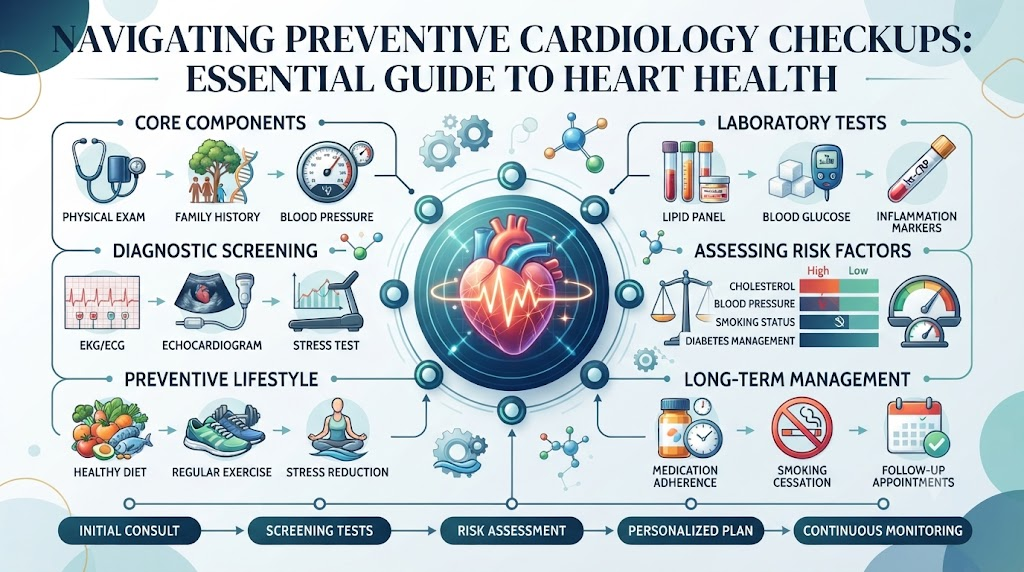
A comprehensive preventive cardiology checkup follows a structured evaluation process designed to understand the patient’s overall health profile:
- Reviewing Medical History: Examining past illnesses, surgeries, and existing health conditions.
- Discussing Family History: Analyzing the prevalence of heart disease or stroke among close relatives.
- Evaluating Lifestyle Habits: Assessing physical activity, dietary patterns, sleep quality, and smoking status.
- Checking Blood Pressure: Measuring baseline systemic blood pressure accurately.
- Assessing Weight and Other Health Indicators: Recording body mass index and waist circumference.
- Reviewing Symptoms: Inquiring about subtle signs like fatigue, shortness of breath, or discomfort.
- Blood Tests: Analyzing cholesterol panels, blood sugar levels, and inflammatory markers.
- Cardiovascular Risk Assessment: Utilizing validated risk calculation tools to estimate future cardiac events.
- Deciding Which Additional Tests May Be Appropriate: Determining whether imaging or functional tests are necessary based on individual risk.
Not every patient requires every available cardiac test; screenings are chosen selectively based on clinical need.
Common Tests Used in Preventive Cardiology
- Blood Pressure Measurement: Evaluates arterial pressure during heart contraction and relaxation.
- Cholesterol and Lipid Tests: Measures total cholesterol, LDL, HDL, and triglycerides.
- Blood Sugar Testing: Assesses fasting glucose or HbA1c to check for diabetes or prediabetes.
- Electrocardiogram (ECG): Records the electrical activity of the heart to detect rhythm abnormalities.
- Echocardiogram: Uses ultrasound waves to visualize heart structure, valve function, and pumping efficiency.
- Exercise Stress Testing: Monitors heart electrical activity and blood pressure during physical exertion on a treadmill or stationary bike.
- Coronary Artery Calcium Assessment: A specialized CT scan that measures calcified plaque burden in coronary arteries when clinically indicated.
- Advanced Cardiac Imaging: Specialized scans providing detailed views of myocardial tissue and blood flow.
- Other Tests Based on Individual Risk: Additional diagnostics tailored to specific patient histories.
Common Preventive Cardiology Tests and Their Purpose
| Test or Assessment | What It Evaluates | When It May Be Considered |
| Blood Pressure Check | Systemic arterial pressure and vascular resistance. | Routine baseline evaluation for all adult health checkups. |
| Lipid Profile | Circulating cholesterol fractions and blood fats. | Routine screening or monitoring of dyslipidemia and heart risk. |
| Blood Sugar Testing | Fasting glucose and long-term glycemic control. | Evaluating patients with metabolic risk factors or family history. |
| Electrocardiogram (ECG) | Heart rhythm, electrical conduction, and past damage. | Baseline screening, pre-exercise assessment, or symptom evaluation. |
| Echocardiogram | Myocardial structure, chamber size, and ejection fraction. | Assessing heart muscle performance and structural abnormalities. |
| Exercise Stress Test | Functional capacity and ischemia during physical exertion. | Evaluating exertional symptoms or unexplained fatigue. |
| Coronary Calcium Assessment | Quantifies calcified atherosclerotic plaque in coronary arteries. | Intermediate-risk individuals to refine personalized prevention strategies. |
| Advanced Cardiac Imaging | Detailed myocardial perfusion and tissue characterization. | Complex clinical evaluations requiring high-resolution visualization. |
Screening and diagnostic testing decisions must always be anchored in individual medical history, existing symptoms, identifiable risk factors, and the professional guidance of qualified healthcare providers. Unnecessary testing can lead to anxiety and false positives, while targeted screening provides actionable clinical insights.
Specialized hospitals ensure that diagnostic tools are utilized judiciously, matching the intensity of the evaluation to the patient’s actual risk level. Open communication between patients and cardiologists ensures that every test serves a clear, beneficial purpose in the overall prevention plan.
Why Hospitals for Preventive Cardiology Checkups Matter
Hospital-based preventive cardiology programs offer distinct advantages for individuals seeking thorough cardiovascular assessments:
- Access to Cardiologists: Direct consultation with fellowship-trained cardiovascular specialists.
- Comprehensive Diagnostic Facilities: In-house access to imaging, laboratories, and functional testing suites.
- Advanced Cardiac Imaging: Cutting-edge technology for precise structural and vascular evaluation.
- Laboratory Services: Rapid turnaround for lipid panels, metabolic markers, and specialized blood tests.
- Risk Assessment Expertise: Sophisticated clinical interpretation of complex multi-variable risk profiles.
- Multidisciplinary Care: Seamless collaboration with endocrinologists, dietitians, and rehabilitation experts.
- Lifestyle and Nutrition Support: Professional guidance on sustainable dietary and exercise habits.
- Long-Term Monitoring: Structured follow-up programs to track health metrics over time.
- Emergency Cardiac Care When Needed: Immediate access to acute intervention facilities if urgent issues are detected.
Advanced Diagnostic Technology in Preventive Cardiology
Modern preventive cardiology utilizes sophisticated technology to enhance diagnostic accuracy, including digital ECG systems for precise rhythm analysis, advanced echocardiography with tissue Doppler imaging, and cardiac CT scanners capable of non-invasive coronary evaluation.
Coronary calcium scoring provides quantifiable data regarding subclinical atherosclerosis. Wearable health monitoring devices and secure digital health records further empower patients and doctors to track real-world cardiovascular trends safely and efficiently.
How to Choose Hospitals for Preventive Cardiology Checkups
When selecting a medical facility for preventive heart evaluations, patients should consider several practical operational factors:
- Availability of dedicated preventive cardiology screening packages.
- Presence of experienced, board-certified cardiologists and clinical staff.
- Comprehensive diagnostic and laboratory testing capabilities under one roof.
- Advanced imaging technology suited for early risk detection.
- Emphasis on personalized risk assessment rather than rigid, generic testing.
- Capacity to manage related metabolic conditions like diabetes and hypertension.
- Seamless access to emergency cardiac support if unforeseen findings occur.
- Strong commitment to patient education and clear risk communication.
- Structured long-term follow-up and monitoring pathways.
- Geographic accessibility and convenience for scheduled appointments.
Lifestyle Strategies for Supporting Heart Health
- Building a Heart-Healthy Eating Pattern: Emphasizing whole grains, fresh vegetables, lean proteins, and healthy plant oils.
- Staying Physically Active: Engaging in consistent aerobic exercise and strength conditioning.
- Managing Body Weight: Maintaining a healthy body mass index to reduce myocardial strain.
- Managing Blood Pressure: Keeping blood pressure within recommended targets through lifestyle and monitoring.
- Managing Cholesterol: Optimizing lipid levels through diet, activity, and medical oversight.
- Controlling Blood Sugar: Maintaining stable glycemic control to protect vascular endothelium.
- Avoiding Tobacco: Eliminating cigarette smoking and exposure to secondhand smoke.
- Managing Stress: Practicing relaxation techniques to mitigate chronic sympathetic nervous system activation.
- Improving Sleep: Prioritizing seven to eight hours of restorative nightly rest.
- Maintaining Regular Medical Follow-Up: Partnering with healthcare professionals for routine evaluations.
Managing High Blood Pressure
High blood pressure places continuous mechanical stress on arterial walls, accelerating plaque formation and increasing the workload of the heart muscle. Understanding blood pressure readings—distinguishing between systolic and diastolic numbers—is essential for tracking vascular health.
Lifestyle support, including sodium reduction, regular aerobic exercise, and weight management, forms the primary foundation of blood pressure control. Regular home and clinical monitoring ensure that trends are caught early, while medical guidance helps determine when pharmacological intervention is necessary.
Managing Cholesterol and Lipid Lipids
Cholesterol circulates in the blood bound to lipoproteins, with LDL cholesterol playing a key role in plaque accumulation and HDL cholesterol offering protective clearing functions. Optimizing lipid profiles involves dietary modifications rich in soluble fiber, regular physical activity, and medical monitoring.
Individualized treatment decisions must be made in close partnership with qualified healthcare professionals, taking into account the patient’s overall 10-year cardiovascular risk rather than focusing solely on a single lipid value.
Diabetes and Cardiovascular Health
Type 2 diabetes and insulin resistance significantly elevate cardiovascular risk by promoting systemic inflammation, endothelial dysfunction, and accelerated atherosclerosis. Comprehensive blood sugar management requires a combination of nutritional awareness, physical activity, and regular monitoring of HbA1c levels.
Coordinated medical care between cardiologists and endocrinologists ensures that diabetes treatments simultaneously protect kidney and heart health.
Family History and Genetic Heart Risk
A strong family history of premature heart disease indicates that genetic factors may contribute to an individual’s baseline cardiovascular vulnerability. Early risk assessment is particularly important for people with close relatives who experienced heart attacks or strokes at an early age.
While genetics influence risk, they do not determine destiny; lifestyle modifications and proactive medical care play powerful roles in mitigating inherited vulnerabilities.
Common Mistakes People Make About Preventive Heart Care
- Waiting for Symptoms Before Seeking a Checkup: Assuming the heart is healthy simply because pain or discomfort is absent.
- Ignoring High Blood Pressure: Overlooking mildly elevated readings without taking corrective action.
- Ignoring High Cholesterol: Disregarding lipid panel results because they feel physically fine.
- Assuming Exercise Alone Is Enough: Believing that physical fitness completely negates poor dietary habits or genetic risks.
- Following Unverified Heart Health Advice: Relying on trendy online cleanses or unproven supplements instead of evidence-based care.
- Stopping Medication Without Medical Guidance: Discontinuing prescribed blood pressure or cholesterol medications abruptly.
- Skipping Follow-Up Appointments: Failing to track health metrics over time after an initial screening.
- Ignoring Family History: Disregarding the potential impact of inherited cardiac conditions.
- Assuming Young People Cannot Have Cardiovascular Risk Factors: Neglecting early screening in younger adults with high stress or poor metabolic markers.
When Should You Seek Immediate Medical Attention?
Certain symptoms require urgent, emergency medical evaluation rather than routine preventive checkups:
- Severe or persistent pressure, squeezing, or discomfort in the center of the chest.
- Sudden or severe difficulty breathing and shortness of breath.
- Sudden weakness, numbness, or paralysis in the face, arm, or leg.
- Fainting, syncopal episodes, or sudden loss of consciousness.
- Sudden severe dizziness, lightheadedness, or loss of balance.
- Acute symptoms suggestive of a heart attack or stroke.
These symptoms require immediate emergency medical assistance and should never be delayed by waiting for routine appointments or online advice.
Benefits of Preventive Cardiology Checkups
- Earlier identification of silent cardiovascular risk factors.
- Personalized risk stratification tailored to individual health data.
- Structured management support for chronic conditions like hypertension and dyslipidemia.
- Enhanced health awareness and actionable lifestyle education.
- Long-term monitoring of physiological trends over time.
- Coordinated multidisciplinary care connecting various medical specialties.
Real-Life Patient Scenarios
Disclaimer: The following patient scenarios are hypothetical examples illustrating typical clinical pathways in preventive cardiology and do not constitute personal medical advice.
Scenario 1: A Person with a Strong Family History of Heart Disease
A 42-year-old adult whose father experienced a myocardial infarction at an early age visits a preventive cardiology clinic. The care team conducts a comprehensive risk assessment, reviews lipid panels, performs a baseline ECG, and establishes a personalized screening schedule to monitor heart health proactively.
Scenario 2: A Patient with High Blood Pressure and Cholesterol
An individual in their mid-50s discovers elevated blood pressure and high LDL cholesterol during a workplace health screening. Referred to a preventive cardiology program, they receive structured lifestyle counseling, initiate home blood pressure monitoring, and partner with a cardiologist to optimize their lipid profile.
Scenario 3: An Adult with Diabetes and No Major Heart Symptoms
A 55-year-old patient managing Type 2 diabetes undergoes a comprehensive cardiovascular evaluation. Although asymptomatic, the screening identifies subclinical metabolic strain, prompting a coordinated care plan involving glycemic optimization and routine cardiac follow-up.
Scenario 4: A Health-Conscious Individual Seeking a Comprehensive Heart Checkup
A fitness enthusiast approaching age 60 seeks a thorough baseline cardiovascular assessment. The specialist reviews their exercise routine, evaluates advanced inflammatory markers, and performs an exercise stress test to confirm optimal functional capacity and tailor ongoing wellness goals.
The Future of Preventive Cardiology
The landscape of preventive cardiology continues to evolve through technological and clinical innovation. Personalized risk assessment models incorporate genetic and environmental data to refine risk prediction. Artificial intelligence assists clinicians in analyzing complex imaging datasets, while wearable heart monitors and digital health platforms enable continuous remote tracking. These emerging tools support earlier detection strategies and advance the precision of cardiovascular care.
The Importance of Long-Term Heart Health Monitoring
Cardiovascular risk factors change dynamically over time due to aging, stress, dietary shifts, and lifestyle changes. Regular follow-up appointments allow healthcare providers to adjust health strategies, monitor chronic conditions, and reinforce sustainable healthy habits. Long-term monitoring ensures that preventive care remains responsive to evolving personal health needs.
Frequently Asked Questions (FAQ)
1. What is preventive cardiology?
Preventive cardiology is a specialized medical approach focused on identifying, assessing, and managing cardiovascular risk factors before serious heart disease develops. It combines lifestyle counseling, diagnostic screening, and medical management to help patients reduce their overall likelihood of experiencing heart attacks, strokes, and other cardiovascular events.
2. Who should get a preventive heart checkup?
Adults with risk factors such as high blood pressure, high cholesterol, diabetes, a family history of premature heart disease, or those experiencing unexplained fatigue can benefit significantly from a preventive heart checkup. Even health-conscious adults often seek baseline assessments to understand and protect their long-term cardiovascular wellness.
3. How often should I have a heart health assessment?
The frequency of a heart health assessment depends on your age, baseline risk factors, and personal medical history. Individuals with multiple risk factors or a strong family history may require annual evaluations, while lower-risk adults may have checkups spaced further apart as recommended by their healthcare provider.
4. What tests are included in a preventive cardiology checkup?
A preventive cardiology checkup may include blood pressure measurements, lipid panels, blood sugar tests, electrocardiograms (ECGs), echocardiograms, or exercise stress tests. The specific tests chosen depend entirely on individual clinical evaluation rather than a rigid, one-size-fits-all package.
5. Do I need a heart checkup if I have no symptoms?
Yes, many cardiovascular risk factors, such as high blood pressure and early plaque buildup, develop silently without causing noticeable symptoms. Preventive checkups are designed precisely to detect these hidden risks before they progress into acute medical issues.
6. Does family history increase the risk of heart disease?
A family history of early heart disease or stroke can increase your baseline genetic risk. While genetics play a role, knowing your family history allows you and your healthcare team to implement proactive lifestyle and screening strategies to mitigate that risk effectively.
7. Can high cholesterol affect heart health?
Elevated levels of LDL cholesterol can contribute to the accumulation of fatty plaques inside coronary arteries, narrowing blood vessels and restricting blood flow to the heart muscle over time. Managing cholesterol helps protect arterial elasticity and overall vascular health.
8. Why is high blood pressure called a risk factor?
High blood pressure forces the heart muscle to pump against increased resistance, straining the heart and damaging delicate arterial walls. Over time, this chronic stress elevates the risk of heart attacks, strokes, and kidney problems.
9. Does diabetes increase cardiovascular risk?
Type 2 diabetes significantly accelerates atherosclerosis and vascular damage due to chronic high blood sugar and associated metabolic abnormalities. Managing blood sugar levels is a vital component of comprehensive cardiovascular risk reduction.
10. Is an ECG part of every heart checkup?
An electrocardiogram is not mandatory for every routine checkup; it is typically ordered when a patient has specific risk factors, abnormal vital signs, or symptoms that warrant an evaluation of heart electrical activity and rhythm.
11. What is a coronary calcium assessment?
A coronary calcium assessment is a specialized, non-invasive CT scan that measures the amount of calcified plaque present in the walls of the coronary arteries. It helps clinicians refine risk stratification, particularly in individuals with intermediate risk profiles.
12. Can lifestyle changes support heart health?
Adopting heart-healthy habits—such as eating a balanced diet, exercising regularly, maintaining a healthy weight, avoiding tobacco, and managing stress—can powerfully support cardiovascular function and lower long-term disease risk.
13. When should I see a cardiologist?
You should consult a cardiologist if you have persistent chest discomfort, unusual shortness of breath, abnormal heart rhythms, uncontrolled blood pressure or cholesterol, or a strong family history of early cardiovascular disease requiring specialist oversight.
14. What should I look for in a hospital for preventive cardiology?
When evaluating hospitals for preventive cardiology, look for experienced cardiac specialists, comprehensive in-house diagnostic and imaging capabilities, personalized risk assessment protocols, multidisciplinary support, and structured long-term follow-up care pathways.
15. Can preventive cardiology help identify cardiovascular risk factors early?
Yes, preventive cardiology is specifically designed to uncover silent risk factors, such as prediabetes, subclinical lipid disorders, and early vascular changes, enabling timely intervention and long-term health protection.
Final Thoughts
Navigating cardiovascular health and understanding personal risk is an empowering step toward long-term wellness. Proactive heart health awareness allows individuals to take charge of their physical well-being before acute issues arise. Comprehensive cardiovascular risk assessment provides invaluable clarity, helping patients identify hidden vulnerabilities such as elevated blood pressure or cholesterol levels early in life.Managing multiple risk factors together requires a coordinated, multi-faceted approach rather than isolated lifestyle tweaks. Partnering with qualified cardiologists and utilizing the advanced diagnostic capabilities of comprehensive hospitals ensures that evaluations are accurate, thorough, and tailored to each person’s unique physiological profile.