For many patients around the world, accessing high-quality medical care requires more than just finding a doctor; it often involves navigating complex healthcare systems, comparing costs, and traveling across borders. India has emerged as a major destination for those seeking reliable and affordable MyMedicPlus solutions. However, the process of planning medical travel can feel overwhelming without the right guidance.
Whether you are considering orthopedic care, cardiac interventions, or specialized diagnostic services, understanding how to evaluate your options is the first step toward a successful outcome.
The Rise of Healthcare in India
India has developed a robust reputation for providing professional medical services to both domestic and international patients. The country hosts a vast network of accredited hospitals, many of which are staffed by surgeons and physicians trained in leading international medical centers.
The primary driver of medical tourism in India is the combination of high-quality standards and significantly lower expenses compared to many Western countries. However, quality should always be the priority. Most top-tier facilities maintain international accreditations, ensuring that patient safety, hygiene, and surgical protocols meet global benchmarks.
Factors Influencing Treatment Cost in India
One of the most frequent questions patients have relates to treatment cost in India. It is important to understand that there is no “flat rate” for medical procedures. Instead, various elements dictate the final expense.
When budgeting for your care, consider the following variables:
- Hospital Classification: Multispecialty corporate hospitals may have different pricing structures compared to boutique clinics or public institutions.
- Surgeon Expertise: The experience and track record of the operating surgeon often influence the surgical fee.
- Procedure Complexity: A routine surgery is significantly less expensive than a complex case involving pre-existing health conditions or post-operative complications.
- Room Category: The choice of accommodation—from general wards to private suites—directly impacts your hospital bill.
- Diagnostic Requirements: Pre-surgical tests, scans, and blood work are essential for safety, and these costs vary based on the technology used.
Understanding Surgical Cost Estimates
Two of the most common procedures sought by international patients are orthopedic and cardiac surgeries. Below is an overview of how costs are typically structured for these procedures.
Knee Replacement Surgery Cost in India
Orthopedic surgery is frequently sought in India due to the country’s high volume of knee and hip replacements. When researching the knee replacement surgery cost in India, patients should look beyond the sticker price. Ensure the quote includes the type of implant being used, the duration of hospital stay, and the post-operative rehabilitation sessions.
Heart Bypass Surgery Cost in India
Cardiac care requires precision and specialized infrastructure. The heart bypass surgery cost in India reflects the intensity of the procedure, the need for intensive care units (ICU), and the expertise of the cardiothoracic team. It is essential to ensure the facility you choose has a dedicated cardiac department with 24/7 emergency support.
How to Choose the Best Hospitals in India for International Patients
Selecting a facility is the most critical decision in your medical journey. The best hospitals in India for international patients are not necessarily the ones with the most advertising, but rather those that prioritize transparency and patient support.
When comparing your options, use the following checklist:
- Accreditation: Check for JCI (Joint Commission International) or NABH (National Accreditation Board for Hospitals & Healthcare Providers) certification.
- Specialization: Does the hospital have a dedicated department for your specific condition? A facility may be excellent for neurology but mediocre for cardiac care.
- Language Support: Ensure the hospital has international patient coordinators who can assist with language barriers and cultural needs.
- Success Rates: While no hospital can guarantee an outcome, reputable centers are often transparent about their success rates for specific procedures.
- Post-Operative Care: Ask about the plan for follow-up care and how the hospital coordinates with your primary physician back home.
If you find the process of searching through hundreds of hospitals daunting, a healthcare information platform can act as a bridge. For instance, MyMedicPlus serves as a hospital comparison resource, helping patients organize their research and understand their options more clearly.
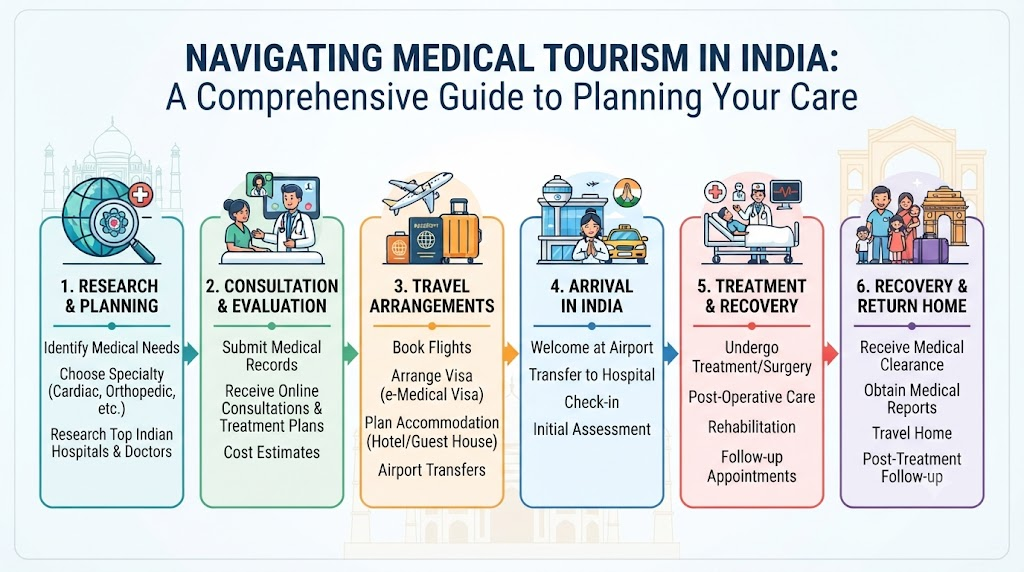
The Medical Tourism Process: A Step-by-Step Plan
Successful medical travel requires thorough healthcare planning. Rushing into a decision can lead to unnecessary stress or unforeseen expenses.
1. Initial Consultation and Diagnosis
Before traveling, ensure you have a clear diagnosis. Most Indian hospitals now offer remote consultations where you can share your medical history and test reports with a specialist via video call.
2. Treatment Planning
Once a doctor reviews your case, you will receive a treatment plan. This should outline the procedure, the expected recovery time, and the estimated duration of your stay in the hospital and the city.
3. Logistic Arrangements
This includes visa assistance, travel bookings, and accommodation for family members. Many patients prefer to stay in service apartments or hotels near the hospital during their recovery period.
4. Arrival and Admission
Upon arrival, the patient assistance team at the hospital typically handles the admission process. Always ensure your medical records are digitized and easily accessible.
5. Recovery and Follow-up
Recovery does not end when you leave the hospital. Plan for physical therapy, medication management, and necessary follow-up visits before you return to your home country.
Comparison Table: Evaluating Your Choices
| Factor | What to Look For | Why It Matters |
| Accreditation | JCI or NABH | Ensures international safety standards. |
| Surgeon Credential | Board Certification/Experience | Affects surgical safety and outcome. |
| Transparency | Itemized Cost Estimates | Prevents hidden fees or “surprise” bills. |
| Patient Support | Language & Logistics Assistance | Reduces stress during travel. |
| Follow-up | Remote monitoring options | Essential for long-term health. |
Key Takeaways for Patients
- Be Proactive: Do your own research, but utilize reputable sources to verify hospital credentials.
- Verify Costs: Always ask for an inclusive estimate that covers surgery, anesthesia, room, and basic medication.
- Communication is Key: Choose a healthcare provider that responds clearly to your questions before you arrive.
- Plan for Recovery: Do not fly home immediately after major surgery. Allow adequate time for healing as advised by your surgeon.
- Use Assistance Platforms: Websites like MyMedicPlus can simplify the search for reliable healthcare providers by consolidating information and helping you compare treatment options.
Frequently Asked Questions (FAQs)
1. Is it safe to travel to India for medical treatment?
Yes, thousands of international patients travel to India every year for safe and effective treatment. By choosing accredited hospitals and consulting with qualified doctors, patients can manage risks effectively.
2. How do I get an accurate cost estimate?
To receive an accurate estimate, provide the hospital with your most recent medical reports, imaging scans (like MRI or CT), and a summary of your medical history. This allows the surgeon to provide a more realistic quote.
3. Do Indian hospitals provide assistance for international patients?
Most major hospitals have dedicated International Patient Departments (IPD) that assist with medical visas, airport transfers, translators, and accommodation.
4. Can I get a second opinion before traveling?
Absolutely. Seeking a second opinion is a standard practice in medical tourism. Many patients use a medical assistance platform to connect with specialists in India for an independent review of their case.
5. How long should I plan to stay for major surgery?
The duration depends on the procedure. While minor surgeries may require a week, complex procedures like cardiac or orthopedic surgery may require 3 to 6 weeks for hospital recovery and initial follow-ups.
6. Are there hidden costs I should watch out for?
Always ask if the cost estimate includes implants, special medications, intensive care, or diagnostic tests outside the standard package. A reliable hospital will be upfront about these potential additions.
Conclusion
Embarking on a medical journey is a significant life decision. By focusing on quality, verifying hospital credentials, and engaging in careful healthcare planning, you can navigate the system with confidence. India offers a landscape of highly skilled professionals and world-class facilities capable of delivering exceptional care. Whether you are seeking relief from chronic pain or a complex surgical solution, being informed is your best defense. Utilize available resources, such as a trusted treatment planning guide, to ensure your medical travel experience is safe, efficient, and aligned with your health goals.