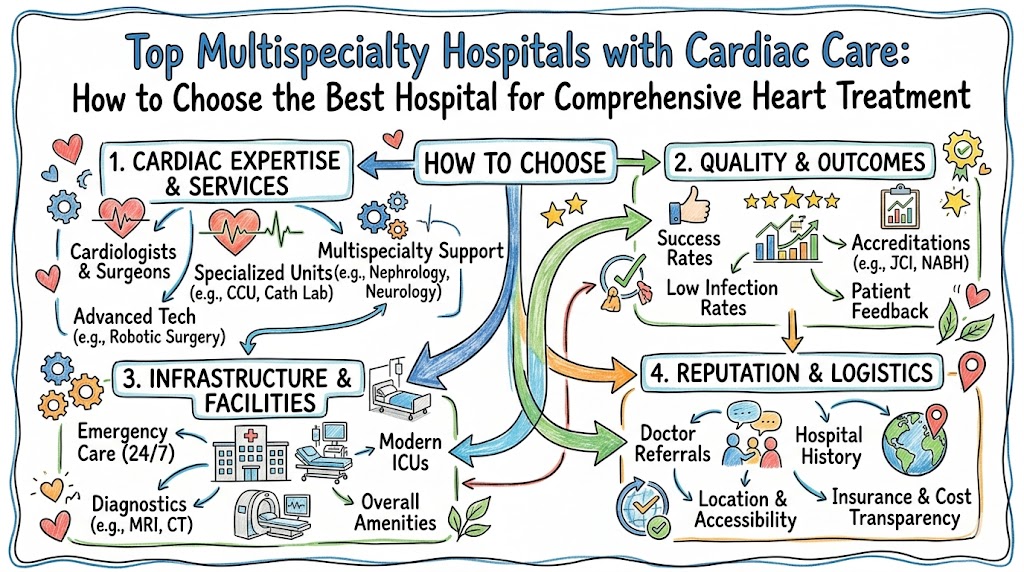
Heart health is the foundation of a long and vibrant life. Because the heart is an intricate organ connected to every other system in the body, cardiac issues often require more than just a cardiologist’s expertise—they require a holistic, integrated approach. This is why patients with complex cardiovascular needs increasingly turn to leading medical institutions that offer comprehensive, all-encompassing care.Finding the right facility can be daunting, but you do not have to navigate it alone. BestCardiacHospitals helps patients compare cardiac hospitals, explore heart specialists, review treatment options, and make informed healthcare decisions with confidence. Whether you are seeking preventative screenings or specialized surgical intervention, understanding the landscape of Top Multispecialty Hospitals with Cardiac Care is the first step toward a healthier heart.This guide provides a deep dive into why multispecialty settings offer the gold standard in heart treatment, how these facilities leverage advanced technology, and what you must consider when selecting the right medical partner for your cardiovascular journey.
Understanding Multispecialty Hospitals
A multispecialty hospital is a comprehensive healthcare facility that houses a vast array of specialized departments—such as cardiology, neurology, endocrinology, and nephrology—all under one roof. Unlike standalone clinics, these hospitals facilitate seamless collaboration between different experts.For heart patients, this architecture is invaluable. Cardiac conditions are frequently linked to other systemic health issues like diabetes, chronic kidney disease, or hypertension. In a multispecialty environment, your cardiologist can consult directly with a nephrologist or endocrinologist, ensuring your treatment plan is safe and optimized for your entire health profile.
Why Cardiac Care Is Essential
Cardiovascular disease remains the leading cause of mortality globally. The heart works tirelessly to pump oxygenated blood throughout the body; when this system falters, the consequences are immediate and far-reaching.
Proactive cardiac care is essential because many heart conditions are “silent” in their early stages. High blood pressure, mild arrhythmias, or early plaque buildup often present no symptoms until a major event occurs. Regular screenings at a high-quality hospital can detect these issues early, preventing life-threatening crises through medication, lifestyle changes, or minimally invasive procedures.
What Makes a Multispecialty Hospital Ideal for Heart Patients?
The “multispecialty” advantage is rooted in synergy. When you choose an elite hospital, you gain access to a culture of cross-departmental excellence.
- Integrated Patient Records: Your electronic health records are accessible by various specialists, reducing the risk of drug interactions or missed diagnostic clues.
- On-Site Diagnostic Support: You can move from an echo-cardiogram to a blood lab or a stress test without leaving the hospital premises.
- Holistic Wellness Support: Access to nutritionists, physical therapists, and mental health counselors who specialize in supporting heart patients through recovery.
Benefits of Choosing Top Multispecialty Hospitals with Cardiac Care
Choosing among the Top Multispecialty Hospitals with Cardiac Care offers significant peace of mind. These facilities are designed to handle everything from routine checkups to the most intricate surgical emergencies.
- Reduced Transition Times: If a patient arrives with a heart attack that requires immediate bypass surgery, the infrastructure for anesthesia, intensive care, and specialized surgery is already present.
- Advanced Infrastructure: Large-scale hospitals invest heavily in state-of-the-art labs that smaller clinics cannot sustain.
- Comprehensive Rehabilitation: Recovery does not end at discharge. These hospitals provide structured programs to rebuild heart strength under medical supervision.
Cardiac Services Available in Leading Hospitals
Table 1: Cardiac Services Offered in Multispecialty Hospitals
| Service | Purpose | Benefits |
| Diagnostic Cardiology | Uses imaging to detect structural/electrical heart issues. | Early detection of potential failures. |
| Interventional Cardiology | Minimally invasive treatments like stenting and angioplasty. | Quicker recovery with less trauma. |
| Cardiac Surgery | Complex repairs such as bypass (CABG) or valve replacement. | Restores life-long heart function. |
| Electrophysiology | Treating abnormal heart rhythms (arrhythmias). | Prevents palpitations and stroke risks. |
| Cardiac Rehabilitation | Monitored exercise and lifestyle counseling post-treatment. | Long-term prevention of future events. |
Advanced Technologies Used in Modern Cardiac Care
Modern cardiology is driven by precision. Top hospitals now utilize tools that allow surgeons to visualize the heart in real-time with stunning clarity.
Table 4: Advanced Cardiac Technologies
| Technology | Purpose | Patient Benefits |
| 3D Echocardiography | Creates 3D images of the heart chambers. | High-precision surgical planning. |
| Robotic Surgery | Allows surgeons to perform delicate repairs through tiny incisions. | Less pain, shorter hospital stays. |
| CT Angiography | Non-invasive imaging of coronary arteries. | Avoids the need for invasive catheterization. |
| Implantable Cardioverter-Defibrillators (ICD) | Monitors and corrects rhythm abnormalities automatically. | Continuous life-saving protection. |
Role of Multidisciplinary Teams in Heart Treatment
No single doctor can address every facet of complex heart disease. Leading hospitals employ a “Heart Team” approach.
- The Cardiologist: Manages medication and long-term diagnostic monitoring.
- The Cardiac Surgeon: Performs life-saving structural interventions.
- The Anesthesiologist: Ensures safety during complex, multi-hour surgeries.
- The Intensivist: Manages the patient’s recovery within the ICU.
- The Dietician: Customizes a heart-healthy diet to manage cholesterol and sodium.
Common Heart Conditions and Treatments
Table 2: Common Heart Conditions and Treatments
| Condition | Symptoms | Treatment Options |
| Coronary Artery Disease | Chest pain, shortness of breath. | Medication, angioplasty, or bypass surgery. |
| Atrial Fibrillation | Irregular heartbeat, dizziness. | Medication, catheter ablation. |
| Heart Valve Disease | Fatigue, fainting, swelling. | Valve repair or replacement surgery. |
| Heart Failure | Fluid retention, extreme fatigue. | Advanced medication, device therapy. |
How to Choose the Right Multispecialty Cardiac Hospital
Selecting a facility is a personal decision that requires careful research. Do not settle for the nearest location if the hospital lacks the specific cardiac accreditation you need.
Table 3: Factors to Consider When Choosing a Cardiac Hospital
| Factor | Importance | Questions to Ask |
| Accreditation | Ensures the hospital meets national quality standards. | “Is your cardiology department nationally accredited?” |
| Specialist Tenure | Experienced teams correlate with better survival rates. | “How many similar procedures does your team perform yearly?” |
| 24/7 Availability | Cardiac events are time-sensitive. | “Do you have a dedicated 24/7 heart catheterization lab?” |
| Patient Outcomes | Data-driven success rates matter. | “What is your hospital’s success rate for this procedure?” |
Patient Heart Health Checklist
Before your appointment or surgery, use this checklist:
- Gather Records: Bring all previous EKG, stress test, and blood work results.
- List Medications: Include vitamins and supplements, as these can interact with heart drugs.
- Identify Concerns: Write down specific symptoms like “shortness of breath during stairs.”
- Financial Review: Confirm insurance coverage for specific cardiac procedures.
- Support Plan: Arrange for a family member or friend to accompany you to appointments.
Frequently Asked Questions
- Why is multispecialty care better for the heart? It allows for coordinated care between heart specialists and other experts (like kidney doctors) who manage comorbid conditions.
- What is interventional cardiology? It is a branch that uses catheters to treat heart blockages without open-heart surgery.
- How long is the recovery for heart surgery? It varies, but multispecialty hospitals offer rehab to speed up the process.
- Do I need a referral to see a cardiologist? Often, yes, but check with your primary care provider or your insurance plan.
- What is a cardiac rehab program? A supervised program of exercise and education to help you recover and improve heart strength.
- Are heart surgeries painful? Modern pain management and minimally invasive techniques have made recovery much more manageable.
- How can I verify a hospital’s quality? Look for accreditation, surgeon certifications, and patient outcomes data.
- What if I have an emergency at night? Top hospitals have 24/7 emergency cardiac teams.
- Can I choose my cardiac surgeon? Yes, you should always interview your surgeon and feel comfortable with their approach.
- What is an electrophysiology study? It is a test to record the electrical activity and pathways of your heart.
- Do I need special insurance for heart care? Check if your hospital is “in-network” for your insurance plan to reduce costs.
- What is a “Heart Team”? A group of specialists working together to customize your treatment plan.
- Is robotic heart surgery safe? Yes, it is a highly validated, precise method used in leading hospitals.
- How do I know if I have a heart condition? Symptoms can include chest pain, fatigue, dizziness, or swelling in legs.
- Can lifestyle changes reverse heart disease? They can stop or slow progression, though some structural damage may require intervention.
- How frequently should I get a cardiac screening? This depends on your age and risk factors; consult your doctor.
- Does the hospital size matter? Larger multispecialty hospitals often have better resources and higher procedure volumes.
- Can I transfer my care to a new hospital? Yes, you can request your records be sent to a new facility at any time.
- What are the common risks of cardiac surgery? Like any major surgery, there are risks of infection or clotting, which hospitals manage proactively.
- Where can I compare hospitals? Use resources like BestCardiacHospitals.com to find top-rated centers.
Conclusion
Choosing the right medical facility is perhaps the most critical decision you will make when dealing with cardiovascular health. As we have explored throughout this guide, Top Multispecialty Hospitals with Cardiac Care provide an ecosystem of healing that transcends simple diagnosis and treatment. By housing diverse medical disciplines under one roof, these institutions ensure that your heart health is managed not in isolation, but in the context of your total physical well-being.The integration of advanced technologies—ranging from robotic surgery and 3D echocardiography to precision electrophysiology—allows these hospitals to offer outcomes that were unimaginable even a decade ago. Moreover, the “Heart Team” approach, which brings together cardiologists, surgeons, and recovery specialists, ensures that every aspect of your care is synchronized, scrutinized, and centered on your individual needs. When you select a premier multispecialty hospital, you are gaining access to a culture of excellence where patient safety, rigorous quality standards, and rapid emergency response are the baseline, not the exception.