Introduction
Heart disease remains one of the most significant health challenges globally. Whether you or a loved one are facing a new diagnosis or managing a chronic condition, the path to recovery often begins with selecting the right medical environment. This is where the specialized expertise of hospitals with best interventional cardiology services becomes a critical factor in long-term health and wellness.At BESTCARDIACHOSPITALS, we believe that patients deserve clarity and confidence when navigating their treatment journey. Choosing a facility is about more than just proximity; it is about ensuring that the hospital’s infrastructure—from its cardiac catheterization labs to its team of surgeons and nurses—is perfectly aligned with your specific medical needs. In this guide, we will explore the essential components of top-tier cardiac centers and help you understand how to identify the care that best suits your heart health journey.
What Is Interventional Cardiology?
Interventional cardiology is a specialized branch of medicine that focuses on the catheter-based treatment of structural heart diseases. Unlike general cardiology, which primarily involves diagnostics and medication management, interventional cardiology is procedural.
- Definition: It involves the use of specialized, flexible tubes called catheters to navigate blood vessels and reach the heart.
- Scope: From opening blocked arteries to repairing heart valves, these procedures are designed to fix structural issues without the need for large incisions.
- Importance: It represents the gold standard for modern, minimally invasive cardiac interventions, shifting the focus from major surgery to precision-based, outpatient-friendly procedures.
Why Specialized Cardiac Hospitals Matter
A specialized cardiac hospital acts as a centralized hub for heart health. When you choose a center with deep focus on cardiology, you gain access to:
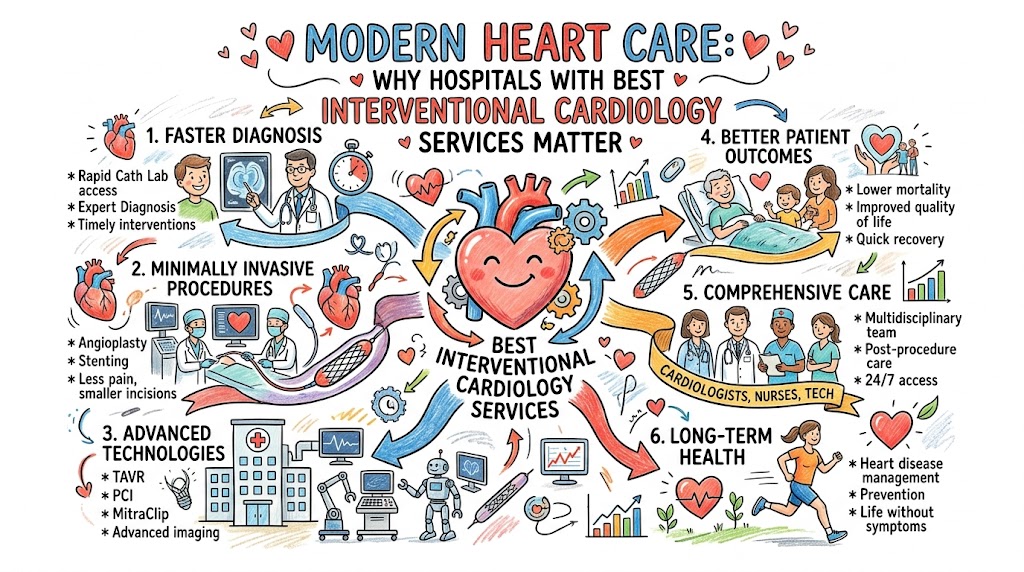
- Faster Diagnosis: Dedicated cardiac labs mean shorter wait times for crucial imaging and blood work.
- Advanced Technology: These hospitals invest heavily in state-of-the-art robotic and imaging systems.
- Better Outcomes: Specialized teams perform high volumes of procedures, which is scientifically linked to better patient success rates.
- Integrated Care: Cardiologists, surgeons, and rehabilitation experts often work in the same building, ensuring seamless transitions between care phases.
Hospitals with Best Interventional Cardiology Services: Key Features
When researching hospitals with best interventional cardiology services, keep an eye out for these essential indicators of quality:
- Cardiac Catheterization Labs: These labs are the heart of the facility, where life-saving procedures like angioplasty are performed.
- Advanced Imaging: Look for facilities with high-resolution 3D echocardiography and CT angiography.
- Hybrid Operating Rooms: These rooms combine the capabilities of a surgical suite and a cath lab, allowing for immediate conversion to open surgery if a complication arises.
- Multidisciplinary Heart Teams: A successful hospital utilizes a “Heart Team” approach, where specialists from different fields discuss your case to determine the safest, most effective treatment.
Common Interventional Cardiology Procedures
- Coronary Angiography: An imaging test used to visualize the heart’s blood vessels using dye and X-rays.
- Angioplasty and Stenting: A procedure to open narrowed or blocked coronary arteries using a balloon-tipped catheter, followed by the placement of a mesh tube (stent) to keep it open.
- Structural Heart Interventions: Procedures to repair or replace damaged heart valves without open-heart surgery (e.g., TAVR).
- Peripheral Vascular Interventions: Treating narrowed arteries in the limbs to improve circulation.
How to Evaluate a Cardiac Hospital
| Factor | Why It Matters |
| Cardiologist Experience | High-volume specialists are more adept at managing complex cases. |
| Technology | Determines the range and precision of treatments available. |
| Emergency Care | 24/7 access to cath labs is vital for acute heart attack management. |
| Success Rates | Objective data provides peace of mind regarding outcomes. |
| ICU Facilities | Necessary for critical monitoring after complex interventions. |
| Patient Support | Holistic care (counseling/nutrition) improves long-term recovery. |
Benefits of Advanced Interventional Cardiology Services
The transition to interventional care has profoundly changed patient experiences. Benefits include:
- Minimally Invasive: Smaller entry points mean less trauma to the body.
- Faster Recovery: Many patients go home the same day or the following morning.
- Reduced Complication Risks: Lower rates of surgical site infections and blood loss compared to traditional surgery.
- Improved Quality of Life: Rapid return to daily activities and reduced chest pain.
Heart Conditions Commonly Treated
Leading cardiac centers are equipped to handle a broad spectrum of conditions, including:
- Coronary Artery Disease (CAD): The buildup of plaque in heart arteries.
- Valvular Heart Disease: Issues with how the heart valves function.
- Peripheral Artery Disease (PAD): Restricted blood flow to the legs.
- Congenital Heart Conditions: Defects present from birth that require specialized monitoring.
- Acute Coronary Syndromes: Sudden heart attacks or unstable angina.
Patient Care and Support Services
Recovery is a comprehensive process. The best cardiac hospitals provide:
- Cardiac Rehabilitation: Supervised exercise and education programs.
- Nutrition Counseling: Heart-healthy diet plans tailored to your specific lipid levels and health goals.
- Lifestyle Coaching: Smoking cessation and stress management workshops.
Common Challenges Patients Face
- Delayed Diagnosis: Symptoms like fatigue or mild chest pain are often ignored. Solution: Prioritize annual screenings if you have risk factors.
- Access to Specialists: Finding the right doctor can be daunting. Solution: Use BESTCARDIACHOSPITALS to compare hospital profiles and expertise.
- Treatment Costs: Heart care is expensive. Solution: Always consult with the hospital’s financial counseling department before starting your procedure.
How BESTCARDIACHOSPITALS.COM Helps Patients
BESTCARDIACHOSPITALS acts as a digital bridge. We provide:
- Hospital Directories: Filtered lists based on specialized cardiac services.
- Comparative Insights: Tools to help you evaluate hospital quality metrics.
- Educational Resources: Deep dives into procedures so you can feel informed and empowered during your consultations.
Expert Tips for Choosing the Best Cardiac Hospital
- Check Certification: Look for hospitals accredited by recognized cardiovascular boards.
- Ask about Volumes: Don’t be afraid to ask, “How many of these procedures does your team perform annually?”
- Review the Team: Ensure the hospital has both interventionalists and cardiothoracic surgeons on staff.
- Prioritize Communication: Choose a facility where the staff makes you feel heard and understood.
Future of Interventional Cardiology
The future is increasingly digital. We are seeing the rise of robotic-assisted angioplasty, which offers even higher precision. Artificial intelligence is also being integrated into imaging systems to help cardiologists detect subtle blockages that were previously invisible. These advancements promise to make procedures safer and more personalized than ever before.
FAQs
Q1. What is interventional cardiology?
A: A specialty focusing on non-surgical, catheter-based treatments for heart disease.
Q2. What procedures do interventional cardiologists perform?
A: Angioplasty, stenting, heart valve repairs, and angiography, among others.
Q3. How do I choose the best cardiac hospital?
A: Look for accreditation, specialized cardiac teams, 24/7 cath labs, and patient-centered reviews.
Q4. Is angioplasty a major surgery?
A: No, it is a minimally invasive procedure performed through a small incision.
Q5. What should I expect after a cardiac procedure?
A: A brief observation period in the hospital and a recovery plan focused on activity monitoring.
Q6. Do I need a referral?
A: Usually, yes, from a primary care doctor or a general cardiologist.
Q7. What if I have an emergency?
A: Always go to the nearest emergency room; if you have a known heart condition, head to a hospital with an active cath lab.
Q8. Are there risks?
A: All procedures have risks; your doctor will discuss these specific to your anatomy and health.
Q9. Can interventional cardiology prevent heart attacks?
A: Yes, by opening blockages before they become total obstructions.
Q10. How long do stents last?
A: Modern stents are designed to last a lifetime, but lifestyle changes are needed to keep the vessel clear.
Q11. Is cardiac rehab required?
A: It is highly recommended to improve heart strength and reduce future risks.
Q12. What is TAVR?
A: Transcatheter Aortic Valve Replacement—a procedure to replace a damaged valve without open surgery.
Q13. How does AI help?
A: It helps doctors visualize images more clearly and predict potential complications during procedures.
Q14. Can I travel after a procedure?
A: Usually, you should wait a few days to weeks depending on your doctor’s advice.
Q15. Where can I find more help?
A: Use BESTCARDIACHOSPITALS.COM to find resources near you.
Conclusion
The search for hospitals with best interventional cardiology services is a proactive step toward protecting your most vital organ. Because heart health is dynamic and complex, having the right team in your corner—equipped with the latest technology and a patient-first philosophy—is indispensable. Interventional cardiology has changed the paradigm of treatment, turning what used to be weeks of recovery into days, and significantly improving the prognosis for patients with complex arterial and structural heart issues.Remember that a hospital is more than its equipment; it is defined by the expertise and compassion of its people. As you research your options, focus on the facility’s track record, its commitment to multidisciplinary collaboration, and its ability to provide comprehensive support both during and after your procedure. By taking the time to make an informed choice, you are not just selecting a place for treatment; you are investing in your future health.