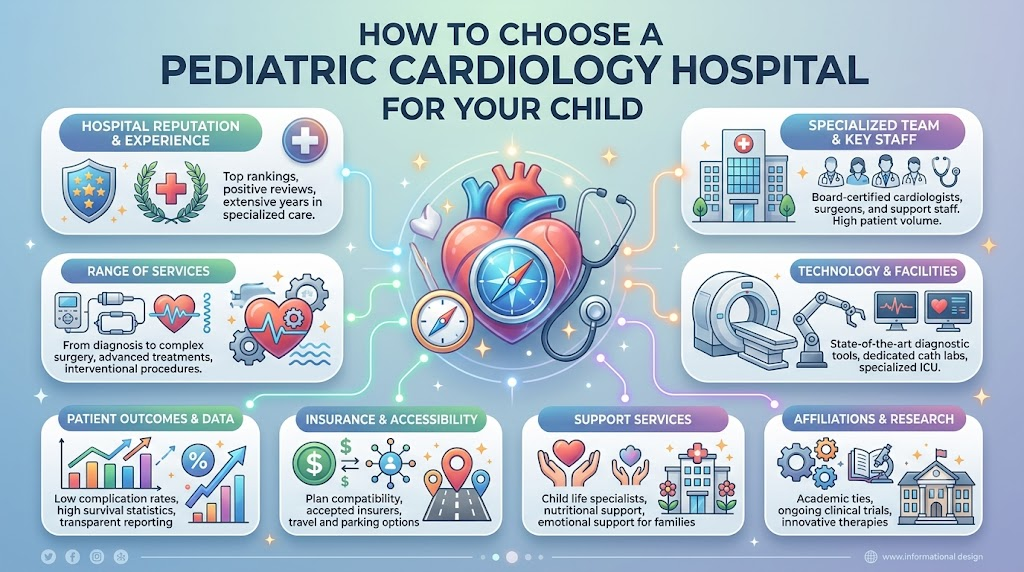
Introduction
When a child has a possible heart problem, parents may feel worried and unsure about what to do next. Choosing a suitable hospital can help families understand the condition, explore care options, and plan the next steps with confidence.
Children may need different tests and treatments based on their age, symptoms, and heart condition. Some need regular checkups or medicines, while others may need a special procedure or heart surgery. A clear pediatric cardiology hospital checklist can help parents ask useful questions and compare care options.
This article explains what to look for in a hospital, which specialists may be needed, and how to prepare for an appointment. Families can also use the information available at Bestcardiachospitals to support their healthcare research.
Remember that the right choice depends on each child’s needs. A qualified medical team can help parents understand which services are needed and whether further specialist care is required.
What Is Pediatric Cardiology?
Pediatric cardiology is the medical specialty that focuses on heart and blood vessel problems in babies, children, and teenagers. A pediatric cardiologist checks how a child’s heart works and helps manage heart conditions.
Some children are born with a heart problem. These are called congenital heart conditions. Examples include holes in the heart, problems with heart valves, and changes in the way blood flows through the heart.
Other heart problems may develop later. These can include abnormal heart rhythms, certain heart muscle problems, or conditions that affect how the heart works after an illness.
A pediatric cardiologist may use tests, medicines, and regular checkups to care for a child. Not every child needs surgery. The care plan depends on the diagnosis, the child’s health, and how the condition changes over time.
Why Specialized Children’s Heart Care Matters
Children are not simply smaller adults. Their hearts, bodies, and medical needs change as they grow. They may also need different medicine doses, tests, and ways of explaining medical care.
A pediatric cardiologist has training in heart conditions that affect children. This specialist can review symptoms, examine test results, explain the diagnosis, and plan care with the family.
Some children may need a pediatric cardiac surgeon. This specialist performs heart operations for children who need them. Other children may need a pediatric cardiac anesthesiologist, heart rhythm specialist, or intensive care team.
A children’s heart hospital may offer several services in one place. However, every child does not need a large specialist hospital. The important point is to find care that matches the child’s condition and the treatment being considered.
Checklist Item 1: Qualified Pediatric Heart Specialists
Start by checking who will assess and care for your child. A trained pediatric cardiologist should be able to explain the suspected or confirmed heart problem in clear language.
If surgery may be needed, ask about the training and experience of the pediatric or congenital cardiac surgeon. For complex procedures, a team may also include specialists in pediatric anesthesia and cardiac intensive care.
Parents can ask these questions:
- Who will lead my child’s heart care?
- Does the team regularly treat this condition?
- Which specialists may be involved?
- Who will explain the results and treatment choices?
You can also ask about the team’s relevant experience with your child’s age group and diagnosis. The goal is not to collect the longest list of qualifications. It is to understand whether the team has the skills needed for your child’s care.
Checklist Item 2: Diagnostic Tests and Equipment
A suitable pediatric cardiology hospital should be able to arrange the tests your child needs. The exact tests depend on the symptoms and the suspected heart condition.
Common tests include:
- Echocardiogram: Uses sound waves to create pictures of the heart. It can show the heart’s structure, movement, and blood flow.
- Electrocardiogram (ECG): Records the heart’s electrical activity and can help detect rhythm problems.
- Holter monitoring: Records the heart rhythm over a longer period, often during normal daily activities.
- Cardiac imaging: Special scans may give more detailed pictures when needed.
- Cardiac catheterization: Uses a thin tube placed into a blood vessel to examine the heart or perform certain treatments.
Not every child needs every test. Ask which tests are recommended, why they are needed, and how the results may affect the care plan.
You can also ask when results will be ready and who will explain them. Clear answers can help reduce worry and prevent confusion.
Checklist Item 3: Treatment and Surgical Services
Heart care can involve several types of treatment. Some children need only observation and regular visits. Others may need medicines, a catheter-based procedure, or surgery.
A catheter-based procedure uses a thin tube passed through a blood vessel. In some cases, doctors can use it to treat a heart problem without opening the chest. Open-heart surgery involves an operation to repair or treat a problem inside the heart or its major blood vessels.
Ask whether the hospital regularly treats your child’s specific condition. If a procedure is recommended, ask who will perform it and what support will be available before and after treatment.
The medical team should explain the possible benefits, risks, alternatives, and expected recovery. Parents should have a chance to ask questions and understand why the proposed plan is suitable for their child.
Do not assume that surgery is always the best choice. For some conditions, careful monitoring or medicine may be enough. The treating specialist can explain the options for your child’s diagnosis.
Checklist Item 4: Pediatric Cardiac Intensive Care
A pediatric cardiac intensive care unit, sometimes called a cardiac ICU or CVICU, provides close care for children with serious heart problems or those recovering from complex heart procedures.
Staff in this unit can monitor heart rate, breathing, blood pressure, and other important signs. Children may also receive support for breathing, circulation, or pain when needed.
Ask whether the hospital has the level of intensive care your child may need. You can also ask who will monitor your child after a procedure and how the team will keep you informed.
Not every child needs intensive care. A child having a simple test or routine checkup may not need these services. The hospital’s facilities should match the child’s planned treatment and level of risk.
Checklist Item 5: Teamwork and Family Communication
Good heart care often involves more than one specialist. Pediatric cardiologists, surgeons, nurses, anesthesiologists, and intensive care staff may work together to plan treatment.
It is also helpful when the hospital communicates with your child’s regular pediatrician. This can support safe care between hospital visits and help the doctors keep track of changes in your child’s health.
Before choosing a hospital, find out who will answer your questions and explain test results. Ask how you can contact the team if you need clarification after an appointment.
Family-centered care means listening to parents and respecting their concerns. Children should receive explanations that suit their age and level of understanding. If your family needs language support, ask whether an interpreter is available.
Checklist Item 6: Safety, Quality, and Outcomes
Parents should feel able to ask how a hospital protects children and improves its care. Useful topics include infection prevention, staff training, safe medicine use, and how the team responds to complications.
If the hospital shares outcome figures, ask what they mean. Results can differ based on the condition being treated, the child’s age, and how complex the cases are.
A number alone may not show whether one hospital is a better choice for your child. Ask whether the information applies to the same condition or procedure your child may need.
Awards, advertisements, and claims of high procedure numbers do not prove that a hospital is right for every family. Look for clear answers, relevant information, and a team willing to discuss risks honestly.
Checklist Item 7: Emergency Support and Follow-Up Care
A child’s care does not always end when a test or procedure is complete. Follow-up visits may help doctors check recovery, review medicines, and see how the heart is working.
Ask how often your child may need appointments and whether repeat tests are likely. Find out whom to contact if symptoms change or you have concerns outside normal clinic hours.
Some children born with heart conditions need lifelong follow-up as they grow. Others may need less frequent checks. The schedule depends on the diagnosis and the advice of the child’s medical team.
It is also useful to ask how the hospital shares reports with your child’s pediatrician or other specialists. Keeping copies of test results and treatment records can help when care involves more than one hospital.
Checklist Item 8: Practical Costs and Travel Needs
Heart care can involve more than the cost of a consultation. Tests, medicines, procedures, hospital stays, and follow-up visits may add to the total expense.
Ask for a written estimate when possible. Check what the estimate includes and whether extra charges may apply. If you use insurance or another payment plan, confirm which services are covered before treatment when time allows.
Families traveling from another city may also need to plan for transport, accommodation, meals, and repeat visits. Ask whether appointments can be arranged in a way that reduces unnecessary travel.
Cost and distance matter, but they should be considered alongside the child’s medical needs. The most expensive hospital is not always the most suitable, and a lower price alone does not prove that care is appropriate.
Pediatric Cardiology Hospital Checklist
Use this table during calls or visits to help compare the services each hospital can provide.
| What to check | Questions to ask | Why it matters |
|---|---|---|
| Specialist qualifications | Who will assess my child, and what is their relevant training? | Helps confirm that the team has suitable skills. |
| Experience with the condition | Does the team regularly treat this diagnosis? | Experience relevant to the child’s needs is important. |
| Diagnostic services | Which tests are available, and who explains the results? | Helps families understand the testing process. |
| Treatment options | Are monitoring, medicines, catheter procedures, or surgery relevant? | Supports informed discussion of care choices. |
| Intensive care when needed | Is pediatric cardiac intensive care available if required? | Helps match services to the child’s treatment needs. |
| Safety information | How does the hospital monitor safety and complications? | Encourages open discussion of risks and quality. |
| Follow-up care | Who arranges future visits and answers questions? | Helps support care after the appointment or procedure. |
Questions Parents Should Ask Before Choosing a Hospital
A written list can make a consultation easier, especially when families feel worried or have many details to remember.
Consider asking:
- Does the team regularly care for children with my child’s condition?
- Which tests or treatments may be needed, and why?
- Who will coordinate my child’s care?
- What are the benefits, risks, and alternatives to the recommended treatment?
- What support is available after a procedure?
- How can we contact the team if we have concerns after leaving the hospital?
- How will follow-up care be arranged?
Bring any previous test reports, referral letters, medicine details, and relevant medical records. A written list of symptoms and questions can also help the doctor understand your concerns.
If something is unclear, ask the doctor to explain it in simpler words. You do not need to understand every medical term at once. It is reasonable to ask for time to review information before making a major decision, unless urgent treatment is needed.
How to Compare Pediatric Cardiology Hospitals
Use the checklist to compare hospitals based on your child’s needs rather than relying only on online rankings or advertising. A suitable pediatric cardiology hospital should be able to explain which services it offers and whether they fit the planned care.
Review the team’s relevant experience, diagnostic services, treatment options, safety information, communication, follow-up access, travel needs, and expected costs. You can write down what each hospital tells you and note any questions that remain unanswered.
For a major treatment decision, a second opinion may help you understand the diagnosis or compare reasonable options. Discuss this with the treating clinician, especially if your child may need treatment soon.
If the condition could be urgent, do not delay care just to compare hospitals. Ask the medical team how quickly a decision is needed and what risks may come with waiting.
When to Seek Urgent Medical Help
Some symptoms need urgent medical assessment. Seek emergency help if your child has severe trouble breathing, collapses, or has blue or grey lips or skin. Fainting with ongoing symptoms also needs urgent attention.
Contact a healthcare professional promptly if your child develops worsening breathlessness, unusual tiredness, or poor feeding as an infant. These signs can have many causes, and only a qualified clinician can assess what is happening.
If your child appears seriously unwell, do not wait to finish this checklist or compare hospitals online. Get urgent medical help first and follow the advice of the emergency team.
Frequently Asked Questions About Pediatric Cardiology Hospitals
1. What does a pediatric cardiologist do?
A pediatric cardiologist checks, diagnoses, and manages heart conditions in babies, children, and teenagers. They may recommend tests, medicines, monitoring, or referral to another specialist.
2. When should a child see a pediatric cardiologist?
A child may need a referral for a heart murmur, unusual heart rhythm, concerning symptoms, or a suspected heart defect. The child’s pediatrician can advise whether specialist assessment is needed.
3. How do I choose a hospital for my child’s heart condition?
Check the team’s experience with the child’s condition, available tests and treatments, safety information, communication, and follow-up care. Also consider practical needs such as travel and cost.
4. What tests may a pediatric cardiology hospital offer?
Tests may include an echocardiogram, ECG, Holter monitoring, and selected types of cardiac imaging. Some children need additional tests, depending on their diagnosis and symptoms.
5. Does every child with a heart defect need surgery?
No. Some heart defects need only monitoring, while others may require medicines, a catheter procedure, or surgery. The recommended plan depends on the type and effect of the defect.
6. Why might a child need a pediatric cardiac intensive care unit?
A child may need this unit after major heart surgery or a complex procedure that requires close monitoring. The need depends on the child’s condition and treatment.
7. What questions should parents ask before heart surgery?
Ask why surgery is recommended, what benefits and risks it has, what alternatives exist, and what recovery may involve. Also ask about the care team, expected hospital stay, and follow-up plan.
8. Can parents seek a second opinion about a child’s heart treatment?
Yes, a second opinion may help families understand a diagnosis or treatment plan. Ask the treating clinician whether it is safe to wait, particularly if the child may need urgent care.
9. How can families prepare for a pediatric cardiology appointment?
Bring previous reports, referral letters, medicine details, and a list of symptoms and questions. Note when symptoms began and what seems to make them better or worse.
10. Why is follow-up care important for children with heart conditions?
Follow-up helps the team check symptoms, review treatment, and monitor changes as the child grows. The timing and length of follow-up depend on the child’s diagnosis and care plan.
Final Thoughts
Choosing a hospital for a child’s heart care can feel like a big task, but a clear plan can help. Focus on the child’s diagnosis, the team’s relevant skills, the services needed, clear communication, and support after treatment.
Use this pediatric cardiology hospital checklist to guide questions and compare care options. Ask for explanations whenever something is unclear, and work with qualified healthcare professionals when making decisions about your child’s health.
This article is for educational purposes only. It does not replace medical advice, diagnosis, or treatment from your child’s healthcare team.