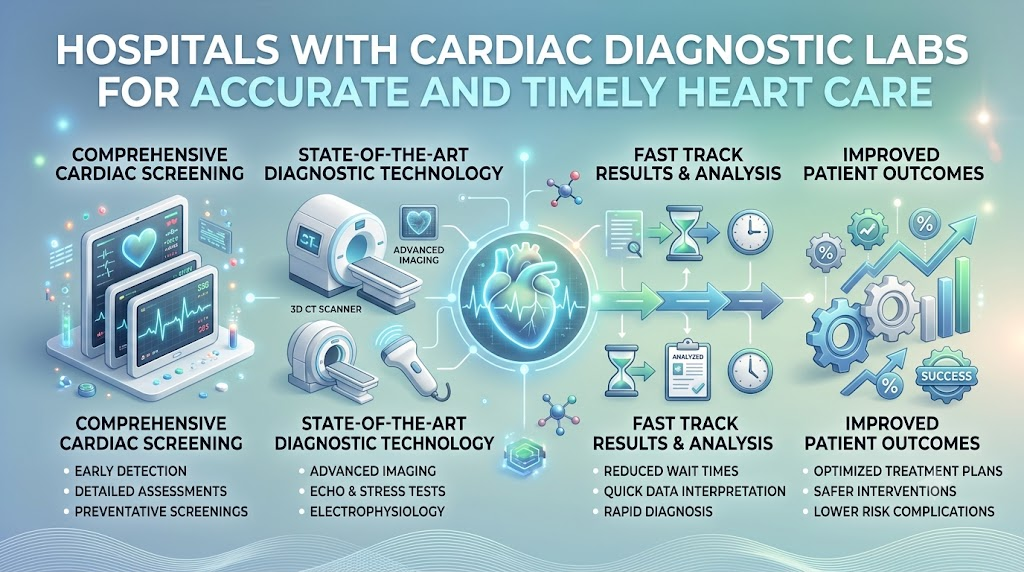
Heart health tests help doctors find possible problems with the heart and choose the next steps in care. Cardiac diagnostic labs assess the heart’s electrical activity, structure, pumping function, and blood supply. These tests may help explain chest discomfort, shortness of breath, a racing heartbeat, dizziness, or signs of known heart disease.
The right test depends on your symptoms, health history, and doctor’s assessment. Some tests take only a few minutes, while others record heart activity over several hours or days. Hospitals with cardiac diagnostic labs may offer basic tests, advanced scans, or specialist investigations, depending on their facilities.
BestCardiacHospitals helps readers learn about cardiac care services and understand what to consider when comparing hospitals. This article explains common cardiac diagnostic tests, what happens during testing, how to prepare, and which questions to ask before booking an appointment.
What Are Cardiac Diagnostic Labs?
Cardiac diagnostic labs are hospital departments or specialist units that perform tests to help doctors assess heart health. They provide useful information about how the heart works and whether further assessment may be needed.
These labs may help with:
- Checking for possible heart disease.
- Finding signs of an irregular heartbeat.
- Assessing the heart’s structure and pumping function.
- Investigating possible reduced blood flow to the heart.
- Monitoring selected heart conditions.
- Checking progress after certain heart treatments or procedures.
A cardiac diagnostic laboratory may offer ECGs, heart scans, rhythm monitoring, blood tests, and other investigations. However, services vary between hospitals. Some tests need special equipment, trained staff, and a cardiologist or another qualified specialist.
Test results are not interpreted alone. Doctors consider symptoms, medical history, physical examination, and other findings before deciding what the results mean. One test may provide useful clues, but another test may be needed to answer a different question.
Common Tests Available in Cardiac Diagnostic Labs
Cardiac diagnostic tests help doctors examine different parts of heart health. The choice depends on what the doctor needs to check.
Electrocardiogram (ECG or EKG)
An electrocardiogram records the heart’s electrical activity. Small sticky patches called electrodes are placed on the skin to record the heart’s signals.
A standard ECG is quick, painless, and does not use needles. It may help identify certain rhythm problems and signs that suggest heart muscle damage or other heart conditions. However, a normal ECG does not rule out every heart problem, especially if symptoms come and go.
Echocardiogram
An echocardiogram uses sound waves to create moving images of the heart. It helps doctors examine the heart’s chambers, valves, pumping function, and blood flow.
The test is often recommended when doctors need more information about the heart’s structure or function. Most standard echocardiograms do not require surgery or radiation. The exact preparation depends on the type of scan.
Exercise Stress Test
An exercise stress test checks how the heart responds when the body becomes more active. The patient usually walks on a treadmill or uses another exercise method while the team monitors heart rate, blood pressure, and heart signals.
The test may help investigate certain symptoms or possible blood flow problems. If exercise is not suitable, a doctor may consider a medicine-based stress test. The clinical team decides which method is safe and useful for each patient.
Holter Monitoring and Other Rhythm Tests
Holter monitoring records the heart’s rhythm during normal daily activities, often for 24 to 48 hours. Other portable monitors can record heart activity for longer periods when needed.
These devices may help detect irregular rhythms that do not appear during a short ECG. Patients may be asked to record symptoms and activities during monitoring. This information helps the doctor compare symptoms with the recorded heart rhythm.
Cardiac Blood Tests
Cardiac blood tests measure substances in the blood that can provide information about heart health. A troponin test, for example, helps doctors assess possible heart muscle injury.
Other blood tests may check cholesterol, blood sugar, kidney function, and other factors linked to heart disease or treatment planning. Emergency blood tests for suspected heart muscle injury serve a different purpose from routine blood tests used to assess long-term risk.
Blood test results must be considered alongside symptoms, examination findings, and other investigations.
Advanced Cardiac Imaging and Angiography
Some hospitals offer advanced cardiac imaging to answer specific medical questions. These tests may include coronary CT angiography, cardiac MRI, and nuclear cardiac imaging.
Coronary CT angiography uses a CT scanner and contrast material to create images of the blood vessels supplying the heart. Cardiac MRI uses magnetic fields and radio waves to produce detailed images. Nuclear imaging uses a small amount of radioactive tracer to assess selected aspects of heart function or blood flow.
Invasive coronary angiography uses a thin tube, called a catheter, and contrast material to show the heart’s blood vessels. It requires suitable specialist facilities and carries risks that the clinical team should explain.
Not every patient needs advanced imaging or invasive angiography. These tests are selected according to the patient’s condition and the question that needs to be answered.
Common Cardiac Diagnostic Tests and Their Uses
| Test | What It Checks | When It May Be Recommended |
|---|---|---|
| ECG | Electrical activity and heart rhythm | Chest symptoms, palpitations, or suspected heart problems |
| Echocardiogram | Heart structure, valves, pumping, and blood flow | Suspected valve problems or changes in heart function |
| Exercise stress test | Heart response to increased activity | Selected cases of suspected heart-related symptoms |
| Holter monitoring | Heart rhythm over an extended period | Repeated palpitations or suspected intermittent rhythm problems |
| Cardiac blood tests | Troponin and other health markers | Suspected heart muscle injury or assessment of risk factors |
| Advanced imaging or angiography | Heart structure or coronary blood vessels | Selected cases needing more detailed investigation |
The doctor chooses the test based on symptoms, medical history, and clinical needs. Not every hospital offers every investigation.
When Might a Doctor Recommend Cardiac Testing?
A doctor may recommend heart diagnostic tests when symptoms or medical findings suggest a possible heart problem. Testing can also help monitor certain conditions that have already been diagnosed.
Common reasons include:
- Chest discomfort or suspected angina, which is chest pain caused by reduced blood flow to the heart.
- Shortness of breath that may be linked to heart disease.
- Palpitations, or a feeling that the heart is racing, pounding, or skipping beats.
- Fainting or unexplained dizziness.
- Assessment of known heart disease.
- Evaluation before selected procedures when testing is clinically needed.
- Follow-up after certain cardiac treatments or procedures.
Not every symptom requires every test. A doctor chooses investigations based on the patient’s condition, risk factors, and the information needed to guide care.
Important safety warning: New, severe, or persistent chest pain, especially with breathlessness, sweating, nausea, or faintness, may be a medical emergency. Seek emergency medical help instead of waiting for a routine cardiac test appointment.
What to Expect During a Cardiac Diagnostic Test
Most cardiac tests follow a clear process, but preparation and test time vary. Knowing what to expect can help patients feel more comfortable.
The visit may include these steps:
- Registration: Staff confirm your identity, appointment, and requested test.
- Health review: The team asks about symptoms, medical history, allergies, and medicines.
- Basic checks: Blood pressure or pulse may be checked when needed.
- Test explanation: Staff explain the procedure, possible risks, and any required consent.
- Testing: Appropriately trained staff perform the investigation.
- Result review: The relevant clinician interprets the findings and explains the next steps.
Some tests need special preparation. You may be asked to fast, avoid caffeine, change your activity, or follow specific medicine instructions. These steps depend on the test and your health needs. Do not stop prescribed medicines unless your healthcare professional tells you to do so.
Before leaving, ask when your report will be ready, who will explain it, and how you will receive follow-up advice.
How to Choose a Hospital with a Cardiac Diagnostic Lab
Choosing a suitable hospital means finding the right test, qualified staff, clear communication, and appropriate follow-up. The most advanced lab is not always the best choice for every patient.
What to Compare When Choosing a Cardiac Diagnostic Lab
| Factor | What Patients Should Check | Why It Matters |
|---|---|---|
| Test availability | Whether the recommended test is offered | Avoids unnecessary delays or referrals |
| Qualified staff | Relevant training and specialist support | Supports safe testing and proper assessment |
| Equipment | Suitable equipment and maintenance procedures | Helps the team perform the required investigation |
| Preparation instructions | Clear guidance on food, drinks, activity, and medicines | Reduces confusion and supports correct preparation |
| Report turnaround | Expected time for results | Helps patients plan follow-up |
| Clinician interpretation | Who reviews and explains the report | Makes findings easier to understand |
| Emergency support | Access to urgent assessment when relevant | Matters if serious symptoms occur |
| Follow-up services | Further tests or specialist referral when needed | Helps coordinate ongoing care |
| Transparent costs | Test fees, extra charges, and insurance coverage | Helps patients plan expenses |
Ask whether the hospital offers the exact test your doctor recommended. Also check appointment availability, accessibility, patient support, and how the diagnostic team shares results with your treating doctor.
Do not rely only on advertising or equipment lists. A hospital should be able to explain its services, staff roles, preparation rules, and reporting process clearly. If a test is unavailable, ask whether the hospital can arrange a suitable referral.
Understanding Cardiac Test Results
Cardiac test reports contain measurements and medical terms that may be difficult to understand without professional help. The doctor who ordered the test can explain how the findings relate to your symptoms and health history.
Keep these points in mind:
- A normal result may not rule out every problem. Some heart conditions appear only during certain activities or when symptoms occur.
- An abnormal result does not always mean serious disease. Some findings need repeat testing or further review before their meaning is clear.
- More tests may be needed. The doctor may recommend another scan, rhythm monitoring, blood tests, treatment, or follow-up.
- Previous reports can help. Bring earlier test results and relevant medical records when seeking a second opinion.
Ask what the findings mean, whether further tests are needed, and which symptoms should prompt urgent care. Do not delay emergency care while waiting for a report to be explained.
Frequently Asked Questions
1. What is a cardiac diagnostic lab?
A cardiac diagnostic lab is a hospital department or specialist unit that performs tests to assess heart rhythm, structure, function, or blood flow. Doctors use the findings to guide further assessment and care.
2. Which tests are commonly available in cardiac diagnostic labs?
Common tests include ECGs, echocardiograms, stress tests, Holter monitoring, and cardiac blood tests. Some hospitals also offer advanced imaging and coronary angiography.
3. What is the difference between an ECG and an echocardiogram?
An ECG records the heart’s electrical activity. An echocardiogram uses sound waves to create images of the heart and assess its structure, valves, and pumping function.
4. Why might a doctor recommend a cardiac stress test?
A stress test checks how the heart responds to increased activity or certain medicines. It may help investigate selected symptoms or possible blood flow problems.
5. How does Holter monitoring help detect heart rhythm problems?
A Holter monitor records heart rhythm over an extended period during daily activities. It can help detect rhythm changes that may not appear during a short ECG.
6. Do all hospitals offer advanced cardiac imaging?
No. Services vary by hospital. Some provide advanced scans or invasive angiography, while others refer patients to specialist centres.
7. Should I fast before a cardiac diagnostic test?
Not always. Some tests require fasting or other preparation, while others do not. Follow the specific instructions from your testing team.
8. How long does it take to receive cardiac test results?
The time varies by test, hospital, and urgency. Ask the facility when the report will be ready and whether a clinician will explain the findings.
9. Can normal cardiac test results rule out every heart problem?
No. A normal result may not exclude all heart conditions. Your doctor may recommend further assessment if symptoms continue or the clinical findings suggest a problem.
10. How do I choose a suitable hospital for cardiac diagnostic testing?
Check test availability, staff qualifications, equipment, preparation guidance, reporting times, costs, and follow-up services. Choose a hospital that meets your clinical needs and communicates clearly.
Conclusion
Hospitals with cardiac diagnostic labs help doctors investigate and monitor heart conditions through suitable tests and professional interpretation. Patients should compare hospitals based on the required investigation, qualified staff, clear preparation instructions, reliable follow-up, and transparent costs.
If you have urgent symptoms such as new or severe chest pain with breathlessness, sweating, nausea, or faintness, seek emergency medical help rather than waiting for a routine appointment.