Heart disease can develop without clear warning signs. High blood pressure and high cholesterol often cause no symptoms. Many people may not know they have these risk factors.
Regular heart health checks can help people understand their cardiovascular health. They can also help doctors find problems that need attention. Hospitals often offer screening packages to make these checks easier.
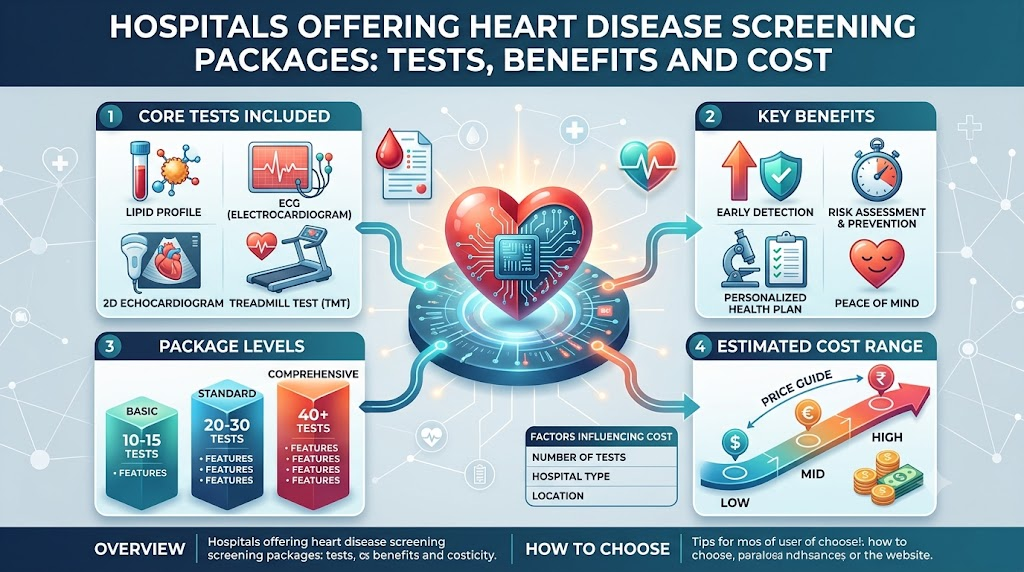
Hospitals Offering Heart Disease Screening Packages may provide consultations, blood tests, body measurements, and selected heart tests. However, each hospital may offer a different set of services. The right package depends on a person’s age, health history, and risk factors.
A heart screening package does not mean everyone needs every test. A doctor should decide which tests are useful. Readers exploring cardiac hospital information can also visit BESTCARDIACHOSPITALS for related resources.
What Are Heart Disease Screening Packages?
A heart disease screening package is a planned health check. It combines selected tests that help assess a person’s heart health and risk factors.
Hospitals may group several services into one package. These can include a doctor’s consultation, blood pressure measurement, cholesterol testing, and an ECG. Some packages may also offer imaging tests.
A cardiologist or qualified healthcare professional reviews the person’s health details. They may ask about family history, lifestyle, existing conditions, and current medicines. This information helps them decide which tests are suitable.
There is an important difference between screening and diagnostic testing. Preventive screening checks for risk factors or possible problems in people who may not have symptoms. Diagnostic testing investigates symptoms or a suspected condition.
Hospital packages are not the same everywhere. Their contents may depend on the hospital, age group, and medical needs. Patients should always check the exact test list before booking.
Why Early Heart Disease Screening Matters
Early screening can help identify risk factors before they cause serious health problems. It gives people a chance to discuss suitable steps with a healthcare professional.
Some common heart disease risk factors include:
- High blood pressure: It puts extra pressure on artery walls. It often has no clear symptoms.
- High cholesterol: Too much LDL cholesterol can contribute to fatty deposits inside arteries.
- High blood sugar: Diabetes can damage blood vessels and raise heart disease risk.
- Smoking and tobacco use: Tobacco harms blood vessels and increases cardiovascular risk.
- Excess body weight: It may increase the chance of high blood pressure and diabetes.
- Physical inactivity: Low activity can affect weight, blood pressure, and overall heart health.
- Family history: Close relatives with early heart disease may increase a person’s risk.
The American Heart Association highlights blood pressure and cholesterol checks as important parts of heart health screening. It also notes that people with risk factors or a family history may need closer attention. American Heart Association
Screening does not guarantee that heart disease will be prevented. It also cannot detect every heart problem. Its value depends on suitable tests, accurate results, and proper follow-up.
Common Tests Included in Hospital Heart Screening Packages
Hospitals may offer several tests as part of a cardiac health assessment. Each test checks a different part of a person’s health.
Not every person needs every test. A doctor should select tests based on symptoms, medical history, and risk.
The following table explains common tests found in some hospital screening packages.
Table 1: Common Tests in Heart Disease Screening Packages
| Screening Test | What It Checks | Why It May Be Used |
|---|---|---|
| Blood pressure check | Pressure inside the arteries | Identifies high blood pressure |
| Lipid profile | Cholesterol and triglycerides | Helps assess cardiovascular risk |
| Blood glucose | Current blood sugar level | Checks for high blood sugar |
| HbA1c | Average blood sugar over recent months | Helps identify diabetes or monitor blood sugar |
| Resting ECG | Electrical activity of the heart | Checks for selected rhythm or electrical problems |
| Echocardiogram | Heart structure and movement | Assesses selected structural and functional problems |
| Exercise stress test | Heart response during exercise | Used when a clinician considers it appropriate |
Blood Pressure Check
This test measures the force of blood against artery walls. High blood pressure can increase the risk of heart attack and stroke.
The test is quick and does not usually cause discomfort. A doctor may suggest repeat readings if the first result is high.
Lipid Profile
A lipid profile measures different types of fats in the blood. These include LDL cholesterol, HDL cholesterol, and triglycerides.
The results help doctors assess cardiovascular risk. Some hospitals may allow this test without fasting. Patients should follow the laboratory’s instructions.
Blood Glucose Test
This test measures the amount of sugar in the blood. It can help identify high blood sugar and possible diabetes.
The preparation depends on the type of glucose test. Some tests require fasting, while others do not.
HbA1c Test
HbA1c gives an estimate of average blood sugar over the past two to three months. It helps identify diabetes and monitor blood sugar control.
Unlike some glucose tests, HbA1c usually does not require fasting.
Resting ECG
An electrocardiogram, or ECG, records the heart’s electrical activity. It can help identify certain rhythm problems and other electrical changes.
A normal ECG does not rule out every heart condition. It is only one part of a wider health assessment.
Echocardiogram
An echocardiogram uses sound waves to create images of the heart. It shows how the heart’s chambers, valves, and muscles look and move.
Doctors may request it when they need to assess a possible structural or functional problem. It is not automatically needed for every routine check-up.
Exercise Stress Test
An exercise stress test checks how the heart responds during physical activity. The person may walk on a treadmill while staff monitor heart activity.
A doctor may recommend this test for selected patients. It is not a routine requirement for every healthy adult without symptoms.
Additional Blood Tests
Doctors may request other blood tests when a person’s health history suggests a need. These may check kidney function or other health concerns.
The purpose is to support a suitable assessment, not to add tests without a clear reason.
Different Types of Heart Screening Packages Offered by Hospitals
Hospitals may group tests into different package levels. However, package names are not standardized. A basic package at one hospital may include different tests from another hospital.
Common package categories include:
- Basic heart health check: May include a consultation, blood pressure check, and selected blood tests.
- Standard cardiac screening: May include cholesterol testing, glucose testing, and an ECG.
- Advanced cardiac assessment: May include imaging or other tests when a clinician finds a clear reason.
- Screening for people with diabetes: May focus on blood pressure, cholesterol, blood sugar, and other cardiovascular risk factors.
- Senior heart health assessment: May include a broader review based on age, symptoms, medical history, and current health.
Patients should not choose a package only by its name. They should review every included test and ask whether each one is suitable.
An advanced package is not automatically better. More tests can mean extra cost and may lead to unnecessary follow-up procedures.
Who Should Consider a Heart Screening Package?
A heart health check-up may be useful for adults with certain risk factors. It can help them understand their health and discuss possible next steps.
People who may benefit from a cardiovascular risk assessment include:
- Adults with high blood pressure.
- People living with diabetes.
- People with high cholesterol.
- Current or former tobacco users.
- People with obesity or low physical activity.
- Adults with a strong family history of early heart disease.
- Older adults.
- People with a history of cardiovascular disease.
People who have already experienced a heart attack or another cardiovascular problem may need regular medical follow-up. Their care plan may be different from a routine screening package.
Age alone does not decide which tests a person needs. A younger adult with diabetes or a strong family history may need an earlier risk review. An older adult may need a different assessment based on overall health.
A healthcare professional can help decide when to start screening and how often to repeat it.
How Hospitals Decide Which Heart Tests Are Needed
A good screening process begins with a review of the person’s health. Doctors should not select tests only because they appear in a package.
A healthcare professional may consider:
- Medical history: Existing conditions, previous diagnoses, and current medicines.
- Family history: Heart disease in close relatives, especially at an early age.
- Age: Age can affect overall cardiovascular risk.
- Blood pressure: High readings may need further checks.
- Body measurements: Weight and waist size can provide useful health information.
- Lifestyle habits: Smoking, diet, and physical activity can affect risk.
- Current symptoms: Chest discomfort or breathlessness may need diagnostic assessment.
- Previous results: Earlier test reports can help guide the next steps.
- Overall risk: Doctors may use these details to estimate future cardiovascular risk.
Some people may need only basic checks and advice. Others may need further tests because of symptoms or existing conditions.
Routine ECG or stress testing is not automatically useful for every healthy adult without symptoms. The US Preventive Services Task Force recommends against ECG screening in asymptomatic adults at low risk. It also notes that evidence is insufficient for some higher-risk groups. United States Preventive Services Taskforce+1
The goal is to choose useful tests, not to complete the longest test list.
How to Choose the Right Hospital for Heart Disease Screening
Choosing a hospital involves more than comparing package prices. Patients should look at the quality of care, available facilities, and support after testing.
Consider these points before selecting a hospital:
- Qualified cardiologists: Check whether experienced heart specialists are available for consultation.
- Laboratory facilities: Ask whether the hospital has suitable laboratory services for blood tests.
- Cardiac testing services: Check access to ECG and imaging services when needed.
- Clear package details: Request a complete list of included and optional tests.
- Transparent pricing: Ask about extra charges before paying.
- Safe testing procedures: Check whether trained staff perform the tests.
- Follow-up consultations: Find out whether a doctor will explain the results.
- Clear communication: Results should be explained in simple language.
- Further care: Ask how the hospital handles abnormal results or referrals.
Patients should also ask whether the consultation is included in the package. Some hospitals may charge separately for a specialist visit or follow-up appointment.
The following table can help patients compare their options.
Table 2: What to Compare Before Choosing a Hospital Screening Package
| Comparison Point | What Patients Should Check |
|---|---|
| Test list | Which tests are included and which are optional |
| Specialist review | Whether a qualified clinician explains the results |
| Package price | Whether consultation and follow-up fees are included |
| Test facilities | Availability of suitable laboratory and cardiac testing services |
| Preparation rules | Whether fasting or other preparation is needed |
| Follow-up support | How abnormal results and further care are handled |
A hospital with a clear process and proper follow-up may be more useful than one offering many tests at a higher price.
Understanding the Cost of Heart Screening Packages
The cost of a hospital heart check-up package can vary widely. There is no single price that applies to every hospital.
Several factors can affect the total cost:
- Number of tests: Packages with more tests may cost more.
- Type of tests: Imaging and specialist tests may increase the price.
- Hospital location: Costs can differ between cities and hospitals.
- Specialist fees: A cardiologist consultation may be charged separately.
- Laboratory facilities: Different hospitals may have different testing costs.
- Follow-up visits: Some packages include a review, while others charge extra.
- Additional testing: A doctor may recommend further tests after reviewing the first results.
Patients should request a written price breakdown before making payment. They should check whether the package includes sample collection, reports, consultation, and follow-up.
An expensive package does not always provide better care. The best option is one that matches the person’s health needs and offers clear medical guidance.
How to Prepare for a Hospital Heart Screening
Preparation depends on the tests included in the package. Patients should ask the hospital for instructions before their appointment.
These steps may help:
- Ask about fasting: Some blood tests may require fasting. Others do not.
- Share medicine details: Tell the healthcare team about all prescribed medicines and supplements.
- Bring old reports: Previous test results can help doctors understand changes over time.
- Explain existing conditions: Share details about diabetes, blood pressure, and other health concerns.
- Wear comfortable clothes: This may help if an exercise stress test is planned.
- Ask about medicines: Check whether you should take your usual medicines before testing.
- Follow hospital instructions: Preparation may differ between tests and hospitals.
Do not stop prescribed medicines on your own. Ask the treating doctor before making any changes.
Understanding Heart Screening Results and Follow-Up
After the tests, a qualified healthcare professional should review the results. Patients should ask for a clear explanation of each important finding.
The review may include:
- Blood pressure readings and their meaning.
- Cholesterol and triglyceride levels.
- Blood glucose and HbA1c results.
- ECG findings and possible rhythm changes.
- Echocardiogram findings, if one was performed.
- The need for any further assessment.
- Suitable lifestyle changes or treatment discussions.
- A plan for future health checks.
An abnormal result does not always mean a person has serious heart disease. Some findings may need repeat testing or further assessment.
A normal result also does not remove all future risk. Blood pressure, cholesterol, blood sugar, and lifestyle habits can change over time.
Patients should keep copies of their reports. These records can help doctors compare results during future visits.
When a Screening Package Is Not Enough
A screening package is meant to assess health risks. It is not a substitute for urgent medical care or a full diagnosis.
Some symptoms need immediate medical attention. Do not wait for a planned screening appointment if you experience:
- Chest pain, pressure, or tightness.
- Sudden or severe shortness of breath.
- Fainting or collapse.
- Sudden weakness, especially with other possible stroke symptoms.
- Severe symptoms that are new or rapidly worsening.
Call local emergency services or seek emergency medical help. Do not delay care to complete a screening package.
A person with new symptoms may need urgent diagnostic tests. The right tests depend on the symptoms and the medical team’s assessment.
Frequently Asked Questions
1. What is included in a heart disease screening package?
A package may include a doctor consultation, blood pressure check, lipid profile, blood glucose test, and ECG. Some hospitals offer additional tests based on medical needs. The exact list varies. Patients should check the package details and ask which tests are suitable for their health.
2. Who should consider getting a heart health check-up?
Adults with high blood pressure, diabetes, high cholesterol, or a family history of early heart disease may benefit from a risk assessment. Tobacco users and people with low physical activity may also need one. A healthcare professional can help decide the right checks.
3. At what age should adults consider heart disease screening?
There is no single starting age for every test. Adults can discuss blood pressure, cholesterol, and other risk checks with a healthcare professional. Family history, diabetes, smoking, and existing conditions may affect when screening should begin.
4. Is an ECG included in every cardiac screening package?
No. Some hospital packages include a resting ECG, while others do not. An ECG is not automatically needed for every healthy adult without symptoms. A doctor should decide whether it can provide useful information based on the person’s health and risk.
5. Can a heart screening package detect blocked arteries?
A basic screening package cannot reliably detect every blocked artery. Blood tests and ECG provide different types of information. Some patients may need further imaging or diagnostic procedures. A cardiologist should decide whether those tests are suitable.
6. Do people with diabetes need regular heart risk assessments?
Diabetes can increase the risk of heart and blood vessel disease. People with diabetes should discuss regular checks of blood pressure, cholesterol, and blood sugar with their healthcare team. The need for additional heart tests depends on symptoms and overall risk.
7. Is fasting required before a heart screening test?
Fasting depends on the tests included. Some glucose tests may require fasting, while HbA1c and many lipid tests can be done without it. Patients should follow the hospital’s instructions instead of assuming every package requires fasting.
8. How much does a hospital heart screening package cost?
The cost depends on the hospital, location, test list, and specialist fees. Some packages include follow-up consultations, while others charge separately. Ask for a written price breakdown before booking. Compare the included services rather than choosing only by price.
9. Can a person have heart disease with a normal ECG result?
Yes. A normal ECG does not rule out every heart condition. It records electrical activity during a short period. Some heart problems may not appear during the test. Doctors consider symptoms, risk factors, and other findings before deciding whether further tests are needed.
10. How often should someone repeat a heart health screening?
The right interval depends on age, test results, family history, and existing health conditions. Some people may need more frequent checks, while others may need them less often. Follow the schedule recommended by a qualified healthcare professional.
Conclusion
Hospitals offering heart disease screening packages can help people understand important cardiovascular risk factors. These packages may include consultations, blood tests, body measurements, and selected heart tests.
However, the most expensive package is not always the best choice. More tests do not automatically mean better care. The right screening plan depends on personal health, age, symptoms, and medical history.
Before choosing a hospital, compare its test list, facilities, pricing, and follow-up support. Discuss your needs with a qualified healthcare professional. A suitable heart health check-up can help guide informed decisions about long-term heart health.