Heart care can be hard to access when a hospital is far away. Travel costs, busy schedules, and mobility problems may make regular visits difficult. Older adults may also need help getting to appointments.
Cardiac teleconsultation lets patients speak with a cardiologist by phone or video when remote care is suitable. It can help with follow-up visits, symptom discussions, and reviews of earlier test reports. The doctor can also explain the next steps in a care plan.
For readers exploring heart care options, BESTCARDIACHOSPITALS can be a starting point for learning about cardiac services. Patients should confirm appointment options directly with their chosen provider.
An online visit cannot replace every hospital examination or heart test. It is also not suitable for every symptom. Severe chest pain, serious breathing difficulty, or other signs of a possible heart emergency require immediate emergency medical help. Do not wait for an online appointment.
What Is Cardiac Teleconsultation?
Cardiac teleconsultation is a medical appointment with a heart specialist through a phone call or video service. It allows the patient and cardiologist to discuss health concerns without meeting in the same room.
The cardiologist may ask about symptoms, past illnesses, current medicines, and family medical history. The doctor may also review earlier test reports and home readings.
A traditional hospital visit allows the doctor to examine the patient in person. An online visit depends more on the information the patient shares and the reports available. Some checks and tests cannot be completed through a video call.
Cardiac teleconsultation is still a real medical appointment. The cardiologist decides whether remote care is suitable or whether the patient needs an examination or more tests.
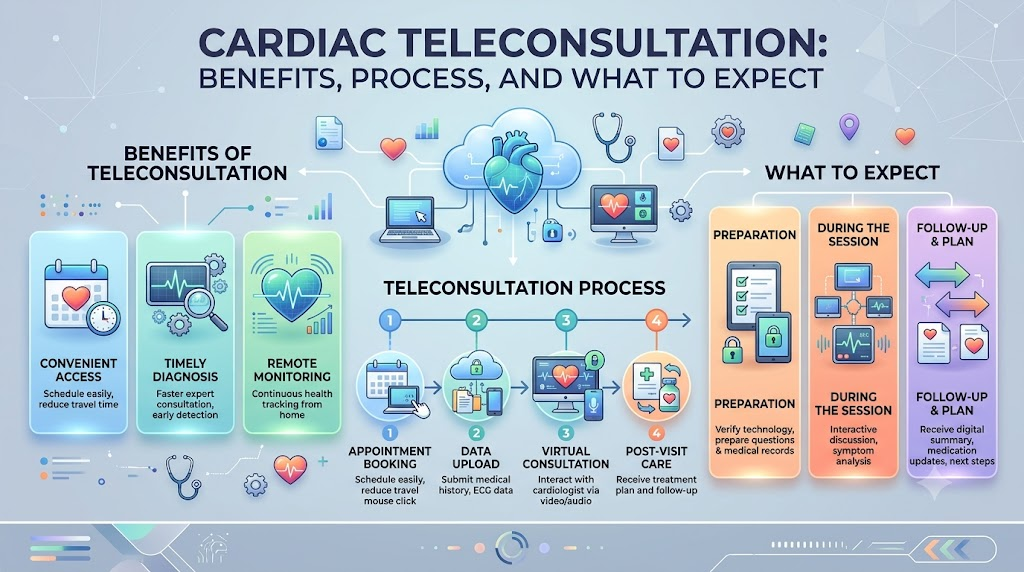
How Does Cardiac Teleconsultation Work?
The process can vary between hospitals and telehealth providers. Most appointments follow a few basic steps.
Step 1: Book an Appointment
The patient arranges an online appointment through a hospital or a suitable telehealth service. Depending on the provider, the visit may take place by phone or video.
Check the appointment time, payment details if any, and instructions for joining. Ask whether the service is suitable for your reason for seeking care.
Step 2: Share Medical Information
The cardiologist may ask about current symptoms, past heart problems, allergies, and other health conditions. The doctor may also ask about earlier procedures or hospital stays.
Give clear and honest answers. Explain when symptoms began and whether they have changed. Mention any recent changes in your health.
Step 3: Prepare Test Reports
Keep available heart reports and medical records nearby. These may include ECG results, echocardiogram reports, blood tests, prescriptions, and hospital discharge summaries.
You may need to upload reports before the appointment or show them during the call. Follow the provider’s instructions for sharing medical information.
Step 4: Join the Consultation
Join the call at the scheduled time using the method given by the provider. Choose a quiet place where you can speak freely.
The doctor or clinic staff may confirm your identity. They may also explain how the appointment will work and ask for your consent before continuing.
Step 5: Discuss Symptoms and Test Results
The cardiologist asks questions about your health and daily activities. You may discuss chest discomfort, tiredness, dizziness, breathing problems, or changes in your heartbeat.
The doctor may review reports and home readings, such as blood pressure or pulse. These details can help the cardiologist understand your situation, but they may not provide a complete picture.
Step 6: Receive a Care Plan
After reviewing the available information, the cardiologist explains possible next steps. These may include lifestyle advice, further tests, a medicine review, or another appointment.
The doctor may also recommend an in-person visit if an examination is needed. Do not change or stop heart medicines without advice from your treating clinician.
Step 7: Follow Up as Advised
Some patients may need another online appointment to discuss their progress. Others may need tests or an in-person hospital visit.
Follow the plan given by your clinician. Arrange recommended tests and seek medical help sooner if your symptoms become worse.
The table below summarises the main steps and what patients can do to prepare.
| Step | What happens | What the patient can do |
|---|---|---|
| Appointment booking | A suitable remote appointment is arranged | Confirm the time and connection method |
| Medical history | The doctor asks about health and symptoms | Share accurate details |
| Report review | Available reports may be discussed | Keep relevant records ready |
| Consultation | The doctor assesses the information provided | Ask questions and describe concerns |
| Care plan | The doctor recommends next steps | Follow the agreed plan |
| Follow-up | More online or in-person care may be arranged | Complete recommended tests and appointments |
The key point is that preparation helps the appointment run smoothly. The exact steps depend on the provider and the patient’s needs.
Who Can Benefit From Cardiac Teleconsultation?
Cardiac teleconsultation may help patients who can safely receive part of their care remotely. The cardiologist must decide whether it fits the patient’s condition.
It may be useful for:
- Routine follow-up visits: Patients with stable conditions may discuss progress and ongoing care.
- Known heart conditions: Some patients may review symptoms and care plans without travelling for every visit.
- Test report discussions: The cardiologist may explain results from earlier investigations.
- Care plan questions: Patients can ask about instructions, recommended tests, and follow-up steps.
- Travel difficulties: Remote visits may help people who live far from a hospital.
- Older adults: Patients with limited mobility may find online appointments easier to attend.
- Caregiver support: A family member may help with the appointment if the patient agrees.
- Initial guidance: Some providers offer first consultations remotely when clinically suitable.
However, online care is not right for everyone. New, severe, or worsening symptoms may need an examination or urgent assessment. A remote appointment should never delay emergency care.
What Happens During an Online Cardiology Appointment?
A virtual cardiologist appointment usually starts with questions about the reason for the visit. The cardiologist may ask when symptoms began, how often they happen, and what makes them better or worse.
The doctor may ask about previous heart conditions, surgery, hospital admissions, and other illnesses. You may also discuss current medicines, missed doses, or possible side effects.
If reports are available, the cardiologist may review them during the appointment. The doctor may also ask about home blood pressure, pulse, or weight readings when these details are relevant.
The appointment can include advice about daily habits, follow-up care, and further tests. Patients should ask questions if any instruction is unclear.
A video call cannot provide every part of a physical examination. For example, the doctor may need equipment to check certain heart sounds or perform tests. The cardiologist may recommend an in-person visit when the available information is not enough.
Benefits of Cardiac Teleconsultation
Online heart consultations offer several possible benefits. Their value depends on the patient’s needs and the services available.
Easier Access to Heart Specialists
People who live far from cardiac hospitals may find it easier to speak with a specialist remotely. This can be helpful when travel takes several hours or requires help from another person.
However, remote appointments depend on specialist availability and the provider’s rules.
Less Travel and Waiting
A phone or video appointment may reduce the need for travel. Patients may also spend less time away from work or family.
The amount of time saved depends on the appointment process. Some patients will still need to visit a hospital for tests or an examination.
Convenient Follow-Up Care
Patients with stable conditions may be able to discuss their progress online. They can ask questions about their care plan and share new reports.
This may make routine follow-up easier for some people. The cardiologist will decide whether an online visit provides enough information.
Support for Older Adults and Caregivers
Older adults and people with mobility problems may find travel tiring. A remote appointment can make some discussions easier to attend.
With the patient’s permission, a caregiver may help gather records, explain concerns, or take notes. The patient should still be involved in decisions about their care whenever possible.
Better Continuity of Care
Regular contact with a care team can help patients understand their next steps. Remote appointments may support this contact between hospital visits.
Patients should still complete recommended tests and attend in-person appointments when advised. An online visit is not a reason to delay needed care.
Access for People in Remote Areas
People in rural or remote areas may have limited access to heart specialists. Teleconsultation can reduce some travel barriers when a suitable service is available.
Access may still depend on internet quality, phone access, language support, and local healthcare services. Not every problem can be managed remotely.
What Are the Limitations of Cardiac Teleconsultation?
Cardiac teleconsultation has limits. It gives the doctor useful information, but it cannot replace every test or physical examination.
- Limited physical examination: The cardiologist cannot complete all hands-on checks through a screen.
- Need for medical tests: ECGs, echocardiograms, and some other investigations require suitable equipment.
- Connection problems: Poor internet, unclear sound, or a weak video signal may interrupt the discussion.
- Missing records: The doctor may not be able to assess the problem fully if important reports are unavailable.
- Incorrect home readings: Blood pressure and pulse readings may be unreliable if the device is used incorrectly.
- Symptoms that need urgent care: Some problems require immediate examination rather than a planned online appointment.
The cardiologist may ask for more information or arrange an in-person visit. This is an important part of safe care, not a failure of teleconsultation.
Patients should explain their symptoms clearly and mention any changes. If symptoms are severe or could signal an emergency, seek urgent medical help instead of waiting for the appointment.
What Tests Can Be Reviewed During a Teleconsultation?
A cardiologist may review existing test reports during an online consultation. The doctor can explain what a report says and whether further assessment may be needed.
Common examples include:
- Electrocardiogram (ECG): A report that records the heart’s electrical activity.
- Echocardiogram: An ultrasound report that shows the heart’s structure and movement.
- Blood test results: These may help the doctor review certain health concerns.
- Cholesterol results: These show levels of fats in the blood that can affect heart health.
- Blood pressure records: Home readings may help the doctor understand blood pressure over time.
- Heart rhythm monitoring reports: These may record heart rhythm over a period.
- Hospital discharge summaries: These explain care received during a hospital stay.
- Reports from past heart procedures: These may help the doctor understand previous treatment.
Reviewing a report online is not the same as performing a test. If an ECG or echocardiogram is needed, the patient must arrange it at a suitable clinic, diagnostic centre, or hospital.
A report also needs to be understood in context. The cardiologist considers symptoms, medical history, and other findings before deciding what to do next. A video call alone cannot confirm every heart condition.
How to Prepare for a Cardiac Teleconsultation
A little preparation can help patients use their appointment well. Use this checklist before joining the call.
- Confirm the appointment time and how to connect.
- Check your phone or computer, camera, microphone, and internet.
- Choose a quiet and private place.
- Keep a list of current medicines and doses.
- Gather earlier heart reports and prescriptions.
- Write down your symptoms and when they began.
- Note any recent changes in your health.
- Prepare questions for the cardiologist.
- Keep recent home readings ready if requested.
- Ask a caregiver to help if needed and if you want their support.
Do not worry if you cannot find every old report. Share what you have and tell the doctor what is missing.
Most importantly, do not delay urgent medical care to collect documents or complete an online appointment. Serious symptoms need prompt assessment.
Is Cardiac Teleconsultation Safe and Private?
Cardiac teleconsultation can support appropriate care when a qualified clinician uses a suitable communication service. Patients can take simple steps to protect their personal information.
Use the appointment link provided by the hospital or telehealth provider. Avoid sending medical reports through unknown websites or unverified accounts.
Choose a private place for the call. Before sharing sensitive details, check who is taking part and ask how your records will be handled. You can also ask how to contact the provider if you have questions after the visit.
If you are unsure about the clinician’s identity or qualifications, ask the provider to confirm them. Privacy safeguards vary by service, so no online system should be assumed to offer complete protection.
Patients should share accurate information with the treating clinician. Clear details help the doctor assess the situation and decide whether further care is needed.
Cardiac Teleconsultation vs. In-Person Cardiology Visits
Both online and in-person appointments can play a role in heart care. The right choice depends on the patient’s symptoms, medical history, and the cardiologist’s advice.
Teleconsultation allows patients to discuss symptoms, medicines, and test reports from another location. An in-person visit allows the doctor to examine the patient directly when needed.
Both types of appointments can include a review of test results and a discussion of the care plan. However, some tests need separate appointments at a clinic or hospital.
The table below shows when each option may be considered.
| Situation | Possible care option | Important point |
|---|---|---|
| Routine follow-up for a stable condition | Teleconsultation may be suitable | The clinician must confirm suitability |
| Discussion of existing test reports | Teleconsultation may be suitable | Further tests may still be needed |
| New symptoms needing examination | In-person assessment may be required | Follow the clinician’s advice |
| Need for an ECG or echocardiogram | A separate test appointment may be needed | These tests require suitable equipment |
| Severe chest pain or serious breathing difficulty | Emergency medical care | Do not wait for an online appointment |
The main takeaway is that neither option is best for every situation. Some patients use online and in-person care at different stages of treatment.
When Is an In-Person Visit Necessary?
A cardiologist may recommend an in-person visit when a remote discussion is not enough. This can happen when symptoms are new, unclear, or getting worse.
An in-person assessment may be needed when:
- The doctor needs to examine the patient directly.
- Symptoms have changed or become more troubling.
- Further heart tests are required.
- Reports or home readings do not provide enough information.
- A treatment decision depends on an examination or new test results.
Follow the cardiologist’s advice about where and when to attend. If you cannot arrange the recommended visit, contact the provider to discuss the next step.
Do not wait for a teleconsultation if you have severe or new chest pain, severe shortness of breath, fainting, or other possible signs of a heart attack. Seek emergency medical help immediately and follow local emergency guidance. Do not try to manage a possible heart emergency through a routine online appointment.
Tips for Getting the Most From Your Online Heart Appointment
Good communication helps the cardiologist understand your concerns. You do not need medical words to explain how you feel.
Describe your symptoms in your own words. Explain when they started, how often they happen, and whether activity or rest changes them. Mention any new symptoms since your last visit.
Keep your medicine list and available reports nearby. If you do not understand a medical term or instruction, ask the doctor to explain it in simpler words. Before the call ends, make sure you understand the next steps.
Follow the agreed care plan and arrange any recommended tests. Do not start, stop, or change heart medicines on your own. Contact your healthcare provider if you have questions about the plan.
Frequently Asked Questions
1. What is cardiac teleconsultation?
Cardiac teleconsultation is an appointment with a heart specialist by phone or video. It allows patients to discuss symptoms, medicines, medical history, and existing test reports from another location. The cardiologist decides whether remote care is suitable. Some patients may still need an in-person examination or further tests.
2. How does an online cardiology consultation work?
The patient books an appointment and joins by phone or video. The cardiologist asks about symptoms, past health problems, and current medicines. The doctor may review available reports and home readings. After assessing the information, the cardiologist explains the next steps, which may include further tests or an in-person visit.
3. Can I consult a cardiologist through a video call?
Yes, some hospitals and telehealth providers offer video appointments with cardiologists. Availability and eligibility depend on the provider and your medical needs. A video call can support discussion and follow-up, but it cannot provide every physical check or test. The doctor may recommend an in-person visit when needed.
4. What reports should I keep ready for a cardiac teleconsultation?
Keep available ECG and echocardiogram reports, blood test results, cholesterol results, previous prescriptions, and hospital discharge summaries. Home blood pressure or pulse readings may also be useful if the doctor requests them. Do not delay urgent care while looking for records. Tell the cardiologist if some reports are missing.
5. Can a cardiologist review an ECG report online?
Yes, a cardiologist may review an existing ECG report during an online appointment. The doctor can explain the findings and discuss whether further assessment is needed. However, reviewing a report is different from performing a new ECG. The doctor will consider symptoms and medical history before recommending next steps.
6. Is cardiac teleconsultation suitable for follow-up care?
It may be suitable for some patients with stable, diagnosed heart conditions. An online follow-up can help the cardiologist discuss symptoms, medicines, and test results. Suitability depends on the patient’s condition and the information available. Patients should attend in-person appointments and complete tests whenever their clinician recommends them.
7. What are the main benefits of online heart consultations?
Online heart consultations may reduce travel and make some follow-up visits easier to attend. They can help patients discuss reports and care plans with a cardiologist from another location. They may also help people with mobility or distance barriers. Benefits vary, and some patients still need hospital visits or tests.
8. Can a cardiologist prescribe medicines during a teleconsultation?
Depending on the clinical situation and local rules, a cardiologist may prescribe or adjust medicines during a teleconsultation. The doctor must first assess the available information and decide what is appropriate. Patients should not change doses, stop treatment, or start new heart medicines without advice from their treating clinician.
9. When should I choose an in-person cardiology appointment?
An in-person appointment may be needed when symptoms are new or worsening, a physical examination is required, or further tests must be performed. The cardiologist may also request a hospital visit when online information is unclear. If symptoms are severe or urgent, seek emergency medical help rather than waiting for a routine appointment.
10. Can I use cardiac teleconsultation during a heart emergency?
No. A routine online appointment is not suitable for a suspected heart emergency. Severe chest pain, serious shortness of breath, fainting, or other possible heart attack signs need immediate emergency assessment. Call your local emergency number and follow emergency guidance. Do not wait for a video call or spend time collecting medical reports.
Conclusion
Cardiac teleconsultation gives patients another way to speak with a heart specialist. It can support follow-up care, report reviews, and discussions about symptoms when remote care is suitable.
Preparing medical records, writing down questions, and explaining symptoms clearly can help make the appointment useful. However, online care cannot replace every examination or heart test.
The safest choice depends on your symptoms and the cardiologist’s advice. Attend in-person visits when recommended, follow your care plan, and seek emergency help for possible heart attack symptoms. Never wait for an online appointment during a heart emergency.