Introduction
Recovering from a cardiac event or surgery is a journey that requires more than just clinical intervention—it demands a structured, supportive environment designed to restore your strength and vitality. Leading hospitals for cardiac rehabilitation provide exactly this, blending advanced medical expertise with compassionate, multidisciplinary care. Whether you are recovering from a heart attack, bypass surgery, or managing heart failure, finding the right recovery environment is critical.
At BestCardiacHospitals, we help patients discover cardiac hospitals, compare rehabilitation programs, explore heart specialists, review recovery services, and make informed cardiovascular healthcare decisions. This guide serves as your comprehensive resource for understanding how specialized heart recovery programs can transform your path to health.
Why Cardiac Rehabilitation Matters
Cardiac rehabilitation is a medically supervised program designed to improve cardiovascular health. It is not just about exercise; it is about building a sustainable foundation for heart health. For many, this process represents the bridge between the hospital ward and a return to daily life, reducing the risk of future hospitalizations and complications.
What Is Cardiac Rehabilitation?
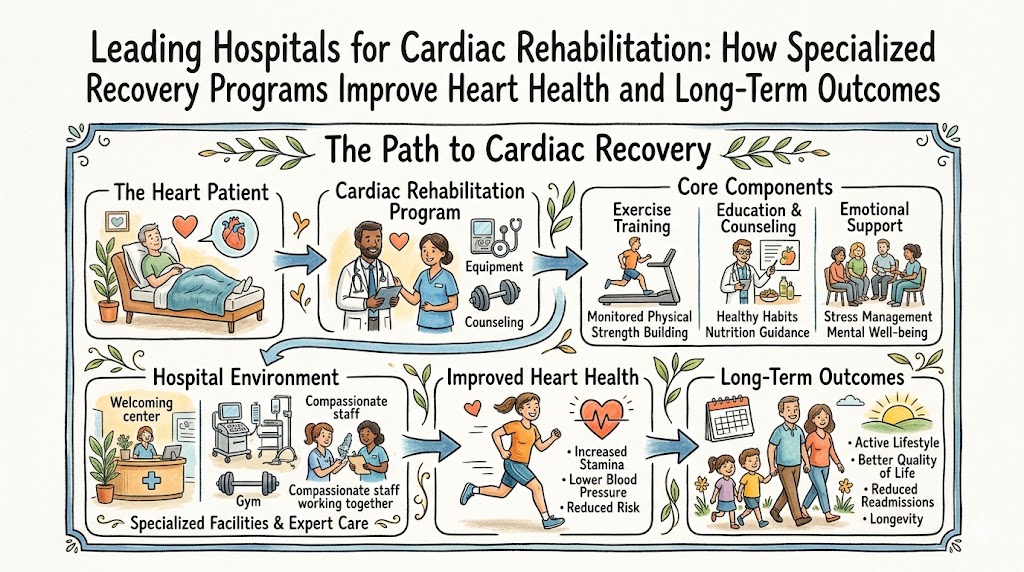
Cardiac rehabilitation is a structured program that encompasses physical activity, education, and emotional support.
- Definition: It is a customized program of exercise and education designed to help you recover after a heart attack, heart surgery, or procedures such as stenting and angioplasty.
- Goals: To strengthen the heart, reduce cardiac symptoms, and address risk factors like high blood pressure and cholesterol.
- Importance: Studies consistently show that patients who attend cardiac rehab programs have a significantly higher survival rate and a lower risk of repeat cardiac events.
Who Needs Cardiac Rehabilitation?
Rehabilitation is highly recommended for a wide range of cardiovascular conditions:
- Heart attack patients: To regain physical endurance and cardiac function.
- Bypass surgery patients: To manage incision healing and improve stamina.
- Valve replacement patients: To ensure the heart adjusts to the new structural changes.
- Heart failure patients: To manage fluid balance, medication adherence, and exercise tolerance.
- Angioplasty patients: To keep arteries clear through long-term lifestyle modification.
What Makes Leading Hospitals for Cardiac Rehabilitation Stand Out?
The quality of care varies across institutions. Top-tier hospitals distinguish themselves through:
- Multidisciplinary Care Teams: These teams include cardiologists, specialized nurses, exercise physiologists, dietitians, and psychologists.
- Specialized Facilities: Equipped with advanced telemetry monitoring and modern rehabilitation gymnasiums.
- Personalized Recovery Plans: No two hearts are the same; leading centers tailor programs to individual fitness levels and medical histories.
- Continuous Monitoring: Ensuring patient safety during physical activity is the highest priority.
Components of a Cardiac Rehabilitation Program
| Program Component | Purpose | Benefits |
| Supervised Exercise | Improve aerobic capacity | Strengthens heart muscle, lowers HR |
| Nutritional Counseling | Heart-healthy diet management | Reduces cholesterol, blood pressure |
| Risk Factor Management | Controlling underlying conditions | Prevents future arterial damage |
| Stress Reduction | Mental and emotional wellness | Lowers cortisol, improves heart rhythm |
| Lifestyle Coaching | Long-term habit formation | Sustained weight and health control |
Benefits of Cardiac Rehabilitation
- Improved physical strength and stamina.
- Better management of medications.
- Increased confidence to engage in daily activities.
- Reduced anxiety and depression associated with heart illness.
- Better long-term adherence to heart-healthy habits.
Advanced Technologies Used in Cardiac Recovery Programs
Modern cardiac rehab centers utilize cutting-edge tools to enhance recovery:
- Wearable Telemetry: Real-time heart rate and rhythm tracking.
- Virtual Rehab Modules: Allowing patients to continue exercise monitoring from home.
- Advanced Imaging Integration: Adjusting exercise intensity based on recent stress tests or echocardiograms.
Recovery Timeline After Cardiac Procedures
| Recovery Stage | Expected Progress | Recommended Activities |
| Phase 1 (In-Hospital) | Early mobilization | Walking, light movement, education |
| Phase 2 (Outpatient) | Gradual fitness gain | Supervised exercise, 3x per week |
| Phase 3 (Maintenance) | Independent lifestyle | Consistent gym, healthy habits |
Lifestyle Changes for Long-Term Heart Health
Recovery is a lifelong commitment. Focus on these pillars:
- Diet: Adopt a Mediterranean-style diet (fruits, vegetables, lean proteins).
- Physical Activity: Aim for at least 150 minutes of moderate aerobic activity weekly.
- Smoking Cessation: The most critical step for arterial health.
- Stress Management: Yoga, meditation, or therapy.
How to Choose the Best Cardiac Rehabilitation Hospital
When searching for the right care, consider accreditation, proximity to your home, the expertise of the staff, and patient review scores.
| Factor | Importance | Questions to Ask |
| Accreditation | Validates safety standards | Is the center AACVPR certified? |
| Team Expertise | Quality of care | Who oversees the exercise program? |
| Proximity | Consistency | Is it easy to commute to 3x/week? |
Questions Patients Should Ask Their Cardiac Rehabilitation Team
- What is the duration of the program?
- How will my progress be measured?
- Are there programs for specific conditions like heart failure?
- Do you provide dietary support and counseling?
- How is the transition handled from hospital to home?
Cost Factors and Insurance Considerations
Most insurance plans cover cardiac rehabilitation, but coverage varies. Contact your provider early to verify the number of sessions allowed and any co-pays associated with professional services.
Risks of Skipping Cardiac Rehabilitation
Skipping rehab significantly increases the risk of “revolving door” readmissions. Patients who do not participate often lack the supervised environment needed to safely increase activity, leading to prolonged recovery times and potential psychological decline.
Common Myths vs Facts About Cardiac Rehabilitation
- Myth: “It’s too dangerous to exercise after a heart attack.”
- Fact: Exercise in a supervised clinical setting is specifically designed to be safe and effective.
- Myth: “I am too old for rehabilitation.”
- Fact: Cardiac rehab is highly beneficial regardless of age.
Latest Innovations in Heart Recovery Programs
- Telerehabilitation: Digital platforms connecting patients to clinicians remotely.
- Precision Medicine: Using genetic data to tailor cardiovascular recovery.
- Enhanced Behavioral Coaching: AI-driven apps to track nutrition and daily movement.
Future of Cardiac Rehabilitation Technology
The future lies in seamless integration. We are moving toward “smart recovery” where devices automatically feed data to your cardiologist, allowing for instantaneous adjustments to your medication or exercise intensity, ensuring maximum efficiency in your recovery.
Expert Recommendations
Prioritize your recovery. Treat your attendance at cardiac rehabilitation sessions as seriously as you would a surgical appointment. The discipline you establish in these first few months often dictates your heart health for years to come.
Patient Recovery Checklist
- Clear your schedule for the duration of the 8–12 week program.
- Consult your doctor about your initial exercise limits.
- Purchase comfortable, supportive walking shoes.
- Keep a journal of your symptoms and exercise intensity.
- Engage your family in your new heart-healthy cooking habits.
Key Takeaways
- Cardiac rehabilitation is essential for physical and emotional recovery.
- Choosing the right hospital ensures access to multidisciplinary teams and modern tech.
- Lifestyle changes are the foundation of preventing future cardiac issues.
- Consistency is the #1 predictor of successful recovery.
Frequently Asked Questions
- How long is a typical rehab program?
Usually 12 weeks, though it varies based on individual needs. - Does insurance cover cardiac rehab?
Yes, most plans cover it after a cardiac event. - Can I exercise at home instead?
Home programs exist, but hospital-supervised programs are safer. - What if I have other health conditions?
Rehab programs are designed to accommodate comorbidities. - Is cardiac rehab just for heart attack patients?
No, it is for heart failure, surgery, and stent patients too. - Will I be monitored?
Yes, most use ECG telemetry. - Do I need a doctor’s referral?
Yes, a referral from a cardiologist is typically required. - Can it help with high blood pressure?
Yes, exercise and diet counseling are core components. - What happens after the program ends?
You transition to a maintenance program independently. - Is it group-based?
Yes, the social aspect of group recovery is a key benefit. - Are diets provided?
Personalized nutritional counseling is standard. - What if I get tired easily?
The program is paced to your specific endurance levels. - Are there mental health benefits?
Yes, stress reduction is a primary focus. - How soon should I start?
Often within 1–2 weeks of hospital discharge. - What is the main goal?
To improve cardiovascular fitness and quality of life.
Conclusion
Your journey to recovery is a marathon, not a sprint. By selecting one of the leading hospitals for cardiac rehabilitation, you are investing in a future of vitality and strength. Utilize the resources at BestCardiacHospitals.com to find the support you need, and remember: with the right team, the right mindset, and the right program, you can achieve long-term cardiovascular health.