Introduction
A heart attack is a serious medical emergency. It happens when blood flow to part of the heart becomes blocked. Without enough blood and oxygen, the heart muscle can become damaged.
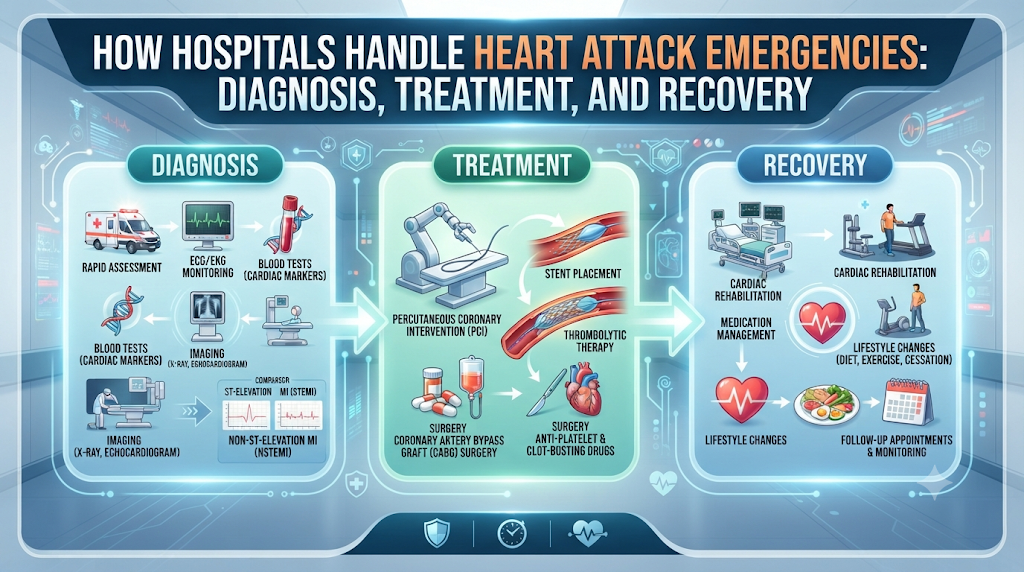
Quick medical care can help limit this damage. Every minute matters when someone has a suspected heart attack. Hospitals use emergency teams, heart tests, and special treatments to restore blood flow.
Emergency doctors, nurses, and heart specialists work together. They check the patient’s condition and begin treatment as quickly as possible. Some patients need urgent procedures, while others need medicines and close monitoring.
Understanding how hospitals handle heart attack emergencies can help patients and families feel more prepared. At BestCardiacHospitals, readers can explore cardiac health information and learn about hospital heart care. This article explains emergency assessment, diagnosis, treatment, hospital facilities, and recovery after a heart attack.
Recognizing a Heart Attack and Starting Emergency Care
Recognizing warning signs is the first step toward getting help. A heart attack does not always feel the same for everyone. Some people have strong chest pain, while others notice less obvious symptoms.
Common warning signs include:
- Pressure, tightness, or pain in the chest.
- Pain spreading to the arms, back, neck, or jaw.
- Shortness of breath.
- Cold sweating.
- Nausea or vomiting.
- Dizziness or lightheadedness.
- Unusual weakness or tiredness.
Some people may experience discomfort in the upper stomach. Symptoms can also be less clear in women, older adults, and people with diabetes.
If you suspect a heart attack, call local emergency services immediately. Do not wait for symptoms to disappear. Do not drive yourself or ask the patient to drive. An ambulance team can begin care during the journey.
Do not try to diagnose the problem at home. Follow emergency service instructions while waiting for help.
Initial Assessment in the Emergency Department
When a patient reaches the hospital, the emergency team starts a quick assessment. They check the patient’s condition and look for signs of a heart attack.
The team may check:
- Blood pressure.
- Heart rate and rhythm.
- Breathing rate.
- Oxygen level.
- Body temperature.
Doctors and nurses ask when the symptoms began. They also ask about chest pain, medical history, allergies, and current medicines.
The time symptoms started is important. It helps doctors choose suitable tests and treatment. Patients should share any history of heart disease, diabetes, or high blood pressure.
Emergency staff give priority to patients with possible heart attack symptoms. They may perform tests and start treatment at the same time.
A fast and organized assessment helps the team avoid unnecessary delays.
Tests Hospitals Use to Diagnose Heart Attacks
Hospitals use several tests to confirm a heart attack. These tests help doctors understand the heart’s condition and the amount of possible damage.
Electrocardiogram (ECG or EKG)
An ECG records the heart’s electrical activity. Small stickers called electrodes are placed on the chest, arms, and legs. The machine records signals from the heart.
Hospitals aim to perform an ECG within 10 minutes of first medical contact for suspected acute coronary syndrome. It can help identify a serious type of heart attack.
Troponin blood test
Troponin is a protein found in heart muscle cells. Damaged heart muscle can release troponin into the blood. A blood test checks its level.
Doctors may repeat this test after a short period. This helps them identify changes and assess possible heart injury.
Echocardiogram
An echocardiogram uses sound waves to create pictures of the heart. It shows how well the heart pumps blood. It can also help identify areas that are not moving normally.
Other tests
Doctors may use chest X-rays, other blood tests, or special heart imaging. These tests help check related problems and guide treatment.
Not every patient needs every test. Doctors consider symptoms, examination findings, and test results together.
How Hospitals Restore Blood Flow to the Heart
Restoring blood flow is a major goal during certain heart attacks. A blocked heart artery can stop oxygen from reaching the heart muscle. Quick treatment can help limit damage.
Doctors choose treatment based on the type of heart attack. They also consider the patient’s health, symptoms, and available hospital facilities.
Understanding different types of heart attacks
A STEMI heart attack happens when an artery is fully blocked. It often causes clear changes on an ECG. It usually needs urgent treatment to reopen the artery.
Other heart attacks may involve a partial blockage or different signs. These cases also need prompt assessment and suitable treatment.
Angioplasty and stent placement
Primary percutaneous coronary intervention (PCI) is a common emergency treatment for STEMI. Doctors use a thin tube called a catheter. They guide it through a blood vessel toward the blocked heart artery.
A small balloon may open the narrowed area. Doctors may then place a stent. A stent is a small metal mesh tube that helps keep the artery open.
This procedure helps restore blood flow to the heart. It is performed in a special hospital room called a cardiac catheterization laboratory.
Clot-dissolving medicines
Some patients may receive clot-dissolving medicines. These medicines are also called fibrinolytic drugs. They help break down blood clots that block an artery.
Doctors may consider them when timely PCI is not available. However, these medicines are not suitable for every patient. Doctors must check the risks and possible benefits first.
Some patients need transfer to another hospital with PCI facilities. The emergency team arranges this when advanced treatment is needed.
The Role of the Cardiac Emergency Team
Heart attack treatment requires teamwork. Different hospital professionals have important roles. They work together to provide fast and organized care.
Emergency doctors and nurses
Emergency doctors assess symptoms and arrange urgent tests. Nurses monitor vital signs and support treatment. They also help patients remain comfortable during care.
Cardiologists
Cardiologists specialize in heart conditions. They review test results and plan treatment. They also monitor the patient’s progress.
Interventional cardiologists
These specialists perform procedures such as angioplasty. They use special tools to open blocked heart arteries. Their work is important during many serious heart attacks.
Cardiac laboratory and imaging teams
Laboratory staff process blood samples. Imaging teams help provide pictures of the heart and chest. Their results support medical decisions.
Critical care specialists
Some patients need advanced monitoring and support. Critical care teams manage serious complications and support vital body functions.
Clear communication helps these teams work efficiently. Hospitals also use emergency protocols to guide important decisions.
Monitoring and Intensive Care After Treatment
Emergency treatment does not always end when blood flow returns. Patients may need close monitoring to check their heart’s recovery.
Many patients stay in a coronary care unit (CCU) or cardiac intensive care unit (CICU). These units have special equipment and trained staff.
The hospital team may monitor:
- Heart rate and rhythm.
- Blood pressure.
- Oxygen levels.
- Chest discomfort.
- Heart function.
- Blood test results.
Doctors may repeat ECGs and blood tests. They check for signs of further heart damage or complications.
Some patients develop abnormal heart rhythms. Others may have reduced heart pumping ability. The team can respond quickly when these problems occur.
Doctors also manage pain and other symptoms. They adjust medicines according to the patient’s condition.
The hospital stay depends on the type of heart attack and treatment. It also depends on complications and overall recovery.
Managing Complications During a Heart Attack
Some heart attacks can cause serious complications. Hospitals prepare to identify and manage these problems quickly. Early treatment may help protect the heart and other organs.
Abnormal heart rhythms
A damaged heart muscle may affect its electrical signals. This can cause the heart to beat too fast, too slowly, or irregularly.
Doctors may use medicines or other treatments to control dangerous rhythms. Some patients may need an electrical treatment called cardioversion or defibrillation.
Heart failure
Heart failure can happen when the heart cannot pump enough blood. Patients may experience breathing problems, tiredness, or fluid buildup.
Doctors may use medicines and other support. Treatment depends on the patient’s symptoms and heart function.
Cardiogenic shock
Cardiogenic shock is a serious condition. It happens when the heart cannot pump enough blood to the body. Blood pressure may fall to dangerous levels.
Doctors may use medicines, procedures, or temporary support devices. Some patients need advanced intensive care. These treatments depend on the person’s condition.
Not every heart attack patient develops complications. Not everyone needs surgery or advanced support devices. Hospital teams choose care based on individual medical needs.
Hospital Facilities That Support Emergency Heart Care
Hospital facilities can affect how quickly patients receive treatment. A well-prepared cardiac emergency department needs suitable equipment and trained staff.
Important facilities may include:
Emergency department
The emergency department provides the first assessment. It should have staff trained to recognize heart attack symptoms. Fast access to ECG testing is also important.
Cardiac catheterization laboratory
This special room supports procedures such as angioplasty. It contains equipment that helps doctors view heart arteries and restore blood flow.
Laboratory testing
Hospitals need access to blood tests, including troponin testing. Quick results can help doctors make treatment decisions.
Cardiac imaging
Echocardiography and other imaging tools help doctors examine heart function. These tests may be useful during diagnosis and follow-up.
Coronary care and intensive care units
These units support patients who need close monitoring. They also provide care for serious complications.
Emergency transfer systems
Some hospitals may not offer every cardiac procedure. A reliable transfer system helps move patients to suitable treatment facilities.
When comparing hospitals, ask about emergency cardiac services, trained teams, and access to PCI. Also check whether emergency support is available around the clock. Facilities and services can differ between hospitals.
Recovery, Medicines, and Cardiac Rehabilitation
Recovery continues after emergency treatment. Doctors create a care plan based on the patient’s heart health. This plan may include medicines, follow-up visits, and lifestyle changes.
Follow prescribed medicines
Doctors may prescribe medicines to reduce the risk of another heart problem. These may include antiplatelet drugs, cholesterol-lowering medicines, and blood pressure medicines.
Some patients may need other medicines to support heart function. Take every medicine as directed. Do not change doses or stop treatment without medical advice.
Attend follow-up appointments
Regular visits help doctors check recovery. They may review symptoms, blood pressure, cholesterol, and heart function.
Tell your doctor about new symptoms or medicine side effects. Ask questions if any part of the treatment plan is unclear.
Join cardiac rehabilitation
Cardiac rehabilitation is a supervised recovery program. It helps patients return to safe daily activities. It may include exercise, health education, and emotional support.
A trained team creates an activity plan based on the patient’s condition. Do not start intense exercise without medical approval.
Build heart-healthy habits
Healthy habits can support long-term heart health. Doctors may suggest:
- Eating balanced meals.
- Reducing excess salt when advised.
- Staying active as approved.
- Stopping smoking.
- Managing blood pressure and cholesterol.
- Getting enough sleep.
Emotional health also matters. Some people feel worried after a heart attack. Talking with family members or a health professional may help.
How Families Can Support a Heart Attack Patient
Family support can make hospital care and recovery easier. Loved ones can help share important information with the medical team.
Keep a list of the patient’s medicines and allergies. Include known health conditions and past heart problems. Tell hospital staff about these details.
Listen carefully to the doctor’s instructions. Ask questions when something is unclear. Keep discharge papers and follow-up details in a safe place.
After discharge, family members can support medicine routines and medical visits. They can also encourage suitable activity and healthy meals.
Recovery can take time. Avoid putting pressure on the patient to return to normal activities too quickly. Offer patience, comfort, and emotional support.
Emergency treatment decisions must remain with qualified medical professionals. Families should share information and follow the care team’s guidance.
Common Heart Attack Tests and Their Purpose
Hospitals use different tests to check heart damage and function. The exact tests depend on the patient’s symptoms and medical condition.
| Test | What It Checks | Why Doctors Use It |
|---|---|---|
| ECG or EKG | The electrical activity of the heart. | Helps identify heart attack signs and rhythm problems. |
| Troponin blood test | Levels of a protein released by damaged heart muscle. | Helps detect heart muscle injury. |
| Echocardiogram | Heart movement, structure, and pumping ability. | Helps assess heart function and possible damage. |
| Chest X-ray | The heart, lungs, and chest structures. | Helps check other causes of symptoms and related problems. |
| Other blood tests | Blood count, kidney function, and other health markers. | Helps assess overall health and guide treatment. |
Hospital Heart Attack Care: From Arrival to Recovery
Heart attack care follows several important stages. The process may change based on the patient’s condition and treatment needs.
| Care Stage | What Happens | Main Purpose |
|---|---|---|
| Emergency assessment | Staff check symptoms and vital signs. | Identify urgent problems quickly. |
| ECG and blood tests | Doctors check heart activity and troponin levels. | Confirm the diagnosis and assess heart injury. |
| Urgent treatment | Medicines or procedures may restore blood flow. | Limit damage to the heart muscle. |
| Cardiac monitoring | Staff monitor heart rhythm and vital signs. | Detect and manage complications. |
| Discharge planning | Doctors explain medicines and follow-up care. | Support safe recovery at home. |
| Rehabilitation | Patients follow a guided recovery program. | Improve strength and support long-term heart health. |
Frequently Asked Questions
1. What is the first thing a hospital does for a heart attack patient?
The emergency team checks the patient’s breathing, blood pressure, heart rate, and oxygen level. They ask about symptoms and medical history. An ECG is usually performed quickly. Doctors may also order blood tests and begin urgent treatment based on the patient’s condition.
2. How quickly should an ECG be done during a suspected heart attack?
Hospitals aim to perform an ECG within 10 minutes of first medical contact. This test records the heart’s electrical activity. It can help identify important heart attack signs. Doctors may repeat the ECG if symptoms continue or the first result is unclear.
3. Which blood tests help doctors detect a heart attack?
Troponin is the main blood marker used to detect heart muscle injury. Doctors may repeat the test to check changes over time. Other blood tests can assess kidney function, blood count, and general health. Results are reviewed with symptoms and ECG findings.
4. What is angioplasty, and why is it used during a heart attack?
Angioplasty is a procedure that opens a blocked or narrowed heart artery. Doctors guide a thin tube into the artery and use a small balloon. They may place a stent to keep the artery open. This helps restore blood flow to the heart.
5. Do all heart attack patients need a stent?
No. Treatment depends on the type of heart attack and the patient’s condition. Some patients need angioplasty and a stent. Others may receive medicines or different procedures. A cardiologist reviews the test results and chooses the most suitable treatment.
6. How long does a patient stay in the hospital after a heart attack?
Hospital stay depends on the severity of the heart attack, treatment, and recovery. Some patients need only a few days, while others need longer care. Complications may increase the stay. Doctors decide when a patient is ready for safe discharge.
7. Why do some heart attack patients need intensive care?
Some patients need close monitoring after a serious heart attack. They may have abnormal heart rhythms, low blood pressure, or reduced heart function. Intensive care teams provide advanced monitoring and treatment. Not every heart attack patient needs an intensive care unit.
8. What facilities should a cardiac emergency hospital have?
A cardiac emergency hospital should have a well-equipped emergency department, ECG machines, laboratory testing, and trained cardiac staff. Access to a catheterization laboratory, intensive care, and emergency transfer services is also important. Check which services are available around the clock.
9. What happens during recovery after a heart attack?
Recovery may include prescribed medicines, follow-up visits, and cardiac rehabilitation. Doctors guide patients on safe activity, nutrition, and other lifestyle changes. The recovery plan depends on heart function and overall health. Patients should follow medical advice and report new symptoms.
10. How can family members help someone recovering from a heart attack?
Family members can help manage medicines, attend follow-up visits, and support healthy daily habits. They should keep medical information available and follow discharge instructions. Emotional support is also valuable. Encourage gradual recovery without putting pressure on the patient.
Final Thoughts
Hospitals handle heart attack emergencies through fast assessment, testing, and treatment. Emergency doctors, nurses, and cardiac specialists work together. Their goal is to restore blood flow and protect heart function.
Quick medical attention can make an important difference. Call local emergency services if someone shows possible heart attack symptoms. Never delay care or drive yourself to the hospital.
Recovery continues after discharge. Medicines, follow-up visits, and cardiac rehabilitation support long-term care. Family support can also help patients return to daily activities safely.
Understanding how hospitals handle heart attack emergencies helps patients and families feel better prepared. Timely treatment and proper follow-up can support a healthier future.
BestCardiacHospitals.com encourages readers to learn about cardiac care and make informed healthcare decisions. Always seek professional medical help during a suspected heart attack.