Introduction
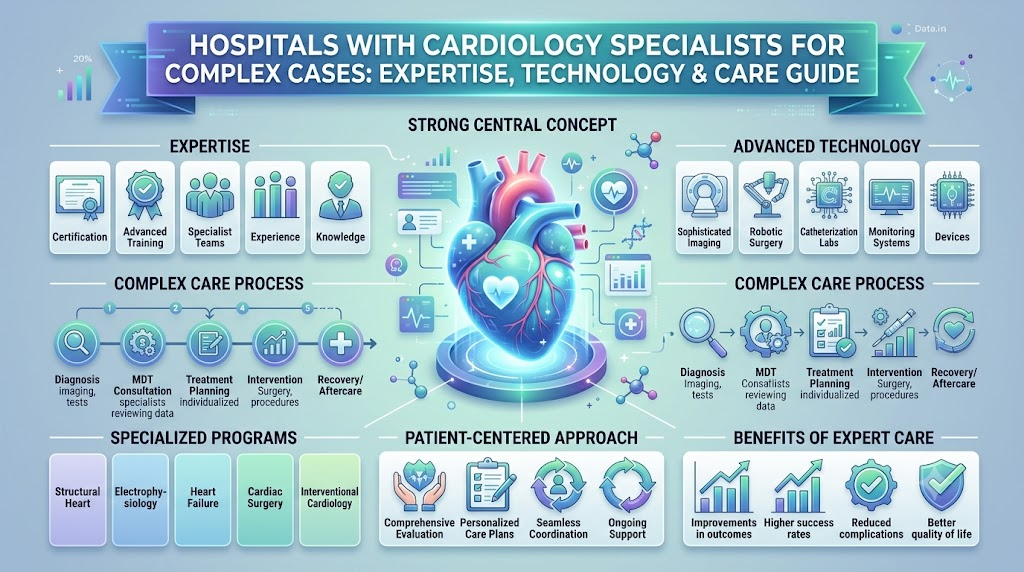
Some heart conditions are straightforward to evaluate and manage, requiring only routine care or basic monitoring. However, other cardiovascular problems can be intricate, involving multiple underlying issues, advanced disease states, or previous procedures that complicate the path forward. When a patient faces a complicated condition, managing it successfully often requires more than a single physician. It may call for several specialists, advanced diagnostic tools, sophisticated procedures, and coordinated hospital care.Navigating these major healthcare decisions requires clear, reliable guidance. Platforms like BestCardiacHospitals serve as a valuable resource for researching cardiac hospitals, specialized physicians, advanced treatment options, and care destinations.
What Makes a Cardiac Case Complex?
In cardiovascular medicine, the term “complex” refers to several different clinical circumstances that go beyond routine heart care. Complexity is determined clinically by a cardiologist and varies significantly from one patient to another.
Common examples of complex cardiovascular situations include:
- Multiple cardiovascular conditions occurring simultaneously within the same patient
- Severe coronary artery disease involving intricate anatomy
- Complex, calcified, or recurrent blockages in blood vessels
- Advanced heart failure that no longer responds to standard medical therapy
- Difficult heart valve disease requiring specialized intervention
- Structural heart conditions present from birth or developed over time
- Complex arrhythmias that are difficult to control with standard therapies
- Adult congenital heart disease requiring lifelong specialized management
- Progressive aortic disease, such as aneurysms or dissections
- Previous cardiac surgery or catheter-based intervention requiring revision
- The need for multiple coordinated procedures during a single care plan
- High-risk patients presenting with other serious medical conditions, such as kidney disease or diabetes
Why Specialized Cardiology Expertise Matters
As cardiovascular medicine has advanced, it has grown far beyond general medical care. Modern cardiology encompasses numerous subspecialties, each requiring years of focused training and extensive clinical experience.When a patient faces a complex heart condition, general management may not be enough. Physicians with specific subspecialty expertise—such as interventional cardiology, electrophysiology, structural heart care, advanced heart failure, or cardiothoracic surgery—bring a deeper level of focus to evaluation and treatment planning.This subspecialization allows care teams to accurately interpret subtle diagnostic findings, select the most appropriate advanced procedures, and anticipate potential complications before they arise.
Types of Cardiology Specialists for Complex Cases
Managing complex heart disease often requires a team of distinct specialists working in close collaboration. Each brings a unique set of skills to the patient’s care journey.
Interventional Cardiologists
Interventional cardiologists specialize in catheter-based treatments for heart disease. They perform minimally invasive procedures using thin, flexible tubes threaded through blood vessels to open blocked arteries, repair heart structures, or place specialized devices without traditional open-heart surgery.
Electrophysiologists
Electrophysiologists are cardiologists who focus specifically on the electrical system of the heart. They evaluate and treat complex heart rhythm disorders, performing specialized studies and catheter ablations to correct erratic heartbeats.
Structural Heart Specialists
Structural heart specialists focus on non-surgical and minimally invasive treatments for anatomical defects of the heart, including diseased heart valves, holes in the heart walls, and other structural abnormalities.
Heart Failure Specialists
Heart failure specialists possess advanced expertise in managing progressive weakening of the heart muscle. They oversee complex medication regimens, specialized device therapies, and evaluations for advanced interventions like mechanical support or transplantation.
Cardiologists With Advanced Imaging Expertise
Cardiologists specializing in advanced imaging utilize sophisticated tools like specialized echocardiography, cardiac CT, and cardiac MRI to visualize the internal structures and function of the heart with exceptional clarity.
Cardiothoracic/Cardiac Surgeons
Cardiac surgeons perform open and minimally invasive surgical procedures on the heart and major blood vessels. They play a vital role when surgical reconstruction, bypass grafting, or valve replacement is required as part of a complex care plan.
Complex Cardiovascular Conditions That May Require Specialized Care
Certain cardiovascular conditions inherently demand advanced diagnostic capabilities and specialized medical or procedural intervention.
Examples of these conditions include:
- Complex Coronary Artery Disease: Including multivessel disease, left-main coronary artery narrowing, chronic total occlusions, and recurrent blockages after previous stenting.
- Complex Valve Disease: Such as severe aortic stenosis, mitral regurgitation, or failing biological heart valves.
- Structural Heart Disorders: Congenital or acquired abnormalities affecting the walls, chambers, or valves of the heart.
- Advanced Heart Failure: Heart muscle failure causing severe symptoms and frequent hospitalizations.
- Complex Arrhythmias: Persistent atrial fibrillation, ventricular tachycardia, and other rhythm disturbances resistant to basic medications.
- Cardiomyopathies: Diseases of the heart muscle that impair its ability to pump blood effectively.
- Aortic Aneurysms: Weakened, bulging sections of the body’s main artery that carry a risk of dangerous rupture.
- Adult Congenital Heart Disease: Heart defects present at birth that persist or require intervention during adulthood.
- Complications Following Previous Procedures: Issues arising from prior surgeries or catheter interventions that require expert revision.
Advanced Cardiac Diagnostics
An accurate, detailed diagnosis is the foundation of effective management, particularly when dealing with complex cardiovascular disease. Advanced hospitals utilize a wide array of sophisticated diagnostic services to map out a patient’s exact anatomical and functional status.
Possible diagnostic services include:
- Standard and specialized electrocardiograms (ECGs)
- Advanced echocardiography (including 3D and transesophageal imaging)
- Specialized stress testing to evaluate heart function under exertion
- Extended Holter and event monitoring for rhythm analysis
- Cardiac CT scans for high-resolution visualization of coronary arteries and heart structures
- Cardiac MRI to assess heart muscle viability and tissue characteristics
- Invasive coronary angiography to visualize blood flow and blockages
- Intravascular imaging (such as IVUS or OCT) for detailed views inside blood vessels
- Hemodynamic assessments measuring pressures within the heart chambers
- Electrophysiology testing to map the heart’s electrical pathways
Not every patient requires every test; your specialist will select only those diagnostic tools that are clinically necessary for your situation.
Multidisciplinary Heart Teams
In complex cardiovascular care, a single physician rarely makes treatment decisions in isolation. Instead, many advanced medical centers utilize a multidisciplinary heart team approach.A multidisciplinary team brings together various experts—including general cardiologists, interventionalists, cardiac surgeons, electrophysiologists, heart failure specialists, imaging experts, anesthesiologists, and critical care professionals—to review a patient’s case collaboratively.These team discussions allow the group to weigh the risks and benefits of different care pathways, considering whether a patient would benefit more from medication, a catheter-based procedure, open surgery, or a hybrid approach. This collaborative framework ensures that complex treatment decisions are thoroughly vetted from every clinical perspective.
Table 1 – Complex Cardiac Cases and Specialist Expertise
| Complex Cardiac Situation | Relevant Specialist(s) | Possible Hospital Resources |
| Complex coronary disease | Interventional Cardiologist, Cardiac Surgeon | Advanced cath lab, intravascular imaging, CABG support |
| Valve disease | Structural Heart Specialist, Cardiac Surgeon | Echocardiography, hybrid operating room, valve clinic |
| Arrhythmia | Electrophysiologist | Dedicated EP lab, 3D mapping systems, device clinic |
| Advanced heart failure | Heart Failure Specialist, Transplant Surgeon | Hemodynamic monitoring, mechanical support devices |
| Structural heart disease | Structural Heart Specialist, Imaging Expert | Advanced cardiac CT/MRI, specialized catheter lab |
| Aortic disease | Vascular Surgeon, Cardiac Surgeon, Cardiologist | Advanced vascular imaging, dedicated surgical suites |
| Previous cardiac procedure complications | Multidisciplinary Team, Cardiac Surgeon | Specialized revision capabilities, intensive care unit |
Interventional Cardiology for Complex Cases
Interventional cardiology has revolutionized the management of patients who might previously have faced high-risk open surgery. For complex cases, advanced interventional techniques allow specialists to navigate intricate anatomy with remarkable precision.
Advanced interventional care involves procedures such as:
- Complex coronary angioplasty and specialized stent placement
- Interventions for chronic total occlusions (completely blocked arteries)
- Use of intravascular imaging to guide stent expansion and placement
- Physiological assessment of blood flow using specialized guidewires
- High-risk coronary interventions supported by temporary circulatory devices
- Specialized catheter-based treatments tailored to individual vascular anatomy
Suitability for these procedures depends entirely on individual anatomy, specific diagnosis, and a thorough assessment by an experienced interventional specialist.
Structural Heart Programs
Structural heart disease involves abnormalities of the heart’s walls, chambers, or valves that are not related to coronary artery blockages. Treating these conditions often requires dedicated structural heart programs equipped with specialized technology and cross-trained personnel.
Structural heart care encompasses:
- Management of aortic valve disease through catheter-based replacement (TAVR)
- Treatments for mitral and tricuspid valve disease using clipping or repair devices
- Closing abnormal holes within the heart using specialized catheter delivery systems
- Coordinating surgical valve repair or replacement when catheter approaches are not suitable
- Relying on multidisciplinary structural heart teams to evaluate high-risk patients
These programs enable patients with previously challenging anatomical problems to receive targeted care with reduced recovery times when appropriate.
Electrophysiology and Complex Rhythm Disorders
The heart relies on a precise electrical system to maintain a steady, coordinated beat. When this system malfunctions, it can lead to complex rhythm disorders that disrupt daily life and pose serious health risks.
Specialized electrophysiology services help manage conditions such as:
- Atrial fibrillation (an irregular and often rapid heart rhythm originating in the upper chambers)
- Ventricular arrhythmias and other complex rhythm disturbances
- Comprehensive electrophysiology studies to map the exact origin of an abnormal rhythm
- Catheter ablation procedures using radiofrequency or cryoablation to neutralize abnormal electrical pathways
- Implantation and management of pacemakers for slow heart rhythms
- Implantable cardioverter-defibrillators (ICDs) to protect against dangerous fast rhythms
- Cardiac resynchronization therapy (CRT) devices to help coordinate heart chamber contractions in heart failure patients
Advanced Heart Failure Care
When the heart muscle weakens to the point where standard medications no longer control symptoms, advanced heart failure care becomes necessary. Specialized programs offer comprehensive management strategies for patients whose disease has progressed.
Advanced heart failure care includes:
- Dedicated heart failure clinics providing close monitoring and specialized oversight
- Careful optimization of medication regimens by experienced clinicians
- Device-based therapies, including specialized pacemakers and defibrillators
- Advanced imaging to track heart chamber function and fluid status
- Evaluation for mechanical circulatory support devices (such as ventricular assist devices)
- Comprehensive assessment and preparation for heart transplantation when appropriate
- Palliative and supportive care services integrated to improve quality of life
Cardiac Surgery Support for Complex Cases
While catheter-based and minimally invasive techniques have advanced tremendously, open and surgical interventions remain essential pillars of complex cardiovascular care. A hospital equipped for complex cases must have robust cardiothoracic surgery support.
Surgical capabilities often involve:
- Coronary artery bypass grafting (CABG) for extensive multivessel blockages
- Surgical repair or replacement of diseased heart valves
- Complex aortic reconstructions and aneurysm repairs
- Redo cardiac surgery for patients who have undergone prior operations
- Minimally invasive surgical approaches designed to reduce recovery times
- Hybrid procedures combining surgical and catheter-based techniques in a single setting
The appropriate surgical or procedural approach is determined by individual clinical findings and specialist consultation.
Critical Care and Emergency Cardiac Support
Managing complex cardiac cases requires a robust hospital infrastructure that extends far beyond the operating room or catheterization lab. Critical care readiness is vital for patient safety.
Essential critical care and emergency features include:
- Dedicated cardiac intensive care units (ICUs) staffed by specialized nurses and intensivists
- 24/7 emergency cardiac services capable of rapidly assessing acute crises
- Immediate availability of catheterization laboratories for urgent interventions
- Specialized cardiac anesthesia teams experienced in high-risk procedures
- Advanced hemodynamic monitoring and ventilatory support equipment
- Temporary mechanical circulatory support devices ready for rapid deployment
- Seamless emergency coordination across multiple medical specialties
Distinguishing between planned complex-case evaluation and emergency intervention is critical; however, having emergency infrastructure on-site provides an essential safety net.
Table 2 – Hospital Features to Compare for Complex Cardiac Care
| Hospital Feature | What to Look For | Why It Matters |
| Specialist expertise | Board-certified subspecialists in multiple fields | Ensures expert evaluation for intricate disease states |
| Multidisciplinary team | Regular collaborative case conferences | Combines surgical, interventional, and medical perspectives |
| Cardiac diagnostics | Comprehensive on-site imaging and lab testing | Enables precise anatomical and functional assessment |
| Cath lab | Advanced, well-equipped catheterization laboratories | Supports complex percutaneous interventions |
| Cardiac surgery | Experienced cardiothoracic surgical teams | Provides essential surgical backup and primary intervention |
| Cardiac ICU | Dedicated intensive care unit with specialized staff | Guarantees high-level postoperative and critical monitoring |
| Emergency cardiac care | 24/7 acute cardiac readiness | Secures patient safety during unexpected events |
| Advanced imaging | State-of-the-art CT, MRI, and echocardiography | Delivers high-resolution structural details |
| Rehabilitation | Structured cardiac rehab programs | Supports safe physical recovery and lifestyle adaptation |
| Follow-up support | Long-term chronic disease management programs | Ensures ongoing stability after hospital discharge |
| Second-opinion services | Formal consultation and review pathways | Helps verify diagnoses and treatment alternatives |
| Cost transparency | Clear billing practices and estimate availability | Prevents unexpected financial stress during care |
The Role of Second Opinions in Complex Cardiac Cases
Facing a complex heart condition or a recommendation for major surgery can feel daunting. Seeking a second opinion is a common and reasonable step that many patients take to ensure they fully understand their diagnosis and treatment options.
A second opinion can help by:
- Confirming the accuracy of a complex diagnosis
- Exploring alternative treatment strategies that may be available
- Reviewing previous diagnostic test results and imaging studies
- Discussing the specific risks and benefits of a recommended procedure
- Clarifying why a particular therapeutic path is advised
- Determining whether consultation with a different subspecialist is warranted
Second opinions should serve to complement—not unnecessarily delay—treatment, particularly when a condition requires timely intervention.
How Technology Supports Complex Cardiac Care
Modern medical technology plays a pivotal role in the evaluation and management of complex cardiovascular disease. However, technology is only effective when combined with clinical expertise and careful patient selection.
Key technological capabilities include:
- Advanced cardiac imaging software for precise 3D anatomical modeling
- Intravascular ultrasound and optical coherence tomography for internal vessel viewing
- Sophisticated electrophysiology mapping systems for targeting irregular rhythms
- Next-generation catheterization laboratories with low-radiation imaging
- Advanced robotic and minimally invasive surgical support tools
- Secure remote monitoring technologies for tracking patient vitals post-discharge
Cardiac Rehabilitation and Long-Term Follow-Up
Treatment for a complex heart condition does not end when a procedure is successfully completed or a hospital stay concludes. Long-term recovery requires ongoing support, monitoring, and lifestyle adjustments.
Key elements of post-treatment care include:
- Structured cardiac rehabilitation programs supervised by exercise physiologists
- Personalized guidance on safe physical activity levels
- Comprehensive risk-factor management (blood pressure, cholesterol, diabetes)
- Dietary and nutritional education tailored to heart health
- Scheduled follow-up appointments with cardiologists and subspecialists
- Regular monitoring of heart function and device performance
- Ongoing emotional and lifestyle support for patients and families
Consistent follow-up is vital for maintaining the benefits of any cardiac intervention.
Cost and Insurance Considerations
Navigating the financial aspects of complex medical care is an important part of healthcare planning. The overall cost of treating a complex heart condition can vary widely depending on multiple factors.
Cost variables include:
- The specific diagnosis and underlying disease severity
- The nature and duration of required procedures or surgeries
- Hospital facility fees and length of stay
- Specialized physician and subspecialist consultation fees
- Diagnostic imaging and laboratory testing expenses
- Intensive care unit requirements
- Specialized medical devices, implants, or drugs used during treatment
- Post-procedure cardiac rehabilitation and outpatient follow-up
- Insurance coverage terms and out-of-pocket maximums
Patients and families should request a detailed, itemized estimate from the hospital’s financial counselors and verify coverage specifics directly with their insurance provider before beginning non-urgent care.
How to Choose a Hospital for a Complex Cardiac Case
Navigating hospital selection for a complicated heart condition benefits from a structured, step-by-step approach:
- Step 1: Obtain a clear, detailed explanation of your diagnosis from your primary physician or cardiologist.
- Step 2: Identify the specific cardiology subspecialty involved in your condition (e.g., interventional, electrophysiology, heart failure).
- Step 3: Gather all previous medical records, lab reports, and imaging files.
- Step 4: Research hospitals with verified specialist expertise and dedicated cardiac programs.
- Step 5: Check the facility’s diagnostic and interventional capabilities.
- Step 6: Evaluate whether the hospital utilizes multidisciplinary heart teams for complex decision-making.
- Step 7: Verify the availability of robust emergency and critical-care support infrastructure.
- Step 8: Compare available rehabilitation and long-term follow-up support services.
- Step 9: Understand expected financial costs and verify insurance coverage details.
- Step 10: Discuss the finalized treatment plan with a qualified cardiac team before proceeding.
When Complex Cardiac Symptoms Require Emergency Care
Emergency Warning: Certain acute cardiac symptoms require immediate emergency medical attention rather than routine online research or delayed hospital comparison. Seek emergency medical services immediately if you or a loved one experience:
- Severe, crushing, or persistent chest pain, pressure, or discomfort
- Severe shortness of breath or difficulty catching your breath
- Sudden fainting, loss of consciousness, or collapse
- Sudden severe weakness, numbness, or signs of a stroke
- Severe, racing palpitations accompanied by dizziness or shortness of breath
- A sudden, unexplained deterioration in a known heart condition
Potentially life-threatening cardiac symptoms must always be evaluated immediately through local emergency medical services or the nearest emergency department.
Common Mistakes Patients Make
When facing a complex medical diagnosis, patients and families can easily make missteps under pressure.
Frequent mistakes include:
- Choosing a hospital based solely on generalized advertising or name recognition rather than specific specialist expertise
- Focusing exclusively on upfront treatment price while ignoring care quality and safety infrastructure
- Ignoring the relevant cardiology subspecialty needed for a specific disease type
- Failing to gather and bring previous medical records and imaging studies to consultations
- Delaying necessary emergency treatment while searching for online opinions
- Assuming that a procedure that worked for another patient will work identically for them
- Comparing personal health outcomes with anecdotes from other patients
- Skipping recommended cardiac rehabilitation and follow-up care after discharge
- Neglecting to ask whether a multidisciplinary heart team evaluates cases
- Relying on unverified online claims regarding success rates or rankings
EXACTLY 15 FAQs
1.What makes a cardiac case complex?
A cardiac case is considered complex when it involves multiple cardiovascular conditions, severe blockages, advanced heart failure, difficult valve disease, or previous failed procedures.
2.What are hospitals with cardiology specialists for complex cases?
These are advanced medical centers equipped with subspecialized cardiologists, multidisciplinary teams, sophisticated diagnostics, and robust surgical and critical-care infrastructure.
3.Which cardiology specialists may be involved in complex heart conditions?
Depending on the diagnosis, specialists may include interventional cardiologists, electrophysiologists, structural heart experts, heart failure specialists, and cardiac surgeons.
4.When should a patient consider a specialized cardiac hospital?
Patients should consider specialized centers when facing intricate diagnoses, multi-vessel disease, high-risk procedures, or conditions requiring coordinated multidisciplinary care.
5.What is a multidisciplinary heart team?
A multidisciplinary heart team is a collaborative group of specialists—including cardiologists and surgeons—who review complex cases together to determine the best treatment strategy.
6.What diagnostic tests may be used for complex cardiac cases?
Tests may include advanced echocardiography, cardiac CT, cardiac MRI, coronary angiography, intravascular imaging, and electrophysiology studies.
7.What is complex interventional cardiology?
It involves performing advanced, catheter-based procedures to treat intricate blockages, chronic total occlusions, and high-risk anatomical structures without open surgery.
8.What is the role of a structural heart specialist?
Structural heart specialists focus on non-surgical and minimally invasive treatments for diseased heart valves and anatomical heart defects.
9.When might an electrophysiologist be involved?
An electrophysiologist is involved when a patient experiences complex heart rhythm disorders requiring specialized studies, ablations, or device therapies.
10.Do complex cardiac cases always require surgery?
Not always; many complex cases are successfully managed with advanced catheter-based procedures, specialized medications, or hybrid approaches.
Conclusion
Managing complex cardiovascular conditions often requires much more than a single specialist or a routine treatment plan. Success hinges on relevant subspecialty expertise, collaborative multidisciplinary care, advanced diagnostic tools, cutting-edge technology, and robust surgical and critical-care support. Rehabilitation, thorough follow-up, and transparent communication further ensure that patients receive safe, high-quality care throughout their recovery journey. Ultimately, finding the right medical center depends on matching the patient’s specific clinical needs with the appropriate hospital resources rather than relying on a universal “best hospital” label.