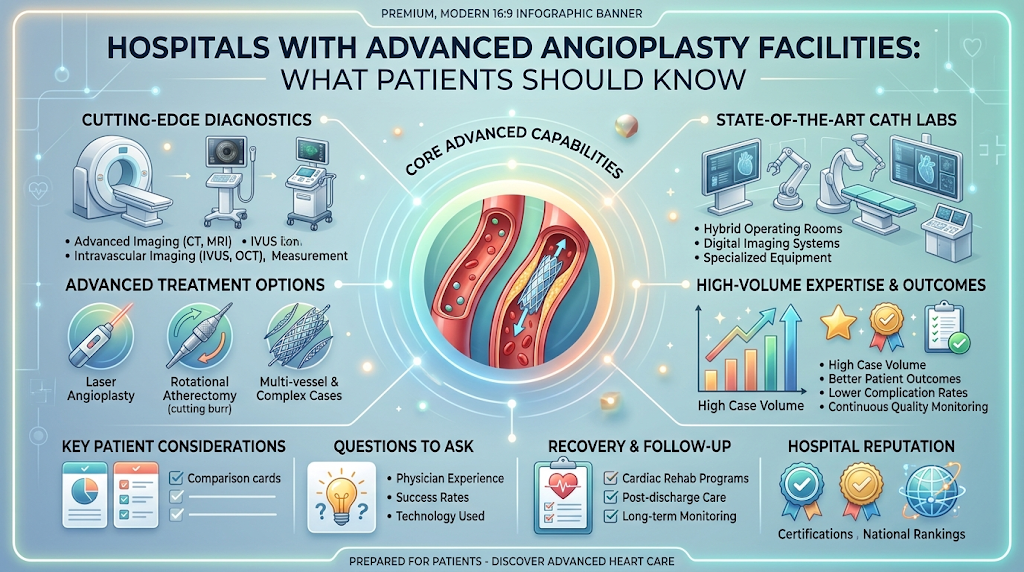
Heart disease can affect how blood moves through the body. When the arteries that supply blood to the heart become narrow or blocked, the heart may not receive enough oxygen. This can cause chest pain, breathlessness, and other symptoms.Angioplasty is a procedure that helps open narrowed heart arteries. Doctors may use a small balloon and a stent to improve blood flow. The right treatment depends on the patient’s heart condition and overall health.
Choosing a hospital is an important part of this process. A suitable hospital may offer modern equipment, skilled heart specialists, emergency support, and proper recovery care. Patients should look beyond technology and understand the full range of services available.People researching hospitals with advanced angioplasty facilities can also visit BESTCARDIACHOSPITALS to explore cardiac hospital information and support their research.
What Is Angioplasty?
Angioplasty is a medical procedure used to open narrowed or blocked arteries. When it is performed on the arteries that supply blood to the heart, it is called coronary angioplasty.These arteries can become narrow due to a buildup of fatty material called plaque. This condition is known as coronary artery disease.During angioplasty, a doctor guides a thin tube called a catheter into an artery. A small balloon at its tip may be inflated to widen the narrowed area. In many cases, a small metal mesh tube called a stent is placed inside the artery.
The stent helps keep the artery open. However, angioplasty is not the right choice for every person with heart disease. Some patients may need medicines or bypass surgery instead.Doctors consider symptoms, test results, the number of blocked arteries, and overall health before suggesting treatment.
What Makes an Angioplasty Facility Advanced?
An advanced angioplasty facility includes more than modern machines. It needs trained staff, proper monitoring, emergency support, and safe treatment systems.
A hospital may offer several facilities to support angioplasty care.
Modern cardiac catheterization laboratory
A cardiac catheterization laboratory, often called a cath lab, is a special room where doctors perform angioplasty. It has imaging equipment that helps guide the procedure.
Advanced imaging and monitoring
Imaging systems help doctors see blood vessels and guide small instruments. Monitoring equipment tracks important signs, such as heart rate and blood pressure.
Equipment for complex procedures
Some patients have difficult blockages. Certain hospitals may have extra tools to help doctors treat selected complex cases.
Emergency and intensive care support
A hospital should have a clear plan for emergencies. Cardiac intensive care facilities can support patients who need close monitoring after treatment.
Skilled medical teams
Experienced interventional cardiologists work with nurses, technicians, and other specialists. Their teamwork supports safe and coordinated care.
Not every patient needs every advanced technology. The doctor chooses equipment based on the patient’s medical needs.
Types of Angioplasty Procedures
Doctors may use different methods based on the location and nature of the blockage.
Balloon angioplasty
A small balloon is placed inside the narrowed artery. The doctor inflates it to widen the artery and improve blood flow.
Coronary stent placement
A stent is a small mesh tube placed inside an artery. It helps keep the treated area open after angioplasty.
Drug-eluting stents
These stents release medicine slowly. This helps lower the chance of tissue growth that could narrow the artery again.
Angioplasty for complex blockages
Some blockages are hard to treat because they are heavily calcified, long, or located near important branches. Doctors may use special tools and imaging in selected cases.
Emergency angioplasty
Angioplasty may be used during certain heart attacks. In these situations, opening the blocked artery quickly can help restore blood flow.
The best approach depends on the patient’s condition. A cardiologist should explain the options, possible benefits, and risks before treatment whenever the situation allows.
Important Technologies Used in Modern Angioplasty
Modern cardiac hospitals may use different technologies to help plan and perform angioplasty. Each tool has a specific purpose.
Digital angiography
Digital angiography uses X-ray images and contrast dye to show blood vessels. It helps doctors find narrowed areas and guide catheters during treatment.
Intravascular ultrasound (IVUS)
IVUS uses sound waves from a small device inside the artery. It creates images of the artery walls and helps doctors assess the blockage.
Optical coherence tomography (OCT)
OCT uses light to create detailed images from inside the artery. It may help doctors examine the artery and check stent placement.
Fractional flow reserve (FFR)
FFR measures pressure across a narrowed artery. It helps doctors understand whether a blockage is reducing blood flow enough to affect the heart.
Rotational atherectomy
This tool uses a small rotating device to treat certain heavily calcified blockages. Doctors use it only in selected cases.
Radiation and contrast monitoring
Angioplasty uses X-ray guidance and may involve contrast dye. Monitoring helps the team manage radiation exposure and the amount of contrast used.
Table 1: Advanced Angioplasty Technologies and Their Uses
| Technology | What It Does | How It May Help |
|---|---|---|
| Digital angiography | Shows blood vessels using X-ray images and contrast dye | Helps locate blockages and guide treatment |
| IVUS | Uses sound waves to create images inside an artery | Helps assess artery size and stent placement |
| OCT | Uses light to create detailed artery images | Helps examine the artery and check stent results |
| FFR | Measures pressure across a narrowed artery | Helps assess the effect of a blockage on blood flow |
| Rotational atherectomy | Uses a rotating tool to treat selected hard deposits | May help prepare certain calcified blockages for treatment |
These technologies are not needed in every procedure. The cardiologist decides which tools may be useful.
How to Choose a Hospital with Advanced Angioplasty Facilities
Choosing a hospital requires careful thought. A modern cath lab is important, but it is only one part of good cardiac care.
Consider these points before making a decision:
Check the cath lab facilities
Ask whether the hospital has a dedicated cardiac catheterization laboratory. You can also ask about its imaging and monitoring systems.
Review the medical team’s experience
Find out who will perform the procedure. Ask about the cardiologist’s training and experience with your type of blockage.
Ask about emergency support
Heart problems can change quickly. Check whether the hospital has emergency cardiac care and clear arrangements for urgent angioplasty.
Check intensive care facilities
Some patients need close observation after treatment. Ask whether cardiac intensive care support is available.
Understand diagnostic services
Tests such as ECG, echocardiography, blood tests, and coronary imaging may help doctors assess the heart.
Review safety practices
Ask about infection prevention, patient monitoring, equipment checks, and emergency response plans.
Discuss costs and follow-up
Request a clear explanation of the expected costs. Ask what follow-up care and cardiac rehabilitation support may be available.
Do not choose a hospital based only on advertisements or claims about advanced technology. Ask questions and compare the care that each hospital can provide.
The Role of the Cardiac Care Team
Angioplasty involves several healthcare professionals. Each person has a role in supporting the patient.
- Interventional cardiologist: Performs angioplasty and guides decisions about heart artery treatment.
- Cardiac nurses: Monitor patients, provide care, and explain recovery instructions.
- Cath lab technicians: Prepare and manage equipment during the procedure.
- Cardiothoracic surgeons: Assess patients who may need heart surgery, including bypass surgery.
- Cardiac rehabilitation professionals: Help patients return to safe activity and build healthier habits.
- Emergency and intensive care teams: Provide support if complications or urgent problems occur.
Good communication between these professionals matters. Patients and families should feel comfortable asking questions about treatment and recovery.
What Happens Before, During, and After Angioplasty?
Understanding the main stages can help patients feel more prepared. The exact process may differ between hospitals and patients.
Before the procedure
The doctor reviews the patient’s medical history and current symptoms. Tests may include an ECG, blood tests, and heart imaging.
The team checks medicines, allergies, and kidney function. Patients receive instructions about eating, drinking, and regular medicines. They should not stop any prescribed medicine unless their doctor tells them to.
The doctor explains the planned procedure, possible benefits, and risks. The patient is asked to provide informed consent.
During the procedure
The patient usually receives local anaesthesia at the insertion site. The doctor places a thin catheter into an artery, often through the wrist or groin.
The catheter moves towards the heart under X-ray guidance. A contrast dye helps show the coronary arteries.
The doctor may inflate a small balloon to widen the narrowed area. A stent may also be placed when needed. The medical team monitors the patient’s condition throughout the procedure.
After the procedure
The patient is moved to a recovery area for observation. Staff check the heart, blood pressure, and catheter insertion site.
The patient receives instructions about wound care, medicines, activity, and follow-up visits. The length of hospital stay depends on the patient’s condition and the type of procedure.
Benefits and Possible Risks of Angioplasty
Angioplasty can improve blood flow through a narrowed coronary artery. In suitable patients, it may reduce chest pain and improve the ability to carry out daily activities.
When used during certain heart attacks, it can help restore blood flow to the heart muscle. However, the benefits depend on the patient’s condition and the reason for treatment.
Like other medical procedures, angioplasty has possible risks.
These may include:
- Bleeding or bruising near the catheter insertion site.
- Damage to a blood vessel.
- Kidney problems related to contrast dye.
- An allergic reaction to contrast material.
- Blood clots or problems related to the stent.
- Heart attack or stroke.
- Irregular heart rhythms or other complications.
Serious complications are less common, but they can happen. Individual risks depend on age, health, kidney function, heart condition, and other factors.
Patients should ask their cardiologist to explain the risks that apply to their situation.
Angioplasty or Bypass Surgery: How Do Doctors Decide?
Angioplasty and coronary artery bypass grafting (CABG) are two different ways to improve blood flow to the heart.
During angioplasty, doctors use a catheter, balloon, and sometimes a stent to open a narrowed artery.
During bypass surgery, a surgeon uses a blood vessel from another part of the body to create a new route for blood around a blockage.
Doctors consider several factors when choosing between these treatments:
- The number of narrowed or blocked arteries.
- The location and complexity of the blockages.
- The patient’s heart function.
- Conditions such as diabetes or kidney disease.
- The patient’s overall health and surgical risk.
- The likely benefits and risks of each option.
For some patients, angioplasty may be suitable. Others may benefit more from bypass surgery or medicines.
The decision should involve the cardiac team and the patient. In complex cases, a team of heart specialists may review the options together.
Recovery and Long-Term Heart Care
Angioplasty treats a narrowed artery, but it does not remove every cause of heart disease. Long-term care remains important.
Patients should follow the treatment plan given by their doctors.
Take prescribed medicines
Some patients need medicines after stent placement to reduce the risk of blood clots. Take them exactly as prescribed. Never stop them without medical advice.
Eat a heart-friendly diet
Choose more vegetables, fruits, whole grains, and suitable protein sources. Limit excess salt, fried foods, and foods high in unhealthy fats.
Return to activity slowly
Follow medical advice about walking, exercise, work, and daily activities. Avoid heavy activity until the doctor says it is safe.
Avoid tobacco
Smoking and other tobacco use can harm blood vessels. Ask a healthcare professional for help with quitting.
Manage other health conditions
Keep blood pressure, cholesterol, and diabetes under control with medical guidance.
Consider cardiac rehabilitation
Cardiac rehabilitation is a supervised programme that may include exercise, education, and support for healthy habits.
Know when to seek urgent help
New or severe chest pain, severe breathlessness, or fainting needs urgent medical attention. Do not wait for a routine appointment if these symptoms occur.
Frequently Asked Questions
1. What are advanced angioplasty facilities in a hospital?
Advanced angioplasty facilities may include a modern cardiac catheterization laboratory, digital imaging, heart monitoring systems, and emergency support. Some hospitals also have tools for selected complex procedures. The right facilities depend on the patient’s needs. Technology should work alongside skilled doctors, trained staff, and proper patient care.
2. What equipment is used during coronary angioplasty?
Doctors commonly use a catheter, guidewire, balloon, and sometimes a stent. X-ray imaging helps guide these tools through the blood vessels. Some procedures may also use IVUS, OCT, or pressure-measuring equipment. The medical team chooses the equipment based on the blockage and treatment plan.
3. Is angioplasty performed in a cardiac catheterization laboratory?
Yes. Coronary angioplasty is usually performed in a cardiac catheterization laboratory, also called a cath lab. This room has imaging and monitoring equipment. It allows the medical team to guide catheters and other small devices through the blood vessels during treatment.
4. How do doctors decide whether a patient needs a stent?
Doctors review the location and severity of the blockage, symptoms, test results, and overall health. If a stent is suitable, it may help keep the treated artery open. Not every patient needs one. The cardiologist explains the reason for using or not using a stent.
5. Is advanced angioplasty suitable for every heart patient?
No. Angioplasty is not suitable for every person with heart disease. Some patients may need medicines, bypass surgery, or another treatment. Doctors consider the patient’s symptoms, artery condition, heart function, and other health problems before recommending an option.
6. How long does a patient usually stay in the hospital after angioplasty?
Some patients go home within a day, while others need a longer stay. The timing depends on the patient’s health, the reason for angioplasty, and whether complications occur. Emergency procedures may need closer observation. The hospital team gives the patient an individual discharge plan.
7. What are the possible risks of coronary angioplasty?
Possible risks include bleeding, bruising, blood vessel damage, contrast-related kidney problems, and allergic reactions. Blood clots, heart attack, and stroke are also possible. Serious complications are less common, but individual risks vary. Patients should discuss their medical history and personal risks with their cardiologist.
8. What should patients check before choosing an angioplasty hospital?
Check the cath lab, medical team’s experience, emergency support, cardiac intensive care, diagnostic services, and follow-up care. Ask about safety practices and treatment costs. Patients should also understand who will perform the procedure and how the hospital handles emergencies.
9. Can angioplasty be performed during a heart attack?
Yes. Doctors may perform emergency angioplasty during certain heart attacks to restore blood flow through a blocked artery. This treatment is time-sensitive. Emergency teams assess the patient’s condition and decide the most suitable treatment as quickly as possible.
10. What care is needed after angioplasty?
Patients should follow their prescribed medicine plan and attend follow-up visits. They may need to care for the catheter insertion site and return to activity gradually. A heart-friendly diet, avoiding tobacco, and managing other health conditions are also important. Cardiac rehabilitation may be recommended.
Final Thoughts
Choosing among hospitals with advanced angioplasty facilities involves more than checking machines and technology. The experience of the cardiac team, emergency readiness, patient safety, clear communication, and follow-up care all matter.Patients should discuss their condition and treatment choices with a qualified cardiologist. They should also ask about the hospital’s facilities, possible risks, and recovery support before making a decision.For people researching cardiac hospitals and heart treatment information, BESTCARDIACHOSPITALS.COM can be a useful starting point. Use reliable information and medical advice to make informed decisions about heart care.