Introduction
Heart surgery recovery starts as soon as surgery ends. But healing does not stop when you leave the hospital.Your body needs time to heal after a major heart procedure. You may need rest, gentle movement, medicines, and follow-up care.Hospital care also plays a key role during early recovery. Your team checks your heart, breathing, wound, and other body functions.After you go home, your daily habits can also support recovery. Family members may help with meals, chores, travel, and other tasks.Every patient has a different recovery path. The type of surgery and your health can affect your progress.BestCardiacHospitals can help patients learn more about cardiac care. Still, your own healthcare team should guide your recovery.
What Happens Right After Heart Surgery?
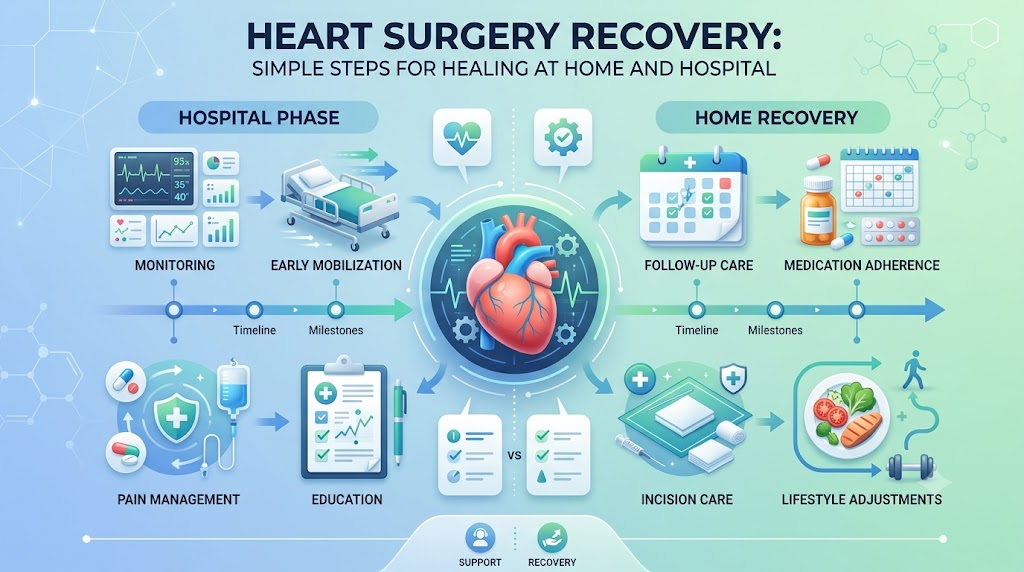
Many patients spend time in an intensive care unit after heart surgery. An intensive care unit, or ICU, gives close medical monitoring.The care team checks your heart rate and blood pressure. They also watch your breathing and other vital signs.Some patients need breathing support for a short time. The team removes this support when it is safe.You may also have chest tubes or other medical tubes. These tubes help drain fluid or support your care.Pain control is also part of early recovery. Tell your care team if your pain feels hard to manage.The team also checks your surgical wound. They watch for signs that may need extra care.As your condition improves, you may start gentle movement. You may also begin simple breathing exercises.Your care depends on the type of surgery and your condition. So, your recovery steps may differ from another patient.
Moving From the Hospital to Home
- Before leaving the hospital, your care team should explain your next steps. Make sure you understand your medicines and care instructions.
- Ask how to care for your wound at home. Also ask when you should return for follow-up care.
- Your team may explain activity limits and safe movement. They should also explain warning signs to watch for.Arrange safe transportation home before discharge. You may also need a family member or caregiver during early recovery.Keep important phone numbers close by. This includes your hospital, doctor, or care team.
- Write down questions before leaving the hospital. Ask about anything that feels unclear.
Simple Discharge Checklist
| Recovery Area | What Patients May Do | Why It Matters |
|---|---|---|
| Medicines | Follow the prescribed schedule | Supports safe treatment |
| Wound care | Follow care instructions | Helps protect the healing wound |
| Activity | Move as your team allows | Builds strength slowly |
| Follow-up | Attend planned visits | Helps track recovery |
| Support | Ask family for help | Makes daily tasks easier |
Managing Medicines After Surgery
- Medicines often play an important role after heart surgery. Your medicine plan depends on your surgery and health needs.
- Take each prescribed medicine as your healthcare team directs. Try to follow the same routine each day.
- Keep a simple list of your medicines. Include the name and time for each medicine.
- Ask questions if any instruction seems unclear. Do not guess how to take a medicine.
- Tell your healthcare team about other medicines you use. This includes medicines from other doctors.
- Also tell them about vitamins or supplements. Do not start a new supplement without medical advice.
- Never stop a prescribed medicine on your own. Your healthcare team can explain when changes may be needed.
Physical Activity During Recovery
- Your body needs rest after heart surgery. But gentle movement can also become part of recovery.
- Your care team may first help you sit up. Next, you may take short walks when they say it is safe.
- You may slowly increase your activity as your strength improves. Rest breaks can help prevent too much strain.
- Do not try to do too much too soon. Your safe activity level depends on your surgery and health.
- Your team may also give lifting or movement limits. Follow these instructions carefully.
- For example, you may need help carrying heavy items. You may also need help with some household tasks.
- Tell your healthcare team about unusual pain or other problems. They can explain whether your activity needs to change.
Cardiac Rehabilitation
- Cardiac rehabilitation is a supervised program for some people after heart problems or procedures. It can help patients build strength and healthy habits.
- The program may include safe exercise and health education. It may also include lifestyle support and progress checks.
- Some programs also offer emotional support. This can help patients manage worries during recovery.
- Cardiac rehabilitation does not suit every patient. Your healthcare provider can tell you if it may help you.
- If you join a program, follow the team’s activity plan. Do not increase exercise on your own.
- The goal is steady progress, not a race. Small steps can help you build confidence.
Food and Healthy Habits
- Good food can support your body while it heals. Your healthcare team may suggest foods that fit your heart care plan.
- Try to include balanced meals when your team allows. Fruits, vegetables, and healthy protein sources can be useful choices.
- Drink enough fluids when your healthcare team allows. Some patients may have special fluid instructions.
- Follow any food advice given by your doctor or diet team. Your needs may differ from another patient’s needs.
- Avoid making major diet changes without medical advice. A heart-friendly plan should fit your health needs.
- For example, your team may suggest limiting certain foods. Follow the advice that your own care team gives you.
- Healthy habits can support recovery over time. Rest, movement, food, and follow-up care all work together.
Caring for the Surgical Wound
- Your surgical wound needs careful attention during recovery. Follow the wound care instructions given by your healthcare team.
- Keep the wound clean as instructed. Follow your team’s advice about bathing and washing.
- Do not pick at the wound or remove anything without advice. Let the wound heal at its own pace.
- Check the wound for unusual changes. Increased redness, swelling, drainage, or pain should be discussed with your team.
- Do not apply creams or other products unless your team says they are safe. Some products may not suit a healing wound.
- Keep your follow-up visits as planned. Your healthcare team can check the wound and your overall recovery.
Sleep, Mood, and Emotional Recovery
Recovery can affect sleep and mood. Some patients may feel tired, worried, sad, or frustrated.
These feelings can happen after major surgery. Changes in routine can also make recovery feel difficult.
Try to keep a calm daily routine when possible. Rest when your body needs it.
alk with family or friends about how you feel. Support can make the recovery period easier.
Tell your healthcare team if sadness or anxiety continues. They can help you understand what support may be useful.Do not feel ashamed about asking for help. Emotional health is also part of recovery.
Preparing the Home for Recovery
A safe home can make early recovery easier. Plan simple changes before you leave the hospital.
Arrange transportation for follow-up visits. Keep medicines in one easy-to-find place.
Prepare simple meals when possible. You may also ask family members to help with cooking.
Keep important phone numbers nearby. This can include your doctor, hospital, and emergency services.
Place frequently used items within easy reach. This can reduce the need for bending or stretching.
Ask for help with chores when needed. You may need support with cleaning, shopping, or lifting.
Plan rest time during the day. A simple routine can help you manage your energy.
Warning Signs After Heart Surgery
- Some changes after surgery need prompt medical attention. Follow the emergency instructions given by your healthcare team.
- Contact your healthcare team about worsening chest pain. Also report trouble breathing or fainting.
- Sudden weakness can also need urgent attention. Severe swelling or major health changes should not be ignored.
- Watch for fever or signs of infection. Increased wound redness, swelling, or drainage should also be reported.
- Do not wait if symptoms become severe or life-threatening. Seek immediate emergency medical care when needed.
- Your hospital may give you specific warning signs before discharge. Keep those instructions where you can find them quickly.
How Long Does Recovery Take?
- Heart surgery recovery is different for each person. There is no single recovery time for everyone.
- The type of surgery can affect recovery. Your age, health, strength, and other conditions can also matter.
- Complications may also change the recovery process. Follow-up care can help your team track your progress.
- Some people improve faster than others. Others may need more time before they feel ready for normal activities.
- Recovery after major heart surgery can take weeks. The exact time depends on the procedure and the patient.
- Do not compare your recovery with someone else’s. Your healthcare team can tell you what progress to expect.
Frequently Asked Questions About Heart Surgery Recovery
1. How long does heart surgery recovery take?
Recovery varies from person to person. It can depend on the surgery, health, strength, and other factors. Some people need weeks to recover from major heart surgery.
2. What happens after heart surgery in the hospital?
The care team closely checks your heart, breathing, blood pressure, and wound. You may also receive pain care and begin gentle movement.
3. When can patients start walking?
Many patients begin gentle movement when their team says it is safe. The timing depends on the surgery and your condition.
4. What is cardiac rehabilitation?
Cardiac rehabilitation is a supervised program that supports safe exercise and healthy habits. Your healthcare provider can tell you if it suits your needs.
5. What should patients eat during recovery?
Choose balanced foods that fit your healthcare team’s advice. Your team may suggest fruits, vegetables, healthy protein, and other suitable foods.
6. How should the surgical wound be cared for?
Follow the wound care instructions from your healthcare team. Keep the wound clean as advised and report unusual redness, swelling, drainage, or pain.
7. Is tiredness normal after heart surgery?
Tiredness can happen during recovery from major surgery. Rest can help, but tell your healthcare team about severe or worsening tiredness.
8. Can mood changes happen after surgery?
Yes. Some patients may feel worried, sad, frustrated, or stressed. Talk with your healthcare team if these feelings continue.
9. When should patients call their healthcare team?
Call your team about worsening chest pain, breathing trouble, fainting, fever, or wound changes. Follow the emergency instructions given before leaving the hospital.
10. How can family members help during recovery?
Family members can help with meals, transport, chores, and medicine routines. They can also provide emotional support and help patients follow care instructions.
Final Thoughts
Heart surgery recovery takes time, patience, and good follow-up care. Hospital care is only the first part of the healing process.After going home, medicines, gentle movement, wound care, food, rest, and follow-up visits can all matter. Emotional support can also make recovery easier.Every patient has different needs after heart surgery. So, follow the instructions given by your own healthcare team.
Ask questions whenever you are unsure about your care. Ask family members for help when daily tasks become difficult.Most importantly, report unusual or serious changes quickly. Good communication with your healthcare team can help you manage recovery safely.