Introduction
Choosing heart care for an older adult needs careful thought. Older patients may have more than one health need. Their heart care may also involve other health problems.Families may need to look beyond basic heart treatment. They may need good testing, heart specialists, emergency care, and follow-up support.If you are comparing heart care options, BestCardiacHospitals can help you explore cardiac hospitals, specialists, treatments, and heart care information.The word “top” does not mean one hospital is best. Instead, families can compare hospitals by their services and patient needs.
Why Elderly Patients May Need Special Cardiac Care
Older adults can have different health needs. Some may also have high blood pressure, diabetes, or kidney problems. Others may have lung or joint problems.Some older people may also have memory concerns. These issues do not affect every elderly patient. Still, doctors may need to review the person’s full health.Good cardiac care looks at the whole person. The heart problem is only one part of the picture. This can help doctors plan safer and more suitable care.
What Makes a Cardiac Hospital Suitable for Older Adults
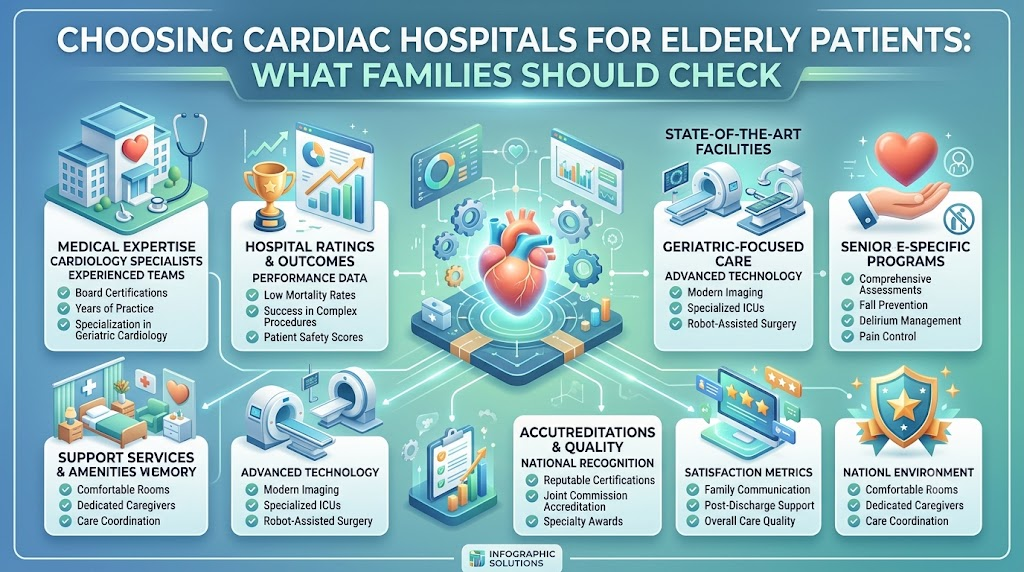
A suitable cardiac hospital should have the right services. These services can include heart specialists, testing, emergency care, and follow-up support.The hospital should also have trained nurses and other care staff. Some patients may need several health experts during treatment. This is often called team-based care.
Families should also look at the hospital’s support after treatment. Recovery may need checkups, medicine review, and cardiac rehabilitation.
| Hospital factor | What families can check |
|---|---|
| Heart specialists | Cardiology and surgery teams |
| Testing | ECG, scans, and heart tests |
| Emergency care | Cardiac emergency support |
| Recovery | Rehab and follow-up care |
| Patient support | Nursing and caregiver help |
Experienced Cardiology Teams
Cardiologists care for heart problems. Some older patients may also need a cardiac surgeon. Other care workers may support the treatment plan.These teams can include nurses, dietitians, and rehab staff. An anesthesiology team may also be needed for some procedures.Complex cases may need several specialists. Good communication between these teams can help keep care organized.Families should ask about the type of heart care offered. They should also ask who will manage follow-up care.
Advanced Cardiac Diagnosis
Good testing helps doctors understand heart problems. The exact tests depend on the patient’s symptoms and health history.An ECG records the heart’s electrical activity. An echocardiogram uses sound waves to check the heart. Blood tests can also provide useful information.Some patients may need heart rhythm monitoring. Others may need stress tests or heart scans. A doctor will decide which tests are needed.
Emergency and Intensive Care Support
Heart problems can sometimes become urgent. A hospital should have a clear plan for cardiac emergencies.Some patients may need close monitoring after treatment. Cardiac intensive care can provide this support when needed.Families can ask if emergency heart services are available. They can also ask about intensive care and surgery support.
Cardiac Treatments for Elderly Patients
Heart treatment depends on the person’s condition. It also depends on overall health and other medical needs.Treatment may include medicines prescribed by a doctor. It may also include lifestyle support or heart procedures.Some patients may need a catheter-based procedure. Others may need heart surgery. Some may need treatment for an abnormal heart rhythm.
Doctors look at risks and benefits before treatment. They also consider the patient’s health and care goals.
| Care need | Hospital support to check |
|---|---|
| Heart tests | Cardiac testing services |
| Heart procedures | Skilled cardiac teams |
| Surgery | Cardiac surgery and intensive care |
| Recovery | Rehab and follow-up |
| Daily support | Nursing and patient guidance |
No single treatment is right for every older adult. Treatment should follow a proper medical assessment.
Elderly-Friendly Hospital Features
Hospital design can matter for older patients. Simple features can make visits easier and safer.Clear signs can help patients find rooms. Wheelchair access can also help people with movement problems. Safe walking areas may lower some daily challenges.Accessible toilets can also make visits easier. Comfortable waiting areas may help older adults feel less tired.Families should also ask about communication support. Clear instructions can help both patients and caregivers understand care plans.
Cardiac Rehabilitation and Recovery Support
Cardiac rehabilitation is a planned care program. It may help some people after certain heart problems or procedures.The program may include safe physical activity. It can also include health education and lifestyle support.Some programs track progress during recovery. Emotional support may also be part of the program.Rehabilitation should follow medical advice. Not every patient will have the same recovery plan. The care team can explain what is suitable.
Family and Caregiver Support
Family members often play an important role. They may help with appointments and daily tasks. They may also help keep medical records organized.Caregivers can write down questions before doctor visits. They can also help remember follow-up dates and care instructions.Families should not make medical decisions alone. The healthcare team should provide medical guidance.Caregivers can also watch for major changes. They should report concerns to the care team when needed.
Safety, Accessibility, and Follow-Up Care
Hospital safety is an important part of cardiac care. Families can ask about infection control and emergency services.They can also check if specialists are available when needed. Diagnostic services and surgery support may also matter.Recognized quality standards can provide useful information. However, one quality mark does not prove that every service is perfect.Follow-up care is also important. Families should ask who they can contact after discharge.
Location and Accessibility
- Location can affect care for older adults. Long travel may be hard for some patients.
- Families can check travel time and transport options. They can also consider family access during hospital visits.
- Some patients may need many follow-up visits. A practical location may make these visits easier.
- Language support can also matter for some families. Clear communication can help patients understand their care.
- The nearest hospital is not always the only factor. Families should look at services, safety, and patient needs together.
Cost and Insurance Questions
- Heart care costs can vary from one patient to another. The final cost may depend on the type of care needed.
- Costs may include doctor visits and tests. They may also include hospital stays, procedures, or medical devices.
- Follow-up care can add to the total cost. Rehabilitation may also have separate costs.
- Ask the hospital for current cost details. Also check what your insurance plan covers. Ask about any costs that may not be covered.
How to Compare Cardiac Hospitals
Families can compare hospitals using simple questions. The goal is to find care that fits the patient’s needs.Look at the hospital’s heart services and specialist teams. Also check emergency care, testing, and recovery support.Consider the patient’s comfort and travel needs too. Caregiver support can also make a difference.
Before choosing a hospital, families can ask:
- Does the hospital treat older heart patients?
- Are cardiologists available?
- Is cardiac emergency care available?
- What heart tests are offered?
- Is cardiac surgery available when needed?
- Does the hospital offer cardiac rehabilitation?
- What follow-up care is provided?
- Does the hospital support caregivers?
- What insurance plans are accepted?
- Who can families contact after discharge?
These questions can make hospital research easier. They can also help families compare services in a clear way.
How BestCardiacHospitals.com Can Help
BestCardiacHospitals.com can support hospital research. Readers can explore information about cardiac hospitals and heart specialists.The platform also covers heart conditions and treatments. It includes information about cardiac procedures and surgeries.Readers can also explore cardiac care destinations. This can help families learn about different care options.The platform is meant for health information and research. It should not replace advice from a qualified healthcare professional.
When Emergency Cardiac Care Is Needed
- Do not spend time comparing hospitals during a heart emergency. Seek urgent medical care when serious symptoms appear.
- Warning signs may include severe chest pain or pressure. Serious breathing trouble can also need urgent care.
- Fainting, severe dizziness, or sudden weakness can also be serious. Other sudden heart symptoms should not be ignored.
- Call local emergency services when needed. Follow emergency advice from qualified health professionals.
Frequently Asked Questions About Cardiac Hospitals for Elderly Patients
1. What should families look for in a cardiac hospital for elderly patients?
Look for heart specialists, testing, emergency care, and follow-up support. Patient comfort and access also matter.
2. Why may elderly patients need specialized cardiac care?
Older adults may have other health problems too. Doctors may need to consider the person’s full health.
3. What cardiac tests may older patients receive?
Tests can include ECGs, blood tests, and echocardiograms. The doctor chooses tests based on the patient’s needs.
4. Do elderly patients always need a cardiac specialist?
Not every patient needs the same type of care. A doctor can decide which heart specialist is needed.
5. What hospital features can help elderly heart patients?
Clear signs and easy access can help. Wheelchair access and helpful staff can also make visits easier.
6. Is cardiac rehabilitation useful for older adults?
It may help some patients after heart problems or procedures. The care team can decide if it is suitable.
7. How can caregivers help an elderly heart patient?
Caregivers can help with visits and daily tasks. They can also help track questions and follow-up dates.
8. Should families compare hospital costs before treatment?
Yes, families can ask about expected costs. They should also check insurance coverage before planned care.
9. How can families compare different cardiac hospitals?
Compare services, specialists, testing, emergency care, and follow-up support. Also consider location and patient needs.
10. When is emergency cardiac care needed?
Emergency care is needed for serious sudden symptoms. These may include severe chest pain or major breathing trouble.
Final Thoughts
Choosing cardiac care for an older adult needs careful thought. Families should look at medical needs and hospital services together.Specialist teams, testing, emergency care, and rehabilitation can matter. Easy access and good follow-up care can also help.BestCardiacHospitals.com can support families during hospital research. It can help readers explore cardiac hospitals, specialists, and heart care information.Treatment choices should always involve qualified healthcare professionals. During a serious heart emergency, seek urgent medical care without delay.