Introduction
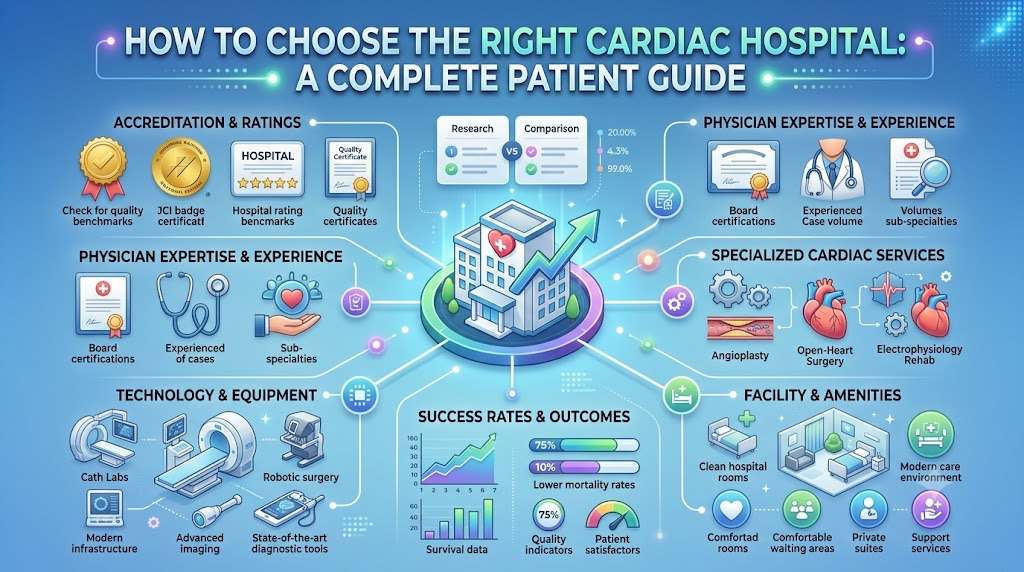
Choosing a cardiac hospital can be an important and sometimes overwhelming decision, especially when someone you care about needs specialized diagnosis, interventional cardiology, heart surgery, or long-term cardiac care. Not every medical center offers the same cardiac services, technology, specialist expertise, emergency support, or rehabilitation resources. Because heart health requires precise, coordinated, and timely intervention, finding the right environment for care is essential for both immediate success and long-term recovery.The purpose of this article is to provide a practical framework for comparing hospitals based on objective and relevant factors rather than advertisements, unverified rankings, or reputation alone. By looking at clinical expertise, infrastructure, safety standards, and patient support systems, patients and their families can make well-informed choices tailored to their specific medical needs. To explore resources for researching cardiac hospitals, heart specialists, treatments, procedures, and destinations, patients can visit Best Cardiac Hospitals as a helpful informational platform.
Why Choosing the Right Cardiac Hospital Matters
Cardiac care is rarely a solo endeavor. It requires complex infrastructure and highly coordinated multidisciplinary teams working seamlessly together. Depending on your diagnosis, your care team may involve a wide range of professionals, including:
- Cardiologists: Physicians specializing in diagnosing, managing, and treating conditions of the heart and blood vessels.
- Interventional Cardiologists: Specialists trained in catheter-based procedures to open blocked arteries or treat structural heart defects.
- Cardiac Surgeons: Surgeons specializing in open-heart and minimally invasive surgical procedures, such as bypass surgery or valve replacements.
- Cardiac Anesthesiologists: Specialists who manage anesthesia specifically tailored for cardiovascular surgeries and high-risk procedures.
- Cardiac Nurses: Nursing staff trained in continuous cardiovascular monitoring and intensive postoperative care.
- Cardiac ICU Teams: Critical care specialists managing patients immediately following major heart procedures.
- Rehabilitation Specialists: Physical therapists and lifestyle educators supporting post-treatment recovery and cardiovascular conditioning.
- Diagnostic Specialists: Technicians and imaging experts interpreting complex cardiac tests.
Coordinated multidisciplinary care ensures that every phase of your diagnosis, treatment, and recovery is handled by individuals with deep expertise in cardiovascular health.
Understand What Type of Cardiac Care You Need
Before comparing hospitals, it helps to understand the general category of care your condition requires. Cardiac services generally span several specialized areas:
- Preventive Cardiology: Focuses on risk assessment, lifestyle guidance, and heart-health monitoring for individuals looking to prevent heart disease.
- Diagnostic Cardiology: Involves non-invasive and invasive tests—such as electrocardiograms (ECGs), echocardiograms, stress testing, and coronary angiography—to identify heart issues.
- Interventional Cardiology: Encompasses catheter-based treatments like angioplasty and stenting to treat blocked coronary arteries without major surgery.
- Cardiac Surgery: Involves surgical operations such as coronary artery bypass grafting (CABG), heart valve repair or replacement, and aortic procedures.
- Electrophysiology: Focuses on diagnosing and treating heart rhythm disorders (arrhythmias) using ablations, pacemakers, and implantable defibrillators.
Understanding the specific service required helps narrow your search to hospitals that routinely handle your type of condition.
Check the Hospital’s Cardiac Specialties
Hospitals vary widely in their scope of services. When evaluating a medical center, look for dedicated departments or structured programs covering:
- General cardiology and outpatient clinics.
- Interventional cardiology and advanced catheterization laboratories.
- Cardiothoracic and vascular surgery suites.
- Electrophysiology and arrhythmia care units.
- Structural heart disease programs for complex valve disorders.
- Heart failure management clinics.
- Pediatric cardiology programs where relevant.
- Dedicated cardiac rehabilitation services.
- 24-hour emergency cardiac care capabilities.
Do not assume that every hospital offering basic cardiology services is equipped to handle complex surgical interventions or specialized electrophysiology procedures.
Evaluate the Cardiology and Cardiac Surgery Team
The quality of a cardiac hospital is fundamentally tied to the skill, training, and experience of its medical staff. When researching physicians, consider:
- Qualifications and Credentials: Board certifications, medical degrees from recognized institutions, and active professional registrations.
- Subspecialization: Focused training in specific areas, such as interventional cardiology, advanced heart failure, pediatric heart surgery, or electrophysiology.
- Procedure-Specific Experience: How frequently the specialist performs your recommended procedure.
- Hospital Affiliations: The academic and clinical networks the doctors are associated with.
- Communication Style: The willingness of the specialist to explain complex medical concepts clearly, discuss risks and benefits honestly, and answer your questions without rushing.
Key Distinction in Specialties
- Cardiologist: Manages medical treatments, diagnostics, and long-term heart conditions.
- Interventional Cardiologist: Performs catheter-based procedures through blood vessels.
- Cardiac/Cardiothoracic Surgeon: Performs open and minimally invasive operations directly on the heart structures.
Hospital Accreditation and Quality Standards
Recognized accreditation can provide useful insight into an institution’s adherence to safety, cleanliness, and operational standards. Consider checking for:
- National and international healthcare accreditations.
- Institutional quality awards or memberships in professional cardiac registries.
- Stricter hospital-wide infection-control protocols.
- Established patient-safety tracking systems.
While accreditation is an important baseline indicator of organizational quality, it should be considered alongside clinical expertise, specific facilities, and your individual healthcare requirements. Accreditation alone does not guarantee superior medical outcomes for every individual case.
Evaluate Cardiac Diagnostic Facilities
Accurate diagnosis is the foundation of effective cardiac treatment. When evaluating a hospital, check the availability and modernization of its diagnostic capabilities:
- Electrocardiography (ECG): For recording heart electrical activity.
- Echocardiography: Ultrasound imaging to assess heart muscle function and valve health.
- Stress Testing: Evaluating heart performance under physical exertion or pharmacological stress.
- Holter and Event Monitoring: Ambulatory devices for tracking heart rhythms over 24 hours or longer.
- Cardiac CT and MRI: Advanced imaging providing detailed three-dimensional views of heart structures and blood vessels.
- Coronary Angiography: Imaging to visualize blockages inside coronary arteries.
- Advanced Laboratory Services: Rapid turnaround for cardiac enzyme and biomarker testing.
Check the Cath Lab
A cardiac catheterization laboratory (cath lab) is a specialized examination room equipped with diagnostic imaging equipment used to visualize the heart’s arteries and chambers and treat stenosis or blockages. When evaluating a hospital’s cath lab facilities, consider:
- Modern Imaging Systems: High-resolution fluoroscopy equipment that minimizes radiation while providing clear visualization.
- Interventional Expertise: The presence of skilled interventional cardiologists and specialized cath lab nursing staff.
- Emergency Readiness: Ability to perform emergency procedures around the clock for acute heart attacks.
- Surgical Backup: Proximity and readiness of cardiothoracic surgical teams if catheter-based interventions require immediate surgical conversion.
Evaluate Cardiac Surgery Infrastructure
If your treatment plan involves surgery, the hospital’s surgical infrastructure must be robust and comprehensive. Key elements include:
- Dedicated Cardiac Operating Rooms: Sterile surgical suites designed specifically for cardiovascular procedures with advanced cardiopulmonary bypass machines.
- Cardiac Anesthesia Support: Anesthesiologists specializing in managing complex hemodynamic monitoring during heart surgery.
- Blood-Bank Support: Immediate access to matched blood products and transfusion services.
- Intensive Monitoring Systems: Comprehensive telemetry and hemodynamic monitoring equipment in operating and recovery areas.
Table 1 – Cardiac Hospital Evaluation Factors
| Hospital Factor | What to Check | Why It Matters |
| Cardiac Specialists | Board certifications, subspecialties, and procedural experience. | Ensures care is led by qualified experts tailored to your specific heart condition. |
| Accreditation | National and international institutional accreditations. | Indicates adherence to structured safety, hygiene, and operational standards. |
| Diagnostic Facilities | Advanced imaging, cath labs, and laboratory support. | Supports accurate diagnosis and precise treatment planning. |
| Cardiac ICU | Dedicated critical care units and specialized nursing. | Essential for close monitoring and recovery immediately following surgery or crisis. |
| Surgery Facilities | Dedicated cardiac operating suites and bypass infrastructure. | Required for safe, complex cardiothoracic surgical interventions. |
| Rehabilitation | Structured physical conditioning and lifestyle education programs. | Supports safe physical recovery and long-term cardiovascular health. |
| Emergency Services | 24/7 cardiac emergency readiness and rapid response teams. | Critical for immediate intervention during acute cardiac events. |
Cardiac ICU and Emergency Services
Emergency readiness is a critical consideration, particularly for patients with acute or progressive heart conditions. When evaluating a hospital, inquire about:
- 24-Hour Emergency Department: Staffed by emergency physicians trained in recognizing acute cardiac events.
- Dedicated Cardiac Intensive Care Unit (ICU): Specialized critical care units equipped with advanced hemodynamic monitoring and staffed by intensivists and specialized cardiac nurses.
- Rapid Response Protocols: Established pathways that minimize door-to-balloon times for heart attack patients.
Note: If you or someone near you is experiencing symptoms of an acute cardiac emergency—such as severe crushing chest pain, sudden shortness of breath, or fainting—do not search for hospitals online. Contact local emergency medical services immediately.
Hospital Experience With Specific Procedures
General hospital reputation is less informative than experience with your specific diagnosis or procedure. When consulting with hospital representatives or physicians, ask targeted questions:
- How many times do the cardiac teams perform this specific procedure (e.g., CABG, complex valve repair, or arrhythmia ablation) annually?
- What is the multidisciplinary team’s experience with patients sharing my age and underlying health profile?
- What specialized postoperative care protocols are in place for this procedure?
Evaluating procedure-specific experience provides a clearer picture of team familiarity and operational smoothness.
Understanding Cardiac Outcomes and Quality Data
When publicly available, hospital quality data can offer helpful perspectives, but it must be interpreted carefully. Consider these guidelines:
- Risk Adjustment: Different hospitals treat patients with varying levels of illness severity. Look for data that has been risk-adjusted to account for complex underlying conditions.
- Data Context: Understand the timeframe, sample size, and patient populations represented in any reported statistics.
- Infection and Readmission Rates: Review institutional infection control records and unplanned readmission metrics where accessible.
Avoid relying on isolated success-rate claims or unverified percentages presented in promotional materials.
Patient Safety and Infection Control
Surgical site infections and medication errors are critical safety concerns in any healthcare environment. Inquire about hospital safety protocols, such as:
- Strict sterilization protocols in operating rooms and cath labs.
- Standardized surgical safety checklists used by the entire care team.
- Medication reconciliation systems to prevent dosing errors.
- Hand hygiene compliance tracking and infection surveillance programs.
- Robust patient identification processes throughout admission and treatment.
Cardiac Rehabilitation Services
Recovery does not end when you leave the operating room or hospital ward. Comprehensive cardiac rehabilitation programs significantly improve long-term outcomes after heart events or surgeries. Look for hospitals that offer:
- Supervised exercise training programs tailored to your fitness level.
- Nutritional counseling and dietary guidance for heart health.
- Stress management and psychological support resources.
- Education regarding risk-factor modification, blood pressure control, and medication adherence.
- Long-term monitoring to ensure safe progression of physical activity.
Technology and Advanced Cardiac Care
While advanced technology is valuable, it should always be evaluated in the context of clinical necessity rather than marketing appeal. Advanced centers may feature:
- Hybrid operating rooms combining surgical infrastructure with advanced imaging.
- Minimally invasive and robotic-assisted surgical equipment where appropriate.
- Advanced electrophysiology mapping systems for complex arrhythmias.
- Intravascular imaging tools like intravascular ultrasound (IVUS) for precise stent placement.
Your cardiologist can help you determine whether specialized technology is relevant to your specific treatment plan.
Patient Communication and Shared Decision-Making
An ideal hospital environment fosters open communication and collaborative decision-making. Throughout your consultation process, ensure that the medical team:
- Explains your diagnosis and treatment options in clear, understandable language.
- Welcomes questions about risks, alternative treatments, and expected recovery milestones.
- Provides clear, transparent information regarding costs and insurance coverage.
- Respects your right to seek a second opinion without hesitation.
You should feel listened to, respected, and supported by everyone involved in your care.
Second Opinions and Complex Cardiac Conditions
Seeking a second opinion is a standard and sensible practice, particularly when:
- Major heart surgery or high-risk interventions are recommended.
- Multiple viable treatment options exist for your condition.
- Your diagnosis is rare, uncertain, or complex.
- You or your family feel uncomfortable with the initial recommendation.
A reputable hospital and physician will support your decision to seek additional clarity. Note: Seeking a second opinion should not delay urgent or emergency medical treatment.
Location and Accessibility
Practical logistical factors play an important role in your overall treatment experience:
- Distance and Travel Time: Proximity to your home can make post-treatment follow-up appointments much easier to manage.
- Emergency Accessibility: Ensuring emergency transport routes are viable.
- Family Accommodation: Availability of nearby lodging for family members during extended hospital stays.
- Local Support Networks: Access to local rehabilitation centers and home-care support after discharge.
While specialized tertiary care centers located far from home may be necessary for complex surgeries, proximity for routine follow-ups is also worth factoring into your decision.
Cost and Financial Transparency
Cardiac care involves multiple cost components that should be understood clearly before treatment begins. Factors affecting total expenses include:
- Physician and surgeon consultation fees.
- Diagnostic testing charges.
- Operating room and anesthesia fees.
- Hospital room and ICU stay duration.
- Cost of medical devices, implants, or specialized hardware (such as valves or stents).
- Postoperative medicines and consumable supplies.
- Cardiac rehabilitation sessions and follow-up visits.
Financial Checklist
- Request a detailed, itemized written estimate distinguishing between base procedure costs and comprehensive hospital expenses.
- Verify your health insurance coverage, preauthorization requirements, network hospitals, and policy exclusions.
- Ask about cashless hospitalization facilities and billing coordination support.
International Patient Services
For patients traveling across states or countries for specialized cardiac care, dedicated international patient departments can facilitate a smoother process. Key services to verify include:
- Assistance with remote medical records review and preliminary treatment planning.
- Dedicated international patient coordinators who assist with communication and scheduling.
- Translation and interpretation services.
- Visa invitation letters and travel documentation support.
- Airport pickup, local transportation, and accommodation coordination.
- Secure transfer of medical records and follow-up coordination with local doctors back home.
Always verify these services directly with the hospital’s official international office.
Red Flags When Choosing a Cardiac Hospital
Exercise caution if you encounter facilities or representatives exhibiting the following warning signs:
- Promising guaranteed 100% success rates or claiming procedures are entirely risk-free.
- Pressuring you into immediate elective surgery without allowing time for consideration or second opinions.
- Avoiding clear discussions about potential risks, complications, or alternative treatments.
- Refusing to provide written, itemized cost estimates.
- Making grandiose, unsupported claims of being universally the “best” hospital.
- Using unverified testimonials or anonymous statistics rather than verifiable clinical credentials.
- Discouraging questions or dismissing your concerns about follow-up care.
Table 2 – Hospital Comparison Checklist
| Comparison Area | Questions to Ask | Information to Verify |
| Specialist Team | Who will lead my care team, and what are their credentials? | Board certifications, subspecialties, and years of experience. |
| Procedure Experience | How frequently does this team perform my specific procedure? | Annual procedure volumes and team familiarity. |
| Facilities & Infrastructure | What diagnostic, cath lab, and surgical facilities are available? | Modern imaging, dedicated cardiac OPs, and ICU capabilities. |
| Patient Safety | What accreditation and infection control standards are maintained? | Institutional accreditations and safety protocols. |
| Rehabilitation | Is comprehensive cardiac rehabilitation available on-site or partnered? | Structured physical therapy and lifestyle education programs. |
| Cost & Insurance | What is included in the treatment estimate, and is insurance accepted? | Written itemized estimates and preauthorization status. |
| Follow-up Care | How will postoperative follow-up and monitoring be managed? | Continuity of care plans and local support coordination. |
| Emergency Support | What 24/7 cardiac emergency and backup systems exist? | Emergency department and intensive care readiness. |
How to Compare Two or More Cardiac Hospitals
When narrowing down your choices between multiple hospitals, structure your comparison objectively:
- Compare the depth of the specific cardiac specialty required for your diagnosis.
- Evaluate the verified credentials and experience of the assigned specialists.
- Check the robustness of diagnostic, cath lab, and surgical infrastructure.
- Review cardiac ICU staffing and emergency response readiness.
- Examine accreditation status and patient safety protocols.
- Compare availability and quality of cardiac rehabilitation programs.
- Review cost transparency, insurance acceptance, and itemized estimates.
- Consider logistical convenience, travel distance, and follow-up accessibility.
Avoid relying on rankings or marketing scores; focus on how well each facility aligns with your medical and personal needs.
When Hospital Choice Becomes an Emergency Issue
In an acute cardiac emergency, comparing hospitals is neither safe nor appropriate. Immediate intervention takes precedence over research. Seek emergency care immediately if you experience:
- Severe, crushing, or persistent chest pain, pressure, or squeezing.
- Sudden, severe shortness of breath or difficulty breathing.
- Fainting, sudden dizziness, or loss of consciousness.
- Sudden weakness, numbness, or difficulty speaking.
- Any acute symptom suggestive of a heart attack or acute cardiovascular crisis.
Call local emergency medical services or go to the nearest emergency department right away.
Step-by-Step Process for Choosing a Cardiac Hospital
- Step 1: Obtain a clear diagnosis and understand your recommended treatment plan from your primary physician.
- Step 2: Identify the specific cardiac specialty or surgical procedure required.
- Step 3: Research hospitals that feature dedicated departments for that specialty.
- Step 4: Verify the credentials, subspecialties, and experience of the relevant cardiologists and surgeons.
- Step 5: Review the hospital’s diagnostic, cath lab, and surgical infrastructure.
- Step 6: Check institutional accreditations and safety protocols.
- Step 7: Assess the availability of dedicated cardiac ICUs and 24/7 emergency support.
- Step 8: Review cardiac rehabilitation and follow-up support services.
- Step 9: Request itemized cost estimates and confirm insurance coverage.
- Step 10: Consider travel logistics, location convenience, and family accommodation.
- Step 11: Ask questions directly during consultations and seek a second opinion if needed.
- Step 12: Make an informed decision collaboratively with your medical team.
FAQs
1. How do I choose the right cardiac hospital?
Choosing the right cardiac hospital involves evaluating specialist expertise, procedure-specific experience, diagnostic and surgical infrastructure, ICU capabilities, patient safety standards, and your individual medical needs.
2. What should I look for in a cardiac hospital?
Look for dedicated cardiology and cardiac surgery departments, qualified specialists, modern cath labs, dedicated cardiac ICUs, recognized accreditations, and comprehensive rehabilitation services.
3. Why is cardiac hospital specialization important?
Specialized cardiac centers house multidisciplinary teams, advanced imaging, and specialized surgical suites designed specifically to manage complex cardiovascular conditions safely.
4. How do I evaluate a cardiologist or cardiac surgeon?
Check their board certifications, subspecialty training, professional registrations, hospital affiliations, and their specific experience with your recommended procedure.
5. Does hospital accreditation matter?
Yes, recognized accreditations indicate that a hospital meets established standards for quality, hygiene, patient safety, and operational governance.
6. What cardiac facilities should a hospital have?
Essential facilities include advanced diagnostic imaging, a modern cardiac catheterization laboratory (cath lab), dedicated cardiac operating rooms, and a specialized cardiac ICU.
7. Why is a cardiac ICU important?
A dedicated cardiac intensive care unit provides continuous hemodynamic monitoring and specialized nursing care critical for patients recovering from major heart surgery or acute events.
8. How can I compare hospitals for heart surgery?
Compare surgical team experience, dedicated cardiac operating infrastructure, bypass support, infection-control records, postoperative ICU care, and rehabilitation support.
9. Should I consider hospital procedure volume?
Procedure-specific experience is helpful to understand, though it should be evaluated alongside team expertise, patient safety protocols, and individual clinical needs.
10. How can I evaluate cardiac hospital quality?
Review institutional accreditations, safety records, staff credentials, facility standards, and risk-adjusted outcome data where publicly available.
11. What questions should I ask about treatment costs?
Ask for a written, itemized estimate covering surgeon fees, diagnostics, room charges, ICU stay, implant costs, medicines, and rehabilitation, and verify insurance coverage.
12. Is cardiac rehabilitation important when choosing a hospital?
Yes, structured cardiac rehabilitation programs play a vital role in restoring physical strength, managing risk factors, and supporting long-term recovery.
13. Should I get a second opinion before major heart treatment?
Seeking a second opinion is recommended when facing major heart surgery, complex diagnoses, or uncertain treatment recommendations, provided it does not delay emergency care.
14. How should international patients compare cardiac hospitals?
International patients should evaluate dedicated international patient services, remote consultation options, medical records transfer, translation support, travel logistics, and cost estimates.
15. What should I do if I am experiencing a cardiac emergency?
If you experience severe chest pain, sudden breathlessness, fainting, or acute heart attack symptoms, do not research hospitals online—contact emergency services immediately.
Conclusion
Choosing a cardiac hospital is a crucial decision that should be guided by your specific medical needs and verified information rather than single rankings, advertisements, or unverified reviews. By carefully evaluating specialist expertise, cardiac services, diagnostic and surgical infrastructure, emergency readiness, patient safety, rehabilitation, cost transparency, and follow-up care, patients and their families can approach their treatment journey with confidence. Informed discussions with qualified healthcare professionals remain the most reliable path toward selecting the right environment for your heart health.