Introduction
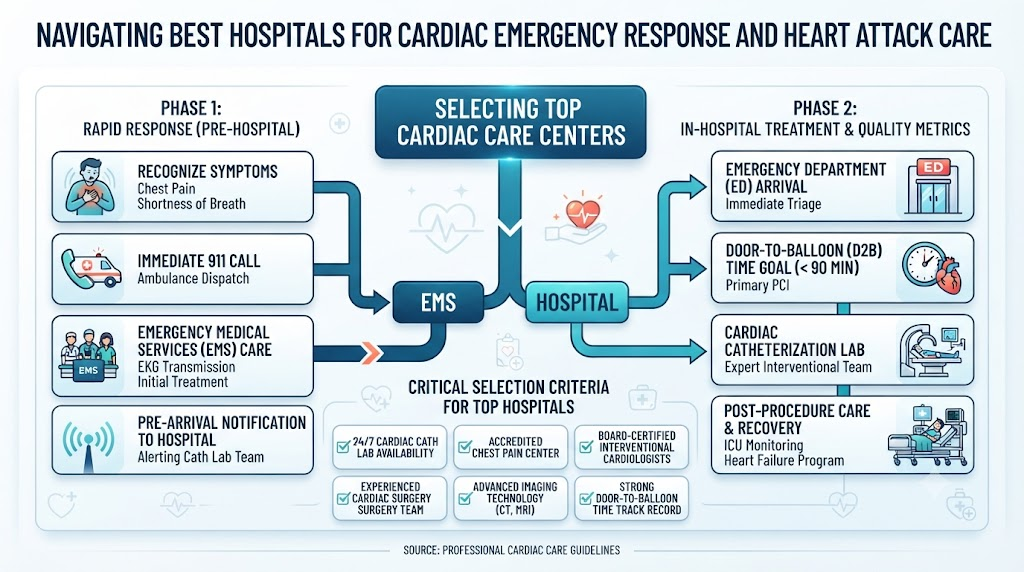
When a heart emergency strikes, time becomes the most valuable asset a patient can have. Rapid recognition of heart emergencies, coordinated emergency medical services, 24/7 cardiac catheterization facilities, and specialized cardiac teams can significantly improve outcomes for patients experiencing heart attacks and other acute cardiac events. Specialized chest pain centers and coordinated emergency response systems help reduce treatment delays (international.heart.org).This comprehensive educational guide explores what cardiac emergency response involves, essential warning signs to watch for, advanced technologies used in modern cardiology, and how patients and families can navigate emergency healthcare choices. For reliable educational resources, hospital comparisons, and patient guidance, readers can explore BESTCARDIACHOSPITALS.
What Is Cardiac Emergency Response?
Cardiac emergency response refers to the coordinated system of emergency medical services, rapid diagnostics, and specialized hospital care deployed when a patient experiences an acute, life-threatening heart condition.The primary purpose of emergency cardiac care is to quickly restore blood flow to the heart muscle, stabilize dangerous heart rhythms, and prevent permanent organ damage. Emergency departments work in close partnership with dedicated cardiac teams to streamline triage and treatment workflows.Coordinated treatment ensures that every step—from initial ambulance dispatch to emergency room intake and catheterization laboratory activation—occurs seamlessly. Rapid response improves patient care by minimizing door-to-balloon times, which directly correlates with higher survival rates and reduced heart muscle injury during a heart attack.
Medical Emergencies That Require Immediate Cardiac Care
Certain cardiac events demand urgent medical intervention and cannot wait for routine outpatient appointments. Recognizing these conditions helps underscore why immediate emergency care is necessary.
Heart Attack (Myocardial Infarction)
Occurs when a coronary artery becomes completely or partially blocked, cutting off oxygen-rich blood to the heart muscle. Immediate intervention is required to open the blocked vessel.
Cardiac Arrest
Happens when the heart abruptly stops beating effectively, causing a sudden loss of blood flow throughout the body. It requires immediate cardiopulmonary resuscitation (CPR) and automated external defibrillator (AED) use.
Unstable Angina
Severe, unexpected chest pain that occurs at rest or worsens progressively, signaling an imminent risk of a complete heart attack.
Serious Heart Rhythm Disorders
Dangerous arrhythmias, such as ventricular fibrillation or rapid ventricular tachycardia, disrupt normal blood pumping and require immediate electrical cardioversion or medication.
Acute Heart Failure
A sudden worsening of heart failure symptoms, leading to severe fluid buildup in the lungs and acute respiratory distress.
Cardiogenic Shock
A life-threatening condition where the heart fails to pump sufficient blood to meet the body’s needs, requiring intensive hemodynamic support.
Aortic Dissection
A tear in the inner layer of the aorta, the large blood vessel branching off the heart, creating a surgical emergency characterized by sharp, tearing chest or back pain.
Severe Chest Pain Requiring Evaluation
Any unexplained, intense pressure or discomfort in the chest area that must be evaluated immediately to rule out acute coronary syndrome.
Cardiac Emergency Services Comparison Table
| Service | Purpose | Patient Benefit |
| 24/7 Emergency Department | Immediate assessment | Faster diagnosis |
| Cardiac Catheterization Lab | Emergency angioplasty | Rapid artery reopening when appropriate |
| ECG & Cardiac Monitoring | Continuous heart monitoring | Early detection of complications |
| Cardiac ICU | Intensive post-emergency care | Specialized monitoring |
| Emergency Cardiology Team | Immediate specialist care | Faster treatment decisions |
| Ambulance Coordination | Rapid transport | Reduced treatment delays |
Services Offered by Hospitals Specializing in Cardiac Emergencies
Medical institutions dedicated to excellence in cardiovascular care structure their emergency departments to handle complex heart events seamlessly. Hospitals with dedicated cardiac emergency programs often provide around-the-clock access to cardiac catheterization laboratories and multidisciplinary heart teams to reduce treatment delays (international.heart.org).
- 24/7 Emergency Cardiology: Constant availability of cardiovascular specialists to evaluate and treat urgent cases.
- Chest Pain Evaluation: Rapid triage protocols designed specifically for patients presenting with chest discomfort.
- Emergency ECG: Immediate electrical tracing of heart rhythms within minutes of arrival.
- Cardiac Biomarker Testing: Fast blood analysis to detect specific proteins released when heart muscle is damaged.
- Primary PCI (Emergency Angioplasty): Immediate mechanical reopening of blocked coronary arteries.
- Cardiac Catheterization Laboratory: Specialized suites equipped for diagnostic angiography and therapeutic interventions.
- Cardiac Intensive Care Unit (CICU): High-level monitoring environments for patients recovering from acute cardiac crises.
- Advanced Cardiac Imaging: Cutting-edge diagnostic tools such as echocardiograms and cardiac CT scans.
- Emergency Cardiac Surgery Support: Immediate availability of cardiothoracic surgeons for complex bypass or repair procedures.
- Cardiac Rehabilitation Planning: Early initiation of physical therapy and lifestyle education following acute stabilization.
Advanced Technologies Used
Modern emergency cardiology relies heavily on advanced medical technology to diagnose and treat acute heart conditions with extreme precision.
- Digital ECG: Provides instant, high-resolution readouts of electrical heart activity for rapid arrhythmia and ischemia detection.
- Portable Echocardiography: Allows clinicians to perform bedside ultrasound imaging of heart valves and pumping chambers without moving the patient.
- Cardiac Catheterization Laboratories: Advanced imaging suites featuring fluoroscopy and specialized catheters to treat blocked vessels.
- Continuous Cardiac Monitoring: Telemetry systems that track heart rhythm and vital signs around the clock.
- Mechanical Circulatory Support: Devices like intra-aortic balloon pumps or ventricular assist devices that support blood circulation in severe shock cases.
- Telecardiology: Digital transmission systems that allow emergency responders or rural clinics to share ECG data instantly with major cardiac centers.
- Advanced Life Support Equipment: State-of-the-art defibrillators, emergency airway kits, and rapid infusion pumps.
Multidisciplinary Cardiac Emergency Team
Successful emergency heart care depends on the coordinated efforts of a highly skilled, multidisciplinary team of professionals.
- Emergency Physicians: Frontline medical doctors who stabilize patients upon arrival and initiate immediate diagnostic protocols.
- Interventional Cardiologists: Subspecialists who perform emergency catheterization and angioplasty procedures.
- Cardiac Surgeons: Perform urgent surgical interventions when catheter-based treatments are insufficient.
- Critical Care Specialists: Manage complex physiological stabilization in the cardiac intensive care unit.
- Cardiac Nurses: Provide continuous bedside monitoring and administer critical intravenous medications.
- Respiratory Therapists: Manage airway stability and oxygen support during acute respiratory compromise.
- Emergency Medical Services (EMS): Paramedics and EMTs who initiate pre-hospital care and rapid transport.
- Rehabilitation Specialists: Guide early physical recovery and lifestyle counseling post-crisis.
How to Choose the Right Hospital for Cardiac Emergencies
When evaluating healthcare facilities for emergency cardiac readiness, several core factors distinguish top-tier centers.
- 24/7 Emergency Services: Round-the-clock intake capability with dedicated triage pathways for chest pain.
- Immediate Cardiology Availability: On-site presence or rapid call-in protocols for interventional cardiologists.
- Dedicated Cardiac Catheterization Lab: Fully equipped, operational labs ready for emergency PCI procedures at any hour.
- Cardiac ICU: Specialized critical care units staffed by nurses and physicians trained exclusively in advanced heart monitoring.
- Experienced Emergency Teams: Proven clinical experience in managing high-volume acute myocardial infarctions.
- Rapid Ambulance Coordination: Seamless communication protocols between EMS providers and hospital intake desks.
- Comprehensive Rehabilitation Services: Integrated inpatient and outpatient recovery programs.
- Strong Patient Safety Practices: Adherence to rigorous quality benchmarks and infection control standards.
Hospital Selection Checklist
| Feature | Why It Matters |
| 24/7 Cardiac Emergency Services | Immediate treatment |
| Cardiac Catheterization Lab | Rapid intervention |
| Experienced Cardiologists | Specialized expertise |
| Cardiac ICU | Intensive monitoring |
| Emergency Ambulance Coordination | Faster hospital access |
| Rehabilitation Program | Recovery support |
Warning Signs of a Cardiac Emergency
Recognizing the early warning signs of a heart emergency can prompt timely intervention. Anyone experiencing these symptoms should seek emergency medical attention immediately rather than attempting to drive themselves if emergency medical services are available (PubMed Central (PMC)).
- Chest Pain or Pressure: A squeezing sensation, fullness, or pain in the center of the chest that lasts more than a few minutes or goes away and returns.
- Pain in Arm, Neck, Jaw, or Back: Discomfort radiating beyond the chest into one or both arms, the back, neck, jaw, or stomach.
- Shortness of Breath: Difficulty breathing, often occurring alongside chest discomfort or even without it.
- Cold Sweats: Sudden breaking out in a cold, clammy sweat without apparent cause.
- Dizziness or Fainting: Lightheadedness, sudden unsteadiness, or brief loss of consciousness.
- Nausea: Feeling sick to the stomach, indigestion-like discomfort, or vomiting.
- Sudden Weakness: Unexplained fatigue or profound lack of physical strength.
- Palpitations: A sudden sensation of a racing, pounding, or irregular heartbeat.
What Happens After Arrival at the Hospital?
The transition from emergency arrival to clinical intervention follows a structured, fast-paced medical pathway.
- Triage Assessment: Immediate evaluation by emergency nurses to prioritize care based on symptom severity.
- ECG Within Minutes: Recording an electrocardiogram within ten minutes of hospital entry to identify heart attack patterns.
- Blood Tests: Drawing blood samples to check cardiac biomarkers and other key health indicators.
- Continuous Monitoring: Connecting the patient to telemetry leads to track heart rhythm and vital signs constantly.
- Emergency Treatment: Administering medications such as aspirin, blood thinners, or pain relief as indicated.
- Specialist Consultation: Immediate bedside evaluation by an interventional cardiologist.
- ICU Admission (If Needed): Transferring the patient to the cardiac intensive care unit for close post-procedure observation.
- Rehabilitation Planning: Initiating discussions regarding lifestyle modifications and structured physical recovery.
Recovery After a Cardiac Emergency
Healing after an acute heart event requires ongoing commitment, medical supervision, and healthy lifestyle changes.
- Cardiac Rehabilitation: Structured exercise programs and education tailored to rebuild cardiovascular strength safely.
- Medication Management: Consistent adherence to prescribed medications, such as antiplatelets, statins, and blood pressure regulators.
- Lifestyle Modification: Adopting heart-healthy habits, including smoking cessation and stress management.
- Follow-up Appointments: Regular check-ins with cardiologists to monitor healing and adjust treatment plans.
- Nutritional Counseling: Working with dietitians to embrace low-sodium, heart-healthy dietary patterns.
- Physical Activity Guidance: Gradual reintroduction of safe physical exertion under professional supervision.
- Long-term Monitoring: Routine diagnostic checks to assess ongoing heart function and overall wellness.
How BESTCARDIACHOSPITALS Helps Patients
Navigating cardiovascular health information requires reliable, easy-to-understand resources. Platforms like BESTCARDIACHOSPITALS assist patients and families by offering:
- Hospital Discovery: Helping users locate specialized cardiac care centers and emergency facilities.
- Cardiac Care Education: Providing clear, accessible information on heart conditions, treatments, and procedures.
- Emergency Preparedness Awareness: Educating communities on recognizing heart attack symptoms and acting quickly.
- Hospital Comparison Resources: Offering structured insights to evaluate hospital capabilities and services.
- Patient Guidance: Equipping individuals with actionable knowledge to make empowered healthcare choices.
- Informed Healthcare Decisions: Supporting patients and families throughout their cardiovascular health journey.
Common Mistakes Patients Make
- Ignoring Early Chest Pain: Dismissing initial warning signs as minor indigestion or fatigue.
- Delaying Emergency Care: Waiting hours to see if symptoms pass before seeking medical help.
- Driving Themselves Despite Severe Symptoms: Attempting to drive to the hospital during a heart attack, risking sudden loss of consciousness behind the wheel.
- Ignoring Follow-up Appointments: Skipping vital post-discharge medical check-ups with cardiologists.
- Skipping Cardiac Rehabilitation: Underestimating the physical and educational value of structured recovery programs.
Practical Solutions: Always treat sudden chest discomfort as an emergency, call emergency medical services immediately instead of driving, and maintain open communication with your multidisciplinary care team throughout recovery.
Common Myths vs Facts
| Myth | Fact |
| Chest pain is always caused by indigestion | Chest pain should always be evaluated promptly when a heart emergency is possible |
| Heart attacks only affect older adults | Adults of different ages can experience heart emergencies |
| Symptoms always involve severe chest pain | Some people experience atypical symptoms such as breathlessness, fatigue, or nausea |
| Recovery ends after hospital discharge | Cardiac rehabilitation and long-term follow-up remain important |
Real-Life Educational Scenarios
Scenario 1: Emergency Angioplasty After Rapid Transport
A middle-aged individual experiences sudden, crushing chest pressure while at home. A family member immediately calls emergency medical services. Paramedics perform an onboard ECG, transmit the data to the receiving hospital’s emergency cardiology team, and ensure direct transport to the cardiac catheterization lab for a successful emergency angioplasty.
Scenario 2: Immediate ECG Evaluation in the Emergency Department
An older adult arrives at a hospital emergency department reporting acute shortness of breath and lightheadedness. Triage staff perform an ECG within minutes of arrival, identifying an evolving heart rhythm abnormality. The emergency physician immediately initiates targeted treatment protocols to stabilize the patient.
Scenario 3: Structured Cardiac Rehabilitation Recovery
Following treatment for an acute myocardial infarction, a patient is enrolled in a supervised outpatient cardiac rehabilitation program. Working with physical therapists and dietitians, the patient gradually regains strength, learns safe exercise habits, and adopts a heart-healthy nutritional plan.
Scenario 4: Early Recognition and Prompt Care
A family member notices someone experiencing unusual sweating, fatigue, and mild jaw discomfort. Recognizing these as potential warning signs of a cardiac issue, they avoid waiting and contact emergency services promptly, allowing clinicians to diagnose and treat an underlying coronary blockage early.
FAQs (15 Questions)
1. What is a cardiac emergency?
A cardiac emergency is a sudden, acute heart condition—such as a heart attack or cardiac arrest—that requires immediate medical intervention to save life and preserve heart tissue.
2. What symptoms require immediate emergency care?
Symptoms include severe chest pain or pressure, pain radiating to the arm or jaw, sudden shortness of breath, cold sweats, dizziness, and unexplained nausea.
3. What is Primary PCI?
Primary Percutaneous Coronary Intervention is an emergency catheterization procedure used to open blocked coronary arteries quickly during a heart attack.
4. What happens in a cardiac emergency department?
Patients undergo rapid triage, ECG testing within minutes, blood biomarker analysis, continuous cardiac monitoring, and immediate evaluation by emergency physicians and cardiologists.
5. What is a Cardiac ICU?
A Cardiac Intensive Care Unit (CICU) is a specialized hospital unit providing advanced, round-the-clock monitoring and life support for critically ill heart patients.
6. Why is rapid treatment important?
Rapid treatment minimizes the duration of oxygen deprivation to the heart muscle, reducing permanent damage and improving survival rates.
7. What tests are performed during a cardiac emergency?
Common tests include electrocardiograms (ECGs), blood tests for cardiac enzymes, chest X-rays, and emergency echocardiograms.
8. What technologies are used in emergency cardiac care?
Key technologies include digital telemetry monitors, portable ultrasound devices, mechanical ventilators, and advanced cardiac catheterization labs.
9. What is cardiac rehabilitation?
Cardiac rehabilitation is a medically supervised program designed to improve cardiovascular health through exercise, education, and counseling after a heart event.
10. Can heart attacks occur without severe chest pain?
Yes, some individuals—particularly women, older adults, and individuals with diabetes—may experience atypical symptoms like breathlessness, fatigue, or back pain.
11. How do I choose the right cardiac emergency hospital?
Look for hospitals with 24/7 emergency departments, dedicated cardiac catheterization labs, certified interventional cardiologists, and cardiac ICU facilities.
12. What should families do during a heart emergency?
Families should call emergency medical services immediately, keep the patient calm, and gather relevant medical history or medication lists.
13. What happens after hospital discharge?
Patients transition home or to a rehabilitation facility with prescribed medications, follow-up appointments, and a structured recovery plan.
14. How can emergency response improve outcomes?
Coordinated pre-hospital care, rapid transport, and streamlined in-hospital workflows reduce treatment delays and optimize clinical recovery.
15. How does BESTCARDIACHOSPITALS help patients find hospitals for cardiac emergency response?
BESTCARDIACHOSPITALS provides trusted educational resources, hospital comparison insights, and guidance to help patients navigate emergency cardiac care options effectively.
Final Thoughts
Rapid cardiac emergency response serves as a vital link between life-threatening heart events and successful recovery. The combination of immediate emergency medical services, advanced catheterization technologies, and expert multidisciplinary cardiac teams ensures that patients receive timely, high-quality interventions when seconds count. Choosing hospitals equipped with comprehensive emergency cardiology capabilities significantly enhances clinical outcomes and supports long-term heart health. Furthermore, ongoing cardiac rehabilitation and follow-up care remain indispensable for sustained recovery after an acute cardiac event.